
VW ID. Polo vs Skoda Epiq in Portugal: Price, Range and Space Compared
Published: 18/11/2026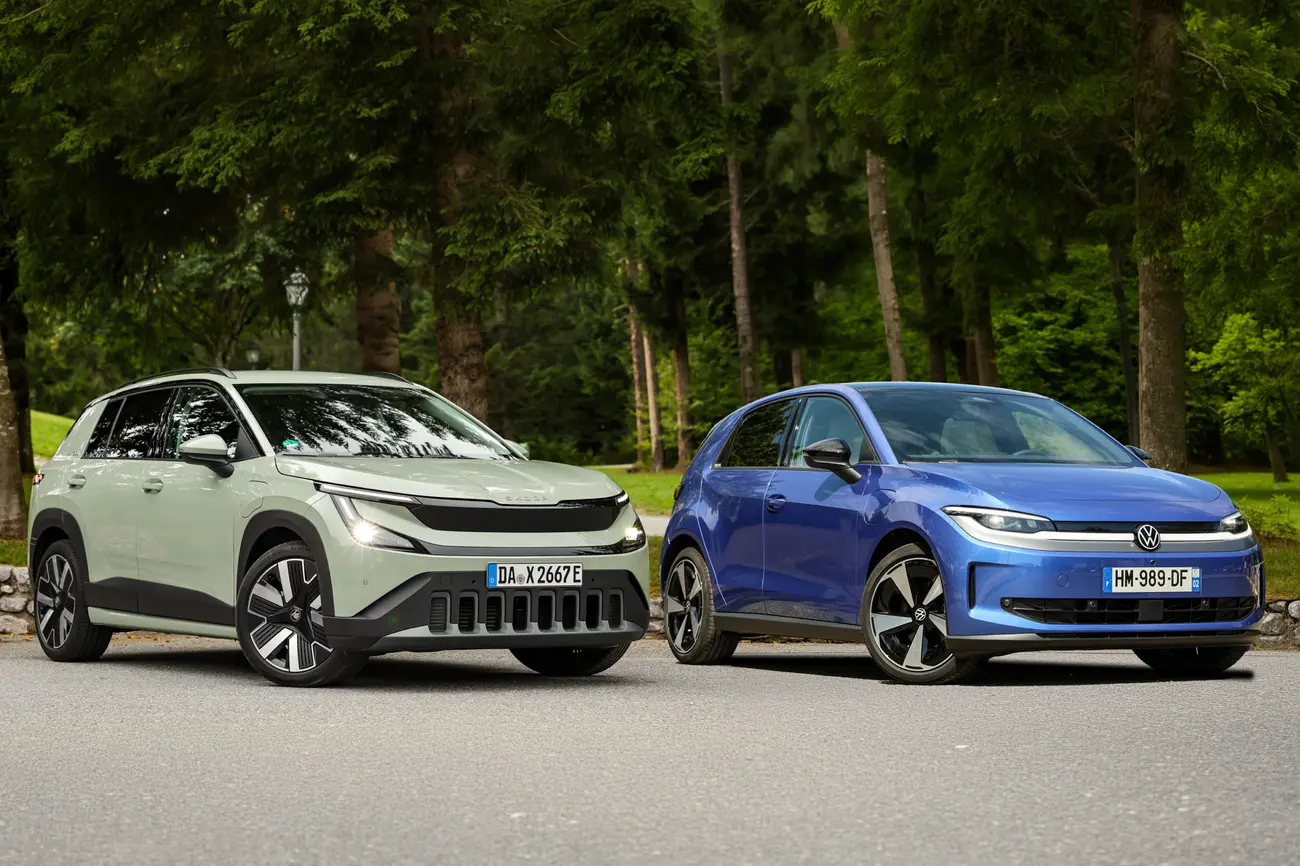
VW ID. Polo vs Skoda Epiq: same bones, two different cars
Same platform, same batteries, same motors, the exact same wheelbase down to the millimetre. Yet in Portugal the VW ID. Polo and the Skoda Epiq neither cost the same nor suit the same driver. This VW ID. Polo vs Skoda Epiq comparison for Portugal pulls together the spec sheets, real-world tests published abroad and the prices already showing up here — because that's where the story flips.
In Germany and France, the Skoda is the "cheap cousin". In Portugal it's the other way round: the ID. Polo starts lower, both at entry level and with the 52 kWh battery. If you're torn between a small electric hatchback and a compact electric SUV, that reversal matters.
Two MEB+ siblings, both built in Spain
Both cars sit on the MEB+ platform (also called MEB Entry), the Volkswagen Group's base for its more affordable EVs, which they also share with the Cupra Raval and the upcoming ID. Cross. Both are front-wheel drive and both are made in Spain: the ID. Polo in Martorell, the Epiq in Pamplona, where series production started in June 2026.
Under the skin, they're almost identical:
- Batteries: 37 kWh LFP or 52 kWh NMC (net figures)
- Power outputs: 116 hp, 135 hp and 211 hp on both; the ID. Polo also gets a 226 hp GTI, with orders expected at the end of 2026
- Torque on the 211 hp version: 290 Nm
- Top speed: 160 km/h
The difference is the body. The ID. Polo is a 4.05 m five-door hatchback; the Epiq is a 4.17 m crossover that stands about 5 cm taller. Twelve centimetres doesn't sound like much, but you feel it where it counts: in the boot and in how high you sit.
ID. Polo vs Epiq price in Portugal
ID. Polo prices for Portugal were announced at its launch in May at the ECAR SHOW in Lisbon. The Epiq doesn't yet have a full official price list published by Skoda Portugal: the figures below come from a dealer page (Caetano) and Portuguese motoring press, so treat them as indicative.
| Version | VW ID. Polo | Skoda Epiq |
|---|---|---|
| Entry (37 kWh) | €24,700 (Trend, 116 hp) | from around €28,800 |
| Mid-range | €28,550 (Life) | — |
| 52 kWh, 211 hp | €32,400 (Style) | €34,928 (Move 55) |
| 52 kWh, higher spec | — | €37,158 (Selection 55) |
| Top of the range | around €39,795 (GTI) | up to around €39,560 |
Run the numbers and the ID. Polo is roughly €4,000 cheaper at entry level and about €2,500 cheaper with the 52 kWh battery and 211 hp. The cheaper Epiq versions only arrive in November 2026 — reservations opened with the Move 55 at €34,928.
Abroad, the picture is different. In Germany the Epiq Essence 55 costs €32,100 against €33,795 for the ID. Polo Life 52 kWh; in France the Epiq 55 City sits at €32,070 while the ID. Polo Life 52 kWh starts at €35,820. German magazine AUTO BILD put it neatly: "the Skoda is cheaper, but the VW is the more rounded package". In Portugal, for now at least, the VW manages to be both.
Taxes and incentives
As fully electric cars, both are exempt from ISV (Portugal's one-off vehicle registration tax) and IUC (the annual road tax), and company buyers get the usual EV tax advantages. As for the Fundo Ambiental (the government's EV purchase incentive), it depends on the rules and budget in force when you buy, including the price cap — check before signing, especially on the better-equipped Epiq versions.
Skoda Epiq vs ID. Polo range and real-world consumption
With the 52 kWh battery, the ID. Polo claims up to 454-455 km WLTP (453 km on the Portuguese spec sheet) and the Epiq 55 up to 440-441 km. The gap is small and comes down to aerodynamics: the Epiq is taller and has roof bars as standard.
On the 37 kWh versions the gap widens. The ID. Polo reaches 329-334 km WLTP; the Epiq still only has provisional figures of 275 to 310 km. If you're buying the small battery, this is probably the strongest argument for the VW.
French site Bevolt drove both on real roads, and the numbers confirm the trend:
| Real-world consumption (52 kWh) | VW ID. Polo | Skoda Epiq |
|---|---|---|
| Mixed-route average | 13.2 kWh/100 km (over 500 km) | 13.8 kWh/100 km (219 km) |
| Motorway at 130 km/h | around 19 kWh/100 km | 18.5 kWh/100 km |
| City | under 10 kWh/100 km | — |
In practice, neither will do Lisbon to Porto (about 310 km) in one go at 130 km/h. Bevolt estimated around 270 km of motorway range for the ID. Polo, and the Epiq is in the same ballpark. In mixed use, expect 350-400 km from the Epiq and more than 450 km from the ID. Polo around town and the suburbs. For daily driving in Lisbon or Porto, either one has plenty in hand.
How long they take to charge
With 52 kWh, it's a dead heat: both charge at up to 105 kW DC and go from 10 to 80% in 24 minutes in ideal conditions. In Bevolt's test, the ID. Polo went from 15% to 61% in 21 minutes on a shared charger, taking on 25.57 kWh. On a coffee stop at a MOBI.E (Portugal's public charging network) fast charger on the A1, that's enough to keep going.
With the 37 kWh battery, the Epiq falls behind:
| 37 kWh battery | Max DC | 10-80% |
|---|---|---|
| ID. Polo (116 and 135 hp) | 90 kW | around 23 min |
| Epiq 35 (116 hp) | 50 kW | around 35 min |
| Epiq 40 (135 hp) | 88 kW | 23 min |
On AC, both take 11 kW. On a three-phase wallbox, the 52 kWh Epiq charges from 0 to 100% in about 5h30. Both offer V2L to power external devices (on the Epiq, from certain trim levels and with an adapter).
Skoda Epiq vs ID. Polo boot space
This is where the Epiq wins outright. It has 475 litres of boot space against 435-441 litres in the ID. Polo, plus a small front trunk (frunk) that's handy for charging cables. With the seats folded, the Epiq reaches 1,345 litres. For the ID. Polo, sources disagree — some quote 1,240 litres, others 1,391 — so it's not safe to say which takes more with the seats down.
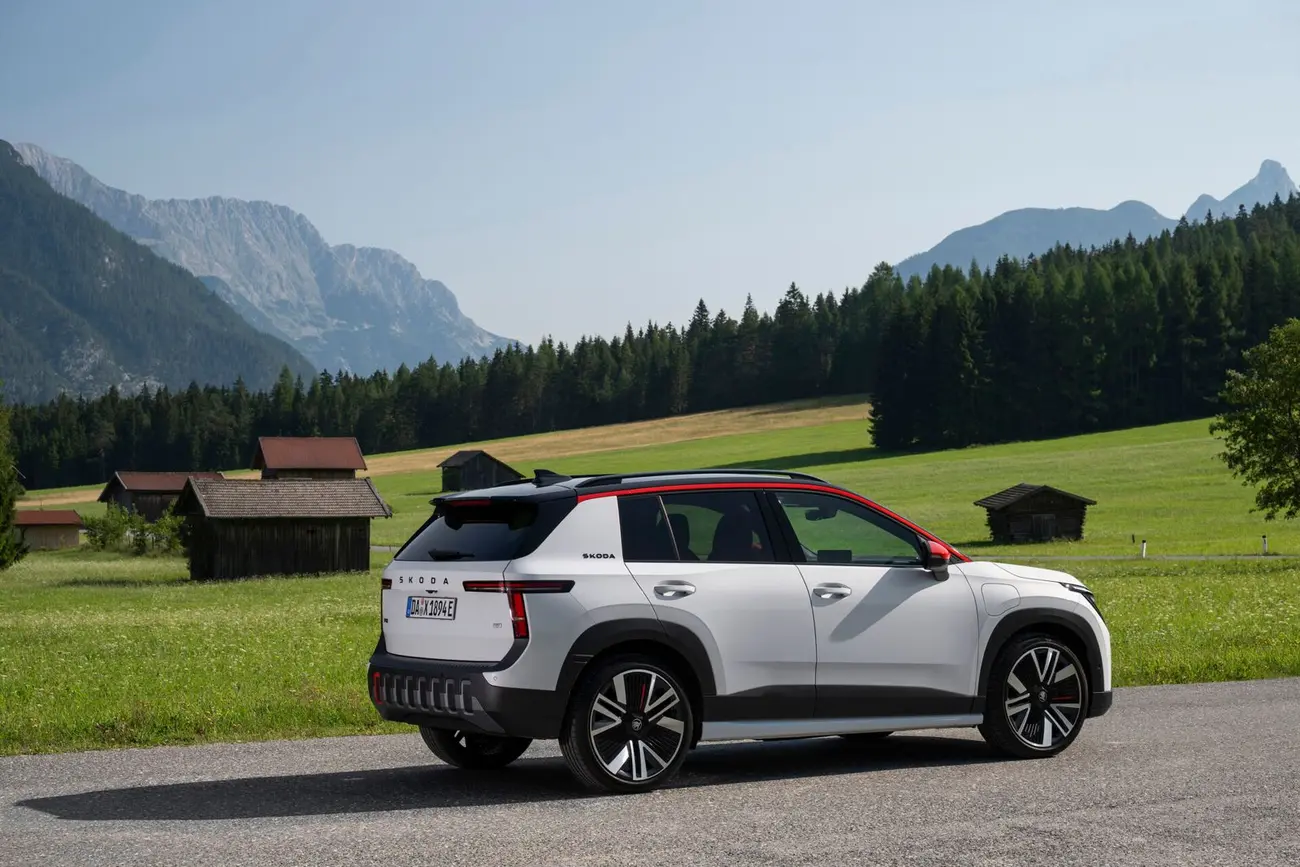
The Epiq adds Skoda's typical "Simply Clever" touches, such as the umbrella in the door, and a higher driving position that many drivers prefer for visibility and easier access. In the back, headroom suits passengers up to about 1.80 m. Around town, the Skoda oddly turns tighter: a 10.68 m turning circle against 10.9 m for the VW.
Interior and driving: where the ID. Polo pulls ahead
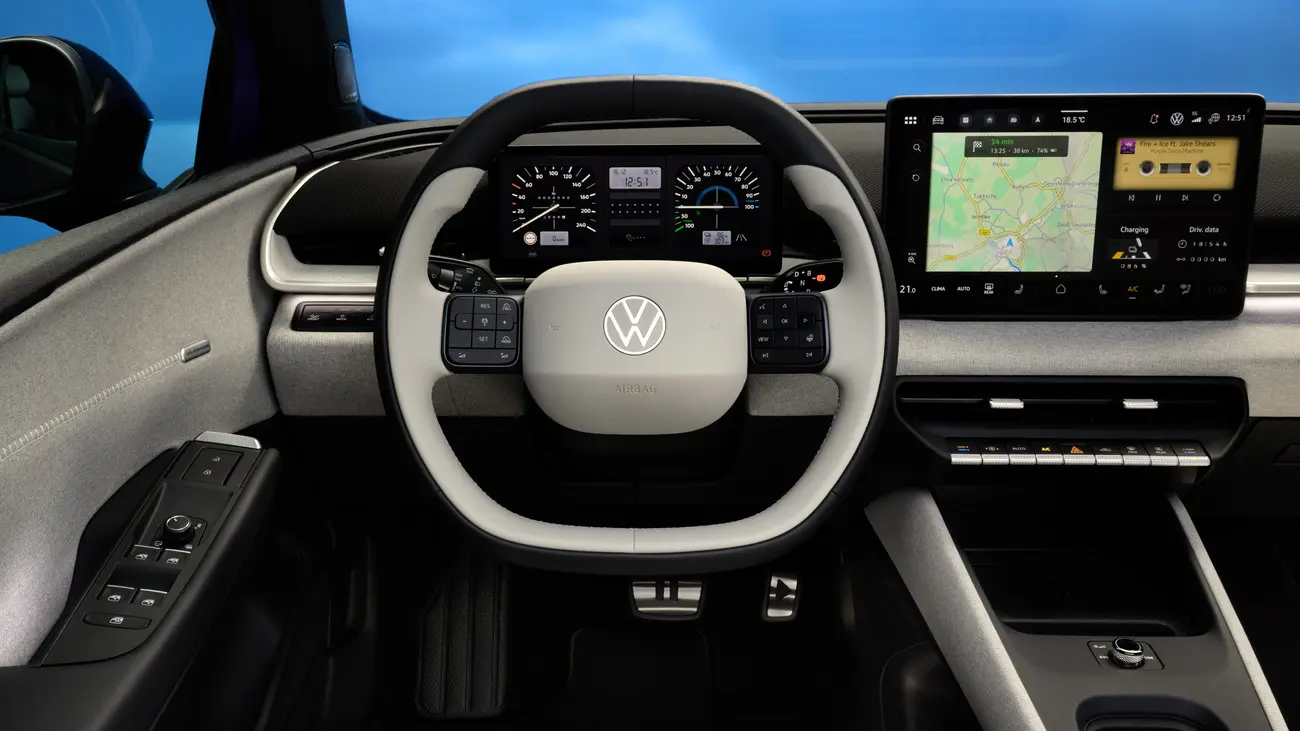
The ID. Polo has a 10-10.25 inch digital instrument cluster, a central screen of around 13 inches and — a detail many will appreciate — physical buttons for the climate controls. There's even a retro display mode inspired by the original Golf.
The Epiq uses a 13-inch central screen with Android-based infotainment, including Google apps, Spotify and YouTube. On the other hand, the display in front of the driver is small (5-5.3 inches) and climate control runs entirely through the touchscreen.
On the road, the 211 hp versions perform almost identically: 7.1 seconds from 0 to 100 km/h on most spec sheets (Carwow quotes 7.4 s for the Epiq), with a 160 km/h top speed on both. The ID. Polo is quieter and more planted in corners; in the Epiq, Bevolt noticed wind noise above 70 km/h, partly due to the roof bars.
Standard equipment
Trim for trim, the ID. Polo tends to include more as standard. In Germany, the Life already has dual-zone climate control, drive profiles and an auto-dimming mirror, which on the Epiq require an €840 Comfort pack. The heat pump, important for holding on to range in winter, is a €990 option on the Epiq (in France). Check with the dealer what's included on the Portuguese versions, since equipment names vary from country to country.
Frequently Asked Questions
In Portugal the ID. Polo is the cheaper car: it starts at €24,700 (Trend, 37 kWh), while the entry-level Epiq costs around €28,800, a gap of nearly €4,000. With the 52 kWh battery and 211 hp, the ID. Polo Style costs €32,400 and the Epiq Move 55 costs €34,928. In Germany and France the order is reversed and the Epiq is the more affordable car, so Portuguese Epiq prices should be treated as indicative until a full official price list is published.
Yes. Both sit on the MEB+ platform and share the same two batteries, 37 kWh LFP and 52 kWh NMC (net), as well as the same 116, 135 and 211 hp motors. The difference is in how the small battery charges: the 37 kWh ID. Polo accepts 90 kW DC (10-80% in about 23 minutes), while the Epiq 35 is limited to 50 kW (about 35 minutes). With 52 kWh, both charge at 105 kW and go from 10 to 80% in 24 minutes.
In a real-world test by the French site Bevolt, the 52 kWh ID. Polo used around 19 kWh/100 km at 130 km/h and the Epiq 18.5 kWh/100 km, which works out to roughly 270 km of motorway range. In mixed driving, consumption was 13.2 kWh/100 km for the ID. Polo and 13.8 kWh/100 km for the Epiq. Official WLTP figures are 454-455 km for the ID. Polo and 440-441 km for the Epiq 55.
Yes, mainly in the boot: the Epiq offers 475 litres versus 435-441 litres in the ID. Polo, plus a front trunk for storing charging cables. The Epiq is 4.17 m long and about 5 cm taller than the 4.05 m ID. Polo, but both share the same 2.60 m wheelbase. With the rear seats folded, the Epiq reaches 1,345 litres.
As fully electric cars, both are exempt from ISV (vehicle purchase tax) and IUC (annual road tax), and companies get the usual EV tax advantages, including VAT deduction within legal limits. Eligibility for the Fundo Ambiental incentive depends on the rules, price cap and budget in force when you buy. Check before signing, especially on pricier versions such as the €37,158 Epiq Selection 55.
ID. Polo or Skoda Epiq: which to buy
For most buyers in Portugal, the ID. Polo is the more rational choice: it costs less to start with, has a little more range, charges faster with the small battery and is nicer to drive. It's the EV for people who mostly drive in town and the suburbs and want a well-finished car without overpaying.
The Epiq makes sense when space is the priority. Small families, anyone regularly hauling a pushchair or suitcases, or people who simply prefer to sit higher will find real reasons in the 475-litre boot and the frunk to pay the difference.
A simple rule of thumb: if you're going for the 37 kWh battery, the ID. Polo is clearly the better buy; with 52 kWh, it comes down to small electric hatchback versus compact electric SUV, and a gap of around €2,500. Keep an eye on the entry-level Epiq versions arriving in November — if Skoda Portugal publishes a sharper official price list, the maths could change.