
Skoda Epiq: Price in Portugal, Range and Full Specs of the New Electric SUV
Published: 15/05/2026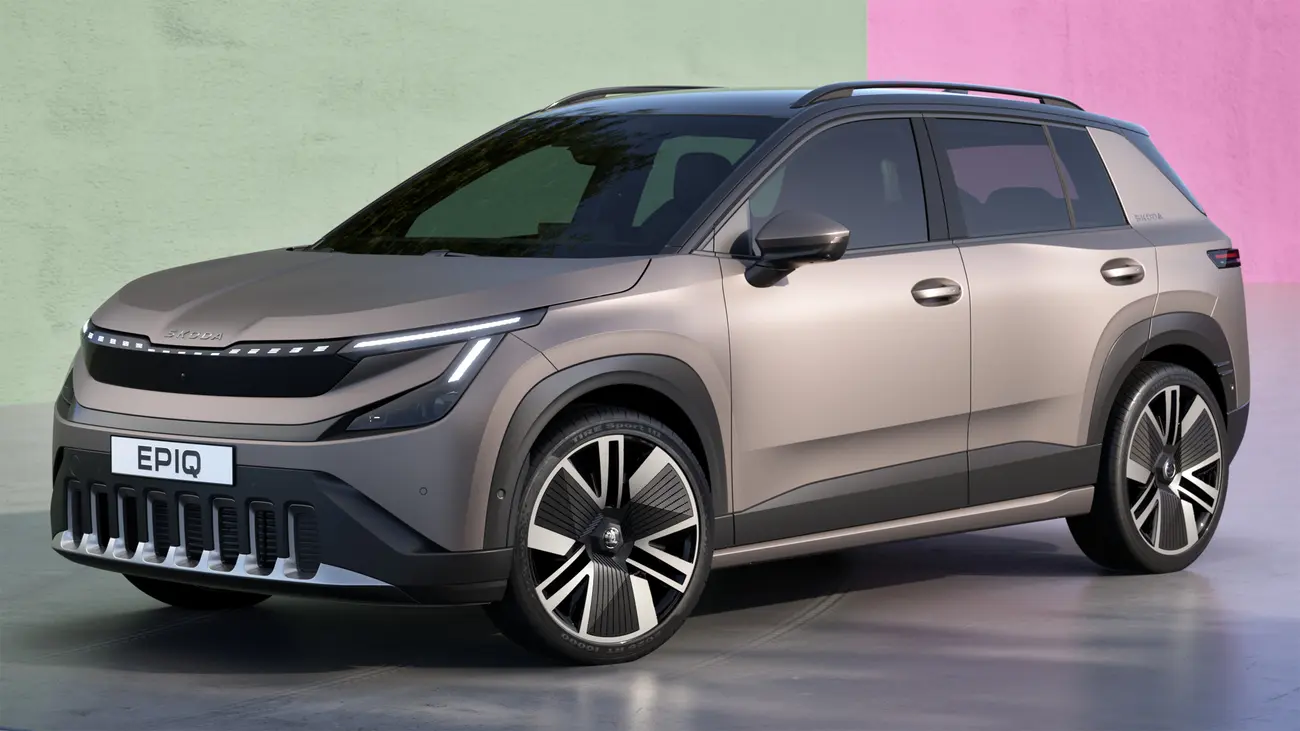
Skoda's most affordable electric SUV debuts on May 19
Twenty-five thousand euros for a brand-new electric SUV, built in Europe, badged as a Skoda. That is the headline promise of the Epiq, the small SUV the Czech brand reveals on May 19 in Zurich at 2 p.m. local time. It is the first production model to fully adopt Skoda's new "Modern Solid" design language and marks the brand's entry into the B-segment electric SUV market — a slice of the Portuguese market that has been hungry for options under 30,000 euros.
The Zurich reveal kicks off a late-2026 sales launch, with first deliveries expected between Q4 2026 and Q1 2027. For anyone tracking the affordable EV race, the Epiq joins the fight alongside the Renault 5, Volkswagen ID. Polo, Cupra Raval, and Citroën e-C3.
Skoda Epiq price Portugal: what to expect
Skoda has confirmed a starting price around 25,000 euros (£25,000 in the UK), in direct parity with the petrol Skoda Kamiq. The top-spec version should land near 30,000 euros. In Portugal, full-electric cars are exempt from ISV (the vehicle registration tax) and pay a token IUC road tax of around 21 euros per year, so the entry version should sit in the 25,000 to 27,000 euro band before campaign discounts.
This is the first time a Skoda electric SUV slips below 30,000 euros. For reference, the larger Skoda Elroq already on sale in Portugal starts above 33,000 euros. The Epiq takes the Elroq formula, shrinks the footprint and the price, and keeps most of the comfort and clever touches.
Specs: three variants on the MEB Entry platform
The Epiq shares the MEB Entry platform (also called MEB+) with the Volkswagen ID. Polo, the ID. Cross, and the Cupra Raval. All variants are front-wheel drive. The line-up splits into three versions.
| Version | Battery | Power | 0-100 km/h | WLTP range | Top speed |
|---|---|---|---|---|---|
| Epiq 35 | 38.5 kWh LFP (37 kWh usable) | 114 hp / 85 kW | 11.0 s | 315 km | 150 km/h |
| Epiq 40 | 38.5 kWh LFP (37 kWh usable) | 133 hp / 99 kW | 9.8 s | 315 km | 150 km/h |
| Epiq 55 | 55 kWh NMC (51.7 kWh usable) | 208 hp / 155 kW | 7.4 s | 430 km | 160 km/h |
Skoda Epiq range: 315 to 430 km on paper
The base and mid versions share the same 38.5 kWh LFP battery, differing only in motor output. The 315 km WLTP figure translates to roughly 240 to 260 km in mixed real-world use, and less than that on the motorway in winter. For city driving and short regional commutes, it is enough.
The Epiq 55, with its 55 kWh NMC pack, climbs to 430 km WLTP. That is enough for Lisbon to Porto in one shot at relaxed speeds, or with a single short charging stop at motorway pace. This is the version that makes sense for anyone who travels regularly.
133 kW DC charging and V2H bidirectional support
The Epiq 55 accepts up to 133 kW DC and goes from 10 to 80 percent in 23 minutes. The Epiq 40 takes 28 minutes over the same range — not a record, but enough time for a coffee at a MOBI.E or Ionity stop. More interesting: every version supports bidirectional V2H charging, meaning the car can feed power back to your home during an outage or take advantage of cheaper overnight tariffs.
Big-car cargo room in a small footprint
At 4.1 metres long, the Epiq is smaller than the Elroq, but the boot is the surprise: 475 litres with the seats up, 1,344 litres with the second row folded. For comparison, the electric Renault 4 manages 420 litres. Five seats, a 13-inch central infotainment screen, and a 5.3-inch hexagonal driver display behind the two-spoke steering wheel.
Skoda kept the "Simply Clever" touches that built the brand's reputation — an umbrella in the door, a parking ticket holder, bag hooks in the boot, wireless phone charging. Seats trimmed in 100 percent recycled polyester, ambient lighting, and three trim levels: Studio, Loft, and Suite.
Skoda Epiq vs Renault 5 and VW ID. Polo
The B-segment EV fight is sharpening. The Renault 5 starts under 25,000 euros but offers less range from the base pack (up to 312 km WLTP on the larger battery). The Volkswagen ID. Polo, the Epiq's mechanical twin, should arrive at similar money with a more urban positioning. The Cupra Raval, another platform sibling, plays the sporty card.
The Epiq differentiates itself with a larger boot, Skoda's signature practical touches, and the rumoured — but not yet confirmed — vRS version with around 223 hp and a 0-100 km/h time below 7 seconds, aligned with the upcoming VW ID. Polo GTI.
Frequently Asked Questions
The entry-level Epiq 35 is expected to start near 25,000 euros, on par with the petrol Skoda Kamiq, while the top Epiq 55 should land around 30,000 euros (about £30,000 in the UK). Official Portuguese pricing will only be confirmed close to the late-2026 order opening, and buyers will benefit from the ISV exemption and reduced IUC road tax that apply to fully electric vehicles.
The world premiere takes place on May 19, 2026, in Zurich, with order books opening in late 2026. First deliveries in Portugal are expected between Q4 2026 and Q1 2027, in line with the European rollout. The car is built in Spain, which should help keep waiting times short for the Iberian market.
Three versions are offered: the Epiq 35 and Epiq 40 share a 38.5 kWh LFP battery (around 37 kWh usable) good for roughly 315 km WLTP, while the Epiq 55 uses a 55 kWh NMC pack (51.7 kWh usable) for up to 430 km WLTP. In real-world winter driving expect a 15% to 25% drop from those figures, especially on the motorway.
The Epiq 55 peaks at 133 kW DC and goes from 10% to 80% in roughly 23 minutes, while the Epiq 40 covers the same window in about 28 minutes. Every version supports bidirectional V2H charging, letting you power your home from the car's battery — a feature still rare in this segment.
At 4.1 m long with a 475 L boot, the Epiq is more practical than the Renault 5 (420 L) and positions itself as the most family-friendly choice within the MEB Entry trio that also includes the VW ID. Polo / ID. Cross and the Cupra Raval. It shares platform, batteries and motors with its Volkswagen Group cousins but stands out via its Modern Solid design language, Simply Clever touches, and an entry price aligned with the Renault 5 at around 25,000 euros.
When it arrives in Portugal and what to weigh before ordering
Production happens in Spain, the European launch is set for late 2026, and Portuguese deliveries are most likely to begin in the first quarter of 2027. Official Portuguese prices should appear closer to the order books opening in autumn 2026.
If you are planning to buy an electric car under 30,000 euros, it is worth waiting for the final Epiq price sheet and trim list before committing. With ISV exemption, the 21-euro annual IUC, and company car tax breaks, the math could become hard to ignore — especially if Skoda holds the 25,000-euro starting price for the Portuguese market as well.