
Geely E2 vs VW ID. Polo in Portugal: A Thousand Euros Apart
Published: 19/10/2026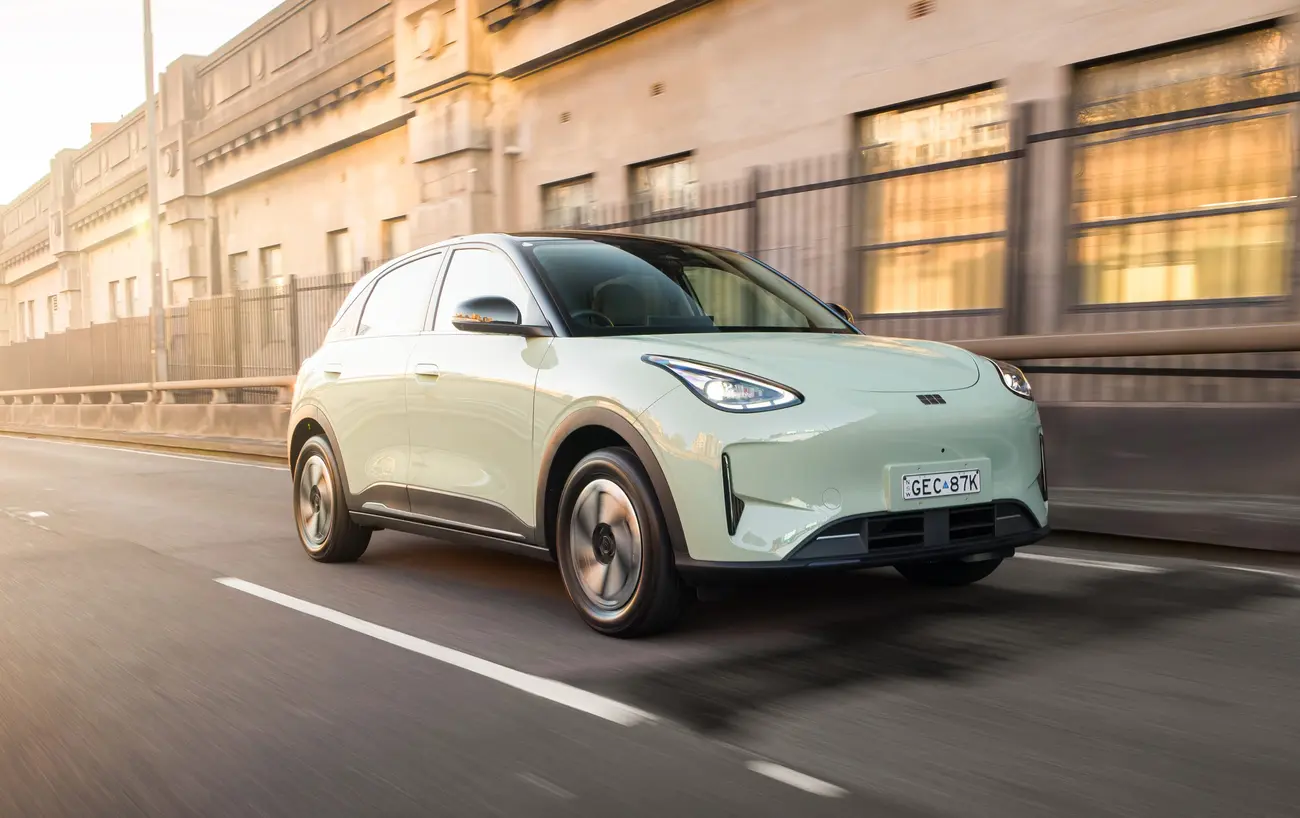
Geely E2 vs VW ID. Polo: a thousand euros apart
A thousand euros. That is the gap between the Geely E2 Max at €23,990 in Germany and the Volkswagen ID. Polo Trend at €24,995 in the same market. Two electric city cars launched within weeks of each other, both sitting around the €25,000 mark, both chasing the same buyer: someone ready to swap a petrol supermini for an EV without climbing to €35,000.
On paper the Chinese car wins. It goes further on a charge, costs less and carries a warranty Volkswagen does not match. On the road and at the plug, the result flips. The most thorough German tests — elektroauto-news, electrive, ADAC and VISION mobility — make it clear that this is not a price-list decision. It is a decision about how and where you will actually use the car.
Geely E2 Max vs ID. Polo Trend: the specs side by side
The fair fight is E2 Max against ID. Polo Trend. These are the trims that meet on price, and both make exactly the same power: 85 kW, or 116 hp.
| Specification | Geely E2 Pro | Geely E2 Max | VW ID. Polo Trend |
|---|---|---|---|
| Price (Germany) | €19,990 | €23,990 | €24,995 |
| Usable battery | 34.28 kWh LFP | 45.72 kWh LFP | 37 kWh LFP |
| Power | 60 kW (82 hp) | 85 kW (116 hp) | 85 kW (116 hp) |
| Torque | 150 Nm | 150 Nm | n/a |
| Drive | rear-wheel | rear-wheel | front-wheel |
| WLTP range | 252 km | 345 km | 323 km |
| WLTP consumption | 15.9 kWh/100 km | 15.5 kWh/100 km | 13.8 kWh/100 km |
| Peak DC charging | 60 kW | 80 kW | 88 kW |
| DC 10–80% | about 26 min | about 23 min (20–80%) | about 23 min |
| Onboard AC charger | 6.6 kW | 6.6 kW | 11 kW |
| AC 10–100% | about 5.3 h | about 7.1 h | n/a |
| 0–100 km/h | 14.2 s | 11.5 s | n/a |
| Top speed | 130 km/h | 130 km/h | n/a |
| Kerb weight | 1,365 kg | 1,440 kg | n/a |
| Boot | 375 L (1,320 L) | 375 L (1,320 L) | 441 L |
| Frunk | 70 L | 70 L | none |
| Payload | 315 kg | 315 kg | n/a |
| Towing | no | no | yes |
| Warranty | 8 years / 200,000 km | 8 years / 200,000 km | n/a |
The E2 measures 4,135 × 1,805 × 1,580 mm with a 9.9-metre turning circle — B-segment numbers wrapped around rear legroom that reviewers describe as C-segment. Volkswagen, for its part, published no consumption figure, no dimensions and no AC charging specification in the official 37 kWh ID. Polo press release; the 13.8 kWh/100 km and the 11 kW come from the trade press and commercial brochures.
What they might cost in Portugal: still no official price
Neither car has a confirmed Portuguese price. That needs saying plainly, because plenty of coverage treats German figures as if they were local ones.
What exists today: guiadoautomovel.pt lists the Geely E2 from €21,907.30 in Portugal, and the ID. Polo has no published Portuguese price at all. Strip VAT out of the German prices, apply Portugal's 23% rate — EVs here are exempt from ISV, the vehicle registration tax, and from IUC, the annual road tax, so there is no car tax to add — and you land on estimates in this range:
- Geely E2 Pro: around €20,700
- Geely E2 Max: around €24,800
- Geely E2 Ultra: around €27,900
- VW ID. Polo Trend: around €25,800
Estimates, not price lists. Launch pricing has swung widely across Europe: €19,490 introductory in Belgium (€21,490 list), €19,900 in Italy, €20,280 cash in Spain, €20,990 to €26,990 in France. The margin for error is real. What the maths does show is that the €1,000 gap between E2 Max and ID. Polo Trend survives the trip to Portugal — it is not an advantage that taxes erase.
Then there is timing. ID. Polo order books are already open in Germany, France and the Netherlands, while some European sources point to 2027 for the E2's arrival in Portugal. Waiting costs you months of use.
Range: the Geely E2's only paper win
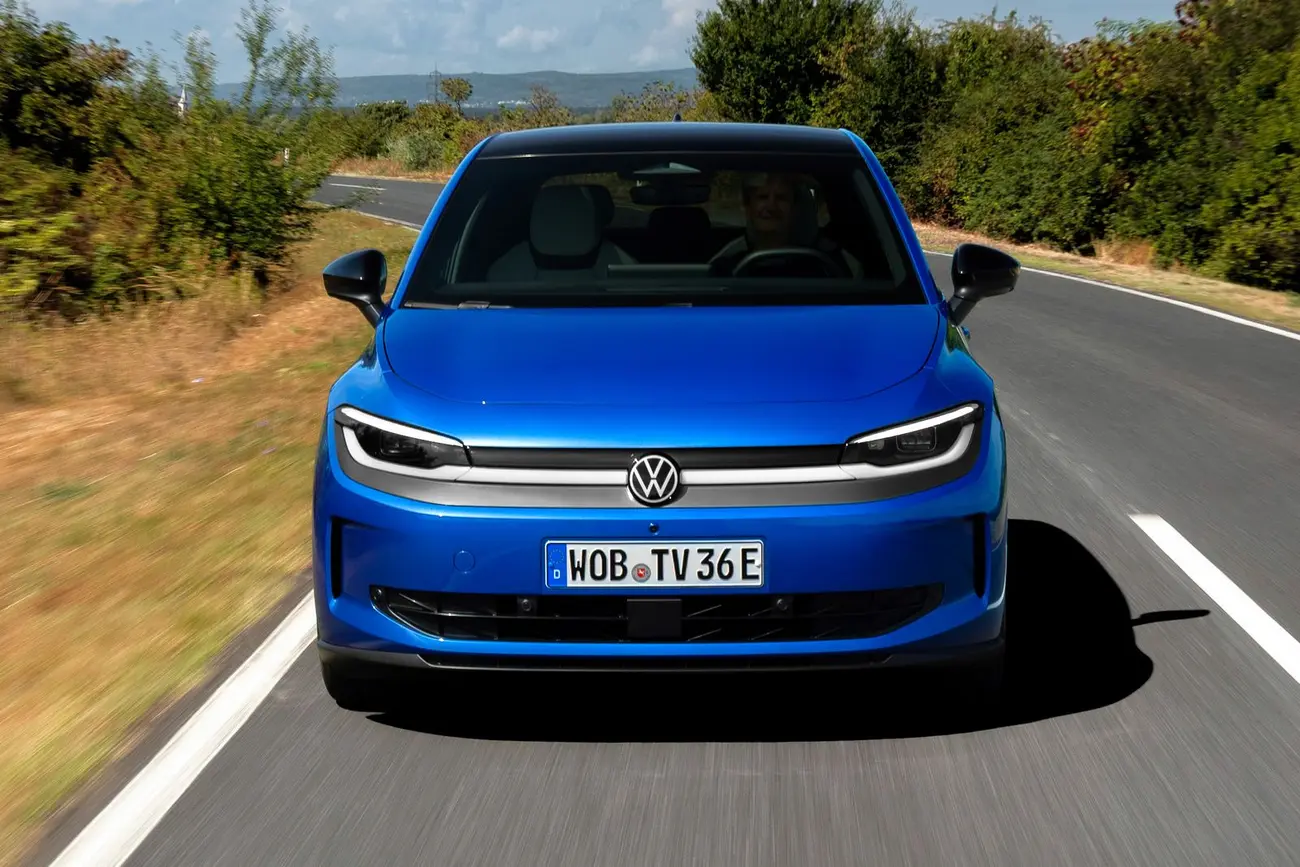
345 km against 323 km on WLTP. That is the E2 Max's advantage, and it comes from a bigger battery: 45.72 kWh usable against the Volkswagen's 37 kWh. Eight and a bit kilowatt-hours, twenty-two kilometres.
Volkswagen quotes "up to 334 km" in the official press release for the 37 kWh ID. Polo — the best case, in the most favourable configurations. For a comparison of these two specific trims, 323 km is the figure to use.
The telling detail: the E2 needs 8.7 kWh more battery to travel 22 km further. That says everything about the relative efficiency of the two cars. The Geely buys with capacity what it loses in consumption, which means more weight, longer charging times and more electricity paid for over the life of the car.
Real-world consumption and the cost per 100 km
Here is the E2's surprise: it uses far less energy than its WLTP label suggests. The homologated 15.5 to 15.9 kWh/100 km includes charging losses, which inflates the number against what the trip computer actually shows.
Measured figures from the tests:
- 9.5 to 10.4 kWh/100 km — Ultra, urban-heavy route with little motorway (elektroauto-news)
- 13.3 kWh/100 km — Ultra, 64 km of motorway at 130 km/h (electrive)
- 13.6 kWh/100 km — Pro, mixed route, anticipatory driving (electrive)
- 17.0 kWh/100 km — Ultra, driven hard, 52 km mixed at 34 °C (electrive)
Converted to euros at €0.18/kWh on a typical Portuguese single-rate domestic tariff:
| Scenario | Consumption | Cost per 100 km |
|---|---|---|
| E2 in town | 10.0 kWh | about €1.80 |
| E2 on the motorway | 13.3 kWh | about €2.40 |
| E2 in mixed use | 13.6 kWh | about €2.45 |
| ID. Polo (WLTP) | 13.8 kWh | about €2.50 |
| E2 driven hard in heat | 17.0 kWh | about €3.05 |
On a Lisbon or Porto commute the E2 slips under two euros per 100 km — scooter territory. Push it hard with the air conditioning working properly through an Alentejo summer and consumption nearly doubles. That spread is wider in the Geely than in the Volkswagen, because the Chinese car is taller, heavier and less efficient at motorway speeds.
There are no independent measurements of the 37 kWh ID. Polo Trend to drop into the same table. What we have is the label: 13.8 against 15.5 kWh/100 km. For someone covering 15,000 km a year, a 1.7 kWh/100 km difference works out to roughly 255 kWh, or a little over €45 a year — small next to the purchase-price gap, but it compounds.
Charging speed: 6.6 kW against 11 kW three-phase
This is where the Geely loses most clearly, and it is also the gap that hits daily life hardest.
The E2's onboard AC charger is capped at 6.6 kW, single-phase. The ID. Polo's takes 11 kW three-phase. In practice: a 10 to 100% AC charge takes about 5.3 hours in the E2 Pro and about 7.1 hours on the 47 kWh battery. If you have a three-phase wallbox at home, or you top up at an AC post on the public MOBI.E network during the working day, the Volkswagen is done in a little over three hours and the Geely in seven.
On DC the difference is smaller than the peak figures imply. The E2 Max tops out at 80 kW, the ID. Polo at up to 88 kW. But the Geely holds a remarkably flat charging curve: electrive measured 20 to 80% in about 23 minutes on both batteries, and elektroauto-news timed 10 to 80% at roughly 26 minutes. Volkswagen quotes 10 to 80% in about 23 minutes at stations delivering up to 90 kW. Stop on the A1 and the two cars are effectively level — three minutes apart.
Short version: on a long trip they are equivalent; at home and at the office, the Volkswagen charges twice as fast.
Boot, payload and the frunk Volkswagen doesn't have
441 litres against 375 litres. The ID. Polo's boot holds 66 litres more, and that is one of ADAC's reasons for calling the Volkswagen the more practical car.
The Geely answers with storage scattered around the car: 375 litres in the boot (1,320 litres with the seats folded), a 28-litre bin under the rear seat and a 70-litre frunk up front, which the ID. Polo lacks. For a supermarket run, the E2's total volume wins. For one large holiday suitcase, the Volkswagen's 441 litres in a single space wins.
Two places where the E2 genuinely falls behind: payload is only 315 kg — five adults plus luggage puts you over the limit — and there is no tow hitch at all. The ID. Polo can tow. If you have a trailer, a bike rack or anything to haul, the decision is already made.
An 8-year warranty and five Euro NCAP stars
The warranty is Geely's second-best argument after price: 8 years or 200,000 km, covering the vehicle and the high-voltage battery, with the battery guaranteed down to 70% residual capacity. No European mainstream brand offers whole-car cover that long in this class.
Safety is settled too: five Euro NCAP stars under the 2026 protocol, which is tougher than the one it replaced. If you were hesitant about a Chinese car on structural or safety-system grounds, you can file that worry away.
The open question is the network. Geely has signed 67 dealer contracts in Germany, 52 of them already active, and parts ship from a European warehouse in Amsterdam, with a German warehouse planned for late 2026 or early 2027. For Portugal, the service footprint is the real unknown. Volkswagen has had a dealer in every district capital for decades. That is hard to put a number on until the day you need it.
How they drive — and the 130 km/h ceiling
Reviewers disagree about almost everything on the E2 except this: it is not a car for going quickly. The suspension is comfortable around town, but elektroauto-news found it short on composure on fast roads, with noticeable body roll through corners, and ADAC calls the steering and suspension vague, rating the ID. Polo clearly superior in ride, steering and practicality. The European version got revised dampers and a tighter setup, which helps without transforming the car.
In the Geely's favour: rear-wheel drive and a 9.9-metre turning circle make it genuinely nimble in car parks and tight manoeuvres — exactly where a city car earns its keep.
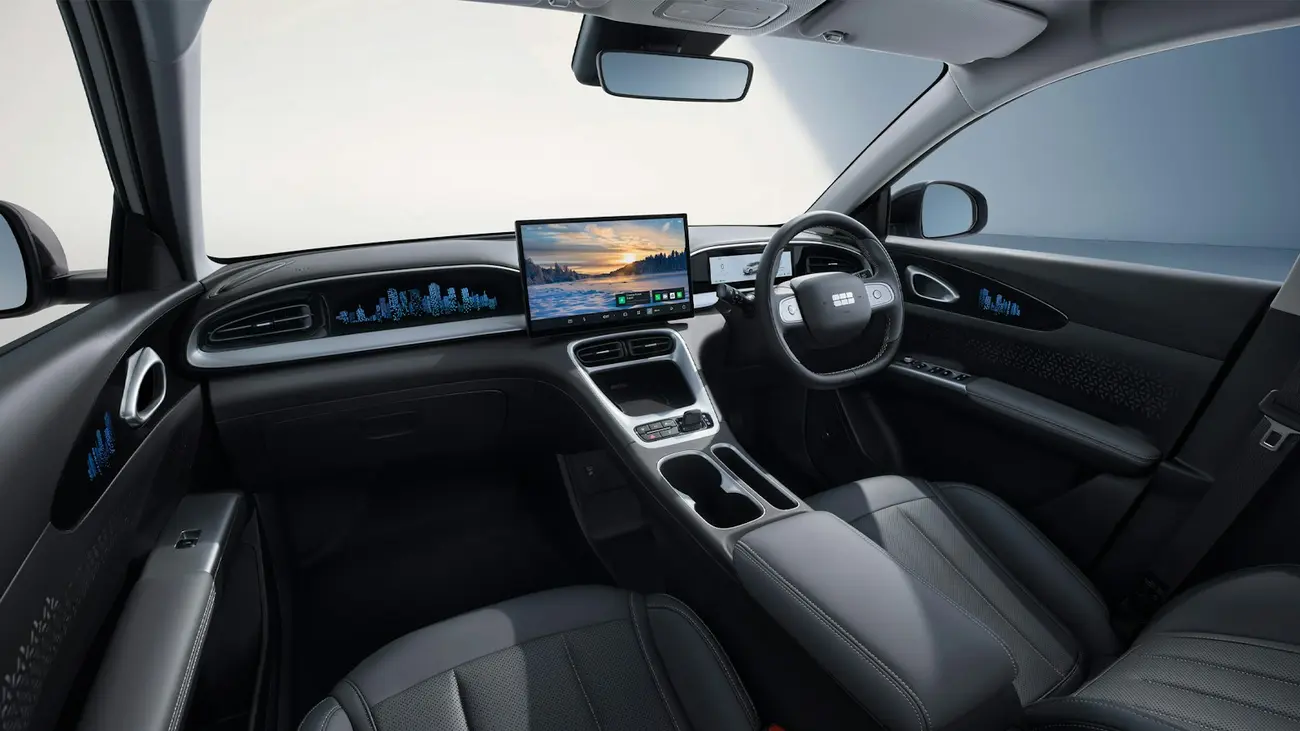
Top speed is electronically limited to 130 km/h across the range. On Portuguese motorways, where the limit is 120 km/h, that is not a blocker — but it leaves ten km/h of headroom for overtaking, and the car is working near its ceiling just to sit at the legal limit. Add that there is no true one-pedal driving (regenerative braking is adjustable, but you still need the pedal in city traffic), that the driver-assistance systems were described as immature in their speed warnings and attention monitoring, and that the voice assistant activates itself unprompted. Software irritations, fixable over the air — but present today.
Frequently Asked Questions
Neither car has a confirmed Portuguese price list yet. In Germany the Geely E2 Max sells for €23,990 against €24,995 for the ID. Polo Trend, a gap of roughly €1,000 in the Chinese car's favour. Converting the German pre-tax figures and applying Portugal's 23% VAT — EVs are exempt from both ISV and IUC — gives estimates of around €24,800 for the E2 Max and €25,800 for the ID. Polo Trend, so the thousand-euro advantage survives the move to Portugal. The only published Portuguese figure so far is guiadoautomovel.pt listing the Geely E2 from €21,907.30 for the entry version.
On the WLTP cycle the Volkswagen is clearly more efficient: 13.8 against 15.5 kWh/100 km for the E2 Max. Independent tests of the Geely, however, came in well below its official rating — 9.5 to 10.4 kWh/100 km on an urban route, 13.3 kWh/100 km on the motorway at 130 km/h and 13.6 kWh/100 km on a mixed route with anticipatory driving. At €0.18/kWh on a flat domestic tariff that works out at about €1.80 per 100 km in town and €2.40 on the motorway for the E2, against roughly €2.50 for the ID. Polo on its WLTP figure. Over 15,000 km a year, the 1.7 kWh/100 km gap between the two official ratings amounts to only about €45.
On DC they are near enough level: the E2 Max peaks at 80 kW and was measured at about 23 minutes from 20 to 80% (roughly 26 minutes for 10 to 80%), while the ID. Polo takes 88 to 90 kW and does 10 to 80% in about 23 minutes. The decisive gap is on AC: the Geely's onboard charger is limited to 6.6 kW single-phase, whereas the Volkswagen accepts 11 kW three-phase. At home or on an AC point, a 10 to 100% charge takes around 5.3 hours on the E2 Pro and about 7.1 hours on the Max's 47 kWh pack — the ID. Polo covers the same ground in a little over three hours.
The Volkswagen ID. Polo is already open for orders in Germany, France and the Netherlands, with more than 25,000 units ordered out of the 70,000 taken across VW's electric city car family. The Geely E2 has no official Portuguese launch date and several European sources point to 2027 for national availability. In Germany Geely has signed 67 dealer contracts (52 already active) and supplies parts from a European warehouse in Amsterdam, but its service network in Portugal remains the big unknown.
Geely covers the E2 for 8 years or 200,000 km on both the vehicle and the high-voltage battery, the latter guaranteed to 70% residual capacity — cover no European mainstream brand matches in this class. The car also scored five Euro NCAP stars under the stricter 2026 protocol, so safety is not the weak point. Against that sits aftersales: Volkswagen has had a dealer in every Portuguese district capital for decades, while Geely's network here is still being built. If the car will live in town and charge overnight at home, the warranty and the €1,000 saving carry more weight; if you drive motorways regularly, need to tow, or want the Volkswagen's single 441-litre boot, the ID. Polo is the safer bet.
Geely E2 or ID. Polo: which one to buy
Take the Geely E2 Max if the car will live in and around a city, if you charge from a domestic socket overnight without needing to rush it, if €1,000 and an 8-year warranty outweigh the service network, and if you never need to tow. In urban use, under two euros per 100 km is a hard argument to beat.
Take the ID. Polo Trend if you drive motorways regularly, if you have or will install a three-phase wallbox, if you want 441 litres in one boot, if you need a tow hitch, or if an established Portuguese dealer network figures in the equation. It is the better-resolved car to drive, and it is the one you can order now.
What this comparison is still missing is an official Portuguese price for both and a firm arrival date for the E2. Until then, buyers who need a car now have a choice, and buyers who can wait have a bet.