
Volkswagen ID. Polo in Portugal: Price, Range and Renault 5 Comparison
Published: 03/05/2026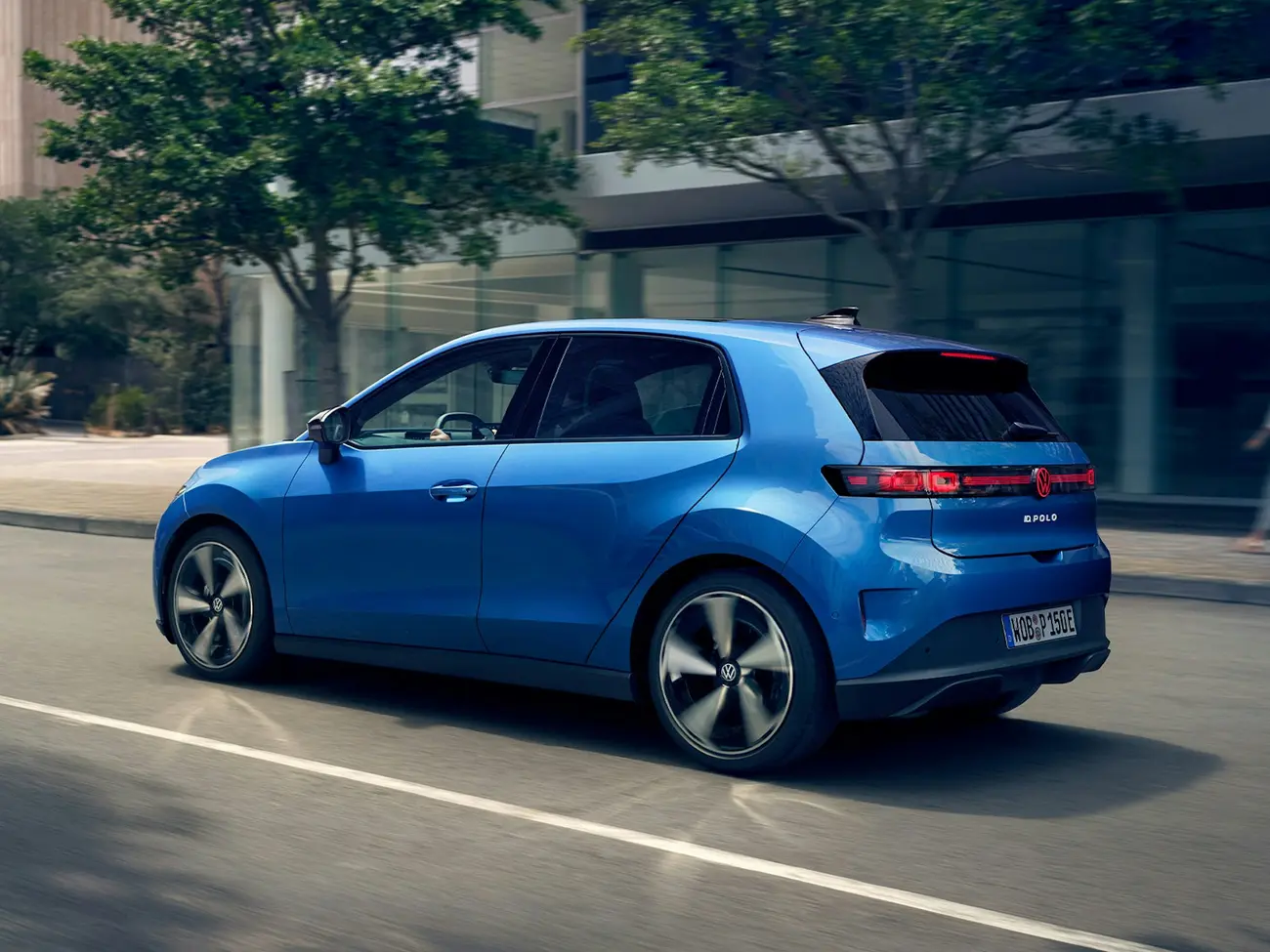
Volkswagen ID. Polo: the people's EV under €25,000 lands in Europe
Under 25,000 euros. That's the line Volkswagen wants to cross with the new ID. Polo, revealed at a world premiere in Wolfsburg on 29 April 2026. Small, fully electric, 454 km of WLTP range in the bigger-battery version — and built in Martorell, Spain, a few hundred kilometres from the Portuguese border.
This is not just another launch. The ID. Polo is Volkswagen's answer to cheap Chinese EVs and to the Renault 5 E-Tech, which is selling fast across Europe. For anyone in Portugal looking for an electric city car without stepping into the 40,000€ C-segment, this is probably the most important announcement of the year.
Volkswagen ID. Polo price Portugal: what to expect
In Germany, the entry Trend trim (85 kW, 37 kWh LFP battery) starts at €24,995 and arrives in summer 2026. For now the only orderable version is the ID. Polo Life with the 155 kW motor and 52 kWh NMC battery, at €33,795. The top Style trim and the GTI (166 kW, due 2027) have no firm pricing yet.
For Portugal, here is the reasonable estimate. The ID. Polo is a full EV, so it benefits from the ISV exemption (ISV is the Portuguese vehicle registration tax). With no ISV inflating the sticker, the gap to German prices is smaller than for an equivalent petrol car. Expect base prices around €25,500–26,500 for the Trend and somewhere between €34,500 and €36,000 for the Life — depending on the importer's margin. A confirmed Portuguese arrival date hasn't been announced, but Volkswagen's usual pattern points to dealerships seeing cars between late summer and autumn 2026.
Range, batteries and charging: the spec sheet that matters
The line-up has three power levels at launch, plus the GTI arriving in 2027:
| Trim | Power | Battery | Chemistry | WLTP range | DC charging |
|---|---|---|---|---|---|
| Trend (entry) | 85 kW / 116 hp | 37 kWh | LFP | 329 km | 90 kW |
| (mid-power) | 99 kW / 135 hp | 37 kWh | LFP | 329 km | 90 kW |
| Life | 155 kW / 211 hp | 52 kWh | NMC | 454 km | 105 kW |
| GTI (2027) | 166 kW / 223 hp | 52 kWh | NMC | TBC | TBC |
The Life's 454 km WLTP is the headline number. In real-world use that translates to around 350–380 km mixed, closer to 300 km on a winter motorway run. Enough for Lisbon-Porto with one short charging stop.
The 52 kWh battery accepts up to 105 kW DC (Volkswagen's official figure; some partners cite up to 130 kW), enough to go from 10 to 80% in about 24 minutes. The smaller 37 kWh LFP pack charges at 90 kW and does the same window in 23–27 minutes. AC charging is 11 kW three-phase as standard — important because some rivals cheap out with a 7 kW onboard charger.
One detail Portuguese buyers will appreciate: 3.6 kW V2L (vehicle-to-load) standard across the range. The car can power 230V appliances directly — handy for a camping weekend in Gerês, or simply riding out a power cut at home.
ID. Polo vs Renault 5: the inevitable comparison
The Renault 5 E-Tech was the 2025 European Car of the Year and is the benchmark in this category. You already see it on Portuguese roads. The ID. Polo enters trying to win on numbers:
| Volkswagen ID. Polo Life | Renault 5 E-Tech 52 kWh | |
|---|---|---|
| German base price | €33,795 | €32,900 |
| WLTP range | 454 km | ~410 km |
| Power | 155 kW / 211 hp | 110 kW / 150 hp |
| DC charging | 105 kW | 100 kW |
| Boot | 441 L | 326 L |
| Length | 4,053 mm | 3,922 mm |
| Towing | 1,200 kg | not approved |
The ID. Polo wins on range, power, charging speed and — most noticeably — boot space (25% bigger than the petrol Polo, and 35% bigger than the Renault 5). It is also 131 mm longer. The Renault 5 fights back with a lower base price for the same battery, immediate availability, and that retro design that pulls eyeballs on its own.
Buyers prioritising real-world range and practical versatility will lean ID. Polo. Buyers chasing character, distinctive looks, and the best entry price stay with the Renault.
Direct rivals already on sale in Portugal
To frame the positioning, here is what you can buy in Portugal right now around the same money:
- Citroën ë-C3 — from around €23,450 in Portugal before incentives, 320 km WLTP. The cheapest, with notably less range.
- Peugeot e-208 — from around €30,500, 433 km WLTP. Direct rival in price and size.
- BYD Dolphin Surf — newly arrived, aggressive entry pricing, around 310 km range.
- Renault 5 E-Tech — covered above.
- Cupra Raval — the ID. Polo's cousin on the same MEB+ platform, also expected in 2026.
- Fiat Grande Panda Electric — available in Portugal from €23,900, 320 km range.
In that context, the ID. Polo sits clearly above the Chinese EVs and Stellantis cars on tech and range, but pays for it with 2,000–4,000€ extra on the invoice.
Tech, equipment, and the return of physical buttons
Volkswagen heard the complaints from ID.3 and ID.4 owners about touch controls. The ID. Polo brings physical climate buttons back, while keeping the 13-inch Innovision touchscreen and the 10-inch digital cockpit. There is also a "retro display" mode styled after the Golf Mk1 — a nice gimmick at no extra cost.
Standard across all trims: LED headlights, climate control, 3.6 kW V2L, and Connected Travel Assist with traffic light recognition (Volkswagen claims a class first). Options include 12-way electric massage seats, a 425W Harman Kardon system, a panoramic roof, and IQ.LIGHT matrix LED headlights.
The design language is "Pure Positive" by Andreas Mindt — cleaner and more grown-up than the first ID generation, with clear nods to earlier Polos.
MEB+ platform and Spanish production
The ID. Polo debuts the MEB+ platform, an evolution of the MEB used in the Volkswagen ID.3, ID.4 and ID.5. Front-wheel drive only (the petrol Polo always was), which is what you'd expect in this B-segment. Production is in Martorell, Spain — the same plant that builds the Cupra Raval and the upcoming Cupra City — and battery cells come from Salzgitter, Germany.
For Portuguese buyers, this logistics setup is good news. Parts, warranty and service flow through the Volkswagen Iberia network, which historically means shorter lead times than with imports from outside the EU.
Frequently Asked Questions
Portuguese prices have not been officially announced yet. In Germany, the Trend (85 kW, 37 kWh LFP) starts at €24,995 and the Life (155 kW, 52 kWh NMC) at €33,795. As a full EV, it qualifies for the Portuguese ISV registration tax exemption, so we estimate a sticker price of €25,500–26,500 for the Trend and €34,500–36,000 for the Life, depending on the importer's margin.
The ID. Polo Life is the only orderable trim today and should reach Portuguese dealerships between late summer and autumn 2026. The sub-€25,000 Trend entry version only lands across Europe in summer 2026, with Portugal following the Iberian timeline. The GTI variant with 166 kW is scheduled for 2027.
The Life trim with the 52 kWh NMC battery rates 454 km WLTP, which translates to around 350–380 km in mixed driving and closer to 300 km on a winter motorway run — enough for Lisbon-Porto with one short charging stop. The 37 kWh LFP versions offer 329 km WLTP, or about 250–270 km real-world, better suited to urban use.
The Renault 5 E-Tech is cheaper at the German base price (€32,900 vs €33,795) and is already on sale in Portugal. The ID. Polo Life wins on range (454 vs ~410 km WLTP), power (211 vs 150 hp), DC charging (105 vs 100 kW) and boot space (441 vs 326 L), and is approved to tow up to 1,200 kg. Buyers prioritising practicality and range will lean ID. Polo; those after design and the lowest entry price still favour the Renault 5.
The 52 kWh NMC battery accepts up to 105 kW DC and goes from 10% to 80% in about 24 minutes at a fast charger. The 37 kWh LFP battery charges at 90 kW and covers the same window in 23–27 minutes. AC charging is 11 kW three-phase as standard across the range, and every trim includes 3.6 kW V2L (vehicle-to-load) to power 230V appliances.
Worth waiting for?
If you're thinking of changing cars in the next few weeks, the calculation is simple. The Renault 5 is available now. The ID. Polo Life arrives over the course of 2026, and the sub-€25,000 Trend only in summer. If your priority is range, boot space, or simply "the latest Volkswagen", waiting makes sense. If you need an electric city car right now, look at what's already in stock.
The Trend from €24,995 in Germany is the key piece of this launch. It is not orderable yet, but it is the version that will actually test Volkswagen's "EV for everyone" strategy against the Chinese newcomers. Worth following the Portuguese price announcements over the coming months — that is where it will be decided whether the ID. Polo is genuinely competitive in our market, or just another European launch that gets marked up too far on its way south.