
VW ID. Polo Real World Consumption, Range and Cost per 100 km in Portugal
Published: 18/09/2026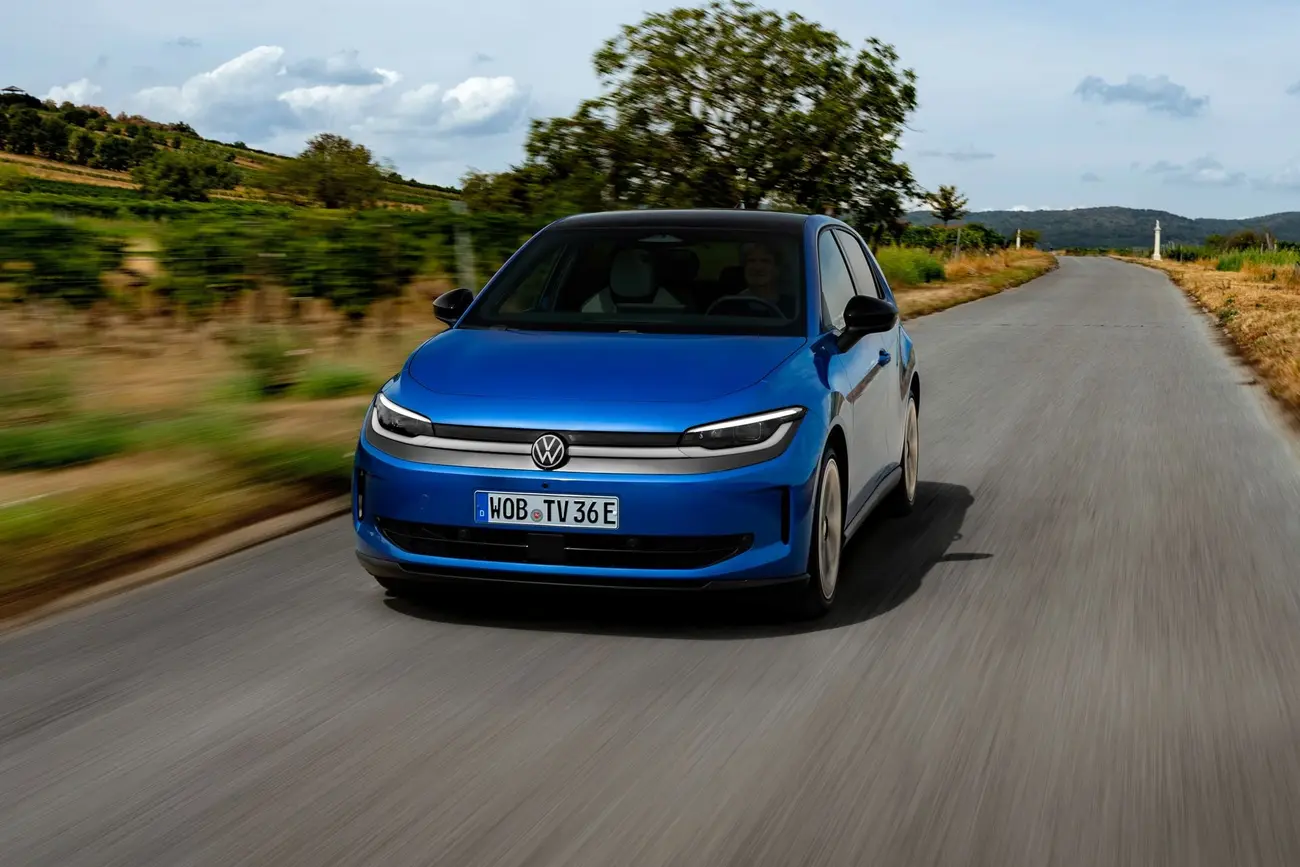
Two independent tests, two different consumption figures
Eleven point eight. Fourteen point seven. Two journalists recorded those numbers in the same 155 kW Volkswagen ID. Polo, and the gap between them is worth more than 100 km of range. Anyone researching VW ID. Polo real world consumption in Portugal before signing a contract deserves the honest answer: it isn't a single number, it's a band running from roughly 12 to 16 kWh/100 km.
The German test by Elektroauto-News, on roads around Vienna, finished at 11.8 to 12.4 kWh/100 km. That was a mixed route — city streets, country roads, the A3 motorway — driven at legal speed limits in around 30 °C. Australian outlet CarExpert, testing the same 155 kW version, measured 14.7 kWh/100 km. Further German tests (Motor1, InsideEVs) reported figures up to about 16 kWh/100 km depending on route, driver and temperature, though those reached us via search summaries rather than the full articles.
None of those tests is wrong. This is simply how an EV behaves: 30 °C, no heating or air conditioning drawing power, a mixed route at legal speeds — that is the best case available. Treat 12 kWh/100 km as exactly that. A good summer afternoon, not the average you will live with.
ID. Polo WLTP vs real consumption: the homologated numbers
The WLTP figures give the argument its frame. These are the official numbers by version:
| Version | Usable battery | WLTP consumption | WLTP range |
|---|---|---|---|
| 85 kW (116 hp) | 37 kWh LFP | 13.8 kWh/100 km | 323 km |
| 99 kW (135 hp) | 37 kWh LFP | 13.6 kWh/100 km | 331 km |
| 155 kW (211 hp) | 52 kWh NMC | 13.4 kWh/100 km | 454 km (452 km in Style) |
Volkswagen itself publishes a band of 14.7 to 13.3 kWh/100 km depending on wheels and equipment — a swing of almost 10% before the car has even left the showroom.
Notice what that means for real world consumption. The Vienna test came in well below WLTP, which is rare for an EV. The CarExpert test came in above it. If both outcomes are possible in the same car, the 13.4 kWh/100 km WLTP figure ends up being, ironically, the most defensible central estimate for varied year-round use.
ID. Polo real world range: 323 to 433 km from the 52 kWh battery
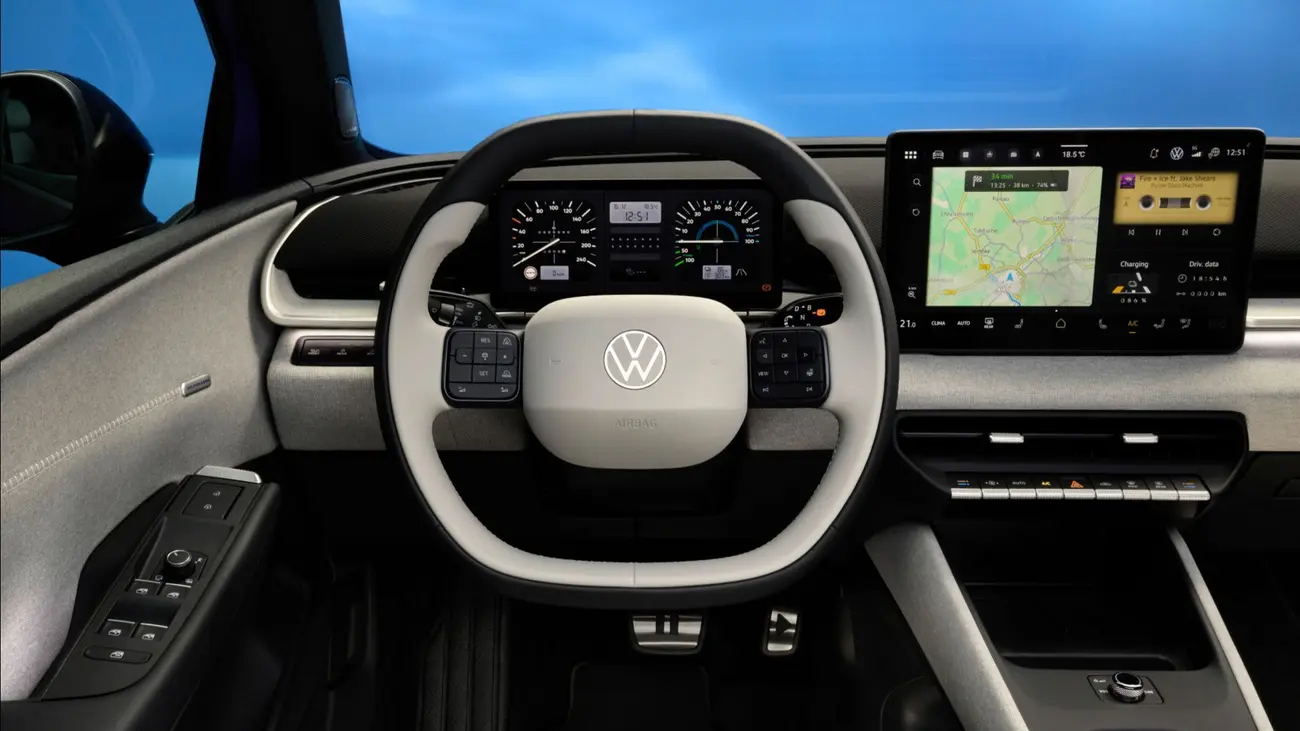
Turning consumption into kilometres is straightforward: divide usable capacity by consumption. With the 52 kWh usable pack in the 155 kW version:
| Consumption | Estimated real world range |
|---|---|
| 12.0 kWh/100 km (best case, summer) | 433 km |
| 13.4 kWh/100 km (WLTP) | 388 km |
| 14.7 kWh/100 km (CarExpert measured) | 354 km |
| 16.1 kWh/100 km (worst case reported) | 323 km |
The 420 to 440 km the Austrian test extrapolated is real — but only at that consumption, in those conditions. For trip planning, 350 to 390 km is the sensible window. That still covers Lisbon to Coimbra and back without charging, or Lisbon to Porto with one short stop.
If you go for the 37 kWh LFP battery in the 85 or 99 kW versions, apply the same arithmetic: 323 and 331 km WLTP become something between 230 and 275 km in practice. It remains a city and metro-area car rather than a motorway machine.
ID. Polo motorway consumption: where the band narrows
Neither test published a motorway-only figure, so we won't invent one. The physics offer a clue, though: with a 0.264 drag coefficient and 1,576 kg to move, the A1 at 120 km/h will push consumption towards the top of the measured band, not the bottom. At that point 16 kWh/100 km stops being the worst case and becomes the likely one.
The comfort caveats matter too. Both tests report wind noise becoming audible above 80 to 85 km/h, and CarExpert found more tyre noise than expected. The torsion-beam rear axle sends expansion joints and thick road seams straight into the cabin — worth knowing if your daily route involves Portugal's older national roads.
Winter range without a heat pump
Those 11.8 kWh/100 km were measured at 30 °C. In January, with cabin heating running, the sums change. And there's an important detail here: the heat pump is an option on the ID. Polo, and Electrifying notes its availability is not yet confirmed for every market. Without one, cabin heating draws straight from the battery at far worse efficiency.
Portugal softens the blow compared with central Europe, but if your winter mornings involve the Beira Interior or Trás-os-Montes, budget for the top of the band. If the heat pump shows up on the options list at a sensible price, tick the box.
What 100 km costs with the ID. Polo
Here's the calculation nobody does for you — with one warning before you read it. We do not have a verified Portuguese tariff source for 2026. None of the publications consulted covers Portuguese electricity pricing. The figures below assume three round prices per kWh, chosen as plausible reference points and clearly flagged as assumptions, not as official ERSE or supplier tariffs:
- EUR 0.15/kWh — assumed home charging on off-peak hours, bi-hourly tariff
- EUR 0.20/kWh — assumed home charging on a simple (flat) tariff
- EUR 0.40/kWh — assumed public DC fast charging
Check your own price per kWh on your bill before using any of this to make a decision.
| Consumption | Home, off-peak (0.15 EUR/kWh) | Home, flat (0.20 EUR/kWh) | Public rapid (0.40 EUR/kWh) |
|---|---|---|---|
| 12.0 kWh/100 km | EUR 1.80 | EUR 2.40 | EUR 4.80 |
| 13.4 kWh/100 km (WLTP) | EUR 2.01 | EUR 2.68 | EUR 5.36 |
| 14.7 kWh/100 km | EUR 2.21 | EUR 2.94 | EUR 5.88 |
| 16.1 kWh/100 km | EUR 2.42 | EUR 3.22 | EUR 6.44 |
The practical reading: charged at home, the ID. Polo costs between EUR 1.80 and EUR 3.22 per 100 km. Only on the public rapid network does the bill triple, which is why a home wallbox does more for your monthly budget than the choice of battery size.
What a full charge costs
On the same assumptions, a full charge of the 52 kWh pack costs EUR 7.80 at 0.15/kWh, EUR 10.40 at 0.20/kWh and EUR 20.80 on a rapid charger at 0.40/kWh. The typical 10-80% top-up, which is 36.4 kWh, works out at EUR 5.46, EUR 7.28 or EUR 14.56 respectively.
On time, the 52 kWh version accepts up to 105 kW DC and does 10-80% in around 24 minutes. The 37 kWh cars peak at 90 kW and need 23 to 27 minutes. On AC both are capped at 11 kW, so a full home charge takes a night — which is precisely the point of an off-peak tariff.
Why this car is efficient
The ID. Polo's efficiency is neither luck nor software. It comes from engineering decisions you can read off the spec sheet:
- Drag coefficient of 0.264, notable for a 4,053 mm hatchback shape
- Kerb weight from 1,568 kg (1,576 kg for the 155 kW), light for an EV carrying 52 kWh
- A 75 kg APP290 motor, new and mounted at the front
- Decoupled climate compressor and a rear-axle vibration damper
- Integrated regenerative braking in a one-box system with a pedal-pressure sensor that blends friction and regen almost imperceptibly
Add the MEB+ platform and 3.6 kW Vehicle-to-Load as standard, letting you run external equipment off the battery.
A note on the direct rivals
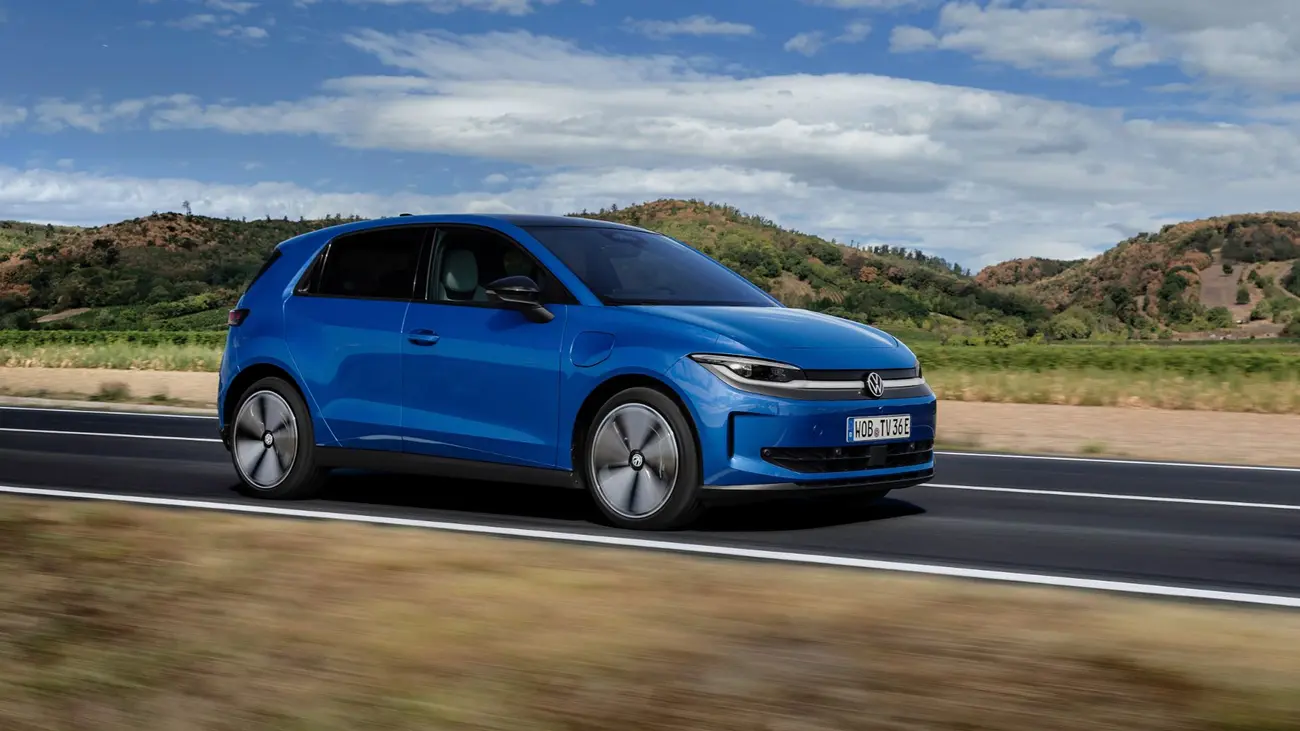
Among electric city cars, the ID. Polo arrives with a homologated efficiency advantage: 13.3 to 13.4 kWh/100 km against roughly 14.8 kWh/100 km for the Renault 5 E-Tech, plus more WLTP range, more charging power and a distinctly bigger 441-litre boot. The rival wins on entry price and, per Electrifying, on driving fun — the verdict on the Polo is that it is "not engaging to drive" by comparison. We've covered the full Renault 5 versus ID. Polo comparison elsewhere, so we'll leave it at what matters here: on kWh per 100 km, the German has the edge on paper.
Frequently Asked Questions
The 11.8 kWh/100 km recorded in the best test came in roughly 30 degrees of summer heat. In winter, with cabin heating drawing straight from the battery and the heat pump only an option on the ID. Polo, expect the top of the measured band: close to 16 kWh/100 km, which works out at around 325 km from the 52 kWh usable pack. On short cold trips where the cabin never fully warms through, it can drop below 300 km. Portugal softens the hit compared with central Europe, but early winter mornings inland warrant budgeting for that worst case.
None of the published tests isolated a motorway-only figure, so there is no measured number to quote. The physics point one way: with a 0.264 drag coefficient and 1,576 kg in the 155 kW version, sustained 120 km/h pushes consumption towards the top of the recorded band, near 16 kWh/100 km, rather than the 12 of the best case. In practice that means roughly 325 km of total range, and only about 227 km between stops if you always charge from 10 to 80%.
Assuming a price of EUR 0.15 per kWh during off-peak hours — an illustrative assumption, not an official ERSE or supplier tariff — a full charge of the 52 kWh usable pack costs about EUR 7.80, and the typical 10 to 80% top-up of 36.4 kWh costs about EUR 5.46. Add 5 to 10% for AC charging losses, which show up on your meter but never reach the battery. Check your own price per kWh on your bill before relying on these figures, because that number decides half the answer.
It comes down to how you drive rather than to efficiency: both versions consume much the same per 100 km (13.4 kWh/100 km WLTP for the 52 kWh against 13.6 and 13.8 for the 37 kWh). The difference is reach. The 37 kWh LFP pack turns its 323 to 331 km WLTP into something between 230 and 275 km in the real world, which is ample for city and metro-area use. The 52 kWh NMC pack delivers 350 to 390 real kilometres in varied use and accepts 105 kW DC against 90 kW, making it the right choice for regular motorway journeys.
On the following assumptions — 15,000 km a year, a real world 14 kWh/100 km in the ID. Polo, EUR 0.15 per kWh charging overnight at home, and an equivalent petrol city car doing 6 litres per 100 km with fuel at EUR 1.75 a litre — electricity costs around EUR 315 a year against roughly EUR 1,575 for petrol, a gap of close to EUR 1,250. On a flat home tariff at EUR 0.20 per kWh the saving falls to around EUR 1,150. None of those energy or fuel prices is a verified 2026 quote: substitute your own figures before deciding, particularly if you often charge on the public rapid network, where the advantage narrows sharply.
The number to budget with
If you're costing out an ID. Polo, assume real world consumption of 14 kWh/100 km. Not 12, which is a well-driven summer afternoon, and not 16, which is winter on the motorway. At 14 kWh the 52 kWh version gives you roughly 370 real kilometres and costs somewhere near EUR 2.10 to EUR 2.80 per 100 km at home, depending on your tariff. Before you finalise anything, pin down the two numbers still open: the Portuguese price with applicable taxes, and your own cost per kWh — that second one decides half the answer.