
Renault 5 vs Volkswagen ID. Polo in Portugal: the €25,000 EV City Car Showdown
Published: 27/05/2026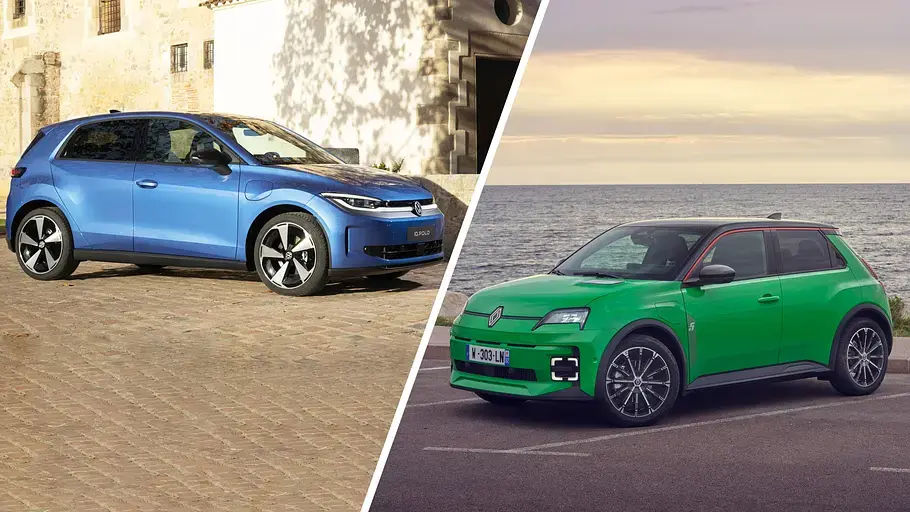
Renault 5 vs Volkswagen ID. Polo in Portugal: the €25,000 electric city car showdown
Two European electric city cars, both hovering around €25,000, both chasing the same buyer. On one side, the Renault 5 E-Tech: neo-retro, already on sale, and with a queue of admirers. On the other, the Volkswagen ID. Polo, the first fully electric Polo in the nameplate's 50-year history, arriving in 2026 with promises of more range, more power, and more space. The question is simple: Renault 5 or ID. Polo, which is better for Portugal? The answer, as so often, comes down to when you actually need the car.
We already have individual articles on each. What was missing is the head-to-head — and that's what this is, with an eye on what matters to a buyer here.
Renault 5 vs ID. Polo: which has more range
In the big-battery versions, the gap is clear. The ID. Polo runs a 52 kWh NMC battery good for roughly 450 to 454 km WLTP. The Renault 5 E-Tech, also with 52 kWh, manages 405 to 410 km WLTP. That's about 40 to 45 km in the Volkswagen's favour — not enormous, but on a Lisbon-Porto run it can be the difference between stopping to charge and not.
The ID. Polo also offers a cheaper entry version with a 37 kWh LFP battery, rated at 300 to 329 km WLTP. That's fine for daily urban and suburban driving, but it's more of a city runabout than a road-trip car.
Charging and power: where the Volkswagen pulls ahead
The ID. Polo charges on DC at up to 130 kW (the manufacturer figure; independent databases list 105 kW), while the Renault 5 tops out at 100 kW. In practice, both recover 10 to 80% in about half an hour on a fast charger — the difference isn't dramatic in real use.
There is one detail that matters, though: even the entry 116 hp ID. Polo supports DC fast charging. The most basic Renault 5 E-Tech does not. For anyone taking the occasional trip out of town, that counts.
On power, the Volkswagen wins. The top 52 kWh version makes 155 kW (211 hp), against the Renault 5's 110 kW (150 hp). It shows in the sprint: 7.4 seconds from 0 to 100 km/h for the ID. Polo versus 8.0 for the Renault. And there's a 226 hp electric GTI on the way for late 2026.
Space and dimensions: the ID. Polo is clearly bigger
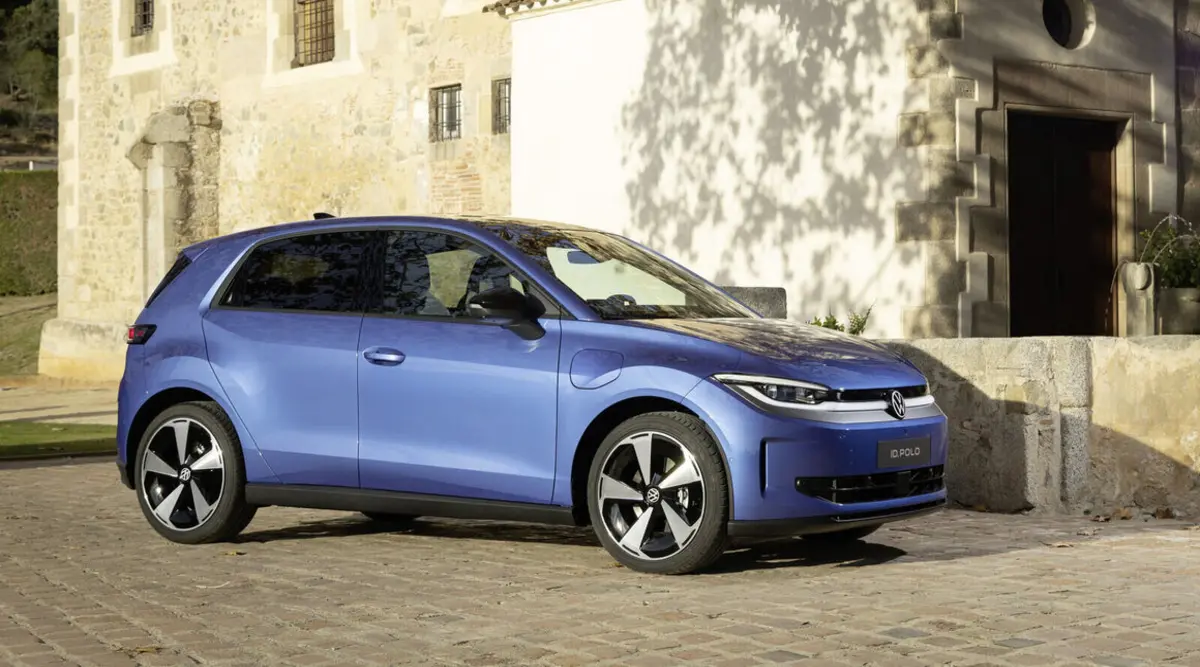
No argument here. The ID. Polo is larger in almost everything: 4053 mm long against the Renault 5's 3922 mm, plus more width and a longer wheelbase (2600 mm versus 2540 mm, matching the Golf). Rear passengers and the boot both feel it.
The Volkswagen's boot holds 441 litres, the Renault's 326 litres — over 100 litres of difference. With the seats folded, the ID. Polo reaches 1249 litres against 1106. If you regularly carry family and luggage, the Polo is the more practical of the two.
Specs side by side
| Specification | VW ID. Polo (52 kWh) | Renault 5 E-Tech (52 kWh) |
|---|---|---|
| WLTP range | 450–454 km | 405–410 km |
| Max power | 155 kW (211 hp) | 110 kW (150 hp) |
| Torque | 290 Nm | 245 Nm |
| 0-100 km/h | 7.4 s | 8.0 s |
| Top speed | 160 km/h | 150 km/h |
| Battery (net) | 52 kWh NMC | 52 kWh NCM |
| Max DC charging | 130 kW | 100 kW |
| AC charging | 11 kW | 11 kW |
| Length | 4053 mm | 3922 mm |
| Wheelbase | 2600 mm | 2540 mm |
| Boot | 441 L | 326 L |
| Boot (folded) | 1249 L | 1106 L |
| Platform | MEB+ (front-wheel drive) | AmpR Small (front-wheel drive) |
| Production | Martorell, Spain | Douai, France |
Both are front-wheel drive — interesting in the ID. Polo's case, since its new MEB+ platform puts the motor up front, unlike the rear-driven ID.3, ID.4 and ID.5. That helps cut weight and free up cabin space.
Price and availability change everything
On paper, the starting prices are nearly identical: Renault 5 E-Tech from €24,990, ID. Polo advertised from €24,995 in Germany. But there's a catch.
The €25,000 version of the ID. Polo — the 37 kWh LFP one — is delayed to late 2026 or early 2027, held back by a shortage of LFP cells. What's reaching showrooms now are the top 52 kWh versions, above €30,000 (the Life with 155 kW costs €33,795 in Germany). The Renault 5, meanwhile, is already on sale at the promised price.
In other words: the cheap ID. Polo exists in the press release, not on the forecourt. Anyone wanting a €25,000 electric city car today really only has the Renault 5 — or rivals like the Citroën ë-C3, Peugeot e-208 or Fiat 500e.
Frequently Asked Questions
It comes down to timing. The Renault 5 E-Tech is already on sale from €24,990 and delivers neo-retro design with immediate availability. The ID. Polo wins on range (up to 454 km WLTP versus 405-410 km), space and power, but the €25,000 version is not expected before late 2026 or early 2027. If you need the car now, the Renault 5 is the answer.
The ID. Polo was announced from around €24,995 in its entry 37 kWh LFP form, but that variant is delayed by a cell shortage. The versions available at launch are the 52 kWh models above €30,000 — the 155 kW Life costs €33,795 in Germany. In Portugal it benefits from ISV exemption and reduced IUC, bringing the final cost close to a well-equipped petrol equivalent.
In the big 52 kWh battery, the ID. Polo leads with 450 to 454 km WLTP against the Renault 5 E-Tech's 405 to 410 km — a gap of about 40 to 45 km. The ID. Polo's entry 37 kWh LFP version manages 300 to 329 km, enough for urban and suburban use but less suited to long trips.
The ID. Polo is clearly roomier, with a 441-litre boot against the Renault 5's 326 litres — over 100 litres of difference. With the seats folded it reaches 1249 litres versus 1106. The Volkswagen is also longer (4053 mm versus 3922 mm) with a longer wheelbase (2600 mm), which benefits rear-passenger space.
If you can wait until 2027 and want more range, space and power for the same money, the 37 kWh ID. Polo is worth holding out for — provided Volkswagen sticks to the promised price of around €25,000. If you need an affordable electric city car now, the Renault 5 E-Tech is available, as are rivals like the Citroën ë-C3, Peugeot e-208 or Fiat 500e.
What this means for buyers in Portugal
In Portugal, both fall into the price band that matters once EV purchase incentives are factored in. Electric cars are exempt from ISV (the vehicle registration tax) and pay reduced IUC (annual road tax), which brings these city cars close to the cost of a well-equipped petrol equivalent. The MOBI.E network and motorway fast chargers cover the essentials for the occasional Lisbon-Porto trip, and the Renault's 100 kW is plenty for that.
The decision really comes down to timing. If you need the car now, the Renault 5 E-Tech delivers neo-retro design, an honest price, and immediate availability. If you can wait until 2027 and want more range, more space, and more power for the same money, the 37 kWh ID. Polo is worth holding out for — provided Volkswagen sticks to the promised price. Until then, the Volkswagen you can actually buy costs €30,000 and plays in a different league.