
Hyundai Ioniq 6 Facelift in Portugal: Price, Versions and Up to 680 km Range
Published: 07/11/2026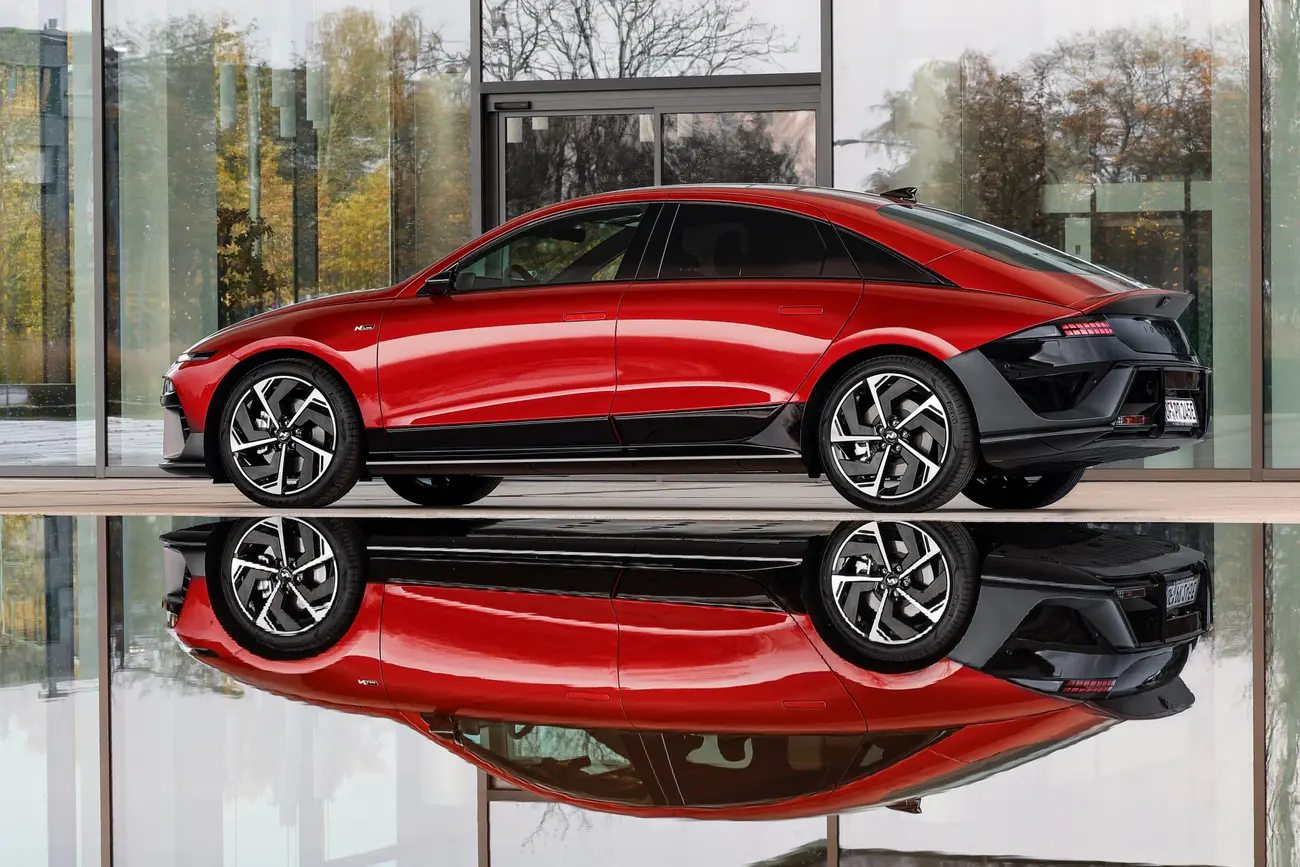
New Hyundai Ioniq 6: what it costs in Portugal
Up to 680 km of WLTP range, bigger batteries and a reworked nose: the Hyundai Ioniq 6 facelift has been on sale in Portugal since May 2026. This week's headlines come from the UK, where Hyundai announced prices from £33,240 and the British press is calling it the cheapest electric saloon on the market. Here in Portugal the picture looks different, and that's the part worth unpacking.
If you're looking up the Hyundai Ioniq 6 facelift price in Portugal, know this first: there are two entry prices in circulation, and they don't match.
Two entry prices: Hyundai Portugal's and the dealer's
At the May launch, Hyundai Portugal stated that the "IONIQ 6 F/L EV 520 km Premium MY26" starts "from 33,000 euros + IVA", plus registration, transport and metallic paint. With Portugal's 23% VAT (IVA) added, that works out at roughly €40,590 before those extra costs.
The price list from Caetano, one of the main Hyundai dealers here, tells another story. It quotes prices with VAT included (registration and transport excluded), and the same 63 kWh Premium starts at €46,250. That's a gap of around €5,700.
Neither source explains the difference. The practical advice is simple: bring both numbers with you and ask the dealer for the current price on the day, in writing, with every fee included.
Hyundai Ioniq 6: versions and prices in Portugal
The Portuguese line-up runs Premium, Vanguard and N Line, with a Vanguard Plus also listed on the dealer's price sheet. These are Caetano's published figures:
| Version | Battery | Power | WLTP range | Price (incl. VAT) |
|---|---|---|---|---|
| Premium | 63 kWh | 170 hp | 521 km | from €46,250 |
| Vanguard | 84 kWh | 229 hp | 680 km | from €56,100 |
| Vanguard Plus | 84 kWh | 229 hp | 680 km | from €60,300 |
| N Line | 84 kWh | 229 hp | 585 km | €61,200 |
Source: Caetano dealer MY26 price list. Excludes registration and transport. At launch, Hyundai Portugal announced the Premium from €33,000 + VAT.
Every version on the Portuguese list is rear-wheel drive. Official consumption ranges from 13.4 kWh/100 km (63 kWh) to 13.5 kWh/100 km (84 kWh) and 14.7 kWh/100 km for the N Line, according to the same table.
The warranty is a strong selling point: 7 years with unlimited mileage on the car, 7 years of roadside assistance and annual check-ups, plus 8 years or 160,000 km on the battery.
What's new on the Hyundai Ioniq 6 facelift
The Ioniq 6 has always split opinion on looks. The facelift, unveiled at the Seoul Motor Show in April 2025, tones down some of the more divisive details while keeping the teardrop silhouette that gives it a drag coefficient of just 0.21.
- New front end: a sharper "shark nose", slim daytime running lights, and main headlamps moved down into the bumper.
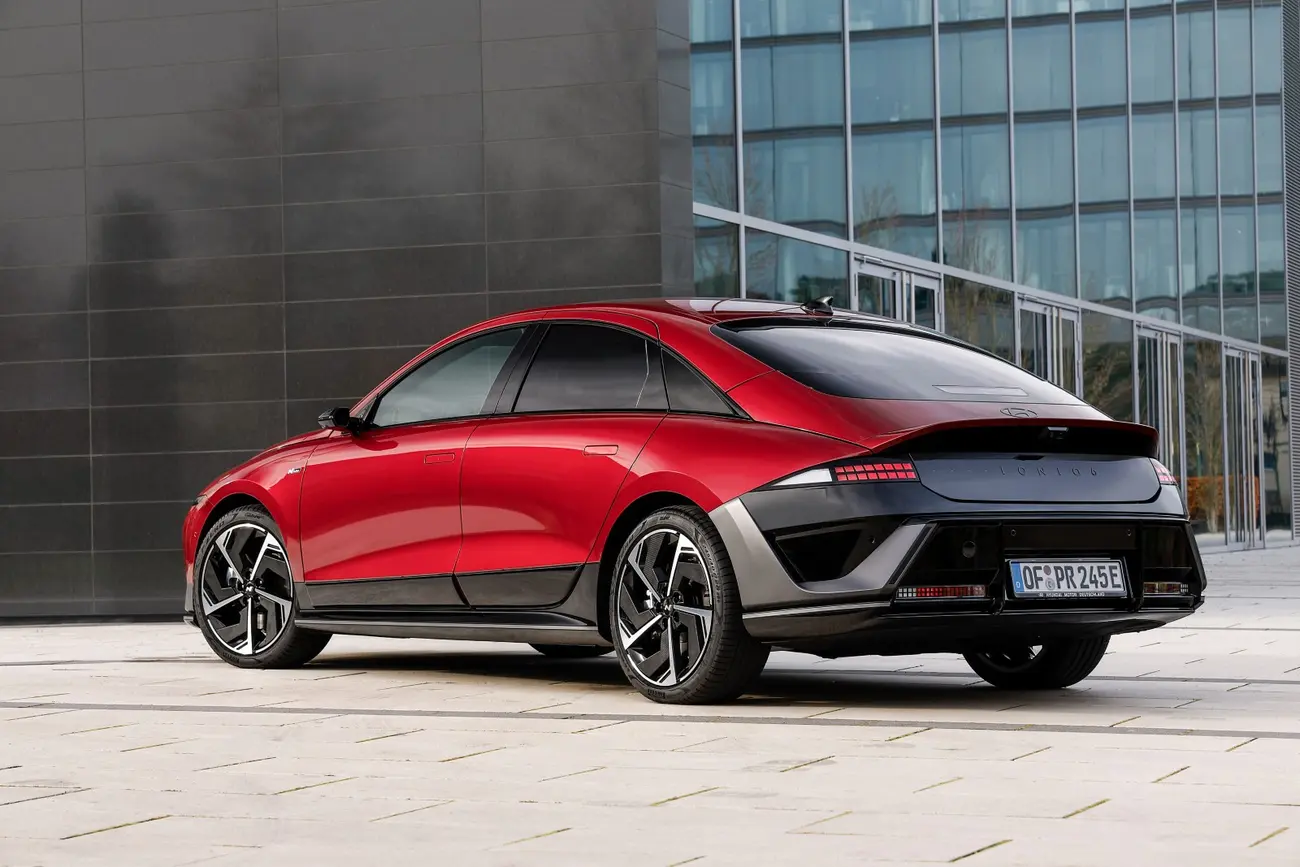
- Cleaner rear: the double spoiler is gone, replaced by a single ducktail above the light bar.
- Longer body: up from 4,855 to 4,925 mm (4,930 mm for the N Line). Wheelbase (2,950 mm) and boot (401 litres) are unchanged.
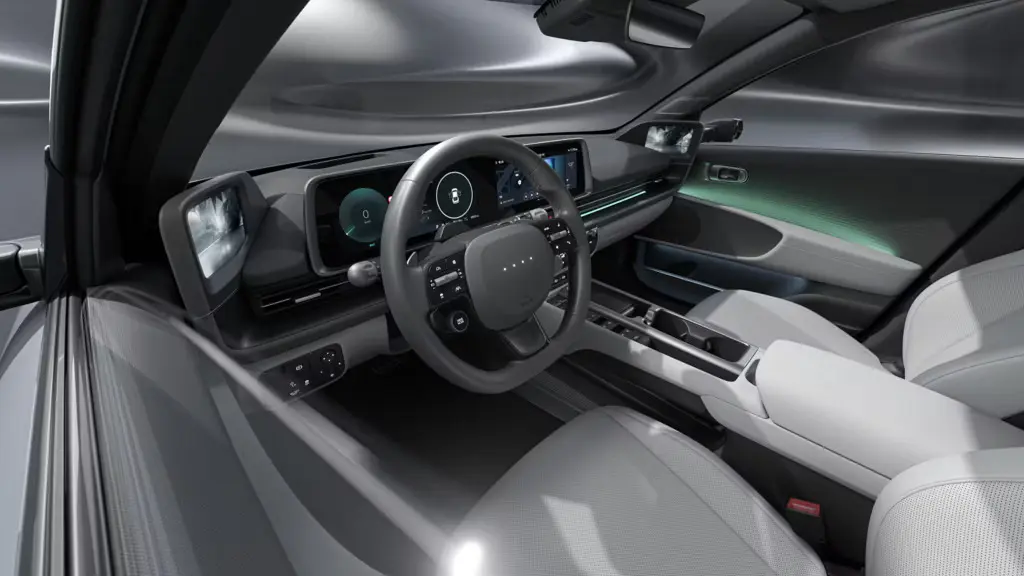
- Reworked cabin: redesigned centre console, physical climate controls, a new three-spoke steering wheel, more USB-C ports and the new ccNC infotainment system with over-the-air updates.
- New colours: including Transmission Blue Matte, Celadon Grey Matte and Sunset Brown Pearl.
The front boot matters too: 45 litres on rear-wheel-drive versions, which are exactly the ones sold in Portugal. Enough to stash the charging cables without eating into rear space.
84 kWh battery and 680 km range
The biggest change sits under the floor. Battery capacity grows from 53.0 to 63 kWh and from 77.4 to 84 kWh, pushing maximum WLTP range from 614 to 680 km.
In practice, 680 km on paper gets you close to a Lisbon-Porto round trip without charging, in favourable conditions. At 120 km/h on the motorway in winter, expect noticeably less, but a Lisbon-Algarve run still won't have you planning charging stops.
Hyundai Ioniq 6 63 kWh vs 84 kWh: which to buy
| 63 kWh | 84 kWh | |
|---|---|---|
| Power / torque | 170 hp / 350 Nm | 229 hp / 350 Nm |
| 0-100 km/h | 8.3 s | 7.4 s |
| WLTP range (18" wheels) | 521 km | 680 km |
| Peak DC charging | 195 kW | 260 kW |
| Towing | 750 kg | 1,500 kg |
| Caetano price | from €46,250 | from €56,100 |
The 63 kWh battery's 521 km is plenty if most of your driving is commuting and you charge at home. The 84 kWh pack earns its keep if you're regularly on the motorway or want to tow something heavier. On the dealer's list, the jump from Premium to Vanguard is about €9,850, which is a lot of money for 159 extra kilometres and more power.
Charging: 10 to 80% in around 18 minutes
The 800 V architecture remains one of the Ioniq 6's best cards. Hyundai quotes 10-80% in about 18 minutes in ideal conditions, with peaks of 195 kW (63 kWh) and 260 kW (84 kWh). InsideEVs Deutschland calculates that's roughly 26.4 km of range added per minute on the 84 kWh car.
On the fast chargers of MOBI.E, Portugal's national public charging network, a coffee stop is enough to get you back on the road. At home, the 11 kW AC charger fills the battery overnight. Plug & Charge and V2L up to 3.6 kW are also on board, handy for powering gear at a campsite.
Hyundai Ioniq 6 N Line: what you get and what it costs
The N Line is the new addition to the range. It borrows styling cues from the 650 hp Ioniq 6 N (bespoke bumpers, exclusive 20" wheels, a distinct spoiler, sports seats with red stitching and metal pedals) but keeps the regular mechanicals.
In Portugal, Caetano's list puts the N Line at €61,200, with the 84 kWh battery, 229 hp and 585 km of range. The 20" wheels and sportier aero cost you range: 95 km less than the 84 kWh Vanguard on 18" wheels.
It's a style choice, not a performance one. If you want real pace, the Ioniq 6 N is a different car with a different budget.
Portugal, Germany and the UK: how prices compare
The "price cut" British outlets are highlighting needs context. In the UK, the Premium lists at £36,990 before the £3,750 Electric Car Grant, landing at £33,240. That UK Premium also comes with the 84 kWh battery and up to 422 miles of range (up from 338). It isn't a like-for-like match for Portugal's 63 kWh Premium.
In Germany, on sale since January 2026, the base price actually rose, from €43,900 to €45,550, on the back of the bigger batteries. Germany is the closest European benchmark for us:
| Version | Germany | Portugal (Caetano) |
|---|---|---|
| Entry 63 kWh | €45,550 | €46,250 |
| 84 kWh rear-wheel drive | €55,300 (Centriq) | €56,100 (Vanguard) |
| N Line 84 kWh rear-wheel drive | €58,300 | €61,200 |
Given that German VAT is 19% against Portugal's 23%, the Portuguese dealer prices line up closely with Germany's. The exception is the N Line, which costs almost €3,000 more here.
Who it's up against
In the UK, the facelifted Ioniq 6 undercuts the Tesla Model 3 by about £5,000 and the electric Mercedes CLA by around £10,000. In Germany, the entry CLA 200 starts at roughly €47,000 with 541 km of range, just €1,450 more than the German 63 kWh Ioniq 6 and 20 km further. The Mazda 6e is the other direct rival among electric saloons.
Tax and running costs for private and company buyers
Like any EV, the Ioniq 6 is exempt in Portugal from ISV (the one-off vehicle purchase tax) and IUC (the annual road tax). Company buyers get another perk: even with VAT included, every version on the dealer's list sits below the €62,500 threshold the law uses for VAT deduction on electric cars and for the exemption from autonomous taxation (tributação autónoma). Options and fees can change the maths, so check with your accountant before signing.
Frequently Asked Questions
Two different entry prices are in circulation. At the May 2026 launch, Hyundai Portugal announced the 63 kWh Premium from €33,000 + VAT (roughly €40,590 with Portugal's 23% VAT), plus registration, transport and metallic paint. Caetano, a Hyundai dealer, lists the same version from €46,250 with VAT included, excluding registration and transport. Neither source explains the gap, so ask a dealer for a written quote with the current price and every fee included.
The 63 kWh battery (170 hp, 521 km WLTP) is enough if you mostly commute and charge at home. The 84 kWh pack (229 hp, up to 680 km WLTP) pays off for frequent motorway driving or towing up to 1,500 kg, versus 750 kg for the 63 kWh car. On Caetano's dealer price list, stepping up from the Premium (from €46,250) to the Vanguard (from €56,100) costs about €9,850 more.
Thanks to its 800 V architecture, Hyundai quotes 10-80% in about 18 minutes on compatible fast chargers under ideal conditions. Peak DC charging is 195 kW on the 63 kWh battery and 260 kW on the 84 kWh battery. At home, the 11 kW AC onboard charger refills the battery overnight.
The N Line adds bespoke bumpers, exclusive 20-inch wheels, a dedicated ducktail spoiler, sports seats with red stitching and metal pedals, while keeping the regular 84 kWh, 229 hp drivetrain. Caetano's dealer list prices it at €61,200 with VAT. The bigger wheels cut WLTP range to 585 km, 95 km less than the 84 kWh Vanguard on 18-inch wheels.
Like every electric car, the Ioniq 6 is exempt in Portugal from ISV (the one-off purchase tax) and IUC (the annual road tax). For company buyers, every version on Caetano's dealer list, up to the €61,200 N Line, sits below the €62,500 threshold used for VAT deduction on electric cars and for the exemption from autonomous taxation. Options and fees can push the price over that limit, so check the numbers with your accountant before buying.
New or used: who the Ioniq 6 facelift makes sense for
The facelifted Ioniq 6 suits drivers who spend a lot of time on the motorway: class-leading aerodynamics, 800 V charging, 680 km of range and a 7-year unlimited-mileage warranty. The 63 kWh Premium is the logical way in if you charge at home; the 84 kWh Vanguard is the one that makes full use of everything this update brings.
If your budget doesn't stretch to €46,000, a pre-facelift Ioniq 6 on the used market is worth a look: same E-GMP platform, same 800 V charging, with less range (up to 614 km WLTP) and the old styling. Whichever you choose, always get the final price in writing. With two different entry prices doing the rounds, that quote is the only number that counts.