
800V Architecture in Electric Cars: Fast Charging in Portugal Explained
Published: 03/06/2026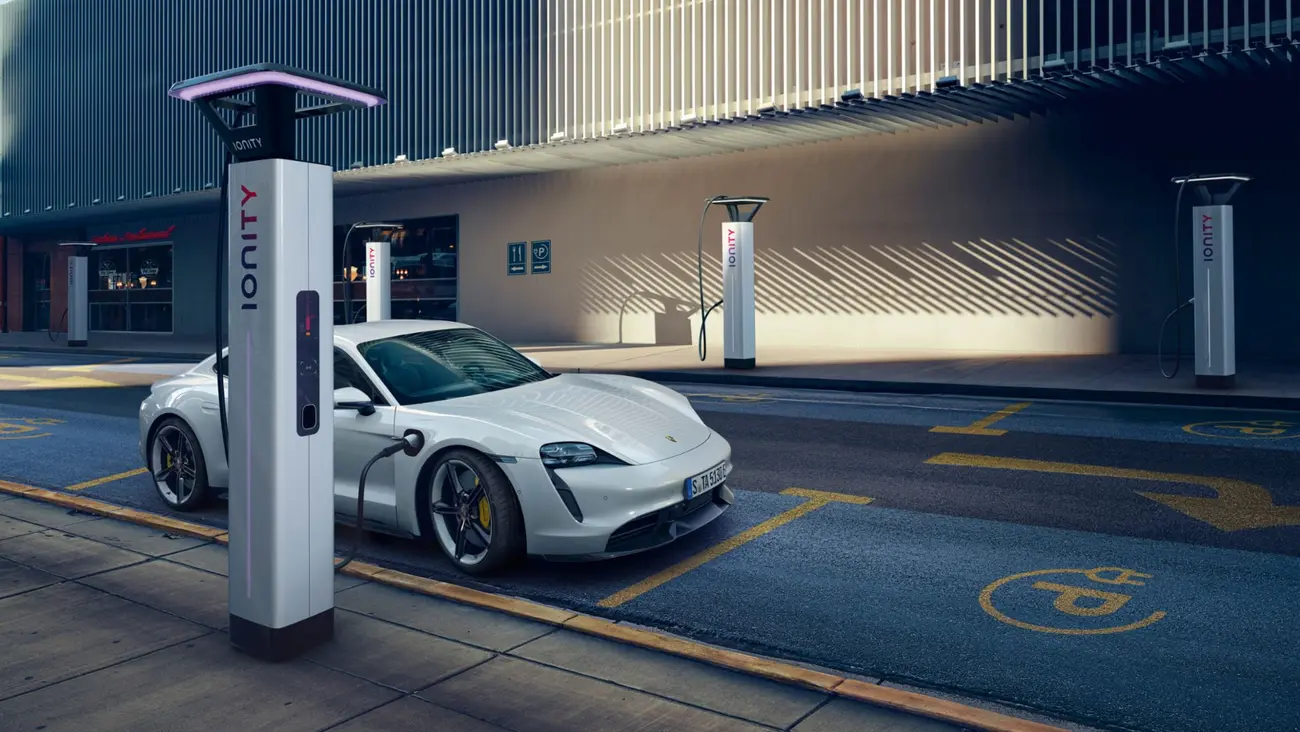
What is 800V architecture in an electric car
Add 300 km of range in ten minutes. That's the promise plastered across ads for the newest electric cars — and almost always, one technical phrase sits behind it: 800V architecture. If you're shopping for an EV in Portugal, it's worth understanding what this actually means before you pay extra for a charging-speed number you might never get to use.
The idea is simple. An EV's battery pack and high-voltage system run at a certain voltage. For years the standard was 400V (in practice, "400V" packs swing between 300 and 500 V depending on state of charge and temperature). A car with 800V architecture does the same job at roughly double the voltage — typically 600 to 900 V, with a few outliers like the Lucid Air reaching 924 V.
800V vs 400V: the physics behind fast charging
It all comes down to a formula you could scribble on the back of a napkin: power = voltage × current. To deliver the same charging power, an 800V system needs half the current of a 400V system.
Why does that matter? Because current is what generates heat. The more current flows through the cables, the more energy is lost as heat — the so-called resistive (Joule) losses. By halving the current, an 800V system cuts these losses by up to around 75%. The upshot: you can sustain very high charging power for longer without cooking the components, and the cables themselves can be thinner and lighter (about 15% less copper mass).
This shift was only possible thanks to modern power electronics, especially silicon carbide (SiC) semiconductors, which handle higher voltages more efficiently.
A concrete example helps. On a 180 kW charger that outputs a maximum of 300 A:
- A 400V car gets 400 V × 300 A = 120 kW (below the station's ceiling).
- An 800V car would in theory get 800 V × 300 A = 240 kW — capped here at the station's 180 kW limit, but already using the station to the full.
How fast does an 800V electric car charge
This is where the theory turns into minutes saved on the motorway.
| Feature | 400V architecture | 800V architecture |
|---|---|---|
| Pack voltage | 300–500 V | 600–900 V (some ~924 V) |
| Peak DC charge power | about 150 kW (Tesla up to 250 kW) | 230 to 350+ kW |
| Typical 10–80% charge | about 30 to 45+ min | about 18 to 25 min |
| Current for same power | higher | roughly half |
| Heat losses | higher | up to 75% lower |
| Cabling | thicker and heavier | thinner and lighter |
A true 800V EV does 10 to 80% in about 18 to 25 minutes and can pull anywhere from 230 kW to over 350 kW on a capable charger. A typical 400V car peaks around 150 kW (Teslas reach 250 kW) and takes 30 to 45 minutes for the same jump. That "10 minutes" headline refers to adding around 300 km of range — like the new Volvo ES90 on a 350 kW station — not a full charge.
Which electric cars have 800V architecture you can buy in Portugal
The good news for the Portuguese buyer is that this tech is no longer reserved for supercars. The list of 800V models available in our market grows every year.
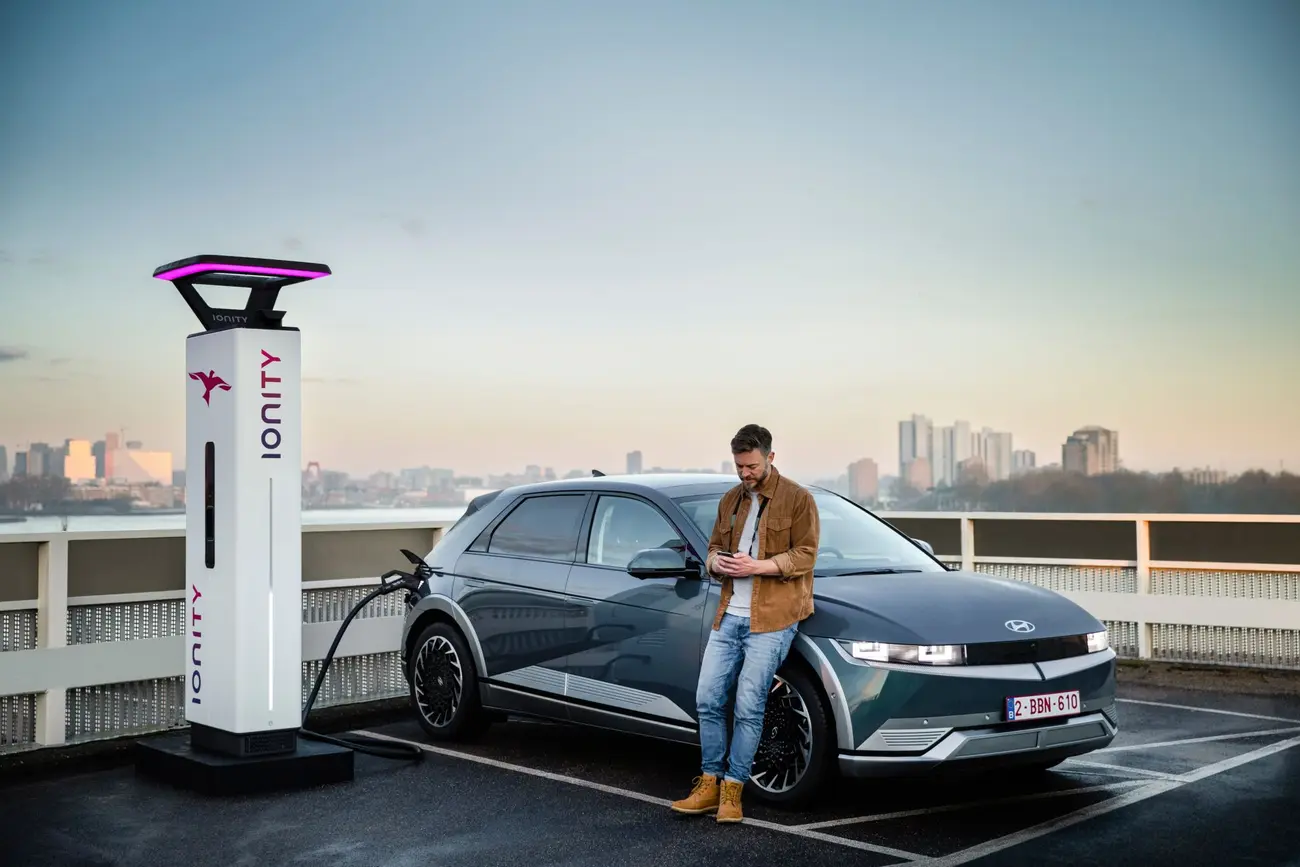
- Porsche Taycan (J1 platform) — the first volume 800V platform, up to around 270 kW.
- Audi e-tron GT — the Taycan's sibling, also 800V.
- Audi Q6 e-tron and Porsche Macan Electric (PPE platform) — the premium SUV/crossover shared between the two brands, at around 270+ kW.
- Hyundai Ioniq 5 and Ioniq 6, Kia EV6 and EV9, Genesis GV60 (E-GMP platform) — the most affordable 800V cars, in the 230 to 240 kW range, with 10 to 80% in about 18 minutes.
- Polestar 3 and the upcoming Polestar 5 (the latter announced with 10 to 80% in about 22 minutes).
- Lotus Eletre, Zeekr 001 and 7X, XPeng G9 — the newcomers, some reaching 350 kW (the Zeekr 7X claims up to 360 kW).
- Volvo ES90 — one of the most recent launches, with up to 700 km WLTP and that +300 km in 10 minutes.
There are also some BYD e-Platform 3.0 variants with 800V packs, and models like the Lucid Air that go even further, with systems around 924 V.
Watch out for one trap: some 400V EVs use "booster" converters or dual-inverter setups to raise the effective voltage during charging, mimicking 800V numbers without a true 800V pack. In other words, a high kW figure doesn't always mean an 800V battery.
Is an 800V electric car worth it in Portugal?
This is the question that separates the marketing from reality. And the honest answer is: it depends heavily on how you'll use the car.
At home, an 800V car behaves like any 400V one. AC charging (your wall socket or wallbox) depends on the amps of the onboard charger and the circuit, not the pack voltage. If most of your charging happens overnight in the garage, 800V architecture changes nothing in your life.
The real gain is on long trips. If you drive Lisboa-Porto or head down to the Algarve several times a year and want short stops, you're the one who feels the difference — provided you have access to powerful chargers.
And that's the biggest catch. The 800V advantage depends on infrastructure, and the infrastructure hasn't caught up. It's estimated that only about 1.5% of public fast chargers in the US and around 3% in Europe can deliver the voltage needed to fully exploit an 800V system. An 800V car will charge fine on a 400V charger — thanks to an internal DC/DC converter — but the effective power is reduced.
On top of that: a healthy 400V pack beats a degraded 800V one, 800V systems demand tighter insulation and electronics requirements (with repairs sometimes restricted to specialist workshops), and owning an 800V car doesn't automatically save you money.
If you mostly drive in the city and charge at home, a good 400V EV with a healthy battery is probably the smarter pick. If you live on the motorway and want the shortest possible stops, then 800V starts to justify the premium — and it's worth checking, before you buy, which high-power chargers actually sit along your usual route.
Frequently Asked Questions
Yes. An 800V car charges fine on a 400V charger thanks to an internal DC/DC converter that adapts the voltage. The catch is that the effective power is reduced, so you won't get the full benefit of the battery. To hit the 230 to 350+ kW peaks you need an ultra-rapid charger that supports 800V — and today that's only about 3% of public chargers in Europe.
The range grows every year and is no longer limited to supercars. 800V models relevant to the Portuguese market include the Porsche Taycan and Audi e-tron GT, the Audi Q6 e-tron and Porsche Macan Electric (PPE platform), and the more affordable Hyundai Ioniq 5 and 6, Kia EV6 and EV9 and Genesis GV60 (E-GMP platform). The Polestar 3, Lotus Eletre, Zeekr 7X, XPeng G9 and the recent Volvo ES90 round out the list.
A true 800V EV does 10 to 80% in about 18 to 25 minutes on a capable charger, versus the 30 to 45+ minutes typical of a 400V car. E-GMP platform models like the Ioniq 5 and Kia EV6 can even hit 10 to 80% in around 18 minutes. The famous "charge in 10 minutes" headline refers to adding roughly 300 km of range, not a full charge.
The difference is the voltage the high-voltage system runs at: 400V packs swing between 300 and 500 V, while 800V packs work at 600 to 900 V (some, like the Lucid Air, reach 924 V). By the formula power = voltage × current, doubling the voltage lets you deliver the same power with half the current, cutting heat losses by up to 75% and allowing thinner cabling. In practice this means faster, more sustained charging.
In most cases, no. For home charging (a wall socket or AC wallbox), an 800V car behaves like any 400V one, because speed depends on the onboard charger and the circuit, not the pack voltage. The real gain is on long trips with short stops, such as Lisboa-Porto or runs to the Algarve, and only if you have ultra-rapid chargers along the way. If you mostly drive in the city and charge overnight, a good 400V EV with a healthy battery is usually the smarter pick.