
Mazda 6e vs Hyundai Ioniq 6 in Portugal: Which Electric Saloon to Buy?
Published: 09/10/2026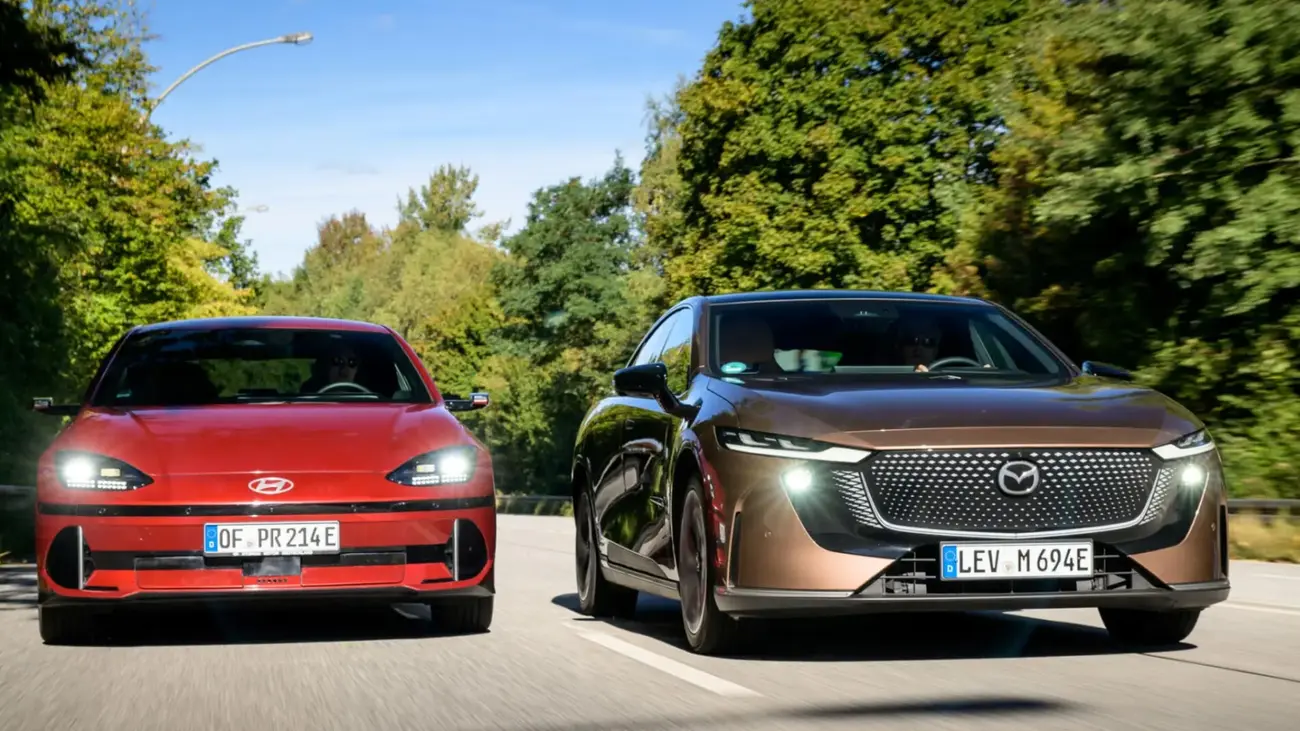
Mazda 6e vs Hyundai Ioniq 6: two recipes for the same electric saloon
Nearly 4.93 metres long, rear-wheel drive as standard and WLTP ranges north of 550 km. On paper, the Mazda 6e and Hyundai Ioniq 6 are chasing exactly the same buyer: someone who wants a big, comfortable electric saloon for long trips without paying German premium-brand money. Underneath, though, they could hardly be more different.
The Mazda 6e is the product of a partnership with China's Changan. It's essentially a Changan Deepal SL03 reworked by Mazda (in China it's sold as the Mazda EZ-6), built on the EPA1 platform with a 400V electrical system. The Ioniq 6 sits on Hyundai's dedicated E-GMP EV platform, runs an 800V architecture and cheats the wind with a drag coefficient of just 0.21. This Mazda 6e vs Ioniq 6 comparison focuses on what actually matters if you're buying in Portugal: space, range, charging time, equipment and price.
| Mazda 6e | Hyundai Ioniq 6 (facelift) | |
|---|---|---|
| Platform / voltage | Changan EPA1 / 400V | E-GMP / 800V |
| Length / width / height | 4,921 / 1,890 / 1,485 mm | 4,925-4,930 / 1,880 / 1,495 mm |
| Wheelbase | 2,895 mm | 2,950 mm |
| Batteries | 68.8 kWh LFP; 80 kWh NMC; 78 kWh LFP (2027 model year) | 63 kWh; 84 kWh NMC |
| Power | 258 hp (68.8 and 78 kWh); 245 hp (80 kWh) | 170 hp (63); 229 hp (84 RWD); 325 hp (84 AWD) |
| 0-100 km/h | 7.6 to 7.9 s | 8.3 s (63); 7.4 s (84 RWD); 5.1 s (AWD) |
| WLTP range | 479 km (68.8); 552 km (80); 560 km (78) | 521 km (63); up to 680 km (84 RWD, 18" wheels); 595-650 km (AWD) |
| Peak DC charging | 165 kW (68.8); 90 kW (80); 200 kW (78) | around 260 kW |
| DC 10-80% | ~24 min (68.8 and 78); ~47 min (80) | ~18 min |
| AC charging | 11 kW | 11 kW |
| Boot | 466 L (to roof) / 1,074 L + 72 L frunk | 401 L + 45 L frunk (RWD) or 14.5 L (AWD) |
| Weight | 2,090 kg (78 kWh) | 2,000 kg (84 RWD) |
| Battery warranty | 8 years / 160,000 km | 8 years / 160,000 km |
Size and boot space: the Mazda pulls ahead
Exterior dimensions are almost carbon copies. The Ioniq 6 has an extra 55 mm of wheelbase, which shows up as rear legroom, but the sweeping roofline takes its toll: rear headroom is the Hyundai's most criticised trait, and anyone over about 1.80 m will ride slightly hunched. To lower the rear bench, Hyundai also sacrificed under-thigh support, something you'll notice on a Lisbon-to-Algarve run.
In the Mazda 6e, the high floor typical of an EV without a dedicated platform takes a little comfort away from rear passengers, though only the very long-legged will really mind. The standard panoramic glass roof helps the cabin feel airy.
Mazda 6e vs Ioniq 6 boot space
This is where the gap is widest. Mazda quotes 466 litres (measured to the roof), 1,074 litres with the seats folded, plus a 72-litre front boot that's perfect for charging cables. The boot is shallow but long. The Ioniq 6 manages 401 litres, with a 45-litre frunk on the rear-drive car that shrinks to a token 14.5 litres on the all-wheel-drive version.
For a family that road-trips on holiday, the Mazda's extra 65 litres out back and larger frunk make a real difference.
Batteries and range: the 78 kWh Mazda 6e changes the maths
In continental Europe, the Mazda 6e launched with an odd choice. The 68.8 kWh version (LFP chemistry, 258 hp) claims 479 km WLTP and charges at 165 kW. The 80 kWh Long Range (NMC, 245 hp) stretches that to 552 km but is capped at 90 kW DC, dragging a 10-80% top-up out to around 47 minutes. More battery, less power and slower charging. Hard to justify.
Mazda has fixed that for the 2027 model year, which reaches European dealers from November 2026: a single 78 kWh LFP battery (77 kWh usable), 258 hp, 560 km WLTP and DC charging up to 200 kW. The UK already gets only this version, and it's the benchmark for the rest of this comparison.
Mazda 6e real-world range
The real-world numbers look promising. EV Database estimates 470 km of real range for the 78 kWh 6e, and about 445 km on the motorway in mild weather. In winter (at -10 °C) on the motorway, that drops to an estimated 340 km. In an Electrifying.com test in the UK, in 30 °C-plus heat with the air conditioning maxed out and the ventilated seats running, the Mazda returned 4.3 miles per kWh, equivalent to roughly 539 km of range. Not bad for a 2,090 kg car.
In Portuguese terms: Lisbon to Porto (about 310 km) is doable without stopping and with margin to spare, and so is Lisbon to the Algarve.
Ioniq 6: efficiency as a weapon
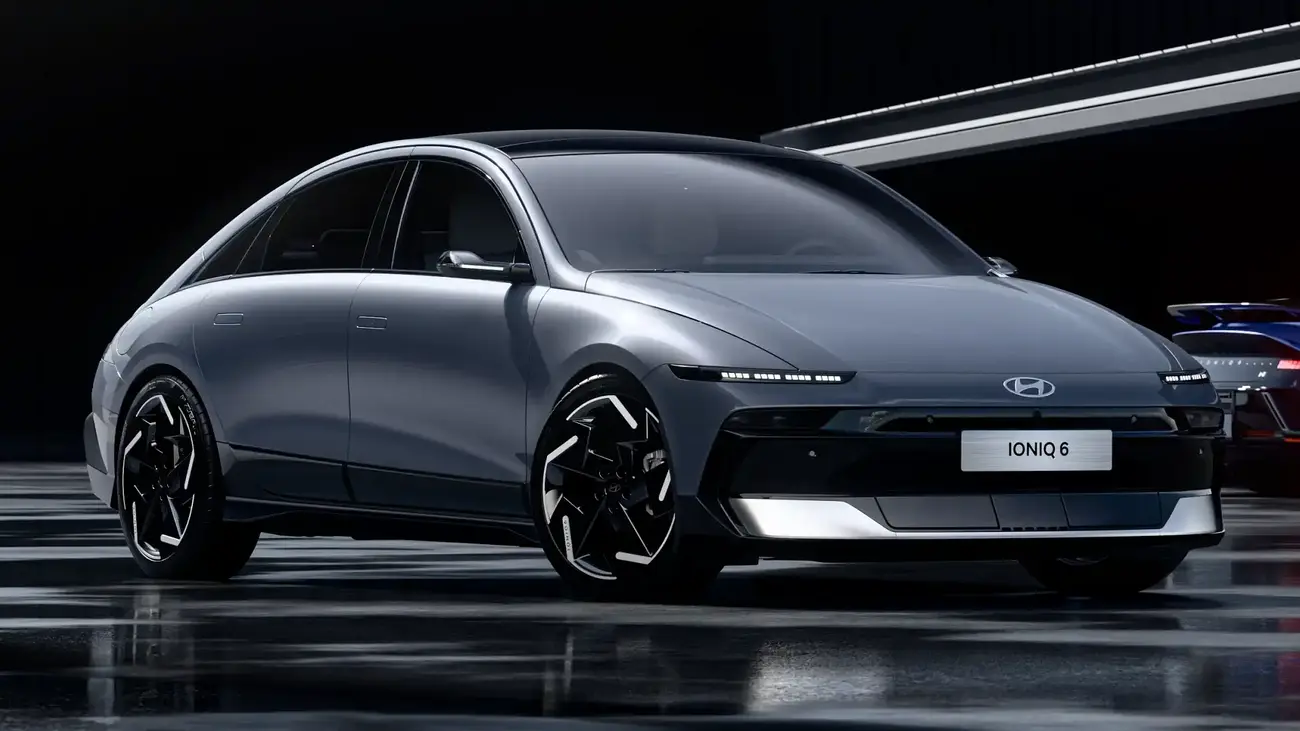
The facelifted Ioniq 6 claims up to 680 km WLTP with the 84 kWh battery (80 kWh usable), rear-wheel drive and 18-inch wheels, on a rated 13.5 kWh/100 km versus the Mazda's 15.9 kWh/100 km. The 63 kWh, 170 hp version manages 521 km, and the 325 hp all-wheel-drive car claims between 595 and 650 km depending on wheels.
On the road, EV Database puts the Ioniq 6 84 kWh RWD at 545 km of real range and 520 km on the motorway in mild weather, against the Mazda's 445 km. That's 75 km more exactly where it counts, at a steady cruise on the A1 or A2 motorways. The reason is aerodynamics: with a 0.21 Cd, the Ioniq 6 needs less energy to hold the same pace.
Ioniq 6 800V charging: 10-80% in 18 minutes
On a long trip, time spent plugged in matters as much as range. The Ioniq 6 goes from 10 to 80% in about 18 minutes on a 350 kW charger, peaking at around 260 kW, and Hyundai promises up to 100 km added in five minutes. It also supports Plug & Charge (plug in and pay automatically, no app or card) and automatically preconditions the battery when you navigate to a charger.
The 78 kWh Mazda 6e claims 24 minutes for the same 10-80%, with a 200 kW peak. A six-minute gap that, honestly, few drivers will feel. Battery preconditioning in the Mazda is manual, so you have to remember to switch it on before you arrive.
What really matters on the Mobi.E network
Mobi.E is Portugal's national public charging network, and 350 kW chargers are still the exception on its motorway sites. On a 150 kW unit, which is far more common, EV Database estimates 25 minutes for the Ioniq 6 and 31 minutes for the Mazda from 10 to 80%. On a 50 kW charger the two are almost level: 71 minutes for the Hyundai, 68 for the Mazda. The 800V advantage is real, but it's bigger on paper than at a typical Portuguese motorway service area.
On AC, both charge at 11 kW. With a home wallbox, a night is enough to fill either one.
Interior and equipment: Mazda goes for luxury, Hyundai for buttons
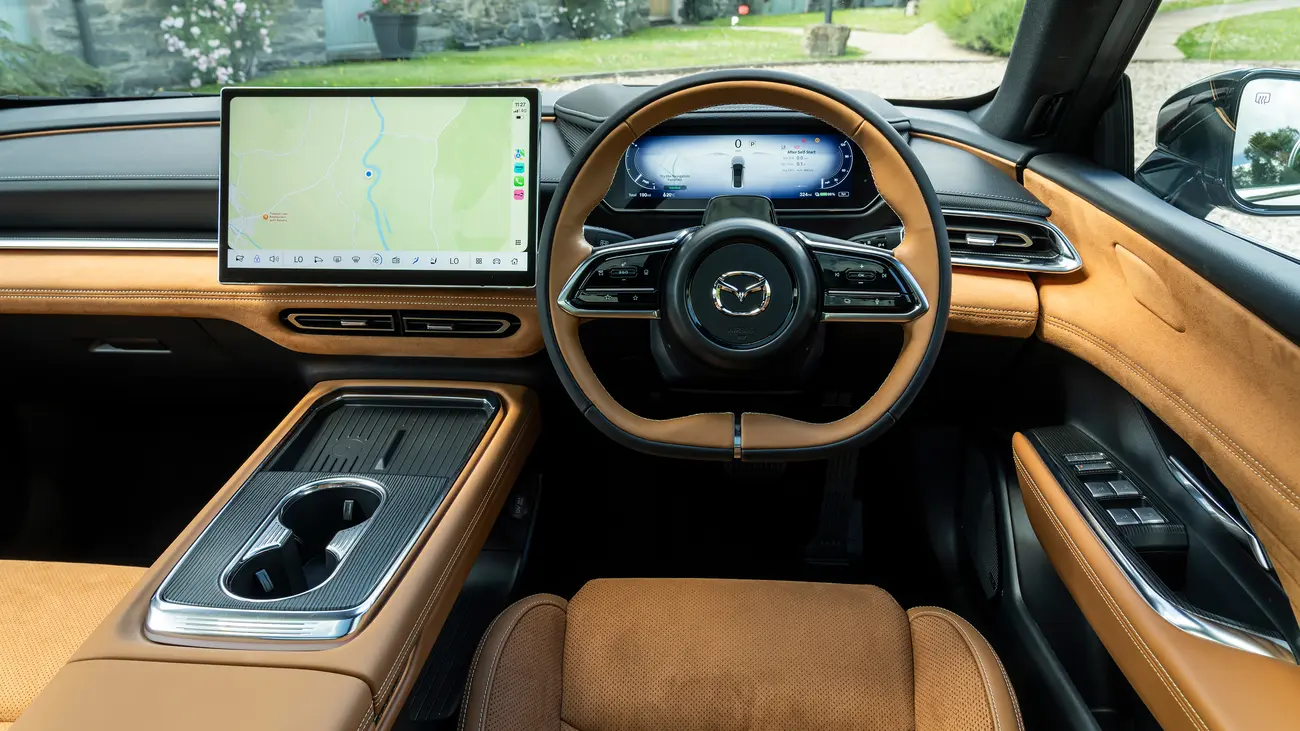
Stepping into the Mazda 6e is a pleasant surprise. Soft materials, suede-like fabric on the doors and, on the Takumi Plus, caramel-toned Nappa leather. The standard kit list is long: powered, heated and ventilated front seats, an augmented-reality head-up display, panoramic roof, 360-degree cameras, a 14-speaker Sony sound system and a heat pump. The driver's display measures 10.2 inches and the central screen 14.6 inches.
The catch? Almost everything runs through the touchscreen, including the wipers and headlights. Two programmable steering-wheel buttons offer a workaround, but the lack of physical controls for safety functions is a recurring complaint in European reviews, along with vague steering around the straight-ahead and a slightly fidgety ride on broken surfaces. Mazda has retuned the suspension for the 2027 model year, but there are no independent tests yet to confirm the improvement.
The Ioniq 6 is the more rational of the two. Twin 12.3-inch screens, physical buttons for the climate control and for seat heating and ventilation, 100 W USB-C charging and 3.6 kW vehicle-to-load (V2L) for powering devices from the battery (the Mazda has V2L too, at 3.3 kW). Head-up display, Bose audio and Highway Driving Assist 2 are reserved for higher trims such as the N Line.
Mazda 6e price in Portugal, and what to expect from the Ioniq 6
Comparing prices takes some care, because both line-ups are in flux. When the Mazda 6e arrived in Portugal in 2025, Portuguese motoring press reported launch prices from €40,050 for the 68.8 kWh Takumi. The new 78 kWh version doesn't have a confirmed Portuguese price yet. For reference, in Italy the 6e starts at €42,650 (Takumi) and €44,300 (Takumi Plus), and in the UK the 78 kWh car costs £38,995.
For the Hyundai Ioniq 6, the best European reference is the 84 kWh RWD: €55,300 in Germany and €52,995 in the Netherlands. Here in Portugal, Hyundai has been running business-customer campaigns on the 63 kWh version, so it's worth asking a dealer for a quote. Even so, the overall picture is clear: at list prices, the Mazda brings more equipment for less money, while the big-battery Ioniq 6 plays a tier above.
Taxes and company cars
Both are fully electric, so both are exempt from ISV (Portugal's vehicle purchase tax) and IUC (the annual road tax). For companies, VAT is deductible and there's no autonomous taxation on electric cars costing up to €62,500 (before VAT), a threshold both entry versions sit comfortably under. Battery warranty? Identical: 8 years or 160,000 km.
Frequently Asked Questions
When it launched in Portugal in 2025, the Mazda 6e was priced from €40,050 for the 68.8 kWh Takumi. The new 2027 model-year 78 kWh version has no confirmed Portuguese price yet; for reference, it starts at €42,650 in Italy and £38,995 in the UK. As a fully electric car, it is exempt from both ISV registration tax and IUC road tax.
The 2027 model year replaces the 68.8 kWh and 80 kWh packs with a single 78 kWh LFP battery (77 kWh usable), 258 PS and 560 km of WLTP range. DC charging rises to 200 kW, with 10-80% in about 24 minutes, versus roughly 47 minutes for the old 80 kWh Long Range, which was capped at 90 kW. It reaches European dealers from November 2026.
EV Database estimates around 470 km of real-world range for the 78 kWh Mazda 6e and 545 km for the 84 kWh rear-wheel-drive Ioniq 6. On the motorway in mild weather, those figures drop to 445 km and 520 km respectively. In winter (-10 °C) on the motorway, the Mazda is estimated at 340 km, still enough for Lisbon to Porto without stopping.
Yes, the Mazda 6e is derived from the Changan Deepal SL03 and is sold in China as the Mazda EZ-6, using Changan's EPA1 platform with a 400V architecture. Mazda restyled the exterior and interior and offers the same battery warranty as the Ioniq 6: 8 years or 160,000 km. The Ioniq 6, by contrast, sits on Hyundai's dedicated 800V E-GMP electric platform.
On a 350 kW charger, the Ioniq 6 goes from 10 to 80% in about 18 minutes, peaking at around 260 kW thanks to its 800V system. On a 150 kW unit, which is far more common on Portugal's Mobi.E network, EV Database estimates 25 minutes (31 minutes for the Mazda 6e), and around 71 minutes on a 50 kW charger. At home, both charge at 11 kW AC, enough to fill the battery overnight.
Mazda 6e or Ioniq 6: which should you choose?
The Mazda 6e makes sense if you prioritise space and cabin comfort. A bigger boot, a useful frunk, an interior finished above the class norm and a kit list that would force you up the Hyundai's trim ladder. With the 78 kWh battery, it no longer has an obvious weak spot on charging. Just try the screen-heavy controls before signing, because the lack of buttons splits opinion.
The Hyundai Ioniq 6 is the pick for high-mileage motorway drivers. More efficient, more real-world range on a trip, shorter charging stops and the maturity of the E-GMP platform. In return, you accept a smaller boot, limited rear headroom and a higher starting price for the 84 kWh version.
If you're waiting for the 78 kWh Mazda 6e, November is the month to mark on the calendar. Once Portuguese prices are confirmed, this comparison will sharpen further, and Hyundai's campaigns may well respond.