
Geely E2 in Portugal: Price, Range and When It Actually Arrives
Published: 11/08/2026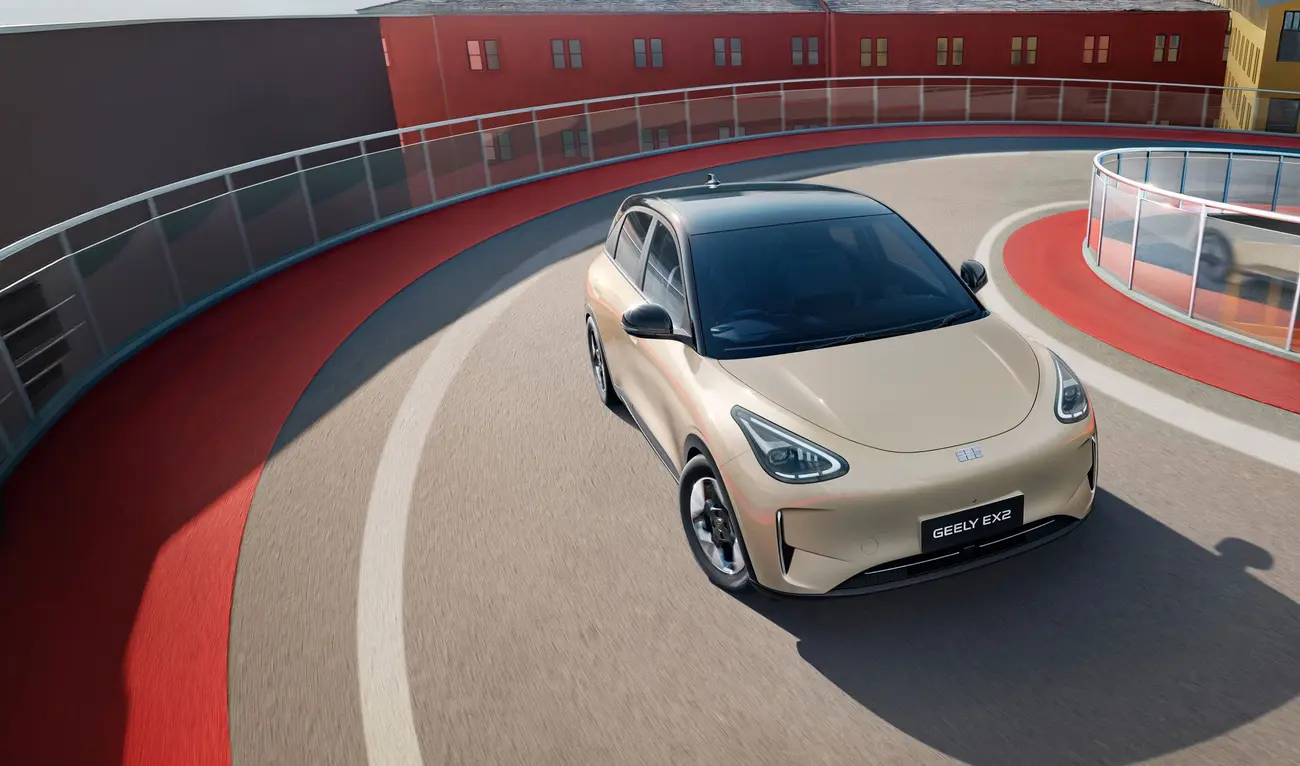
China's best-selling car reaches Europe for under €20,000
Belgium has opened its order books for the Geely E2 at a launch price of €19,490. That buys a 4.13-metre electric hatchback with rear-wheel drive and a 375-litre boot — undercutting the BYD Dolphin Surf and sitting more than five thousand euros below the Renault 5 E-Tech.
This is not an experiment looking for a market. In China it is sold as the Geely Galaxy Xingyuan, and it was the country's best-selling car of 2025 with 465,775 units. It held the lead through the first half of 2026 with 194,159 deliveries. What Geely is doing now is taking that volume and aiming it at the one segment where European manufacturers struggle most to make money: the cheap city EV.
Geely E2 price Portugal: what is known, and what isn't
Let's be blunt — there is no official Portuguese price for the Geely E2. None. What exists are prices from other European markets, useful as a reference but not as a promise:
| Market | Price | Notes |
|---|---|---|
| Belgium | €19,490 (launch) / €21,490 (list) | €2,000 discount of unstated duration; first deliveries September 2026 |
| Italy | €19,900 | on sale from October 2026 |
| Spain | €20,280 cash | launch on 9 September 2026 |
The Spanish figure needs a warning label. Headlines quoting €13,990 exist, but that number only appears after stacking dealer discounts, an early-reservation promotion and Spain's Plan Auto+ purchase incentives (€3,375), with finance attached at 8.99%. None of those apply in Portugal. The comparable cash figure is €20,280.
And Portugal itself? Arrival is confirmed for 2027 through Salvador Caetano, Geely's importer here — the EX5 SUV and Starray hybrid come first in 2026, with the E2 following as the volume model. On price, Geely's European communications have pointed to figures "certainly above €21,000". Anyone waiting for a €14,000 Portuguese E2 will be waiting a long time.
One tax point works in its favour. As a fully electric car, the E2 is exempt from ISV (Portugal's vehicle registration tax) and pays a reduced IUC (annual road tax). That exemption is already baked into the sticker price of every EV sold here, and it is worth several thousand euros compared with an equivalent petrol car.
Specs and range: 252 or 345 km, depending on the battery
The European range spans three trims — Pro, Max and Ultra — and two batteries:
| Pro | Max / Ultra | |
|---|---|---|
| Battery | 35 kWh (LFP) | 47 kWh |
| WLTP combined range | 252 km | 345 km |
| WLTP urban range | 368 km | 497 km |
| Urban consumption | 12.2 kWh/100 km | 12.8 kWh/100 km |
| Motor | 85 kW (114 hp), rear | 85 kW (114 hp), rear |
The gap between those two range figures is the part that matters to a buyer. The Pro's 252 km combined looks thin — and it is, on the motorway. But the urban cycle returns 368 km, and city driving is where this car will spend its life. For a 40 km daily commute around Lisbon or Porto, one charge covers more than a week.
The 47 kWh pack changes the maths. At 345 km WLTP combined and 497 km urban, it becomes a car you can take from Lisbon to Porto with one charging stop instead of two. If it has to be the only car in the household, that's the version to buy.
Note one inconsistency between Geely's July and August releases: an earlier version quoted 39.4 kWh and 317 km WLTP, with 0–100 km/h in 10.2 seconds. The 35/47 kWh grid is the newer one and should be treated as the definitive European line-up.
Rear-wheel drive at this price
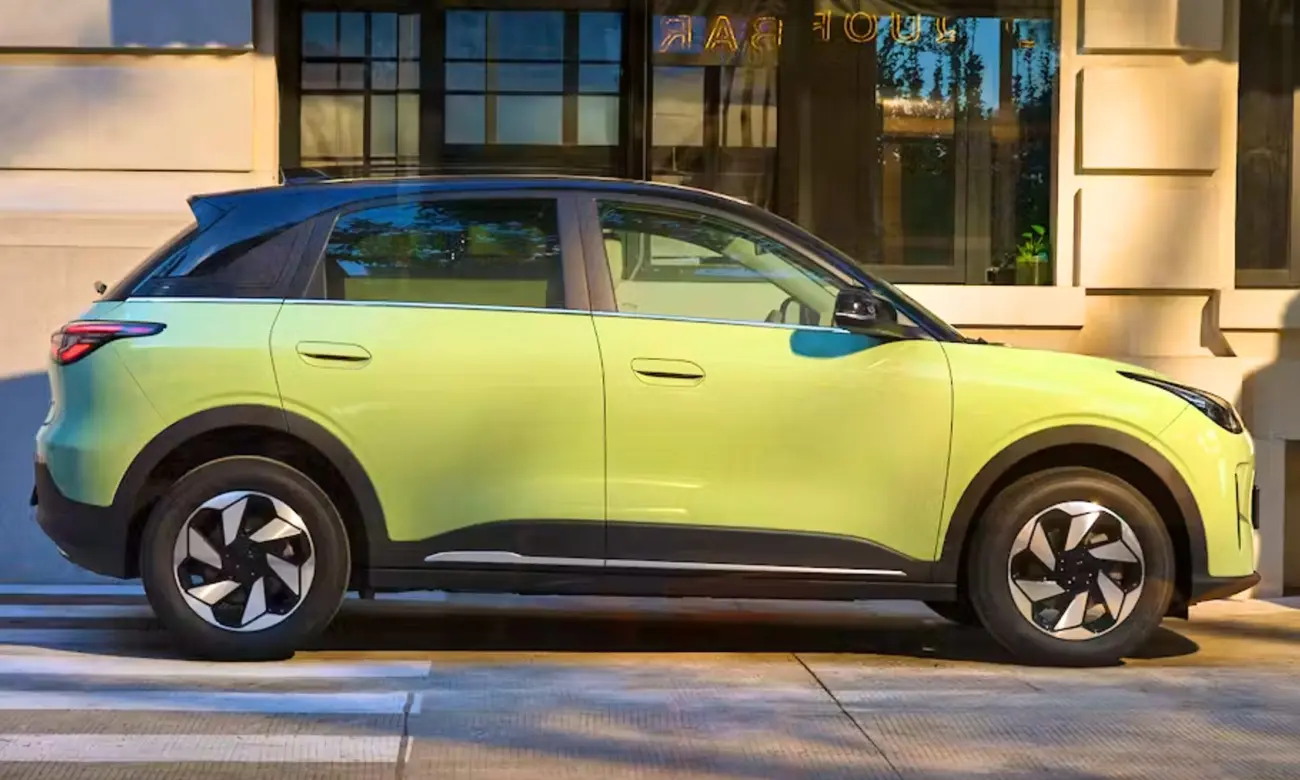
This is the oddest line on the spec sheet. The E2 puts its motor on the rear axle and pairs it with a multi-link independent rear suspension — hardware the Renault 5, Citroën ë-C3 and Leapmotor T03 all do without, since they are front-driven with simpler rear ends.
Two practical results: a tighter turning circle for city manoeuvring, because the front wheels aren't also delivering power, and more balanced handling through corners. It sits on Geely's GEA platform, designed from scratch for EVs, which is also how a 4.13 m car ends up with a 2,650 mm wheelbase.
Space and standard equipment
- 375 litres of rear boot plus a 70-litre frunk — 445 litres combined, or 1,320 litres with the 60/40 rear seats folded
- 14.6-inch central touchscreen running Flyme Auto
- Seven airbags and Level 2 driver assistance, with up to 36 safety-related functions
- Heated seats, adaptive cruise control and a powered tailgate
- 16-inch wheels, kerb weight of 1,290–1,365 kg
The 70-litre frunk solves a genuine small-EV annoyance: it's where the charging cables live without eating into the boot.
Geely E2 vs Renault 5 and the rest of the field
| Model | Entry price (Europe) | Entry battery | Range | Drive |
|---|---|---|---|---|
| Geely E2 | €19,490–19,900 | 35 kWh | 252 km WLTP | rear |
| BYD Dolphin Surf | €19,790–20,475 | — | — | front |
| Renault 5 E-Tech | €24,900 | 40 kWh / 120 hp | — | front |
| Citroën ë-C3 | around €19,000–23,300 | 44 kWh | — | front |
| Leapmotor T03 | under €19,000 | — | — | front |
These figures move from market to market, and none of them is a Portuguese price — they are European reference points.
Against the Renault 5, the gap runs to €5,410 in the Geely's favour, and the E2 is the longer car too (4,135 mm versus roughly 3,920 mm). Against the Dolphin Surf the advantage narrows to about €985, but it's still there. What the Renault keeps is its service network, its residual values and a design that sells itself — none of which shows up in a price table, but all of which matter when you come to sell the car five years from now.
The market data explains Geely's urgency. Between January and May 2026, small-car sales in Europe fell 1.7% to 789,900 units — while small electric cars jumped 49% to 98,200. The Renault 5 E-Tech leads with 36,600 units, followed by the Citroën ë-C3 on 17,900 (down 11% year on year) and the BYD Dolphin Surf on 15,100. A small segment growing fast, with few established players.
Frequently Asked Questions
There is no official Portuguese price for the Geely E2 — the car has not launched here yet. The available references come from other European markets: a €19,490 launch price in Belgium (€21,490 list), €19,900 in Italy and €20,280 cash in Spain. Geely Europe has already signalled that prices will sit "safely above €21,000", so the €13,990 Spanish headlines, which depend on dealer discounts and Spain's €3,375 Plan Auto+ grant, cannot be transferred to Portugal.
Portuguese arrival is set for 2027, through Salvador Caetano, Geely's importer in Portugal. The brand's plan brings the EX5 SUV and the Starray hybrid first in 2026, with the E2 following in 2027 as the range's entry-level model. Elsewhere in Europe, first deliveries begin in September 2026 in Belgium and Spain, with Italy following in October.
The Pro version, with a 35 kWh LFP battery, is rated at 252 km WLTP combined but climbs to 368 km on the WLTP urban cycle, consuming 12.2 kWh/100 km. The Max and Ultra trims, with 47 kWh, claim 345 km combined and 497 km urban at 12.8 kWh/100 km. For a typical 40 km daily commute around Greater Lisbon or Porto, even the entry version covers more than a week between charges.
On European pricing, the E2 undercuts the Renault 5 E-Tech (€24,900) by roughly €5,410 and the BYD Dolphin Surf (€20,475) by about €985. It is also the largest of the three at 4,135 mm long with a 2,650 mm wheelbase, against roughly 3.92 m for the Renault 5, and the only one with rear-wheel drive and an independent multi-link rear axle. The Renault still holds an established service network and stronger resale value, which no price table captures.
As a full battery-electric car, the Geely E2 will qualify for Portugal's ISV exemption and reduced IUC road tax, like every other BEV sold nationally. That tax break is already built into the final retail price and is what lets small electric hatchbacks close the gap to petrol equivalents, where the registration tax adds several thousand euros. Portugal does not, however, offer a purchase incentive equivalent to Spain's €3,375 Plan Auto+ grant.
Is it worth waiting for in Portugal?
If you need a car now, no. 2027 is a long way off, and the Dolphin Surf, ë-C3, Inster and T03 are already here with dealer networks in place.
If you can wait, three concrete reasons make the E2 worth tracking: it's bigger than almost anything at its price, the 47 kWh version offers serious range for a city car, and Salvador Caetano gives it an aftersales network that many newly arrived Chinese brands still lack. The open question remains the price — "certainly above €21,000" isn't enough to plan a purchase around. Watch Geely's announcements through 2026, as the EX5 and Starray clear the path.