
EV Charging Apps in Portugal: How to Pick the Right Charger Every Time
Published: 03/11/2026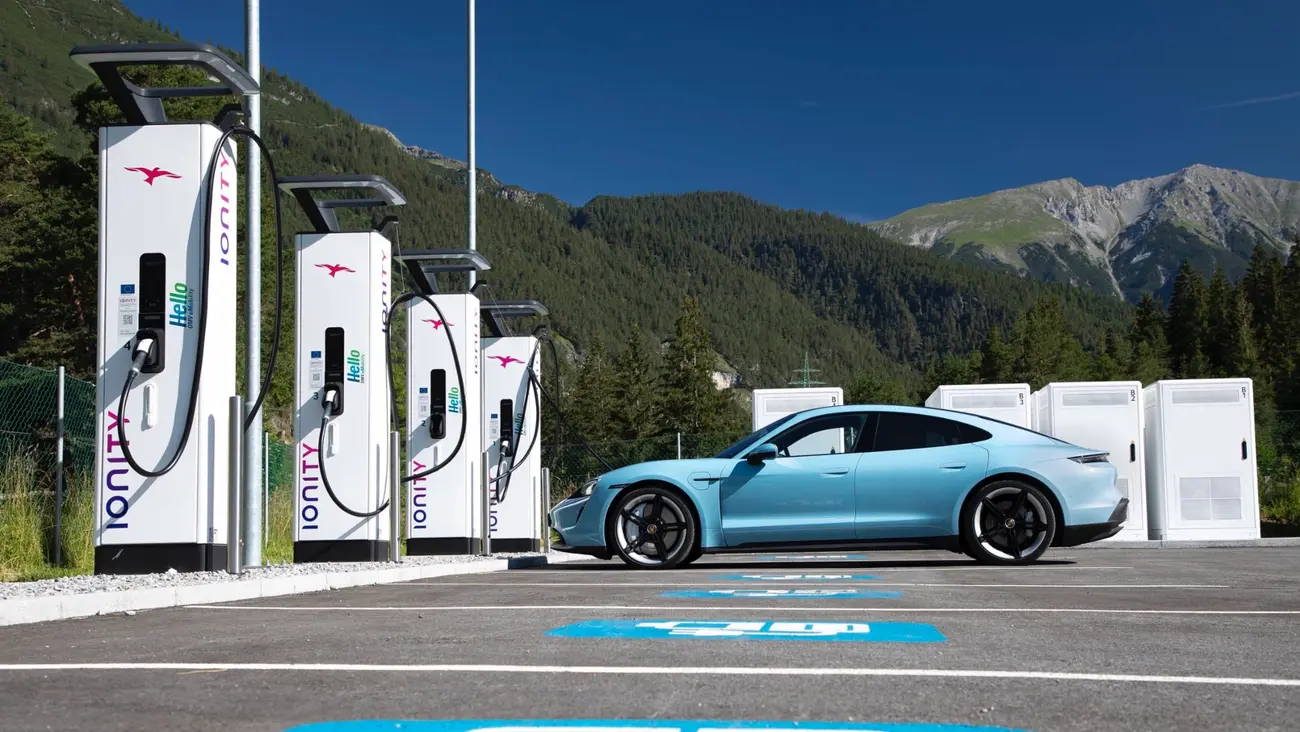
Why the nearest charger isn't always the right one
A charger 500 metres away on the map can be the worst stop of your trip. If it's a 7 kW AC unit and you only have 15 minutes, you'll leave with roughly the battery you arrived with. There's no shortage of EV charging apps in Portugal, so finding a charger is rarely the problem anymore. Reading the map properly and picking the point that suits that particular stop — that's the real skill.
Portugal makes the starting point easier than most countries. Every public charger has to be registered with Mobi.E, the national charging platform that handles billing across all operators, so any decent electric car charging map here shows roughly the same locations. What differs is the quality of the information: power, connectors, real-time availability and price. Those four filters are what separate a quick top-up from a wasted half hour.
How to choose a charging point: what actually matters
Before opening any app, ask yourself one thing: how long will I be parked? The answer settles most of the rest.
Trip type: short stop or long journey
For a supermarket run, the gym or a day at the office, an AC charger near your destination is plenty. You'll be there an hour or two anyway. On a long trip the logic flips: look for DC fast charging right by the main road rather than leaving the motorway for a charger 10 km off your route.
Power: the number that matters most
Anything above 50 kW counts as fast charging — enough to recover a large share of your range in about 30 minutes. Portugal's network breaks down roughly into three tiers:
- AC (Type 2): 3 to 22 kW. Ideal for long stops and overnight charging.
- DC fast: 50 to 150 kW. The standard for road-trip stops.
- High power charging (HPC): 150 to 350 kW, with some Iberdrola | bp pulse sites now rated up to 600 kW.
One catch: your car has a limit too. An EV that tops out at 70 kW won't charge any faster on a 350 kW HPC. Sometimes a free 150 kW charger beats an ultra-fast one with a queue.
Which connector does my car use: CCS2 or Type 2?
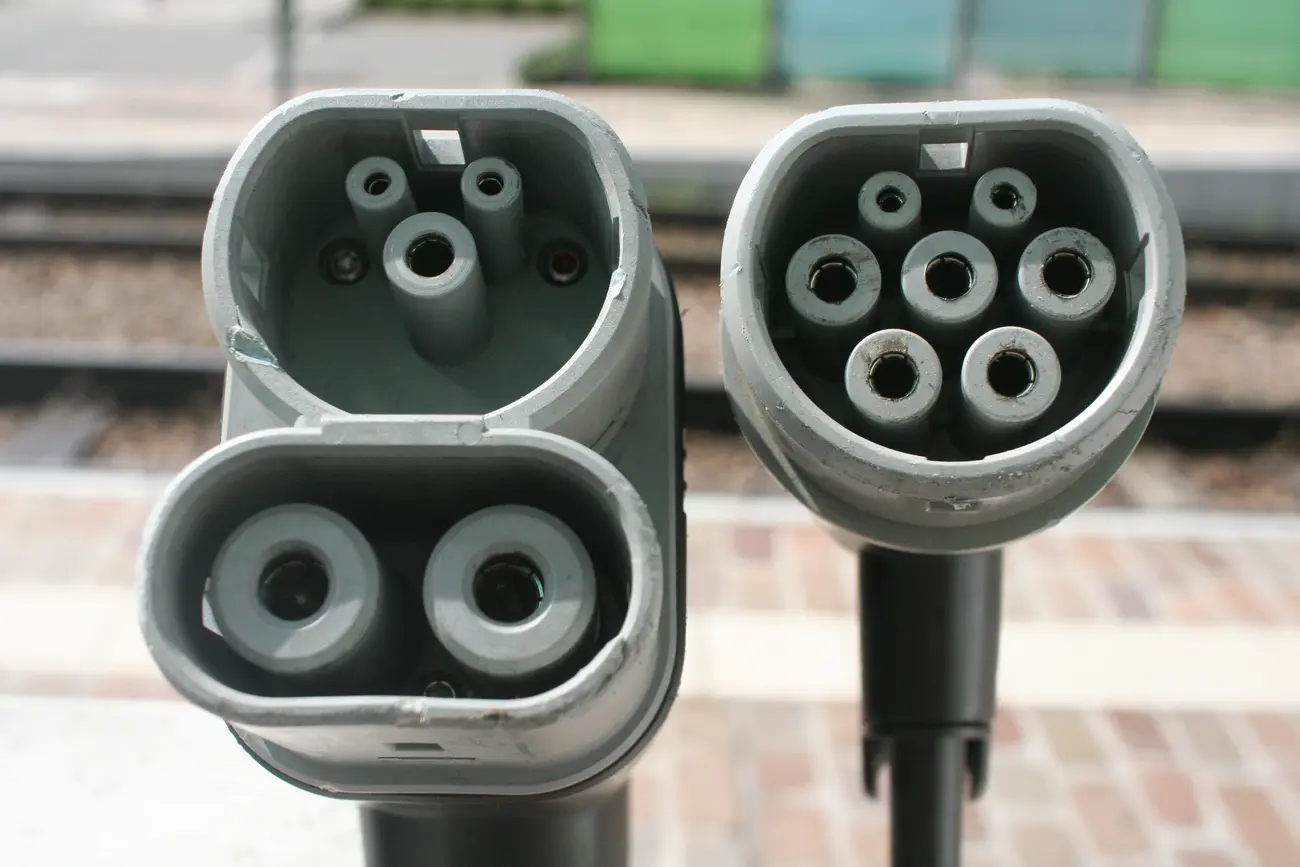
In Europe the answer is almost always both. Type 2 handles AC charging; CCS2 (Combo 2) is the European standard for DC fast charging. Before you set off, check that the connector icon on the map matches your car — especially with an older or imported model. Tesla Superchargers open to other brands use CCS2.
Availability: the least reliable data on the map
A charger showing as "available" may be occupied or out of order by the time you get there. It's the most common complaint and it affects every app. The practical fix is to cross-check two sources before an important stop and always keep a plan B a few kilometres away.
Price and payment
Each operator sets its own tariffs, which vary a lot between AC, DC and HPC, and some add idle fees if you leave the car plugged in after it's done. Some chargers need an app or RFID card, others take a bank card directly. For the detail on tariffs, we have a dedicated guide to public charging prices in Portugal.
What is the best charging app for electric cars in Portugal?
No single app does everything, but some combinations work well. Here's what each one does best:
| App / map | Strength | Limitation |
|---|---|---|
| Mobi.E | Covers the entire national public network, free and no subscription | Built for charging, not for planning |
| Miio | Price per kWh including fees, full filters, trip planning | miio one subscription needed for discounts |
| Electromaps | Real-time availability, Iberdrola | bp pulse integration | Users report availability data is sometimes wrong |
| Google Maps | Real-time free ports, connector and speed filters | No payment in the app |
| Apple Maps | Real-time availability, network and plug filters | Routing with charging stops only in supported cars |
| ABRP / PlugShare | Detailed route planning / check-ins from other drivers | Complementary tools |
Miio vs Electromaps
These are the two most widely used independent apps here, and they suit different drivers.
Miio is developed in Portugal (by MUVEXT) and has more than 500,000 drivers. Its biggest advantage is transparency: it shows the price per kWh at each charger including idle fees and taxes, so you can compare operators before plugging in. It filters by power, connector, availability and distance, recommends chargers compatible with your car, calculates stops along a route and works with Apple CarPlay. You start sessions in the app or with a miio card or keyfob. There's also a miio one subscription with automatic discounts.
Electromaps focuses on coverage and real-time availability. It lists around 8,500 stations in Portugal and, since August 2026, has the Iberdrola | bp pulse network integrated — more than 500 fast and ultra-fast points in the country and over 2,500 across the Iberian Peninsula. If you cross the border often, the app and the Electropass card let you manage the whole trip between Portugal and Spain. The downside: some users complain that chargers marked as available turn out to be in use.
Bottom line? Miio if price matters most to you; Electromaps if you do a lot of Iberian driving.
Does Google Maps show available charging stations?
It does, and it's probably the most underrated tool of the lot. Google Maps shows how many ports are free in real time, the charging speed and, in the phone app, the payment methods accepted and whether the station "was used today" — a good sign it's working. You can filter by the plugs in your EV profile and by speed (fast, very fast, super-fast).
For road trips, Maps plans charging stops for more than 350 EV models through Android Auto. In cars with Google built-in (Volvo, Polestar, Renault, Ford, Honda, Nissan and others), it estimates battery on arrival and adds stops automatically if your charge won't reach the destination.
Apple Maps has offered real-time availability since iOS 17, with filters by network and plug type. In supported cars you can set a preferred network and have charging stops added to your route.
Operator apps and roaming cards
EDP, Galp, Iberdrola, Powerdot, Tesla and Ionity all have their own apps, which make sense if you always use the same network. Roaming cards such as Octopus Electroverse (free card, no subscription), Chargemap Pass (€19.90 for two years), Shell Recharge or Plugsurfing also work on the Mobi.E network. Worth knowing: Chargemap Pass doesn't lower prices — its margin is built into the rates.
Can I pay for EV charging in Portugal with a bank card?
Increasingly, you don't need an app at all. The EU's AFIR regulation requires every new public charger installed since 13 April 2024 to accept bank cards. From 1 January 2027, the rule extends to chargers of 50 kW or more on Europe's main road network (TEN-T) — existing ones included.
If you rarely charge away from home, a contactless card may be all you need. If you charge often, an app still pays off for the price and availability information.
Fast charging on Portugal's motorways
Along the coast, things are comfortable. According to travel-site estimates, the A1, A2, A22 and A6 have high-power chargers every 60 to 80 km, which makes Lisbon–Porto on the A1 easy with one quick stop in Leiria or Coimbra. Inland, the gaps grow: on the A23, the A24 and parts of the Alentejo you may drive 100 to 150 km between fast chargers.
Planning an EV road trip in Portugal
For inland trips, planning makes a real difference:
- Enter your car and current charge in Google Maps, ABRP or Miio to get suggested stops.
- Pick DC chargers by the road, not in town centres.
- Check availability in two apps before leaving the motorway.
- Always have a backup charger within 30 km.
- Don't wait until you're at 5% — inland, arriving with some margin pays off.
You don't need to install every EV charging app in Portugal. One independent app (Miio or Electromaps) plus Google or Apple Maps covers the vast majority of situations, with your bank card as plan C. Before a long trip, spend five minutes cross-checking availability and power — it'll save you far more than that on the road.
Frequently Asked Questions
Google Maps, Apple Maps (since iOS 17), Miio and Electromaps all show real-time charger status, but availability is the least reliable field on any map: a charger marked as free may be occupied or out of order. In Google Maps, the "used today" indicator is a good sign that the charger actually works, and PlugShare shows recent check-ins from other drivers. Before an important stop, cross-check at least two sources and keep a backup charger a few kilometres away.
Anything from 50 kW upwards counts as fast charging, and around 30 minutes is usually enough to recover a good share of your range. The actual time depends on your car's maximum charging power and battery level: an EV limited to 50 kW charges at the same rate on a 50 kW unit as on a 350 kW HPC. For shorter road-trip stops, a 100 to 150 kW DC charger makes more of a difference, provided your car can accept that power.
You don't need a contract with each operator: every public charger is part of the Mobi.E network, set up under Decree-Law 39/2010 and running since 2013, so any app or card accepted on the network works at all of them. Miio, used by more than 500,000 drivers, and operator apps (EDP, Galp, Powerdot, Iberdrola | bp pulse) are the most common choices. Roaming cards such as Octopus Electroverse (free), Shell Recharge or Plugsurfing also work, which is handy for visitors from abroad.
Estimates vary by source, but the public network includes roughly 8,000 AC Type 2 points (3 to 22 kW), around 1,500 DC fast points (50 to 150 kW) and close to 450 HPC ultra-fast points (150 to 350 kW). Electromaps lists about 8,500 stations in the country. Along the coast, the A1, A2, A22 and A6 have ultra-fast chargers every 60 to 80 km, while on the A23, A24 and parts of the Alentejo there can be 100 to 150 km between fast chargers.
Only if you charge frequently on public networks. miio one gives automatic discounts on sessions started through Miio, while Chargemap Pass costs €19.90 for two years but doesn't lower prices, since its margin is built into the tariffs. If you rarely charge away from home, a contactless bank card may be enough: new public chargers have had to accept cards since 13 April 2024, and from 1 January 2027 the rule extends to all chargers of 50 kW or more on the TEN-T network, including existing ones.