
CHAdeMO Charging in Portugal: Where Nissan Leaf Owners Can Still Plug In
Published: 08/10/2026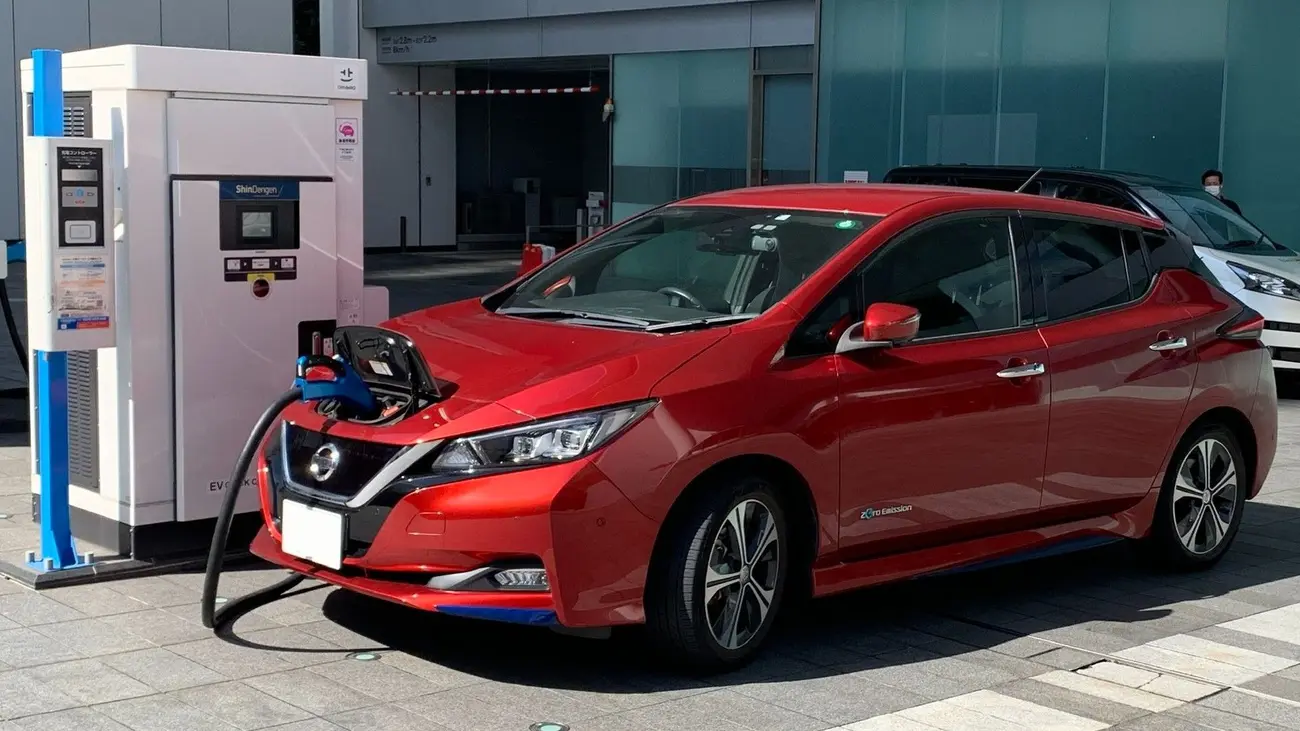
CHAdeMO charging in Portugal: the plug Europe is leaving behind
"A car doesn't stop being viable the day the manufacturer moves on to a new connector." That's Delvin Lane, CEO of UK charging network InstaVolt, and it neatly sums up the worry of anyone who owns — or is eyeing — a used Nissan Leaf. InstaVolt has just promised to keep CHAdeMO at its sites for good, at a time when most other European operators are heading the other way. So where does that leave CHAdeMO charging in Portugal?
Short answer: it's still here, it still works, and we found no public announcement of any Portuguese operator removing it. But the European trend is unmistakable, and if you want to charge a Nissan Leaf in Portugal without stress over the next few years, it's worth understanding what's shifting.
What InstaVolt promised in the UK
InstaVolt runs 900 ultra-rapid charging sites across the UK, with another 300 in development. The pledge, announced on 25 September 2026 during Used EV Week, is straightforward: at least one CHAdeMO connector at every site, existing or future, as a "permanent feature" of the network. Most of its chargers will still be CCS.
The reasoning is the used market. According to the company, thousands of British drivers still rely on CHAdeMO — mostly Leaf owners, as the car remains one of the UK's most popular used EVs. "Electric vehicle ownership doesn't change overnight," InstaVolt says.
Why is this news? Because, according to InstaVolt itself, other operators haven't just stopped installing CHAdeMO — they're decommissioning it at existing sites rather than maintaining it.
CHAdeMO being phased out in Europe: the numbers behind the trend
CHAdeMO was born in Japan in 2010, backed by companies including Nissan, Mitsubishi and Toyota. It launched at up to 62.5 kW DC, and the spec later grew to 400 kW. Europe, however, went another way: the CCS2 (CCS Combo 2) plug became the standard on every new EV — including the third-generation Leaf, which uses CCS in Europe.
Data from GIREVE, a European charging roaming platform, shows how far the shift has gone:
| Indicator (Europe) | Value |
|---|---|
| CHAdeMO share of all connectors | under 30% |
| Share of newly installed fast chargers | under 15% |
| Share of charging sessions (2024) | 4.4% |
| Usage compared with CCS points | 83-85% lower |
In the UK, CHAdeMO-only chargers fell from 10% of new public devices in 2021 to 7% in 2022 and just 2% in 2023. France scrapped its CHAdeMO requirement for high-power public stations in May 2021. And the EU's AFIR regulation (the Alternative Fuels Infrastructure Regulation) only mandates the CCS2 plug for DC fast charging.
What the big operators are doing
- Allego: stopped installing CHAdeMO at new sites in 2023 and doesn't replace broken units, though existing ones stay in service.
- Ionity: CCS-only across the 24 countries it operates in.
- Fastned: still offers CHAdeMO at all sites but says the policy is "under review".
- InstaVolt: a permanent commitment in the UK.
The typical legacy station layout is two CCS connectors and one CHAdeMO. For a Leaf driver that cuts both ways: if the single plug is taken or out of order, you wait. On the other hand, some UK owners report less queuing at CHAdeMO precisely because hardly anyone else uses it.
CHAdeMO chargers on MOBI.E: where to charge today
MOBI.E is Portugal's national charging network — every public charger in the country has to be registered on it. It now counts more than 7,000 stations and more than 13,000 charging points, and close to 40% are fast or ultra-fast. Portugal complies with AFIR and has something few countries can match: a fully interoperable system. Any driver can charge at any station, regardless of the charge point operator or their electricity supplier.
So where does CHAdeMO fit in? There's no up-to-date public count of CHAdeMO points on MOBI.E, and we're not going to make one up. Here's what we do know:
- Powerdot and Atlante list CHAdeMO at their stations, alongside CCS2 and Type 2.
- Tesla Superchargers are open to other brands, but only via CCS2 — no use for a Leaf.
- Ionity is CCS-only here, just as everywhere else.
Practical advice: before a road trip, filter the MOBI.E map or your supplier's app by connector type. On the A1 and A2 motorways you'll find fast chargers every 40-60 km; in the interior of the Alentejo, Trás-os-Montes or along the A24, the gap between fast chargers can stretch to 100-150 km. With only one CHAdeMO per station, having a plan B matters more than it does for a CCS driver.
Will CHAdeMO chargers disappear in Portugal?
Not any time soon, as far as we can tell. We found no announcement from any Portuguese operator about removing CHAdeMO from its stations. The risk is slower and quieter: new stations going in with CCS2 only, because that's what AFIR requires, and older chargers eventually being swapped for units without CHAdeMO. Its share will shrink over time — but shrinking isn't the same as vanishing.
Rapid charging a Nissan Leaf: what to expect at a stop
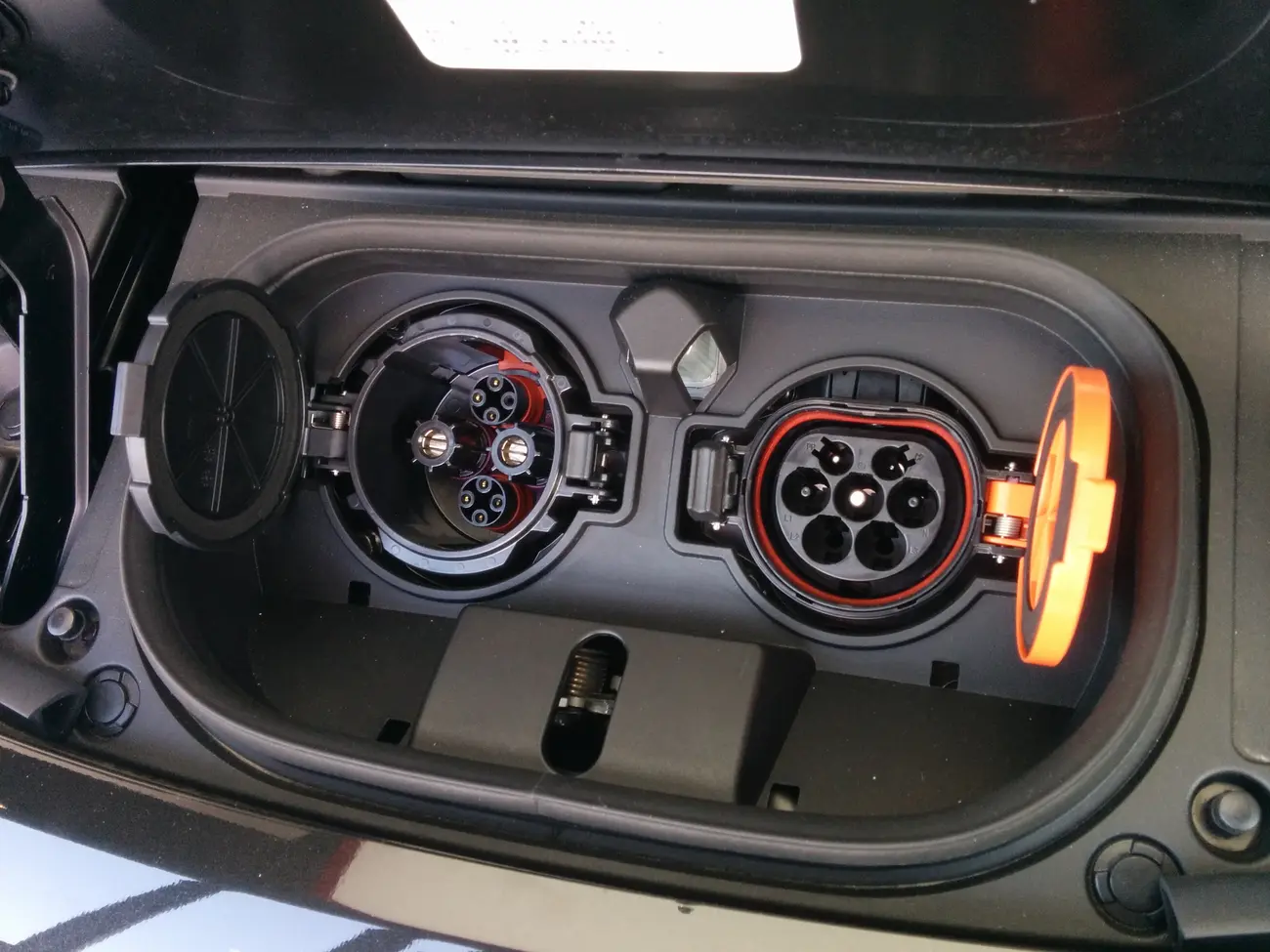
The Leaf has two inlets behind the flap in its front grille: one for AC (Type 1 on the first generation, Type 2 from 2018) and CHAdeMO for DC. The numbers that matter:
| Nissan Leaf | Battery | AC charging | DC charging |
|---|---|---|---|
| 1st generation | 24 / 30 kWh | 3.6 or 6.6 kW (Type 1) | up to 50 kW CHAdeMO |
| 2nd generation | 40 kWh | 6.6 kW (Type 2) | up to 50 kW CHAdeMO |
| Leaf e+ | 62 kWh | 6.6 kW (Type 2) | up to 50 kW CHAdeMO |
| 3rd generation (2025+) | — | — | CCS in Europe |
At a rapid charger, budget around an hour to reach 80%. The 40 kWh Leaf is rated at 168 miles WLTP (about 270 km) and manages roughly 151 miles in the real world (about 243 km); the e+ reaches up to 239 miles (about 385 km). In practice, Lisbon to Porto in a 40 kWh car means one stop — and you'll want that stop's CHAdeMO to be free.
There's another quirk owners know well: "rapidgate". The Leaf's battery has no active cooling, so on a hot day with several rapid charges in a row, charging power drops. On a long drive in August, your second stop can take longer than your first.
CCS to CHAdeMO adapter for the Nissan Leaf: worth it?
CCS2-to-CHAdeMO adapters are sold online, and the question comes up regularly in Portuguese Leaf owner groups. They're active devices that translate the communication between car and charger, and they aren't approved by Nissan. Before spending money on one, check compatibility with your model year and battery, and read up on other owners' experience. If you mostly charge at home, it's probably not worth it.
Is a used Nissan Leaf worth buying in Portugal with a CHAdeMO plug?
It depends on how you'll use the car. UK and US sources flag CHAdeMO as a drag on resale value for drivers who do a lot of long trips, but a minor issue for everyday commuters who charge at home. For that profile, a wallbox covers everything (with a Type 1 cable on a first-generation Leaf): at 7 kW, a second-generation Leaf fills up in around 7.5 hours, capped by its 6.6 kW on-board charger.
If your driving is a Lisbon or Porto commute and you have a garage or a parking space with a socket, the Leaf remains one of the cheapest ways into electric motoring. If you're doing Lisbon to the Algarve every month, depending on a single connector per station is a real cost, and a used EV with CCS may make more sense.
Used Leaf 40 kWh or 62 kWh: which one?
The 40 kWh car covers almost all urban and suburban use. The 62 kWh e+ suits drivers who want fewer stops: with more range, you rely less on finding a free CHAdeMO. Either way, ask for a battery state of health (SoH) report before you buy — on a used Leaf, that tells you more than the odometer.
Other EVs with a CHAdeMO plug
It's not just the Leaf. CHAdeMO is also found on the first-generation Kia Soul EV, the Citroën C-Zero, Peugeot iOn and Mitsubishi i-MiEV trio, and the Mitsubishi Outlander PHEV. They all share the same reality: rapid charging is possible, but on a network increasingly built around CCS.
CHAdeMO charging in Portugal isn't on its way out — it's becoming a minority. If you own a Leaf or are thinking of buying one, the real question isn't "will it disappear?" but "how often will I actually need rapid charging?". If the answer is "rarely", the plug is a detail. Worth watching whether any Portuguese operator follows InstaVolt's lead — or Allego's.
Frequently Asked Questions
On the MOBI.E network, which has over 7,000 stations and 13,000 charging points, around 40% of them fast or ultra-fast. Operators such as Powerdot and Atlante list CHAdeMO at their stations, while Tesla Superchargers and Ionity are CCS2-only and won't work with a Leaf. Filter the MOBI.E map or your energy supplier's app by CHAdeMO before setting off. At AC posts, a first-generation Leaf has a Type 1 inlet and needs a Type 2 to Type 1 cable.
There are no signs of that in the short term: we found no public announcement of any Portuguese operator removing CHAdeMO. The European trend is one of decline, as the AFIR regulation only mandates CCS2 and CHAdeMO accounted for under 15% of new fast chargers and just 4.4% of charging sessions in Europe in 2024. The likely outcome is a shrinking share as new CCS2-only stations are built, not a sudden disappearance.
Around one hour to 80%, since every CHAdeMO-equipped Leaf is capped at 50 kW DC. Because the battery has no active cooling, power drops on hot days or after several back-to-back rapid charges (so-called rapidgate), so the second stop on a long trip can take longer. At home on a 7 kW wallbox, a Leaf fills up in about 7.5 hours.
Yes, for drivers who mostly charge at home and commute, where the CHAdeMO plug matters little. For frequent long trips, relying on a single connector per station is a real cost and CHAdeMO tends to weigh on resale value. Between versions, the 40 kWh (about 270 km WLTP) covers urban use, while the 62 kWh e+ (about 385 km) cuts down on stops. Always ask for a battery state of health (SoH) report before buying.
Active adapters that translate communication between a CCS2 charger and the car are sold online, but they are not approved by Nissan and compatibility varies by Leaf year and battery. Even when one works, the Leaf is still limited to 50 kW DC. For owners who charge almost exclusively at home, the investment is hard to justify.