
Xiaomi Dealer Network and Portugal: The 8 German Groups Selling Xiaomi in 2027
Published: 24/09/2026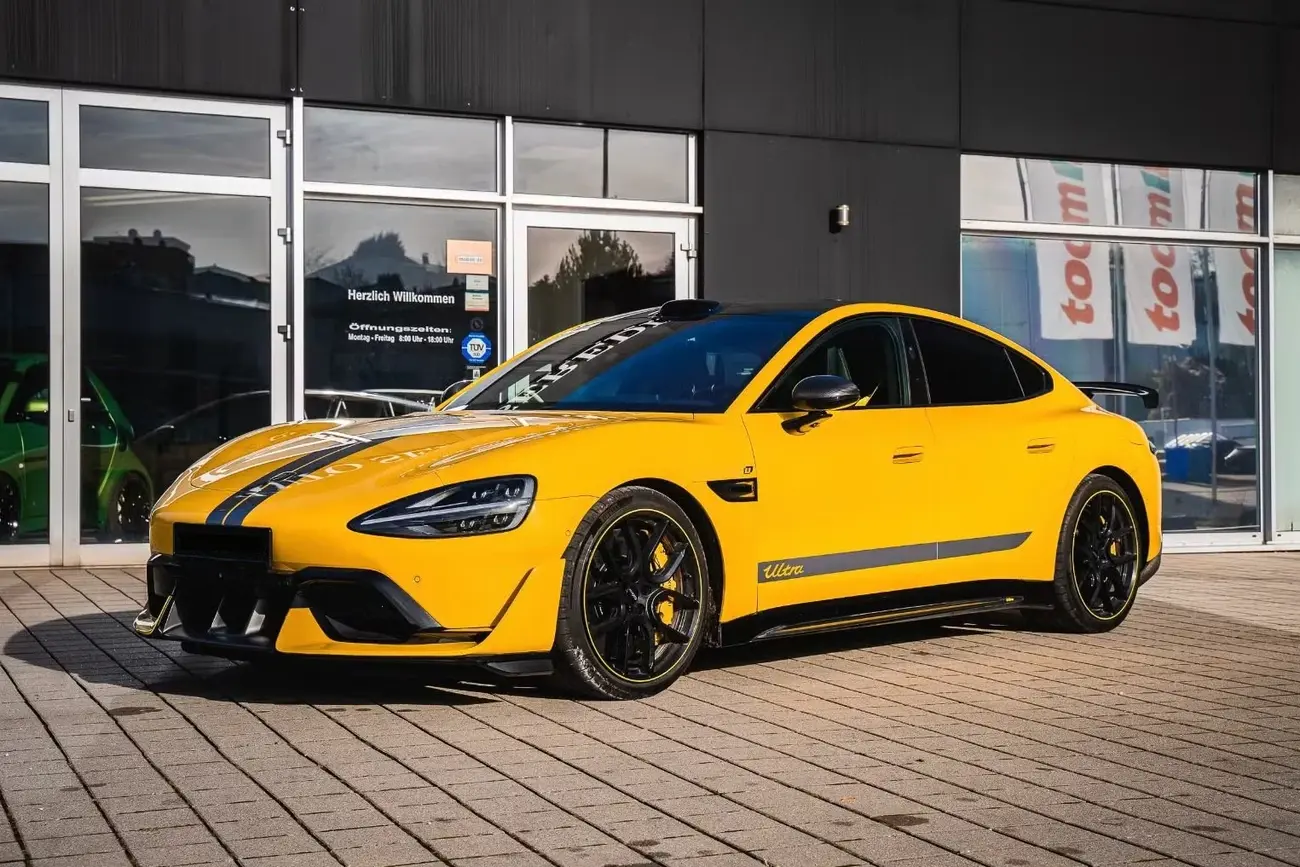
Eight German dealer groups, zero signed contracts
Eight dealer groups, every one of them German, signed a memorandum with Xiaomi Auto on 3 September 2026, during the IFA Berlin media day. It's the Chinese brand's first concrete step towards a European retail network for its 2027 launch — and if you live in Portugal and have been wondering about a Xiaomi dealer network here, it's also the best clue so far about how the company plans to sell cars in Europe.
Most coverage boiled it down to one line: "eight dealers, 2027, more countries to follow". The more useful questions went unanswered. What kind of deal is this? Why start in Germany? What could an SU7 cost once EU tariffs are added? And what does any of it suggest for buyers in Portugal?
Who the eight Xiaomi dealer groups are
These are the groups that signed, with the full legal names published by CnEVPost:
| Group | Note |
|---|---|
| Ernst Dello GmbH & Co. KG | German dealer group |
| Autohaus Dinnebier GmbH | German dealer group |
| Emil Frey Germany | One of Europe's largest automotive dealer groups |
| Fett & Wirtz Automobile GmbH & Co. KG | German dealer group |
| Hahn Automobile GmbH + Co. KG | German dealer group |
| LUEG Mobility GmbH | Germany's first Mercedes-Benz dealer |
| Penske-Jacobs Innovation GmbH | German dealer group |
| SPT Avior SE & Co. KG | German dealer group |
Xiaomi says it chose them for their "extensive operating experience in Germany and elsewhere in Europe" and their track record selling and servicing premium brands. It describes them as "among the most established premium-brand dealers in Germany".
A memorandum is not a contract
It's worth keeping the announcement in proportion. These are non-binding memoranda of understanding (MoUs) — statements of intent, not franchise agreements. Nobody has disclosed store counts per group, sales territories, investment amounts or commercial terms.
Also missing: the first European models, pricing and an exact launch date within 2027. Xiaomi only says more European dealer partners will be announced before launch. Dr. Yu Liguo, Xiaomi Auto vice president and head of international business, put it this way: the company "plans to make long-term investments in Europe", with local partners at the core of its strategy.
Dealers or online sales? How Xiaomi's dealer network will work
This is the most telling part of the story. Tesla trained us to expect direct sales, and many newer Chinese brands have gone for company-owned stores or the so-called agency model. Xiaomi has picked the traditional route instead: franchised dealers handling both sales and after-sales service.
That's a real shift from how it operates at home. In China, Xiaomi mixes company-owned stores and delivery centres in the big cities with authorised partners on an agency model, where the brand controls orders and pricing centrally. Electrek suggests an agency model with uniform pricing could still be used in Europe, so the final format isn't fully settled.
The obvious reading, as paultan.org puts it: by leaning on established groups, Xiaomi avoids the heavy cost of building its own network in a new market. For buyers, that usually means a service workshop within reasonable distance from day one — something newly arrived brands can't always promise.
Why Xiaomi is starting in Germany
Germany is Europe's biggest car market and the one that shapes brand perception most. Win over German buyers used to BMW, Mercedes and Porsche, and doors open across the rest of the continent.
Xiaomi already has local roots. Its Munich R&D centre employs around 50 people drawn from BMW, Porsche, Lamborghini and Mercedes, working on vehicle dynamics, design and adaptation to European regulations. In spring 2026 it hired Tesla's former head of European delivery operations. On 26 August it launched its international website, complete with an inquiry portal for prospective dealers and distributors. The IFA memoranda are the next piece.
What a Xiaomi SU7 could cost in Europe with EU tariffs
Official prices? None yet. But there's one sum Xiaomi can't avoid: the EU tariffs on Chinese-built electric cars.
The tariff maths: 10% + 35.3%
Xiaomi made its first delivery in March 2024, after the European Commission opened its anti-subsidy investigation in October 2023. It wasn't part of that probe, so it falls under the rate for non-cooperating manufacturers:
- Standard EU import duty on cars: 10%
- Countervailing duty for non-cooperating manufacturers: 35.3%
- Total: 45.3%
On a €40,000 car, the countervailing duty alone adds roughly €14,120 before VAT and shipping — the figure Tech Times quotes. Add the standard 10% duty and the tariff bill reaches around €18,120. That's a simplified calculation (in practice, duties apply to the car's customs value, not its showroom price), but it shows the scale of the problem.
There is a possible way out. Since January 2026, the Commission has published guidance on minimum-price undertakings, which let Chinese carmakers reduce their countervailing duties. Xiaomi hasn't confirmed whether it's talking to Brussels about this.
From €28,000 in China to €50,000–65,000 in Europe?
In China, the SU7 starts at around ¥190,000 — roughly €28,000, according to ArenaEV. Once tariffs, shipping, homologation and margins are added, ArenaEV estimates a European price of €50,000 to €65,000 for the standard versions and over €140,000 for the SU7 Ultra. These are estimates from a specialist site, not Xiaomi's own pricing.
At that level, the SU7 would be fighting the BMW i5 for buyers and edging towards Porsche Taycan territory — the two cars ArenaEV uses for its size comparison. In Portugal, fully electric cars are exempt from ISV (the one-off registration tax) and IUC (the annual road tax), but still pay 23% VAT. If those European estimates hold, the SU7 won't be a cheap EV here.
SU7, YU7 and SkyNomad: which models to expect
In China, Xiaomi currently sells the SU7 saloon and the YU7 SUV, and both are expected in Europe. The brand hasn't confirmed its launch line-up, though, and stresses that the SU7 isn't currently on sale outside China.
| Xiaomi SU7 | Xiaomi YU7 | |
|---|---|---|
| Body | Saloon | SUV |
| Length | 4,997 mm | 4,999 mm |
| Width | 1,963 mm | 1,996 mm |
| Height | 1,440 mm | 1,600 mm |
| Wheelbase | 3,000 mm | 3,000 mm |
| Weight | 1,980 kg (RWD) / 2,205 kg (Max) / 2,360 kg (Ultra) | approx. 2,405 kg (AWD) |
| Highlight | SU7 Ultra: 7:04.957 at the Nürburgring (April 2025) | 240,000 locked orders in 18 hours |
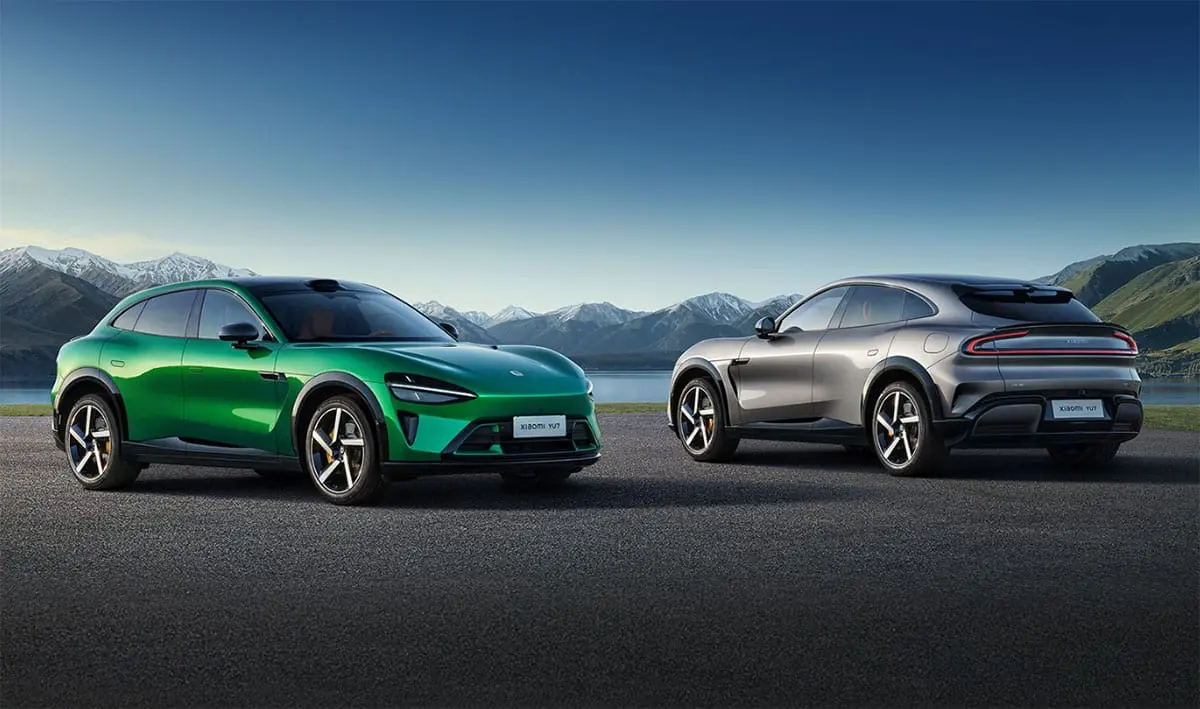
Paultan.org adds the SkyNomad N70 and N90 to the list — extended-range electric SUVs. ArenaEV notes the family was designed with the charging gaps of Southern and Eastern Europe in mind, a description that could, in theory, also fit inland Portugal.
The China track record — and numbers that don't match
Since its first delivery in March 2024, Xiaomi has handed over more than 700,000 cars in China. The SU7 reached 500,000 units in 28.5 months. Electrek reports that the car business turned profitable within six quarters.
Tech Times tells a different story: the EV division reportedly posted a 2.6 billion yuan operating loss (about $387 million) in Q2 2026, albeit narrower than in Q1. The two claims don't sit comfortably together, and neither source explains the gap. For European buyers, the takeaway holds either way: Xiaomi has real volume and demand in China, but going international will cost it money.
Frequently Asked Questions
Eight German dealer groups signed non-binding memorandums of understanding on 3 September 2026 at IFA Berlin: Ernst Dello, Autohaus Dinnebier, Emil Frey Germany, Fett & Wirtz, Hahn Automobile, LUEG Mobility, Penske-Jacobs Innovation and SPT Avior. Emil Frey is one of Europe's largest dealer groups, and LUEG was Germany's first Mercedes-Benz dealer. Store counts and locations for each group have not been disclosed yet.
Xiaomi has chosen franchised dealers that handle both sales and after-sales service, rather than Tesla-style direct sales. In China it mixes its own stores with agency partners on uniform pricing, and Electrek notes that an agency model could still be used in Europe. The final setup should only become clear once the memorandums turn into binding contracts.
There are no official prices yet. Because Xiaomi did not take part in the 2023 EU anti-subsidy probe, it faces a 10% import duty plus a 35.3% countervailing duty, 45.3% in total. ArenaEV estimates €50,000 to €65,000 for standard SU7 versions and over €140,000 for the SU7 Ultra, compared with about €28,000 in China. In Portugal, electric cars are exempt from ISV and IUC but still pay 23% VAT.
Nothing has been announced. Every partner signed so far is German, and no source on the deal mentions Portugal or Spain. Xiaomi says more European partners will follow before launch, and Emil Frey's multi-country footprint hints at wider expansion, but an Iberian rollout would likely need a local importer or dealer group and is expected to come in a later wave after Germany.
Xiaomi has only confirmed 2027, starting with Germany, with no month or launch line-up announced. The company itself stresses that the SU7 is not yet on sale outside China. Until then, the only option is independent importers, without a factory warranty or an official service network.
Will Xiaomi sell cars in Portugal?
The honest answer: nobody knows. For now, the Xiaomi dealer network in Europe is entirely German, and none of the reporting on the deal mentions Portugal, Spain or France. Germany is the only country named, despite the "Europe" headlines.
What follows is our analysis, not anything Xiaomi has said. Two hints point to a wider rollout: the promise of more European dealer partners before launch, and Emil Frey's presence in several European countries. Neither points to Portugal specifically.
If Xiaomi sticks with dealers, a Xiaomi dealer network in Portugal would most likely need an Iberian importer or dealer group — and, going by the usual pattern for Chinese brands, would come after the bigger markets. Arrival in a later wave than Germany looks like the most likely scenario, but that's an expectation, not an announcement.
What we still don't know
- Which models arrive first, and in which versions
- Official prices, and whether Xiaomi negotiates a minimum price with Brussels
- The launch month in Germany in 2027
- How many showrooms and workshops each group will run
- Which countries come next — and when the Iberian Peninsula appears on the map
For now, the signal to watch is simple: the next batch of distribution partners. If a group with operations in Portugal or Spain shows up, buying a Xiaomi here moves from hypothesis to timeline.