
Xiaomi SKYNOMAD: Three Hybrid SUVs and a Camper Heading to Europe in 2027
Published: 07/05/2026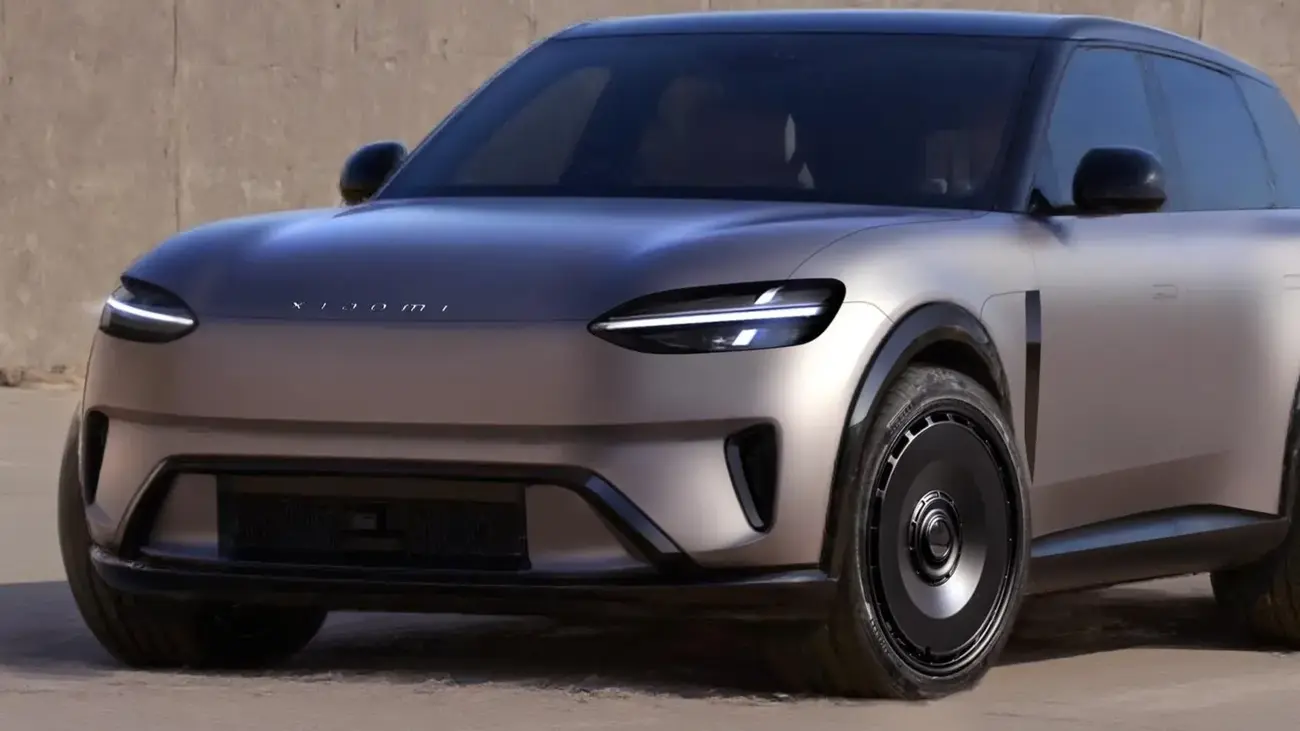
Xiaomi readies three hybrid SUVs and a camper under its new SKYNOMAD sub-brand
Xiaomi is pushing past the SU7 and YU7. The Chinese brand has announced a dedicated sub-brand — SKYNOMAD (in Chinese Xuntian, "sky nomad") — to house a family of range-extender hybrid SUVs and even a pop-top camper. For anyone in Portugal watching the steady arrival of Chinese EVs, it's another name to track — but with one twist: these aren't pure electric, they're EREVs.
The natural buyer's question is simple. When does it arrive? And is it worth waiting? Short answer: Xiaomi has confirmed a European launch in 2027, with Germany first. The longer answer requires a look at the lineup, the powertrain, and where it fits.
What SKYNOMAD is and why it matters for Portugal
SKYNOMAD is the home for Xiaomi's EREV (extended-range electric vehicle) cars — vehicles that always run on electric motors but carry a petrol engine acting purely as a generator when the battery runs low. It's not a traditional plug-in hybrid. The wheels are driven only by electric motors; the combustion engine never touches the drivetrain. That matters in Portugal for a practical reason: outside the main motorways, fast-charging coverage still has gaps, and an EREV solves range anxiety on long trips down to the Algarve or out to the interior without forcing a 40-minute stop at a MOBI.E station (Portugal's main public charging network).
The new sub-brand will carry its own badge — replacing the Xiaomi logo on the rear and steering wheel — and is aimed at families and long-distance, outdoor-leaning buyers. The first wave includes three Kunlun-platform SUVs, the YU9 flagship with its pop-top variant, and a dedicated motorhome known as "Island of Man" (Mandao internally).
Kunlun lineup: three sizes, two battery packs
The Kunlun line covers three segments and is squarely aimed at Li Auto, which currently dominates China's premium hybrid SUV space.
| Model | Positioning | Layout | Battery |
|---|---|---|---|
| Kunlun 10 | Li Auto L6 rival | Compact 5-seater | 70 or 90 kWh |
| Kunlun 20 | Li Auto L8 rival | Mid-size 5-seater | 70 or 90 kWh |
| Kunlun 30 | Li Auto L9 rival | Flagship 7-seater | 70 or 90 kWh |
Announced Chinese pricing for the SKYNOMAD range runs from CNY 200,000 to 450,000 (roughly $27,500 to $62,000). Converted to euros and adjusted for Portuguese ISV (the local vehicle import tax) and logistics, that probably translates to a 35,000 to 75,000 euro range if it lands here — no guarantees though, because Xiaomi Auto president William Lu himself has called the YU9 and SKYNOMAD "less likely" candidates for the first European wave, which will lead with SU7 and YU7.
Xiaomi YU9: flagship spec sheet
The YU9 is the centrepiece. A 5.2 to 5.3-metre, seven-seat SUV with a 1.5-litre turbo EREV powertrain and over 400 hp combined. The closest things on sale in Portugal are the BYD Sealion 8 plug-in hybrid and a top-spec Volvo XC90.
The numbers, drawn from spotted prototypes:
- Length 5.2 to 5.3 m, height around 1.8 m
- 2+2+2 or 2+3+2 seating (six or seven seats)
- 1.5L turbo as generator, dual electric motors with all-wheel drive
- Over 400 hp combined, 0-100 km/h in roughly 5 seconds
- Pure-electric range: over 200 km CLTC
- Combined range: up to 1,500 km
- 800V fast charging (same architecture as the Porsche Taycan)
- Roof-mounted LiDAR for advanced driver assistance
- Rear-wheel steering
- Xiaomi HyperOS plus HyperConnect smart-home integration
Starting price in China is around CNY 359,800 (about $50,000), with top variants below CNY 500,000. For context: Li Auto L9 starts at CNY 409,800 and the Aito M9 at CNY 469,800.
Is the 1,500 km range real?
This figure deserves a sanity check. The 1,500 km comes from China's CLTC cycle, which is famously generous — under WLTP you typically lose 20 to 25%. Even adjusted, that's still 1,100 to 1,200 km of real-world range on a full tank and full battery. Lisbon to Faro and back without refuelling? Plausible. That's the EREV pitch: drive on electric for daily use, keep a petrol safety net for the long haul.
"Island of Man": the camper that turns into a living room
The lineup's most unusual piece is the dedicated motorhome, codenamed Mandao or "Island of Man". This isn't an SUV with a roof tent. It's a vehicle with a real lift-up roof, full standing room inside, and a sleeping platform up top.
The numbers floating around — still early-stage according to ChinaEVHome — are striking:
- 95 kWh battery
- Up to 600 km of pure-electric range (CLTC)
- Four electric motors
- Active suspension
- 30-inch interior TV
- Lift-up roof with sleeping space
- Loft-style cabin with full standing height
For anyone in Portugal weighing a traditional motorhome or a Volkswagen California, Xiaomi's pitch lands in different waters — it pairs genuine electric mobility with proper camper functionality. The price will reflect that, but the concept itself is rare on the market.
When does it reach Europe and what to expect in Portugal
Xiaomi has confirmed via William Lu, Auto division president, that European entry happens in 2027, starting in Germany. The brand already runs an R&D centre in Munich led by former BMW exec Rudolf Dittrich, and is preparing physical showrooms.
The first European phase focuses on the SU7 (electric saloon) and YU7 (electric SUV), both already going through WLTP homologation. SKYNOMAD and the YU9, by Lu's own framing, are second-priority candidates — they'll depend on how the first launch goes and on EU regulatory clarity around EREVs, which still sit in a slightly grey zone compared to traditional plug-in hybrids.
For Portugal specifically, this means:
- Realistic arrival window: 2028 or later, if at all
- Direct rivals here: BYD Sealion 8 (already confirmed for Europe), Geely Galaxy M9, possibly future Li Auto models
- Tax: as an EREV, expect reduced ISV (similar to plug-in hybrids with over 50 km electric range) — a real edge over an equivalent diesel SUV
- Service network: the big unknown; Xiaomi has no official aftersales presence in Portugal yet, and that weighs heavily on buying decisions in this price bracket
Frequently Asked Questions
Xiaomi has confirmed via Auto division president William Lu that European entry happens in 2027, starting in Germany. The first wave focuses on the SU7 and YU7; the YU9 and SKYNOMAD sub-brand are second-priority candidates, so the realistic window for Portugal is 2028 or later, subject to EREV WLTP homologation in the European Union.
In China, the SKYNOMAD range runs from CNY 200,000 to 450,000 (roughly $27,500 to $62,000), with the YU9 starting at CNY 359,800. After Portuguese ISV (vehicle import tax), VAT and logistics, expect a range between 35,000 and 75,000 euros if it lands here — but no official European pricing exists yet, and Xiaomi has no confirmed aftersales network in Portugal.
An EREV (extended-range electric vehicle) is always driven by electric motors, with a petrol engine acting only as a generator to recharge the battery. In Portugal, with over 50 km of pure-electric range, it should qualify for the reduced ISV rate that applies to plug-in hybrids — a real advantage over an equivalent diesel SUV, potentially saving thousands of euros on the final invoice.
The 1,500 km figure comes from China's CLTC cycle, which is famously optimistic. Under WLTP testing you typically lose 20 to 25%, pointing to a realistic 1,100 to 1,200 km on a full tank and full battery. Pure-electric range is around 200 km CLTC (roughly 150 km real-world), enough for most daily driving in Portugal without firing up the petrol engine.
The YU9 is squarely positioned against the Li Auto L9 (from CNY 409,800 in China) and the BYD Sealion 8 (already confirmed for Europe). It stands out with 800V fast charging, roof-mounted LiDAR, rear-wheel steering, and integration with Xiaomi's HyperOS/HyperConnect ecosystem. It puts down over 400 hp combined and 0-100 km/h in around 5 seconds — close to the L9 but with more advanced tech hardware.
Xiaomi's strategic play
Xiaomi delivered 108,800 cars in Q3 2025 alone, with auto revenues up 197.9% year-on-year. The brand is already turning a profit on EVs — its first quarterly operating profit in the mobility division. Launching SKYNOMAD shows the strategy isn't just copying Tesla and Porsche; it's building parallel fronts, with EREV covering the segment where pure electric still has friction.
For the Portuguese buyer, the practical takeaway: worth following, no rush. The YU7 and SU7 will be the first Xiaomi cars to land here, likely in 2027. But if you're looking for a seven-seat family SUV that's efficient, has long real-world range, and can travel without charging stress, the YU9 and the Kunlun lineup deserve a spot on the watchlist for 2028 onwards. Official European pricing, when it arrives, will tell us whether Xiaomi keeps its aggressive cost promise outside China too.