
Xiaomi Cars in Portugal: 2027 Timeline, Prices and Dealer Plans
Published: 01/09/2026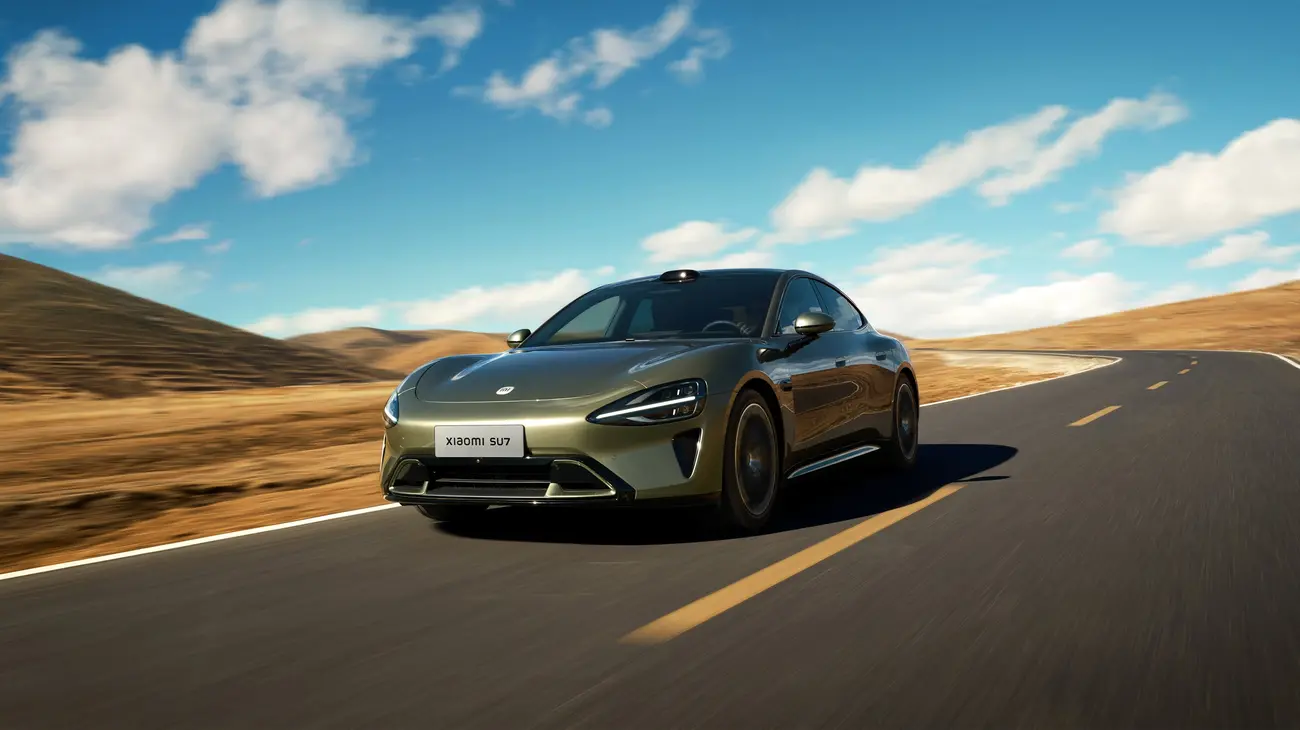
Xiaomi is already recruiting dealers — just not in Portugal
On 26 August 2026 Xiaomi switched on its first international car website, xiaomiauto.com, headlined with a single line: "Officially Coming to Europe in 2027." Sitting next to it is something far more concrete than a marketing promise — an inquiry form for dealers and distributors, with its own address, Autopartners@xiaomi.com.
That changes what this story is. Brands announce European ambitions all the time; very few open a retail recruitment channel three years before selling their first car. If you live in Portugal and have been eyeing an SU7 on YouTube, the practical question is different: when will Xiaomi cars be available in Portugal, and at what price?
The real timeline: Germany first, Portugal nowhere
Xiaomi president William Lu (Lu Weibing) has been specific about the start: the overseas push formally begins in Q3 or Q4 2027. Second half of the year, in other words — not January.
The country order is known too. Germany first, with France and Italy to follow. Right-hand-drive markets such as the UK and Ireland are pencilled in for 2028. CnEVPost also reports a strategic priority of "right-hand-drive before left-hand-drive" attributed to Lu, which sits awkwardly against a Germany-first launch — it is one of the few parts of the story that remains contradictory.
Portugal appears on none of these lists. That is not a snub, it is simply how this works: Chinese brands enter through the large markets and work down to Iberia afterwards, usually a year or two later. If the BYD, MG and Leapmotor pattern repeats, a Xiaomi dealer in Lisbon or Porto is a 2028 or 2029 conversation, not a 2027 one.
Which Xiaomi models might reach Europe
The global site shows the SU7, SU7 Ultra, SU7 Ultra Prototype, YU7 GT, Sky Nomad and the Vision Gran Turismo concept. Showing is not selling: Xiaomi has not confirmed which of these actually cross the border, and there are no country prices, specs or sales channels yet.
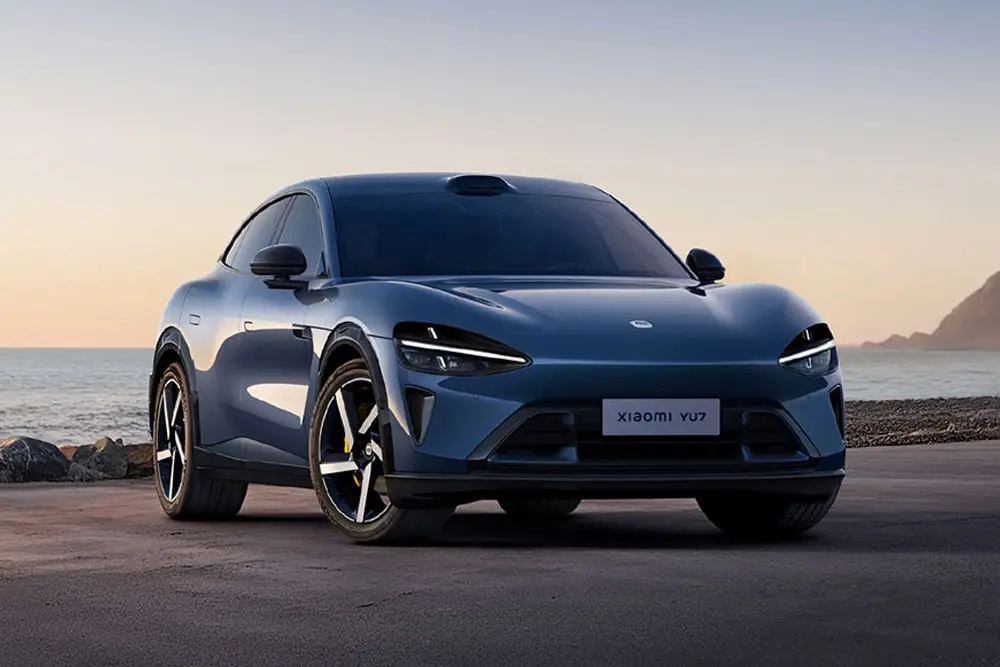
The two obvious candidates are the SU7 saloon and the YU7 SUV.
| SU7 | YU7 | SU7 Ultra | |
|---|---|---|---|
| Body | Saloon, 4.997 m | SUV, 4.99 x 2.00 x 1.60 m | Saloon |
| Architecture | 752 V (Std/Pro) / 897 V (Max) | 800 V SiC | 897 V |
| Power | 320 hp to 690 hp | 508 kW / 691 hp, 866 Nm | 1,548 hp, 1,770 Nm |
| 0-100 km/h | 5.0 s to 2.6 s | 3.23 s (Max) | 1.98 s |
| Battery | 73.6 kWh LFP to 101 kWh NMC | 96.3 kWh LFP to 101.7 kWh NMC | 93.7 kWh CATL Qilin II |
| Range | up to 902 km CLTC (~700-750 km WLTP est.) | up to 835 km CLTC (~600-650 km WLTP est.) | 630 km CLTC |
| China price | from ~€28,000 | ~€30,000 to €39,000 | from ~€64,000 |
The SU7 Max claims 670 km of range recovered in 15 minutes on a compatible charger. Translated to a Lisbon-Porto run: one coffee stop would cover the return leg without a second thought. The YU7 took more than 200,000 reservations in the first three minutes of ordering in China and passed 150,000 deliveries in six months — it outsells the SU7 at home, and it is the model nobody here talks about.
One caveat on range: 902 km is the CLTC cycle, the Chinese standard, and it flatters. Realistic WLTP estimates land around 700-750 km for the SU7 and 600-650 km for the YU7. Still excellent, but not the same number.
How much will the Xiaomi SU7 cost in Portugal
Here comes the maths that spoils the party. The EU applies roughly 30.7% in duties to EVs built in China — a 20.7% countervailing duty plus the standard 10% customs duty. Xiaomi has announced no European plant and no local assembly partnership, so the tariff stays in play.
Add duties, European type approval and CCS2 adaptation, and third-party estimates — these are not Xiaomi figures — put a European SU7 at €35,000 to €40,000 and a YU7 at €45,000 to €55,000. The SU7 Ultra would clear €80,000.
The framing is still favourable. An SU7 at €37,000 with 690 hp and around 700 km WLTP undercuts the Tesla Model 3 (€42,990) and the BYD Seal (€46,990), and sits far below the BMW i4 (€59,950). Portugal adds its own sweeteners: pure EVs are exempt from ISV, the vehicle registration tax, and pay a reduced IUC road tax — a large part of why Chinese EVs sell well here already. What the estimates do not include is the margin of a Portuguese importer, because there isn't one yet.
Importing a Xiaomi SU7 now? Price is the smaller problem
SU7s already drive around Europe through parallel imports, via specialists such as Germany's CEVM. The prices are punitive: €73,000 to €98,000 for a car that costs €28,000 in China.
The technical detail does more damage than the invoice. Those cars come with GB/T plugs, the Chinese standard, incompatible with European CCS2. Through an adapter, DC charging is capped around 90 kW instead of the 350 kW the 800 V architecture allows. On a Lisbon-Algarve run that is the difference between a 15-minute stop and nearly an hour at the charger. Add the absence of an official service network or warranty in Portugal and importing today is a collector's exercise, not daily transport.
What Xiaomi has already built in Europe
The industrial footprint is real. In April 2026 Xiaomi opened an R&D centre in Munich with roughly 50 staff working on high performance, design and vehicle dynamics, led by ex-BMW and ex-Porsche engineers: Rudolf Dittrich (BMW M4 GT3 programme), Claus-Dieter Groll (3 Series, Z4 and X models), Kai Langer (BMW i8 designer), Fabian Schmoelz-Obermeier (Porsche 911 GT3 RS, Lamborghini Temerario) and Dusan Sarac (Rolls-Royce Cullinan).
The SU7 Ultra was approved for European public roads in July 2025 and registered in Munich under the plate "M SU7088E". In November 2025 Lu Weibing drove it about 800 km between Berlin, Hamburg and Frankfurt, hitting 260 km/h on the autobahn and calling Germany's charging network "well-developed overall".
What's missing is the hard, unglamorous part: retail network, workshops, parts, warranty. Which is exactly why the dealer form went live three years before the first car.
The competition won't be waiting
By 2027 Xiaomi lands in a market where BYD, Leapmotor, MG, Omoda and Xpeng already have dealers, warranty histories and customers with real mileage behind them. Leapmotor was the fastest-growing brand in Europe in the first half of 2026. Several of these brands already cover most Portuguese districts.
Xiaomi arrives with an advantage no other Chinese carmaker has: brand recognition among people who already own its phones, TVs and vacuum cleaners, plus an ecosystem (HyperOS, Xiaomi Pilot, HyperEngine motors) that ties the car into it. It also arrives with weak spots — 216,322 cars delivered in the first seven months of 2026, only 39% of the 550,000 annual target, and a Q2 automotive operating loss of 2.6 billion yuan (around €330 million). The company projects profitability in the second half of 2026, and timed the European launch to follow it.
Frequently Asked Questions
There is no date for Portugal. Xiaomi has only confirmed a European launch in the second half of 2027 (Q3 or Q4), starting with Germany and then moving to France and Italy, with right-hand-drive markets such as the UK pencilled in for 2028. Portugal appears on no announced list, so it would be part of a second wave — realistically 2028 or later, and only once an importer, type approval and a service network are in place.
Xiaomi has not released European prices. Third-party estimates put the SU7 at roughly 35,000 to 40,000 euros and the YU7 SUV at 45,000 to 55,000 euros, against about 28,000 euros for the SU7 in China. The gap comes from the EU's roughly 30.7% surcharge on Chinese-built EVs (20.7% countervailing duty plus the standard 10%), European homologation and the switch to CCS2 charging. With no European plant or industrial partner announced, those tariffs stay baked into the final price.
In practice, no. European grey importers ask between 73,000 and 98,000 euros for an SU7, more than double the estimated price of the future official European version. Chinese-market cars also come with a GB/T socket: through an adapter, DC charging is capped at around 90 kW instead of the native 350 kW. On top of that you face ISV and IUC taxes, individual type approval, and no official warranty or service network in Portugal.
Xiaomi's first international website, xiaomiauto.com, includes a contact channel for distribution partners at Autopartners@xiaomi.com. The announcement is Europe-wide and names no countries, so Portuguese dealer groups can register interest through it, but no dealer programme has been announced for Portugal. Recruitment starts with the first-phase markets — Germany, France and Italy.
Buyers who want a Chinese EV in 2026 already have officially represented options: BYD, Leapmotor (the fastest-growing brand in Europe in the first half of 2026), MG, Omoda and Xpeng all sell here with warranty, service and CCS2 charging as standard. Each will have at least another year of established network by the time Xiaomi reaches Europe in 2027. Waiting for Xiaomi only makes sense if you value its smartphone ecosystem integration and are not in a hurry.
What to watch over the next few months
Three signals matter more than any press release if you are buying in Portugal: the appointment of an importer or distribution group for Iberia, confirmation of which models get EU type approval with CCS2 sockets, and the first German price list — because Portuguese prices get calculated from it. Until then, anyone who needs an EV in 2026 or 2027 has genuine choice on the local market, and waiting three years for a brand with no workshop nearby rarely pays off.