
Renault Twingo vs Dacia Spring vs Nissan Pixo: Which Electric City Car to Buy?
Published: 29/09/2026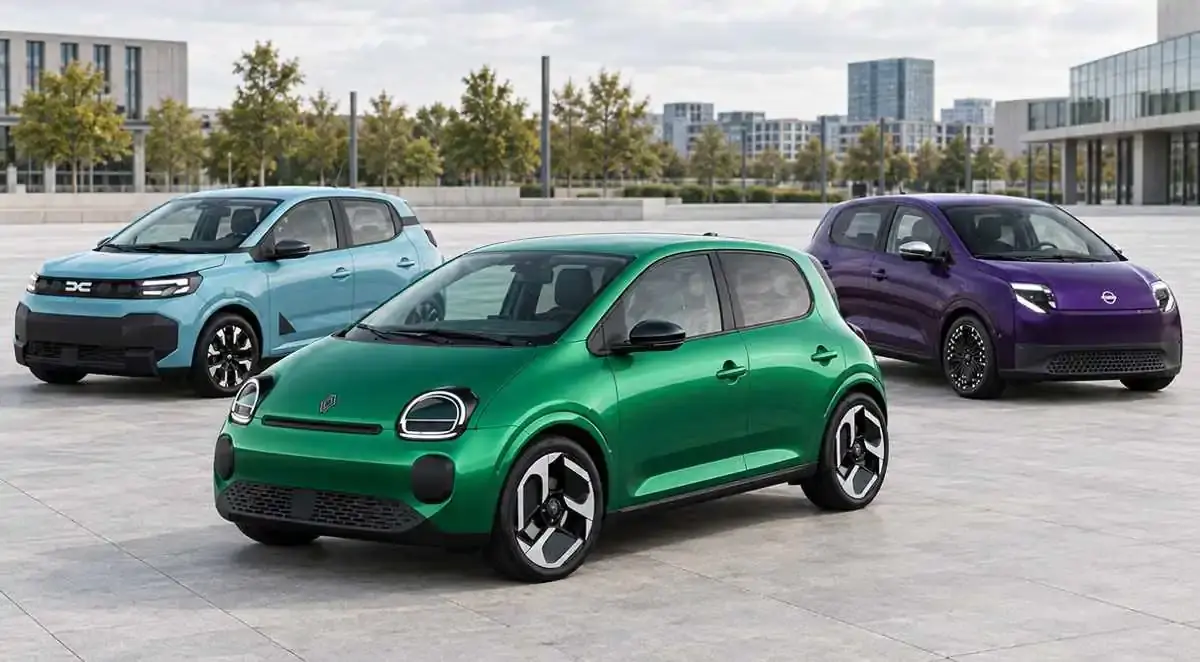
Three cars, one base: what separates the Twingo, Spring and Pixo
Same motor, same battery, same factory in Slovenia. The Renault Twingo E-Tech, the new Dacia Spring and the new electric Nissan Pixo are, under the skin, practically the same car — yet each one asks for a different decision if you're shopping for an electric car under 20,000 euros in Portugal.
So the Renault Twingo vs Dacia Spring vs Nissan Pixo comparison comes down to other things: price, standard equipment, cabin space and, above all, charging. That's where the differences stop being cosmetic and start to matter for your wallet and your daily routine.
What all three share: the RG-EV Small platform and LFP battery
All three are built on Renault Group's RG-EV Small platform (formerly called AmpR Small) and roll off the same assembly line in Novo Mesto, Slovenia. The mechanicals are shared:
- 60 kW (80 to 82 hp) front motor with 175 Nm
- 27.5 kWh usable LFP battery (29 kWh gross), with a CATL-designed chemistry
- 0-100 km/h in 12.1 seconds and a 130 km/h top speed
- Front-wheel drive and four seats
The LFP (lithium iron phosphate) battery is good news if you plan to keep the car for years: it copes better with frequent charges to 100% and is cheaper to produce. For Nissan, it's actually the brand's first EV with this chemistry.
A 130 km/h top speed is enough for the motorway, but these are A-segment city cars. They're built for Lisbon, Porto and the surrounding suburbs, not for running up and down the A1 every weekend.
WLTP range: small gaps, explained by aerodynamics
With the same battery, range only varies with the shape of the body:
| Model | WLTP range |
|---|---|
| Renault Twingo E-Tech | 263 km |
| Nissan Pixo electric | 259 km |
| Dacia Spring | 250 km |
That's 13 km between first and last — irrelevant in practice. The Spring, boxier and styled like a small SUV, pays a small aerodynamic penalty. Even so, it claims 12.7 kWh/100 km, a very low figure helped by its 1,212 kg kerb weight.
WLTP figures are easier to match around town than on the motorway, where range drops noticeably. Still, if you drive 30 or 40 km a day, any of the three only needs plugging in once or twice a week.
Charging: where the Nissan Pixo stands out
This is the biggest difference between the three — and one you only really feel after you've bought the car.
The electric Nissan Pixo comes with 50 kW DC fast charging and an 11 kW bidirectional AC charger as standard. At a fast charger on the MOBI.E network (Portugal's national public charging network), it goes from 15% to 80% in 28 minutes. On a home wallbox, a full charge takes 1 h 55 min.
The Renault Twingo E-Tech and Dacia Spring come with a 6.6 kW AC charger as standard and no DC charging. The 50 kW fast charging and 11 kW AC are part of an optional pack — on the Twingo it's called Advanced Charge and costs €500; on the Spring it's the Charge Pack, which also adds V2L (powering external devices from the battery). With the pack, the Twingo does 10-80% in 30 minutes and the Spring 15-80% in 28 minutes.
Twingo with 50 kW fast charging: is it worth it?
If you only charge at home or at work, 6.6 kW is plenty: the Twingo goes from 10% to 100% in 4 h 15 min, so one night covers it. But if you live in a flat without a garage, rely on public chargers or occasionally take a longer trip, the €500 pack is money well spent. Without DC, a car like this is tied to slow chargers — and at resale time, an EV without fast charging will be a harder sell.
Space and boot: the Spring is bigger outside, the Twingo more versatile inside
On the outside, the Spring is the biggest. Inside, the maths is different:
| Twingo E-Tech | Dacia Spring | Nissan Pixo electric | |
|---|---|---|---|
| Length | 3.79 m | 3.85 m | 3.796 m |
| Width | about 1.72 m | 1.74 m | 1.79 m |
| Boot | up to 360 L | 337 L (+18 L optional frunk) | 356 L |
| Max boot | n/a | 1,283 L | 1,221 L |
| Cabin storage | 25 L | 20 L | 18 L |
The Twingo reaches 360 litres thanks to individually sliding rear seats — you choose between more rear legroom or more luggage space. The Pixo uses the same trick and is the widest of the three, 7 cm wider than the Twingo, which you'll notice in front shoulder room. The Pixo's 356 litres include a 50-litre compartment for storing cables.
The Spring makes up for it with the largest maximum boot (1,283 L with the seats folded) and an optional 18-litre frunk under the bonnet — handy for exactly those cables.
Equipment: three philosophies for the same car
Renault Group has aimed each model at a different buyer, and it shows most clearly in the equipment list.
Dacia Spring: the essentials, no extras
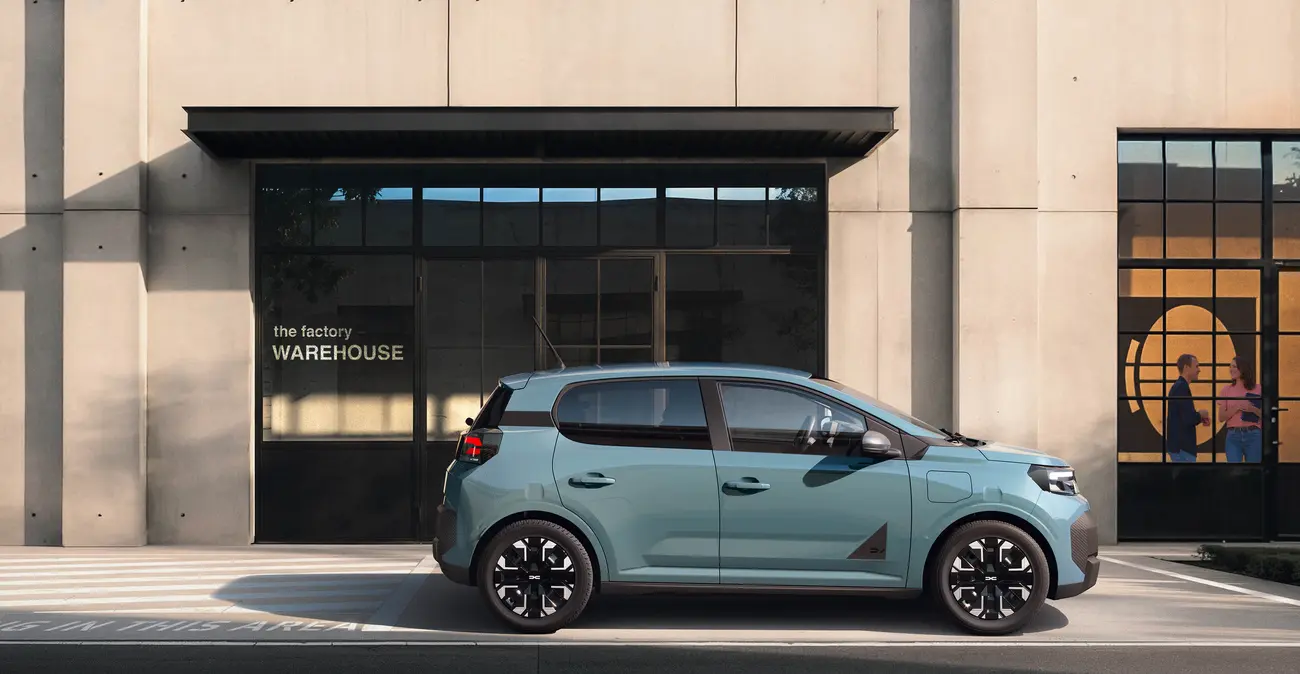
Dacia does what it has always done: strips out everything that isn't essential to keep the price down. The Spring has a boxy, solid look, almost a mini-SUV. If you want a second car for town and don't care about screens, it's the logical pick.
Renault Twingo E-Tech: nostalgia with a rich spec
The Twingo bets on neo-retro styling inspired by the original 1993 Twingo. Even the entry-level Evolution trim is well equipped: 7" digital cluster, 10" central screen with smartphone mirroring, cruise control, automatic emergency braking, lane keeping assist, electric parking brake, manual air conditioning, rear parking sensors and the sliding rear seats mentioned above.
The Techno trim adds the OpenR Link system with Google built-in, the Reno avatar, adaptive cruise control with Stop & Go, automatic air conditioning, one-pedal driving, a folding front passenger backrest and a digital rear-view camera.
Electric Nissan Pixo: everything as standard
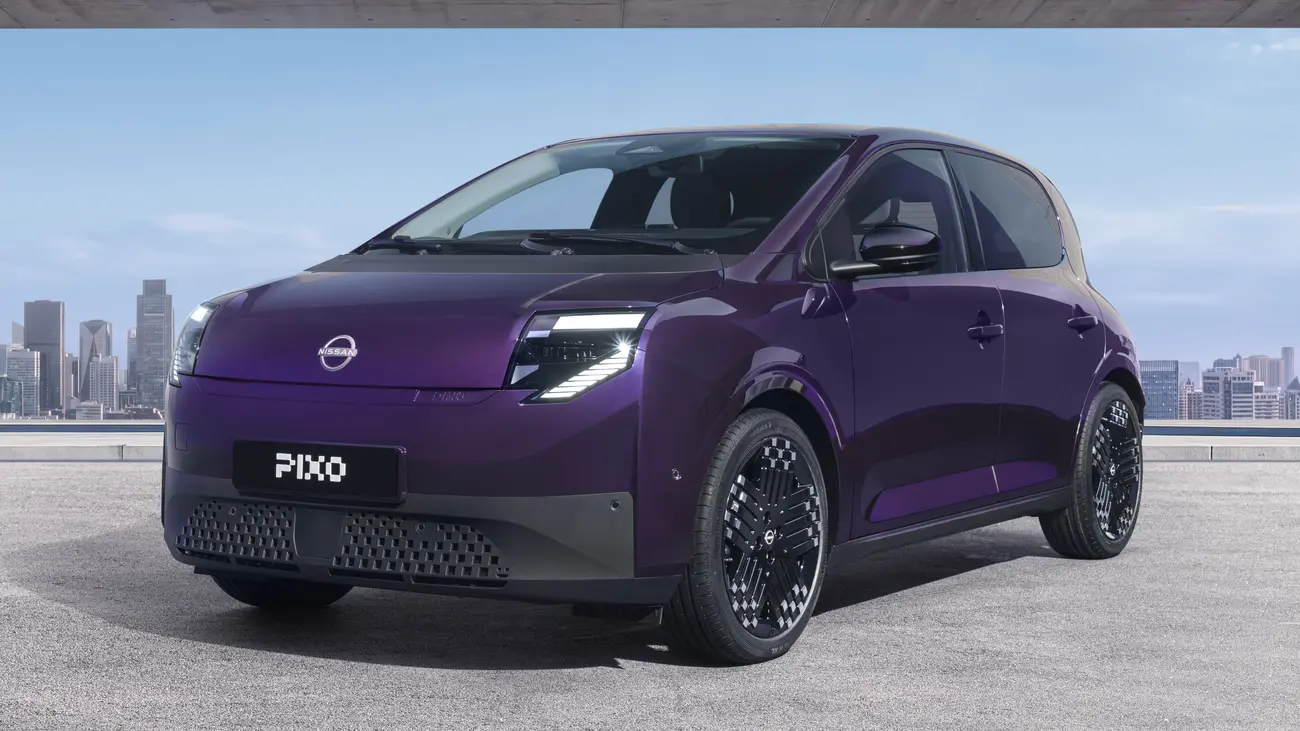
Nissan started from the Twingo and mainly changed the front and rear, with pixel-signature LED headlights and an anime-influenced look. It wants to sell an affordable EV without the "budget car" stigma, so it bundles as standard what the others offer as options or reserve for the top trim:
- Google built-in with the Gemini assistant
- Adaptive cruise control and lane keeping assist
- Hands-free automatic parking
- One-pedal driving
- Facial recognition to remember driver settings — rare in this segment
- 7" cluster and 10" screen on every version
Prices in Portugal: the cheapest electric city car
This is where the decision starts to take shape for buyers in Portugal:
| Model | Version | Price in Portugal |
|---|---|---|
| Dacia Spring | Expression | from €17,900 |
| Dacia Spring | Journey | from €19,400 |
| Renault Twingo E-Tech | Evolution | €19,490 |
| Renault Twingo E-Tech | Evolution with DC charging | €19,950 |
| Renault Twingo E-Tech | Techno | €21,090 |
| Nissan Pixo electric | single version | TBA (expected just under €20,000) |
New Dacia Spring 2 price in Portugal
The new Dacia Spring is the cheapest electric car in Portugal among these three, with the whole range under €20,000. The Expression trim starts at €17,900 and the Journey at €19,400. Before signing, check whether the Charge Pack (50 kW DC and 11 kW AC) is included in your chosen trim — if not, add its cost to the gap with the rivals.
Renault Twingo E-Tech price in Portugal
The Twingo E-Tech is already on sale. The Evolution costs €19,490, rising to €19,950 with DC fast charging, and the Techno sits at €21,090. For most buyers, the Evolution with DC is the sweet spot.
Nissan Pixo price and arrival in Portugal
Price? Not yet. Nissan will announce it from December 2026, with deliveries in early 2027 (from March in France). It's expected to land just under €20,000, close to the fast-charging Twingo. Don't confuse it with the old petrol Nissan Pixo (2009-2013), which still shows up in used car listings — the new Pixo is fully electric.
If the new Nissan Pixo arrives in Portugal close to the €19,950 of the equivalent Twingo, it will offer the most complete spec sheet for the money.
Taxes and incentives for EVs
All three benefit from Portugal's EV tax regime: exemption from ISV (the one-off vehicle registration tax paid on purchase) and from IUC (the annual road tax). It's also worth checking whether funds are available under the Fundo Ambiental (Environmental Fund) incentives for private buyers at the time you buy — when they exist, they can cut the final price significantly.
Frequently Asked Questions
Among the three RG-EV Small city cars, the Dacia Spring is the cheapest (from €17,900 in Expression trim), while the Renault Twingo E-Tech with 50 kW DC charging costs €19,950. The electric Nissan Pixo is expected to land just under €20,000 and is the only one with 50 kW DC and 11 kW AC charging as standard. Since all three share the same 27.5 kWh LFP battery and 60 kW motor, the choice comes down to final price, equipment and included charging hardware.
Nissan plans to announce Pixo pricing from December 2026, with first European deliveries in early 2027 (from March in France). It is expected to cost just under €20,000, close to the €19,950 Twingo Evolution with fast charging. When browsing used listings, don't confuse it with the old petrol Nissan Pixo sold between 2009 and 2013.
Yes. Like the Dacia Spring and Nissan Pixo, the Twingo E-Tech uses a single-speed reduction gear with no clutch or gear changes, so it drives like an automatic and can be driven on an automatic-only licence. The Techno trim adds one-pedal driving, which comes as standard on every electric Pixo.
The new Dacia Spring is rated at 250 km WLTP with its 27.5 kWh LFP battery, up from around 220 km for the previous generation. Official consumption is 12.7 kWh/100 km, helped by a kerb weight of 1,212 kg. In town you can get close to the WLTP figure, but at 120 km/h on the motorway real-world range drops noticeably, so the Spring is best suited to urban driving.
All three electric cars are exempt from ISV purchase tax and the annual IUC road tax, a clear saving over an equivalent petrol city car. Companies and self-employed buyers can also deduct VAT on EVs priced up to €62,500, which comfortably covers all three models. Fundo Ambiental grants for private buyers depend on each year's budget and rules, so check availability before signing.
Twingo, Spring or Pixo: which to buy in Portugal
It depends on what you value:
- Dacia Spring — for those who want to spend as little as possible and mostly drive in town, charging at home. It's the cheapest and offers the most boot space with the seats folded.
- Renault Twingo E-Tech — for those who want the car now, with good equipment and personality. Go for the version with fast charging: the extra €460 pays off.
- Electric Nissan Pixo — for those who can wait until 2027 and want everything as standard, especially fast charging and adaptive cruise control. It's also the widest inside.
In the Renault Twingo vs Dacia Spring vs Nissan Pixo contest, there's almost nothing between them mechanically — you choose on price, equipment and style. The next thing to watch is the Pixo's price in December: if it undercuts the Twingo with DC, Nissan will have the best deal of the trio.