
Nissan Pixo Electric in Portugal: Expected Price, Range and 2027 Launch
Published: 16/09/2026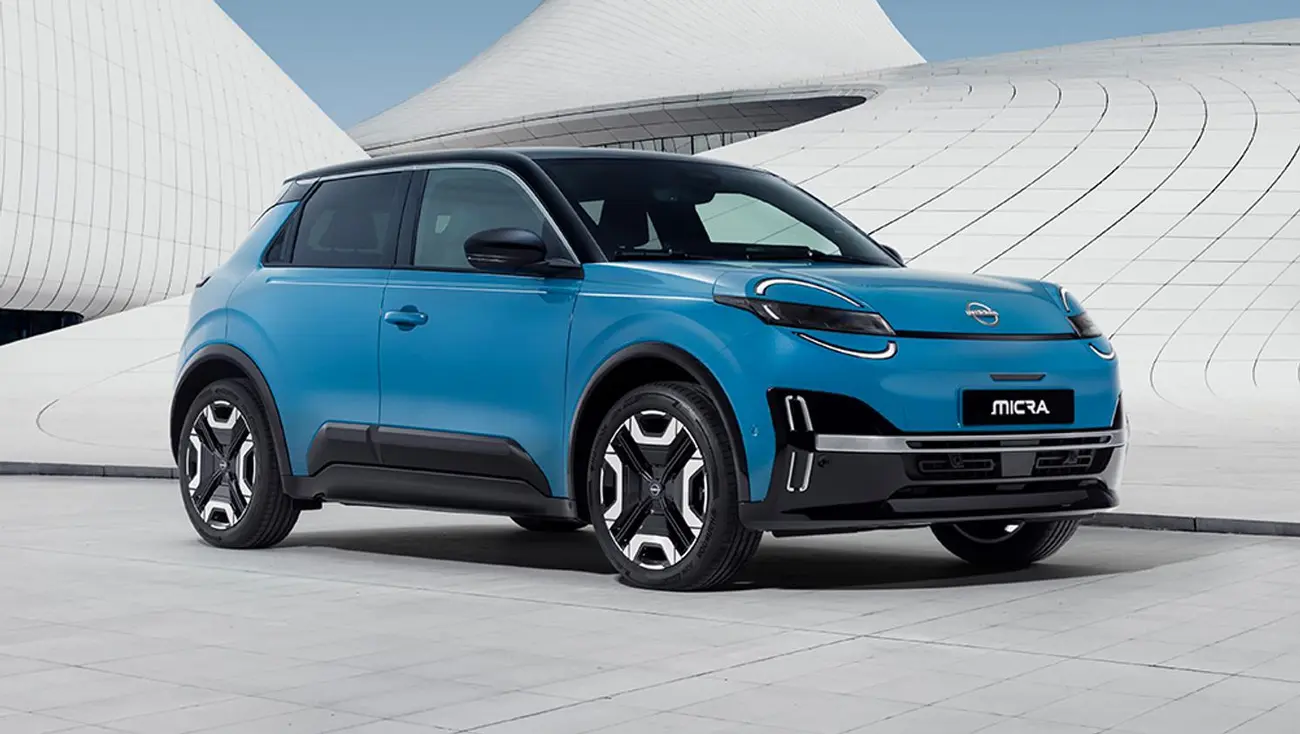
The Pixo name is back — this time without petrol
Nissan has raided its own archive. The Pixo, retired in 2013, returns in 2027 as a fully electric A-segment city car with a target that will get people's attention: under 20,000 euros. The world premiere is set for 23 September 2026, with European deliveries starting in the first half of 2027.
Let's clear up the confusion straight away. The Pixo still filling Portuguese classifieds is the 2009-2013 petrol city car built with Suzuki. This is a different vehicle entirely: electric, LFP battery, sitting on the same underpinnings as the new Renault Twingo E-Tech. The name is all they share.
Nissan UK boss James Taylor explained the thinking: "there is always a lot of benefit in reusing historic nameplates, because you've already got that customer consideration." The alternative on the table was "Wave", and it was dropped.
Nissan Pixo EV specs: what we can reasonably expect
Honesty first: Nissan has published no official figures yet. Everything below comes from the technical twin, the Renault Twingo E-Tech, and from the shared RGEV Small platform (previously AmpR Small) that also carries the new Dacia Spring. These are informed expectations, not confirmed data.
| Specification | Expected value |
|---|---|
| Platform | RGEV Small (formerly AmpR Small) |
| Body | Five-door A-segment city car |
| Length | around 3.79 m |
| Battery | 27.5 kWh LFP (CATL, made in Hungary) |
| Motor | 60 kW / 82 hp, front-mounted, front-wheel drive |
| WLTP range | 262-263 km |
| AC charging | 6.6 kW as standard |
| DC charging | up to 50 kW, 10-80% in about 30 minutes |
| Kerb weight | around 1,200 kg |
| Boot | 360 litres (Twingo figure, bench slid forward) |
| Production | Novo Mesto, Slovenia |
What 262 km of range actually buys you
It will not do Lisbon to Porto in one go. That is not the job. With 27.5 kWh and 262 km WLTP, expect something between 180 and 220 km in real urban and suburban use — and small EVs tend to beat their WLTP figure in town rather than fall short of it, thanks to constant regenerative braking.
Translated into Portuguese routine: a full week of commuting around Greater Lisbon or Porto without touching a charger. Recharging happens overnight on a 6.6 kW home wallbox — four hours from 10 to 100%, or a single night on a reinforced domestic socket. The 50 kW DC capability is there for weekends: half an hour at a motorway stop on the A1 puts 70% of the battery back.
Long trips are where it bites. Faro to Porto in a Pixo means three or four charging stops. This is a second family car or a first urban car, and it should be bought with that in mind.
Nissan Pixo price in Portugal: why under 20,000 euros is believable
Nissan is targeting under 20,000 euros before incentives. In the UK the talk is around £17,000. For Portugal there is no official price yet — not even formal confirmation the model will be sold here, though it almost certainly will be.
What makes the figure credible is the twin. The Twingo E-Tech starts at 19,500 euros in France in Evolution trim, rising to 21,100 euros for the Techno. The Pixo uses the same platform, the same factory, the same motor and the same battery. There is no technical reason for it to cost meaningfully more.
Portuguese tax rules help, too. Fully electric cars are exempt from ISV (the vehicle registration tax) and exempt from IUC (the annual road tax). On an equivalent petrol city car those two line items would easily add a four-figure sum in year one plus a recurring annual charge. On a car at this price point, that is not a rounding error.
Where Portugal loses out is direct purchase aid. France grants up to 4,200 euros through its "Coup de pouce CEE" scheme for lower-income households, which drops the Twingo to roughly 15,300 euros. Portugal currently has nothing comparable in force for private buyers at that scale. The Portuguese list price will, in practice, be the price you pay.
Nissan Pixo vs Renault Twingo vs Dacia Spring: the differences that matter
Three cars, one platform — but not one product.
| Model | Price (France reference) | WLTP range | Power | DC charging |
|---|---|---|---|---|
| Nissan Pixo (expected) | under 20,000 € | around 262 km | 82 hp | 50 kW |
| Renault Twingo E-Tech | 19,500 € (Evolution) | 263 km | 82 hp | 50 kW (option) |
| Dacia Spring | 18,900 € | 225 km | 65 hp | 30 kW |
| Citroën ë-C3 | 23,300 € | 320 km | 113 hp | 100 kW |
| Fiat 500e | 29,900 € | 320 km | 95 hp | 85 kW |
The Spring undercuts everything and gives up a lot to do it: 17 hp less, 37 km less range, and DC charging capped at 30 kW that turns every stop into a long wait. The Twingo and the Pixo are mechanically the same proposition — choosing between them will come down to styling, dealer network and equipment.
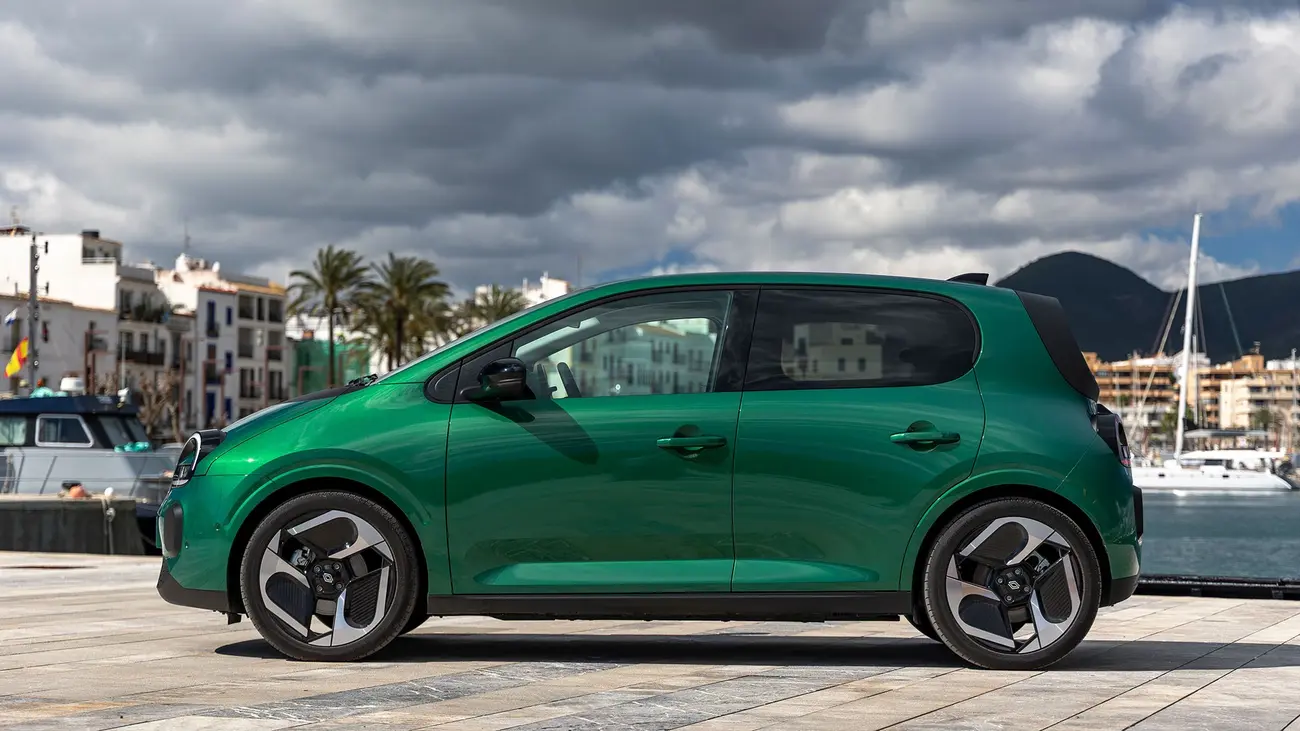
That is where the Pixo makes its own case. Spy shots show a more angular nose than the Twingo's, with squared-off headlights instead of Renault's round units, a sharply cut air-intake bumper and Nissan-specific wheels. The rear is crisper too. Inside, the architecture carries over from the Twingo and Spring, differentiated by colours and materials — but with one meaningful detail: a touchscreen is expected even on the entry trim, which the base Spring does not offer. Nissan's teasers lean on 1980s pixel graphics, and there are reports of design cues borrowed from the brand's old Pike Factory cars, the Pao, Figaro and Be-1.
Built in Slovenia, slotted below the Micra
The Pixo comes off Renault's line in Novo Mesto, Slovenia, alongside the Twingo. European production means it qualifies for incentive schemes that require EU origin — relevant in France today, and potentially relevant in Portugal if any future programme adopts a similar rule.
In Nissan's European hierarchy the Pixo sits one rung below the electric Micra, which is itself a Renault 5 derivative. It marks the brand's return to the A-segment in Europe, and it arrives after Nissan shelved the all-electric Qashqai that had been central to its European recovery plan. The logic has shifted: rather than fight in the mid-size class, attack from below, where pressure from BYD and Leapmotor is fiercest — the Dolphin Surf and T03 are already here, with the VW ID.1 and Kia EV1 on the way.
Frequently Asked Questions
There is no official Portuguese price yet — Nissan has only stated a European target of under 20,000 euros before incentives, with UK expectations around 17,000 pounds. The most reliable benchmark is its technical twin: the Renault Twingo E-Tech starts at 19,500 euros in France in Evolution trim. Because the Pixo is fully electric, it is exempt from Portugal's ISV registration tax and from IUC road tax, which removes well over a thousand euros in first-year costs compared with an equivalent petrol city car. However, Portugal currently has no direct purchase grant comparable to France's 4,200-euro 'Coup de pouce CEE', so the Portuguese list price will effectively be the price you pay.
The world premiere is set for 23 September 2026, with the European market launch expected in the first half of 2027. Nissan has not confirmed a specific Portuguese date, nor formally confirmed sales in Portugal, although it is highly likely given the brand's presence here. Portuguese pricing should only be announced much closer to first deliveries, during 2027.
No — they share only the name. The Pixo still listed in Portuguese classifieds is the 2009-2013 petrol city car developed with Suzuki on the Alto platform. The new Pixo is fully electric, built on the RGEV Small platform (formerly AmpR Small) shared with the Renault Twingo E-Tech and the new Dacia Spring, and produced in Novo Mesto, Slovenia. Nissan revived the badge because, as UK boss James Taylor put it, reusing historic nameplates already carries customer consideration; the alternative name under consideration, 'Wave', was dropped.
Both come from the same platform, but they are not technically equivalent. The Dacia Spring is priced around 18,900 euros as a French reference, with 65 hp, 225 km WLTP and DC charging capped at 30 kW. The Pixo is expected to deliver 82 hp, around 262 km WLTP and DC charging up to 50 kW, plus a touchscreen anticipated even on the entry trim, which the base Spring does not offer. If the lowest possible sticker price is the priority, the Spring wins; if range, charging speed and equipment per euro matter more, the Pixo should have the edge — bearing in mind that every Pixo figure is an expectation derived from the Twingo, not data confirmed by Nissan.
Based on the Renault Twingo E-Tech, the 27.5 kWh LFP battery should accept DC fast charging at up to 50 kW, covering 10-80% in roughly 30 minutes — enough for one stop at an A1 or A2 service area. At home, the 6.6 kW onboard charger fills the battery from 10 to 100% in about four hours on a domestic wallbox, or overnight on a reinforced socket. The Twingo also offers optional 11 kW bidirectional AC charging with V2L, a feature Nissan may or may not carry over.
Is it worth waiting for?
If you want an electric city car now, the Twingo E-Tech is already on sale with identical mechanicals. Waiting for the Pixo makes sense only if Nissan's styling appeals more, if you would rather deal with the Japanese brand's service network, or if you are betting that another rival on the same platform pushes prices down across the board.
On 23 September the guesswork ends. That is when Nissan shows the finished car and, with luck, confirms official range and power figures. Portuguese pricing will not surface until much closer to launch, somewhere in 2027.