
New Dacia Spring in Portugal: Price, Specs and 250 km WLTP Range
Published: 14/09/2026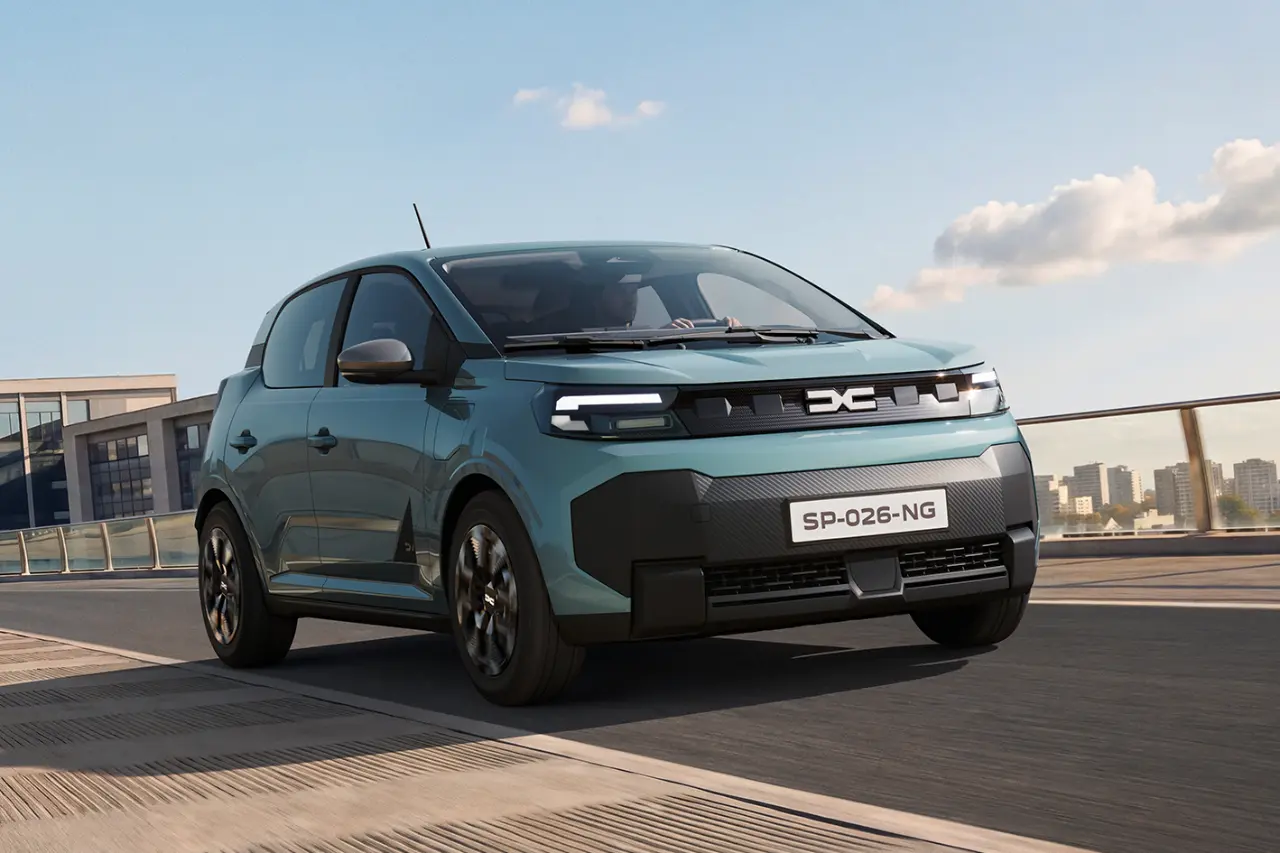
Confirmed: €17,900, and built in Europe
The guessing is over. Dacia revealed the second-generation Spring on 8 September 2026 with firm prices: €17,900 for the Expression and €19,400 for the Journey in France (€19,500 in Italy), before incentives and before options. The whole range sits under €20,000, exactly where the brand said it would.
The bigger change isn't on the price list, it's on the factory floor. The new Spring leaves China and is now built in Novo Mesto, Slovenia, on the same line as the Renault Twingo E-Tech. That frees it from the EU import tariffs applied to Chinese-built EVs and, more usefully for buyers, makes it eligible for European purchase incentives.
We covered this second generation back in June, based on the official teasers and an estimated price. Now the full spec sheet is out — and the estimate wasn't far off.
New Dacia Spring specs: new platform, Twingo mechanicals
The Spring drops the CMFA-EV platform for the RGEV small architecture, also known as AmpR Small — the same one under the Twingo E-Tech, the Renault 5 E-Tech and the Nissan Micra. In practice the Spring stops being an adapted Chinese car and becomes a Renault Group product, with everything that implies for ride quality and electronics.
There's one powertrain: a 60 kW (80 hp) front motor with 175 Nm, 0-100 km/h in 12.1 seconds and a 130 km/h top speed. The battery is a 27.5 kWh usable LFP pack good for up to 250 km WLTP — 25 km more than the old car, but 13 km less than the Twingo, which uses the identical pack. Rated consumption is 12.7 kWh/100 km on the Journey and 12.9 on the Expression.
| Specification | Value |
|---|---|
| Platform | RGEV small / AmpR Small |
| Motor | 60 kW (80 hp), front-wheel drive |
| Torque | 175 Nm |
| 0-100 km/h | 12.1 s |
| Top speed | 130 km/h |
| Battery | 27.5 kWh usable, LFP |
| WLTP range | up to 250 km |
| Consumption | 12.7 kWh/100 km (Journey) |
| Kerb weight | from 1,212 kg |
| Length | 3,850 mm |
| Width (excl. mirrors) | 1,740 mm |
| Height | 1,520 mm |
| Wheelbase | 2,490 mm |
| Turning circle | 4.95 m |
| Boot | 337 l |
| Boot, seats folded | 1,283 l |
| Frunk (optional) | 18 l |
| Seats | 4 |
15 cm longer, and the biggest boot in the class
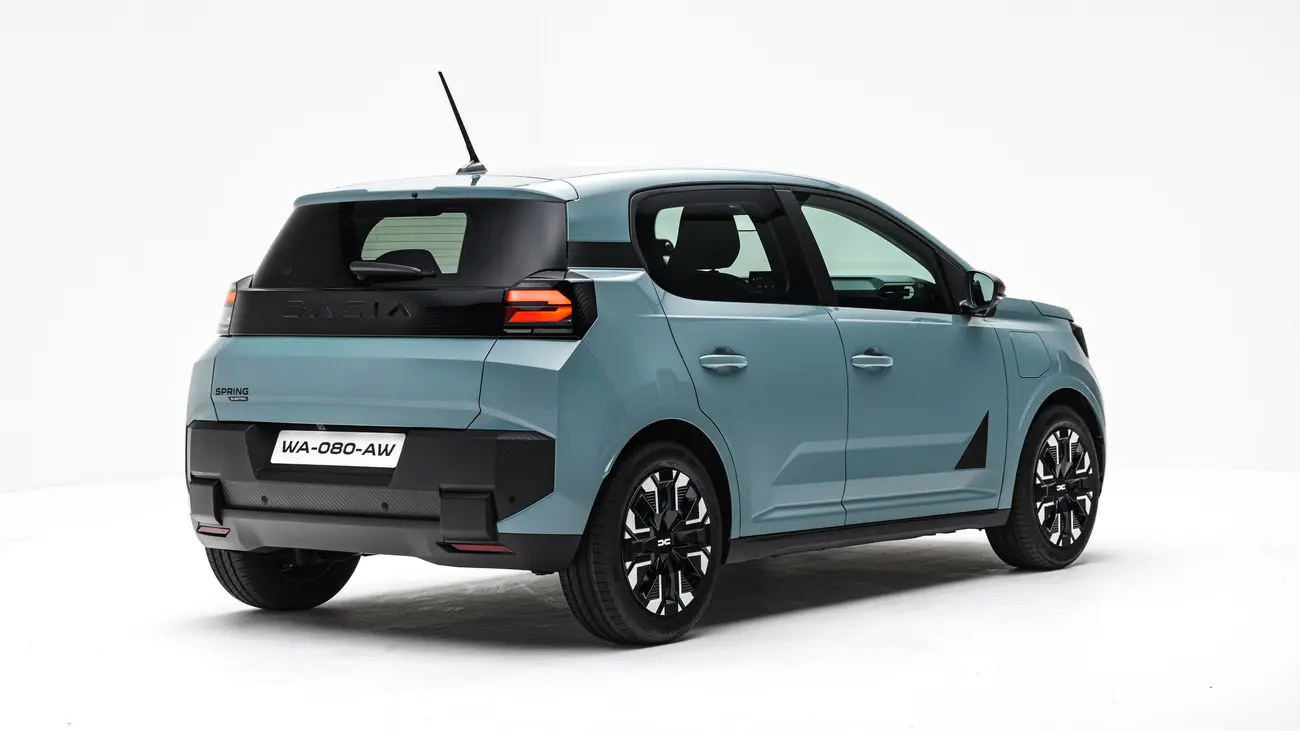
It measures 3.85 metres long (15 cm more than the old Spring, 6 cm more than the Twingo), 1.74 m wide (18 cm more) and 2.49 m between the axles (7 cm more). Height is unchanged at 1.52 m. The turning circle is 4.95 metres, which you appreciate in the narrow streets of Lisbon or Porto.
The real gain is at the back. The boot holds 337 litres under a two-piece adjustable floor — 29 litres more than before and 27 more than the Twingo, making it the biggest in the category. Fold the 50/50 rear bench and it becomes 1,283 litres. There's also an optional 18-litre frunk up front, handy for the charging cable, plus around 20 litres of cabin storage.
Two adults still fit in the back — the Spring is a four-seater — with more head and legroom than before. The rear bench is firm and sits low relative to the floor because of the battery in the chassis, which leaves knees high. Fine around town; less fine on a long trip.
Expression or Journey: where the money goes
The new range has just two trims, Expression and Journey. Worth flagging one source of confusion: Essential, Extreme and Cargo are trims of the outgoing Spring with its 24.3 kWh battery, and have nothing to do with this generation.
| Equipment | Expression | Journey |
|---|---|---|
| Wheels | 15" steel with covers | 16" steel with covers |
| Digital cluster | 7" | 7" |
| Infotainment | Media Control (smartphone mount) | Media Nav Live 10.1" |
| Wireless CarPlay / Android Auto | No | Yes |
| Parking aid | Rear sensors | Sensors plus camera |
| Hands-free card | No | Yes |
| Charge Pack (50 kW DC) | Not available | Optional, €500 |
Both share the motor, battery, 6.6 kW onboard charger and manual air conditioning. The Journey adds the 10.1-inch touchscreen with eight years of connected navigation, two USB-C ports, a reversing camera and the hands-free card. For a €1,500 difference it's the version that makes sense — and it's the only one that can have fast charging at all.
Fast charging is an option, and only on the Journey
This is the car's weak spot and it deserves a straight answer. Every Spring comes with a 6.6 kW AC charger as standard. On a domestic socket that means 9 hours from 15% to 80%; on a reinforced socket, 5 h 40; on a 7 kW wallbox, 2 h 55. If you charge at home overnight, that's plenty.
DC fast charging at 50 kW — 28 minutes from 15% to 80% — only comes with the €500 Charge Pack, which also raises the AC charger to 11 kW (1 h 55 on a three-phase wallbox or a 22 kW point) and adds vehicle-to-load (V2L) so the battery can power external devices. That pack is restricted to the Journey trim.
The problem is the competition. The Leapmotor T03 and BYD Dolphin Surf include DC charging as standard, even on entry versions. A Spring Expression bought without thinking about it is stuck on AC: purely urban drivers won't notice, but anyone who needs a stop on the A1 heading to Porto will. If there's one box to tick on the configurator, this is it.
What it should cost in Portugal
There is no Portuguese price list yet — Dacia opened French orders on 8 September and the national list should follow in the following weeks. What we can do is estimate from the European lists already published, and it's worth being explicit that this is an estimate, not an announcement.
France asks €17,900 for the Expression and €19,400 for the Journey; Italy asks €17,900 and €19,500. Because EVs are exempt from ISV (Portugal's vehicle registration tax) here, the Portuguese figure tends to land very close to those numbers, with small differences in VAT and standard equipment between markets. So expect something around €18,000 for the Expression and €19,500 for the Journey, pending official confirmation.
Add the options before deciding. Using the French list: metallic paint €550, domestic charging cable €300, frunk €150, heated seats €250 and the Charge Pack €500. A white Expression with cable and frunk comes to €18,350; a Journey with the Charge Pack and heated seats passes €20,150. The "under €20,000" promise holds for the base range, then evaporates on the options sheet.
On tax, Portugal is friendly to this car: full ISV exemption, IUC (annual road tax) exemption for pure electric vehicles, and the usual company-car benefits. On direct purchase incentives, check what's actually running when you order — in France this Spring qualifies for the "coup de pouce CEE" grant of €3,620 to €6,180, precisely because it's built in Europe.
Dacia Spring vs Renault Twingo E-Tech, Leapmotor T03 and BYD Dolphin Surf
The Spring's most awkward rival is its factory sibling. The Twingo E-Tech has the same 27.5 kWh battery, the same 60 kW motor and the same 175 Nm, but claims 263 km WLTP — 13 km more — and lists at €19,490 in France. The Spring answers with 27 litres more boot, 6 cm more length and an entry price €1,590 lower. It's a choice between space and range, not between cheap and expensive.
| Model | Entry price (France, Sept 2026) | DC charging standard |
|---|---|---|
| Leapmotor T03 | €16,900 | Yes |
| Dacia Spring | €17,900 | No (option, Journey only) |
| Renault Twingo E-Tech | €19,490 | Optional |
| BYD Dolphin Surf | €19,990 | Yes |
The Leapmotor T03 is still cheaper to get into and includes fast charging; the BYD Dolphin Surf is the priciest of the four. Neither Chinese-built car qualifies for the European incentives tied to local production, which flips that ranking in markets that pay one. In Portugal, with no direct purchase grant in play at the moment, the comparison comes down to list price — and there the Spring sits mid-table, with the biggest boot and the weakest standard charging.
One footnote: the old Chinese-built Spring stays on sale for a transitional period as the cheaper option. It sold over 210,000 units across more than 40 countries since 2021 and was discounted to €11,900 in Germany. If price is your only criterion, the old car still has an argument.
Orders opened on 8 September 2026 with first deliveries expected by the end of the year, though some markets point to early 2027. For Portugal, the next milestone is the official price list — and the answer to the question that matters: whether the Charge Pack stays optional and Journey-only here too.
Frequently Asked Questions
There is no official Portuguese price list yet. In France the new Spring starts at €17,900 for the Expression and €19,400 for the Journey (€19,500 in Italy), so the estimate for Portugal is around €18,000 and €19,500 respectively, pending confirmation from Dacia. Budget for the options too: metallic paint €550, domestic charging cable €300, the 18-litre frunk €150, heated seats €250 and the Charge Pack €500. Orders opened on 8 September 2026, with first deliveries expected between late 2026 and early 2027.
The official WLTP figure is up to 250 km, with consumption of 12.7 kWh/100 km on the Journey and 12.9 kWh/100 km on the Expression. Because the WLTP cycle is heavily weighted towards urban driving, at legal motorway speeds you should realistically expect 20% to 30% less — roughly 170 to 190 km from the 27.5 kWh LFP battery. For the car's intended use, city driving and commuting, the 250 km figure is achievable; for long trips the Spring remains a second-car proposition.
With the standard 6.6 kW AC onboard charger, a 15% to 80% charge takes about 9 hours from a normal domestic socket, 5 hours 40 minutes from a reinforced socket and 2 hours 55 minutes on a 7 kW wallbox. With the optional Charge Pack and its 11 kW AC charger, that same cycle drops to 1 hour 55 minutes. On a 50 kW DC fast charger, 15% to 80% takes 28 minutes.
Almost everything. The new Spring swaps the CMFA-EV platform for the RGEV small (AmpR Small) architecture shared with the Renault Twingo E-Tech, Renault 5 E-Tech and Nissan Micra, and it is now built in Novo Mesto, Slovenia, instead of China — which frees it from the EU import tariffs on Chinese-built EVs. It grows 15 cm longer (3.85 m) and 18 cm wider, the boot rises to 337 litres (1,283 litres with the rear bench folded), and the 27.5 kWh LFP battery lifts range to 250 km WLTP with 60 kW of power. The old 24.3 kWh Spring stays on sale for a transitional period as the cheaper option.
Yes. As a pure electric vehicle, the Spring is exempt from both the vehicle tax (ISV) and the annual road tax (IUC) in Portugal, and it qualifies for the usual company-car tax advantages. That is why the Portuguese price should land very close to the French and Italian lists, with differences coming only from VAT and standard equipment. As for direct purchase incentives, check what is in force when you place the order — in France this Spring qualifies for the "coup de pouce CEE" support of between €3,620 and €6,180, precisely because it is built in Europe.