
Peugeot E-208 GTi vs Opel Corsa GSE vs Alpine A290: Which to Buy in Portugal
Published: 06/10/2026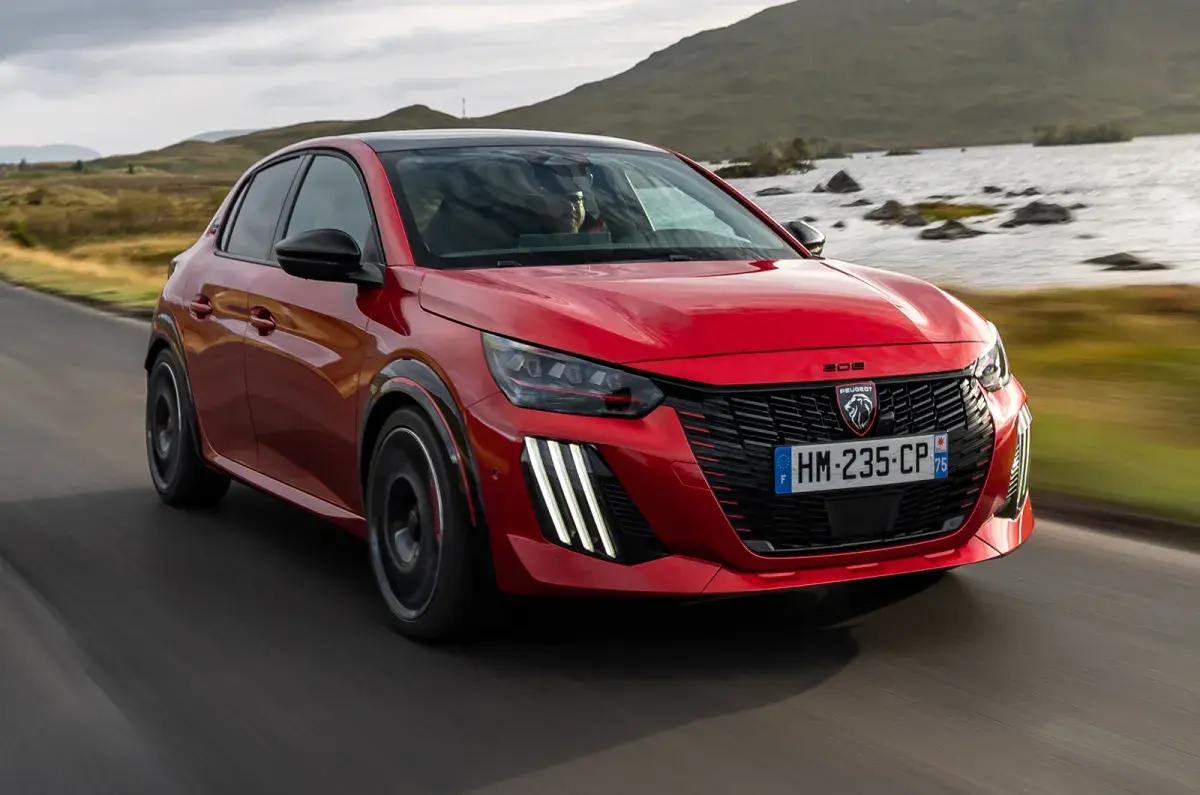
Peugeot E-208 GTi vs Opel Corsa GSE: the same car with two badges?
207 kW, 345 Nm, 0-100 km/h in 5.5 seconds, a Torsen limited-slip differential and four-piston Alcon brakes. That spec sheet describes two cars. The Peugeot E-208 GTi and the Opel Corsa GSE are Stellantis twins, built on the same e-CMP platform with the same M4+ motor, yet they arrive in Portugal at different prices.
This Peugeot E-208 GTi vs Corsa GSE comparison for Portugal tackles the question every buyer asks when they see the two side by side: what exactly does the extra money for the Peugeot buy? And is it worth looking at the Alpine A290 instead, which has less power but less weight, and has become the benchmark electric hot hatch in this market?
What the E-208 GTi and Corsa GSE share
The list of shared parts is long. Both were developed by Stellantis Motorsport, and both are the last performance models on the e-CMP platform before the switch to STLA-One, expected in 2027/2028.
- M4+ motor: 207 kW (280/281 hp) and 345 Nm, front-wheel drive only
- Battery: 54 kWh gross, 51 kWh usable
- Performance: 0-100 km/h in 5.5 s (some early Peugeot data quoted 5.7 s) and a 180 km/h top speed
- Chassis: 25 mm lower, tracks widened by 56 mm at the front and 28 mm at the rear, hydraulic bump stops and a stiffer rear anti-roll bar
- Differential: mechanical Torsen limited-slip on the front axle
- Brakes: four-piston Alcon calipers with 355 mm front discs
- Tyres: Michelin Pilot Sport 4S 215/40 R18 as standard, with Hankook rubber optional if you want more range
British magazine evo, which tested the Peugeot, summed it up in one line: dynamically, the E-208 GTi "closely mirrors" its Opel sibling (sold as a Vauxhall in the UK). Anyone hoping to feel a difference from behind the wheel will struggle.
Prices in Portugal: what each electric hot hatch costs
This is where it gets interesting. In Germany, the Peugeot costs 44,900 EUR and the Opel 39,900 EUR, a gap of roughly 5,000 EUR. In France, the gap shrinks to 3,000 EUR (42,900 vs 39,900 EUR).
In Portugal it is smaller still. The Corsa GSE now has an official price: from 42,740 EUR, with orders open since September. The E-208 GTi was announced at 44,900 EUR. That is a 2,160 EUR difference, less than half of what a German buyer pays extra for the lion badge.
| Model | Power | Price in Portugal |
|---|---|---|
| Opel Corsa GSE | 281 hp | from 42,740 € |
| Peugeot E-208 GTi | 280 hp | 44,900 € |
| Alpine A290 GT | 180 hp | from 39,000 € |
| Alpine A290 GTS | 220 hp | from 45,200 € |
Alpine A290 prices have crept up slightly since launch: the first Portuguese price lists showed 38,700 EUR for the GT and 44,905 EUR for the GTS. The figures in the table are what the brand currently publishes on its Portuguese website, but check with a dealer before signing, especially while promotions are running.
As fully electric cars, all three are exempt from ISV (Portugal's vehicle purchase tax) and IUC (the annual road tax). For company buyers, they sit below the 62,500 EUR threshold that brings zero autonomous taxation and deductible VAT, which makes them serious candidates for a company car with some character.
The difference between the E-208 GTi and Corsa GSE: what the Peugeot premium buys
Same motor, different price. The Peugeot's extra 2,160 EUR mostly buys design and heritage, not performance.
The E-208 GTi goes all in on 205 GTi nostalgia: red accents on the wheel arches, GTi script on the C-pillar exactly as in the 1980s, perforated Speedline-style 18-inch wheels, a roof spoiler and an aggressive rear diffuser. Inside you get red carpets, red seatbelts, a perforated Alcantara steering wheel and the i-Connect Advanced system with TomTom navigation.
Corsa GSE: the fully loaded sleeper
Opel went the other way. The Corsa GSE is understated on the outside, with gloss-black trim and stickers as the main clue that this is no ordinary Corsa. French site Automobile Propre called it a "sleeper", a car that keeps its talents to itself.
Understated does not mean bare. The GSE comes in a single, well-equipped trim:
- Alcantara Performance seats with tartan inserts inspired by the old Corsa GT
- Heated front and rear seats and a heated steering wheel
- Adaptive cruise control with stop and go
- 180-degree rear camera
- Navigation, keyless entry and wireless phone charging
- 10-inch central touchscreen and 7-inch digital cluster with a performance menu (G-forces, lap timer, battery temperature)
There is one practical point in the Opel's favour: its 11 kW AC charger. Carwow lists 7.4 kW for the Peugeot, with 11 kW likely an option. If you charge at home on a three-phase wallbox, that cuts several hours off a full charge.
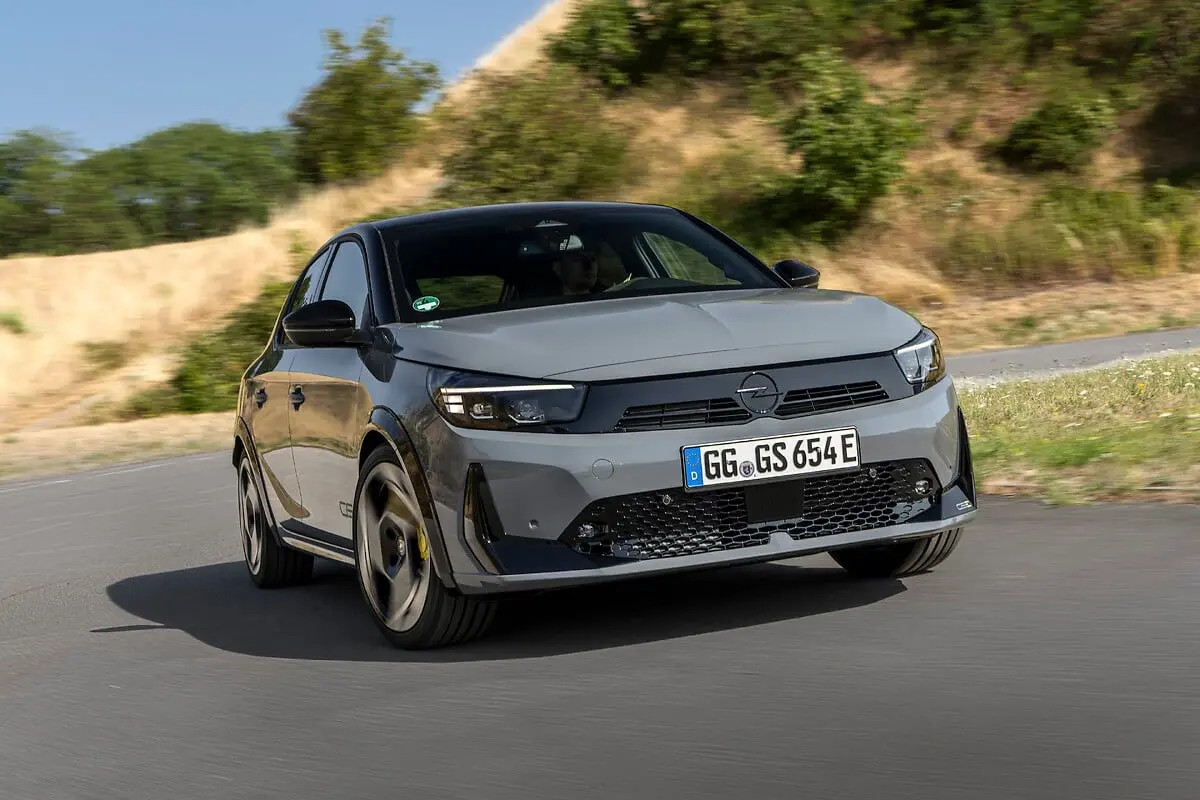
So, is the Peugeot E-208 GTi worth the extra over the Corsa GSE? Only if the design and the link to the 205 GTi matter to you. In acceleration, braking and handling, these are essentially the same car.
Peugeot E-208 GTi vs Alpine A290: less power, more polish
The Alpine A290 GTS follows a different philosophy. It has 162 kW (220 hp) and 300 Nm, does 0-100 km/h in 6.4 seconds and tops out at 170 km/h. On paper it loses on every measure of raw muscle: evo notes the Peugeot is 0.9 seconds quicker to 100 km/h.
The Alpine's trump card is weight. At 1,479 kg it is lighter than the Corsa GSE (1,554 kg) and the E-208 GTi (1,546 kg according to evo, 1,610 kg in earlier Carwow data). Add multi-link rear suspension, 19-inch wheels and Brembo brakes on the GTS. What it lacks is a mechanical limited-slip differential, which is precisely the Stellantis twins' secret weapon.
| Spec | Peugeot E-208 GTi | Opel Corsa GSE | Alpine A290 GTS |
|---|---|---|---|
| Power | 207 kW / 280 hp | 207 kW / 281 hp | 162 kW / 220 hp |
| Torque | 345 Nm | 345 Nm | 300 Nm |
| 0-100 km/h | 5.5 s | 5.5 s | 6.4 s |
| Top speed | 180 km/h | 180 km/h | 170 km/h |
| Battery | 54 kWh (51 usable) | 54 kWh (51 usable) | 52 kWh |
| WLTP range | 350-375 km | 354-374 km | up to 380 km |
| DC charging | 100 kW, 20-80% in ~27 min | 100 kW, 20-80% in 27 min | 100 kW, 10-80% in 30 min |
| AC charging | 7.4 kW (11 kW likely optional) | 11 kW | 11 kW |
| Weight | 1,546-1,610 kg | 1,554 kg | 1,479 kg |
| Mechanical LSD | Yes (Torsen) | Yes (Torsen) | No |
| Wheels | 18" | 18" | 19" |
| Price in Portugal | 44,900 € | from 42,740 € | from 45,200 € |
Inside, the Alpine plays in a different league: Nappa leather, a nine-speaker Devialet sound system, Alpine Telemetrics, twin 10-inch screens, one-pedal driving and F1-inspired Recharge and Overtake buttons. Carwow summed up the duel neatly: the Peugeot is "raw, aggressive and has power to spare", while the Alpine is "subtler, more refined and truer to the classic sporting spirit".
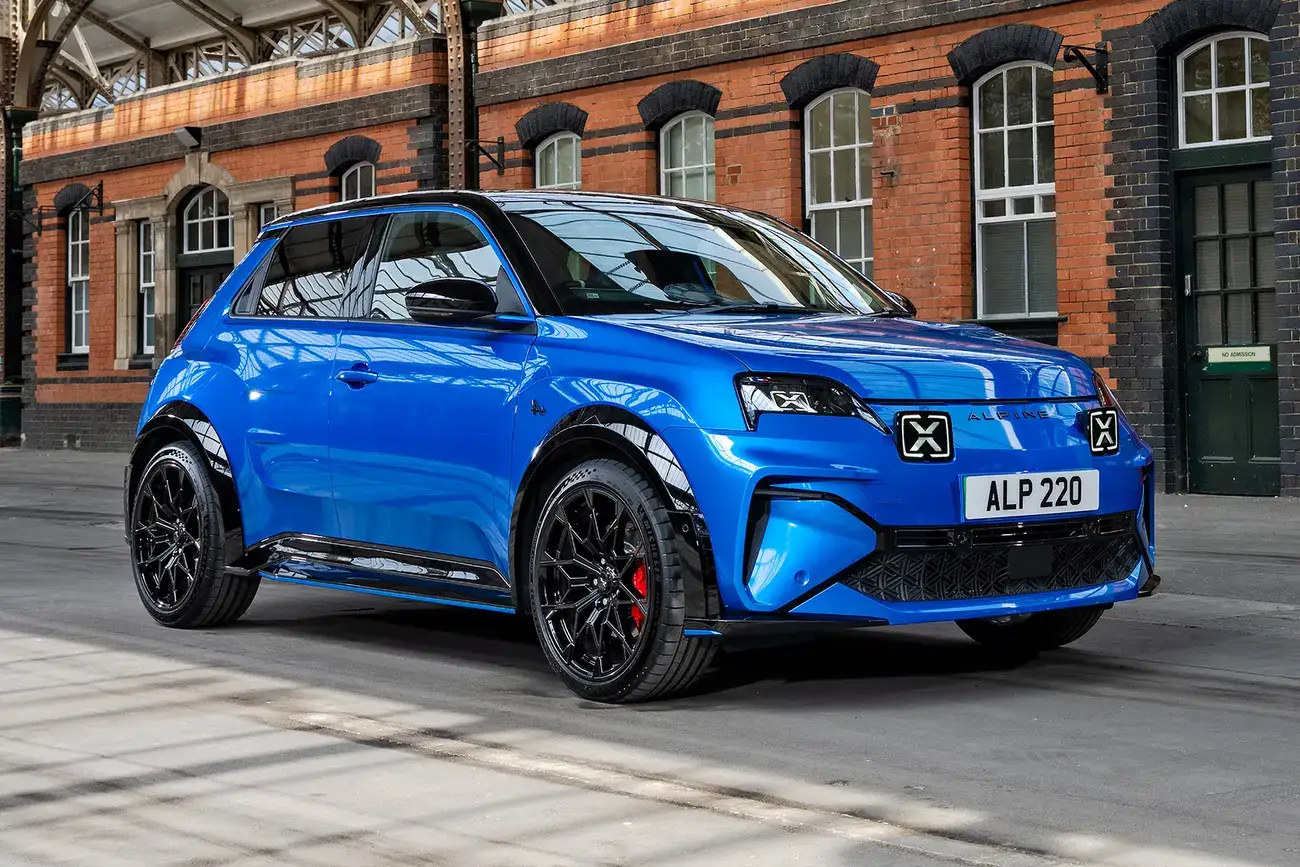
In Portugal, the A290 GTS costs almost exactly the same as the E-208 GTi, about 300 EUR more. Settle for the 180 hp entry-level GT and you save nearly 6,000 EUR over the Peugeot, but at that point you are no longer comparing like-for-like hot hatches.
Real-world range and charging: the shared weak spot
WLTP figures are around 350-375 km for both Stellantis cars, with the Hankook tyres adding about 20 km over the Michelins. On the road, it depends heavily on your right foot. Automobile Propre's Corsa GSE test gives a good picture:
- Mixed route, relaxed driving: 15.7 kWh/100 km, around 324 km
- Normal mode, no effort to save energy: 18 kWh/100 km, around 283 km
- Motorway at 110-130 km/h: 23.5 kWh/100 km, between 200 and 220 km
- On track: 50 kWh/100 km
German tests of the E-208 GTi and Corsa GSE landed at about 20 kWh/100 km, and with enthusiastic driving the range drops to 200-250 km. In Portuguese terms: a Lisbon-Porto run at motorway pace means a stop on the MOBI.E network, Portugal's national public charging network.
That is where the main criticism from the press comes in. 100 kW DC charging is too slow for a car that uses 20 kWh or more when driven properly. electrive also points out that the Corsa GSE has no one-pedal mode, no auto-hold and no paddles to adjust regenerative braking. The Alpine also charges at 100 kW, but at least it offers one-pedal driving.
Other electric hot hatches in Portugal in 2026
The trio is not alone. The Lancia Ypsilon HF uses the same 280 hp motor (42,400 EUR in France). The Cupra Raval VZ has 225 hp and the Mini John Cooper Works Electric 258 hp. From Volkswagen, the ID. Polo GTI is expected at around 39,000 EUR in Germany. Portuguese prices for all of these rivals are not yet confirmed, but the segment is set to get much more crowded over the coming months.
Frequently Asked Questions
Yes. Both use the Stellantis M4+ motor with 207 kW (280/281 hp) and 345 Nm, the same 54 kWh battery (51 kWh usable), a Torsen limited-slip differential and four-piston Alcon brakes. Both hit 0-100 km/h in 5.5 seconds and top out at 180 km/h. The differences come down to design, equipment and onboard AC charging: 11 kW on the Corsa GSE versus 7.4 kW quoted for the Peugeot.
In Portugal the Corsa GSE starts at 42,740 EUR and the E-208 GTi costs 44,900 EUR, a 2,160 EUR difference. That is far smaller than in Germany, where the gap is around 5,000 EUR (44,900 vs 39,900 EUR), or France at 3,000 EUR. As fully electric cars, both are exempt from ISV purchase tax and IUC road tax, and company buyers stay below the 62,500 EUR threshold for deductible VAT.
The E-208 GTi is quicker in a straight line: 280 hp and 345 Nm against 220 hp and 300 Nm, 0-100 km/h in 5.5 seconds versus 6.4 seconds, and a 180 km/h top speed versus 170 km/h. The Alpine fights back with lower weight (1,479 kg against 1,546-1,610 kg) and multi-link rear suspension, but it has no mechanical limited-slip differential. In Portugal the A290 GTS starts at 45,200 EUR, about 300 EUR more than the Peugeot.
WLTP range is around 350-375 km, but real-world figures are noticeably lower. In Automobile Propre's Corsa GSE test, consumption ranged from 15.7 kWh/100 km on a relaxed mixed route (about 324 km) to 23.5 kWh/100 km on the motorway at 110-130 km/h (200-220 km). On a 100 kW DC fast charger, going from 20% to 80% takes about 27 minutes.
The Corsa GSE offers the most performance per euro, with 281 hp from 42,740 EUR and a full standard kit list. The E-208 GTi delivers identical performance with 205 GTi styling for 44,900 EUR, while the Alpine A290 GTS focuses on refinement and lightness. Also worth watching are the Lancia Ypsilon HF (280 hp), Cupra Raval VZ (225 hp), Mini John Cooper Works Electric (258 hp) and VW ID. Polo GTI, though not all of their Portuguese prices are confirmed yet.
E-208 GTi or Corsa GSE: which should you choose?
If performance per euro is the goal, the Corsa GSE is the rational pick. It has the same motor, differential and brakes as the Peugeot, costs 2,160 EUR less in Portugal, and comes with an 11 kW AC charger and a full kit list as standard. Opel even gave it its world debut at the Caramulo Motorfestival in central Portugal, which says something about how seriously it takes this market.
The E-208 GTi justifies the premium for anyone who grew up with the 205 GTi and wants a car that turns heads. It is the same mechanical package with more visual personality, and in Portugal that personality costs far less than it does in Germany.
The Alpine A290 GTS is for buyers who value lightness, refinement and premium equipment over acceleration figures. For the same money as the Peugeot, it delivers a more complete but less explosive experience. Before you sign anything, compare dealer promotions: list prices like these are rarely what you end up paying.