
Opel Corsa GSE in Portugal: Price, Specs and 276 hp Electric Hot Hatch
Published: 16/05/2026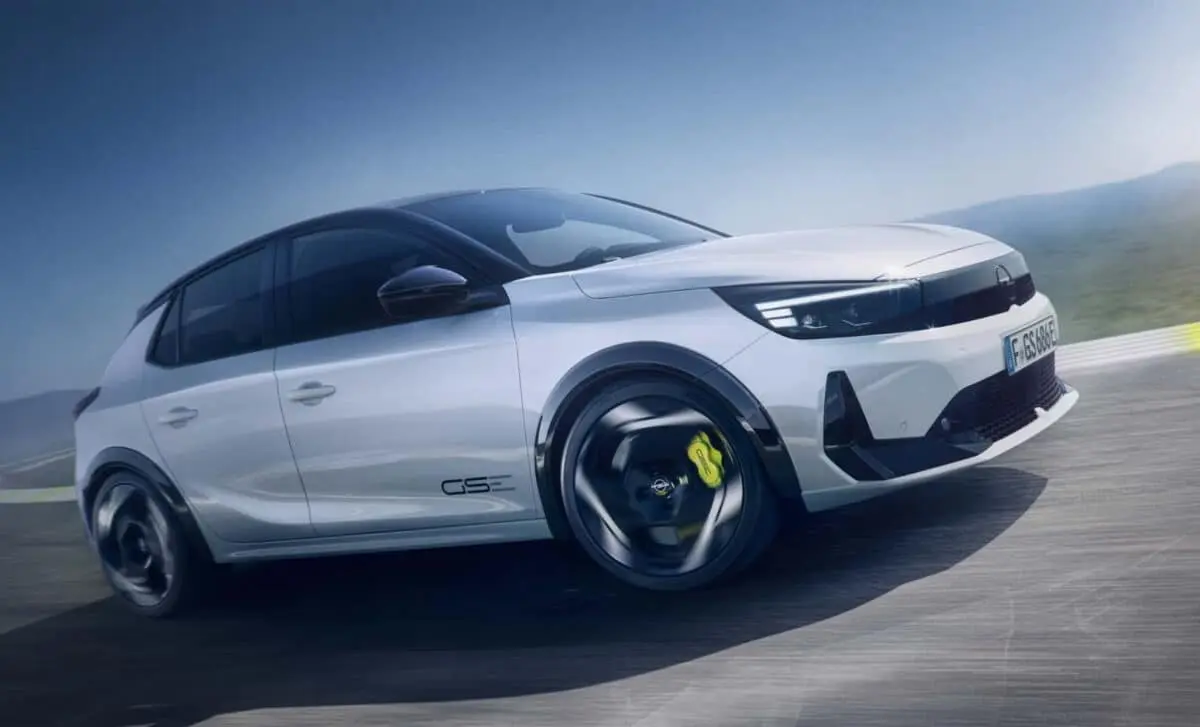
The Corsa GSE is back — and this time it's all electric
Opel is reviving a badge with real history. The new electric Corsa GSE debuts at the Paris Motor Show in October 2026 with 207 kW (276 hp), zero to 100 km/h in 5.5 seconds, and something almost nobody offers in a sporty EV: a mechanical Torsen limited-slip differential. The Opel Corsa GSE Portugal price hasn't been confirmed yet, but European estimates point to roughly 40,000 euros before incentives, with first deliveries arriving by late 2026 or early 2027.
The original Corsa GSE goes back to the 1980s, and the badge stayed alive through the Vauxhall VXR line until 2018. That heritage returns now — minus the combustion engine.
Opel Corsa GSE electric specs that matter
Stellantis confirms three driving modes, each with a different power output that genuinely changes the character of the car:
| Mode | Power | Top speed |
|---|---|---|
| Sport | 207 kW / 276 hp | 180 km/h |
| Normal | 170 kW / 231 hp | 180 km/h |
| Eco | reduced | 150 km/h |
Peak torque is 345 Nm and stays consistent across all modes. The lithium-ion battery offers 54 kWh nominal capacity, with 51 kWh usable. Estimated WLTP range sits at 340 to 350 km — not a long-distance number, but coherent for a performance-focused hot hatch.
Kerb weight is 1,554 kg. That's heavy for a Corsa, but reasonable in the electric performance segment.
Hardware highlights
- Stellantis e-CMP platform (shared with Peugeot e-208 GTI, Abarth 600e, Alfa Romeo Junior Veloce)
- Front-wheel drive, single front-mounted motor
- Mechanical Torsen limited-slip differential — almost unheard of in EVs
- Lowered suspension, GSE-specific axles, anti-roll bars and dedicated hydraulic dampers
- Alcon four-piston front brake calipers with visible GSE branding
- 18-inch three-spoke wheels with 1980s-inspired design
- Michelin Pilot Sport 4S 215/40 R18 tyres
- V2L bidirectional charging
- Plaid bucket seats, Alcantara, yellow stitching and seatbelts, aluminium pedals
- 10-inch touchscreen with G-force display
The Torsen deserves attention. Most electric rivals — Alpine A290, Mini Cooper SE JCW — use software to manage torque between the front wheels. Opel chose a mechanical part instead. It's more predictable through corners and more consistent across variable surfaces. It's also expensive, which says a lot about how seriously this project is taken.
How it stacks up against rivals
On straight-line acceleration the Corsa GSE outpaces its closest competition:
| Model | 0-100 km/h | Power | WLTP range |
|---|---|---|---|
| Opel Corsa GSE | 5.5 s | 276 hp | ~340-350 km |
| Peugeot e-208 GTI | 5.7 s | 280 hp | ~350 km |
| Mini Cooper SE JCW | 5.9 s | 258 hp | ~371 km |
| Alpine A290 | 6.4 s | 220 hp | ~364 km |
| VW ID. Polo GTI (expected) | n/a | 223 hp | ~418 km |
The Peugeot e-208 GTI shares the platform and most hardware with the Corsa, so differences come down to tuning, the diff and price. The Alpine A290 is lighter and more dynamically focused, but with less power. Volkswagen's upcoming ID. Polo GTI plays a different game: longer range, less performance.
What it'll likely cost in Portugal
No official Portuguese pricing yet. European estimates put the Corsa GSE at roughly 40,000 euros in Germany and 35,000 to 37,000 pounds in the UK (around 41,000 to 43,000 euros). Adjusting for the Portuguese market — ISV is reduced for pure electric vehicles, but import margins and standard equipment differ — a realistic list price falls between 39,000 and 43,000 euros.
One key point for buyers based in Portugal: pure EVs remain exempt from ISV (Portugal's vehicle registration tax) up to a value of 62,500 euros, and annual IUC road tax is minimal. For a car with this level of performance, that's serious savings compared to a petrol equivalent, where ISV would add thousands of euros to the sticker.
Opel Corsa GSE availability Portugal
The official reveal is October 2026 at the Paris Motor Show. First European deliveries are scheduled for late 2026, with volume rolling out as a 2027 model year. In Portugal, allowing for the usual homologation and Opel distribution timing, expect first units at dealerships in the first quarter of 2027. Book a test drive early — limited-run hot hatches tend to clear their first allocation fast.
Frequently Asked Questions
There is no official Portuguese price yet. European estimates put the Corsa GSE at around 40,000 euros in Germany and 35,000 to 37,000 pounds in the UK (roughly 41,000 to 43,000 euros). A realistic Portuguese list price falls between 39,000 and 43,000 euros, helped by Portugal's full ISV exemption for pure electric vehicles valued up to 62,500 euros.
The global reveal is October 2026 at the Paris Motor Show, with first European deliveries scheduled for late 2026 as a 2027 model year. Allowing for typical homologation and Opel distribution timing, expect the first units to reach Portuguese dealerships in the first quarter of 2027.
Estimated WLTP range is 340 to 350 km, from a 54 kWh nominal battery (51 kWh usable). That's enough for a week of urban driving or a Lisbon-Evora round trip, but a non-stop Lisbon-Porto run will require one DC fast charge along the way, typically 25 to 30 minutes.
The Corsa GSE delivers 276 hp and 0-100 km/h in 5.5 seconds, beating both the Peugeot e-208 GTI (5.7 s, 280 hp) and the Alpine A290 (6.4 s, 220 hp). It shares the e-CMP platform with the Peugeot, but stands out thanks to a mechanical Torsen limited-slip differential — almost unheard of in EVs — while rivals rely on software torque vectoring.
As a pure EV, the Corsa GSE is fully exempt from ISV (registration tax) up to a vehicle value of 62,500 euros, which covers its expected list price entirely. Annual IUC road tax is minimal compared to a petrol equivalent, and business buyers can deduct VAT, making total cost of ownership significantly lower than a combustion hot hatch.
Does it make sense for a Portuguese buyer?
For drivers who use the car mainly in town and on shorter trips — Lisbon, Porto, the coastal strip — this is a strong proposition. The 340 km range comfortably covers a week of urban driving and a Lisbon-Évora round trip with margin to spare. For Lisbon-Porto non-stop, it falls short: you'll need one fast charge along the way.
Portugal's MOBI.E charging network is now dense enough that this isn't a real obstacle, and DC fast charging brings stops down to 25-30 minutes.
The weak point remains the weight. At 1,554 kg, a Corsa carries a lot of mass for twisty roads. The Torsen helps, but it doesn't cheat physics. Anyone hoping for the lightness of a 2010s Corsa OPC will feel the change.
On the upside, instant electric torque transforms how the car exits corners, and the mode setup lets you drive 231 hp daily and unlock the full 276 hp when the road deserves it.
The electric Corsa GSE isn't a car for everyone. It's for buyers who want a city-friendly footprint with genuine performance credentials, without giving up the tax breaks and running cost advantages of an EV. With arrival confirmed for 2027 and pricing around 40,000 euros, it's worth keeping an eye on Opel Portugal's announcements in the coming months.