
Peugeot E-208 GTi Electric in Portugal: 280 hp, Real Range and Price
Published: 10/06/2026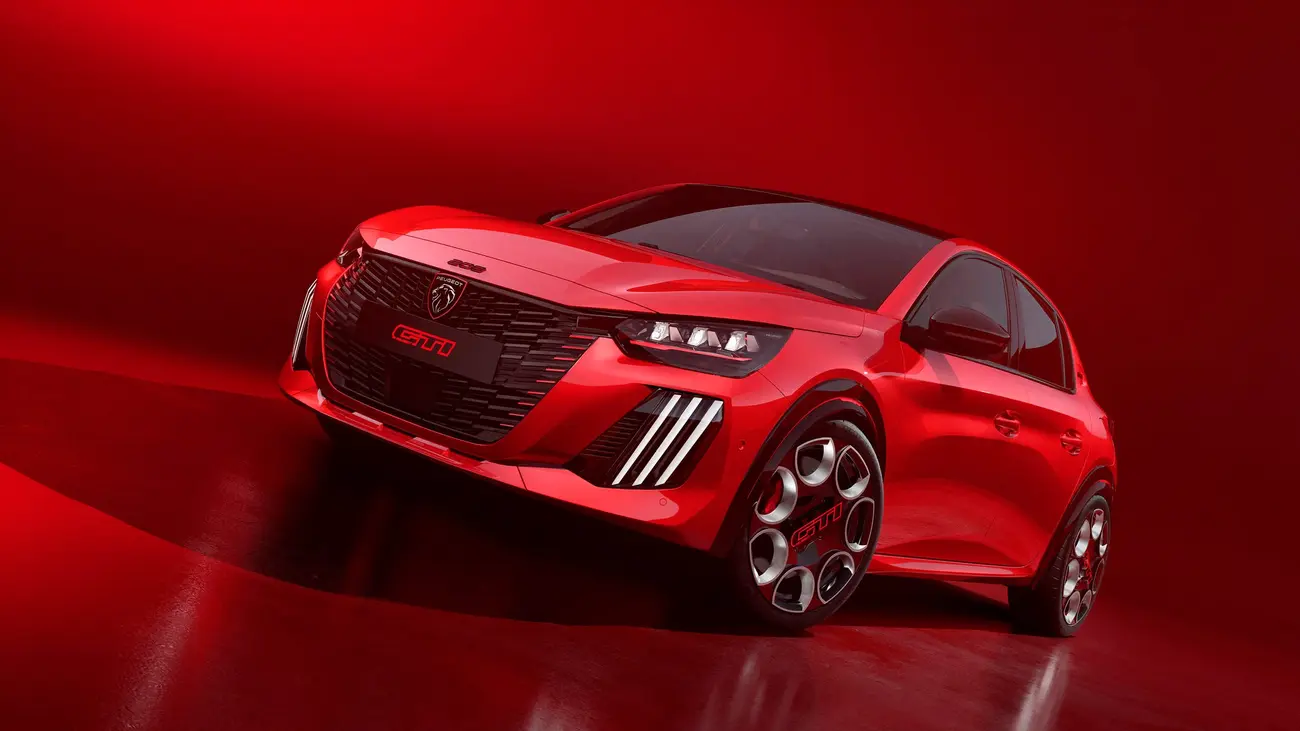
The most powerful GTi ever returns — now fully electric
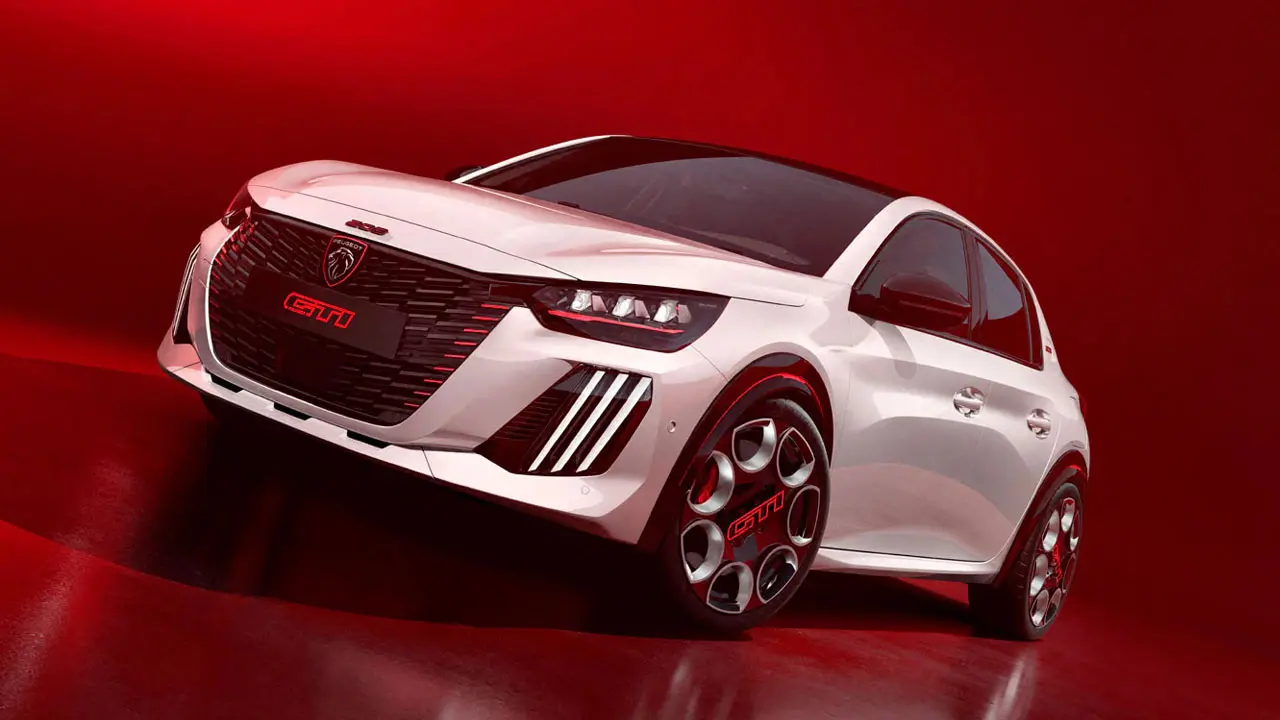
Peugeot has brought back the most charismatic badge in its history. And it did so in the least expected way: the new Peugeot E-208 GTi arrives without a drop of petrol, packing 280 hp and a mechanical limited-slip differential that puts it on a direct collision course with the Alpine A290. Eight years after the last combustion 208 GTi, this is the most powerful GTi the brand has ever built.
The production version was revealed on 8 June 2026, with its public debut at the Le Mans 24 Hours on 12 June — exactly one year after the concept car and a century after Peugeot first raced at La Sarthe. If you're in Portugal looking for an electric hot hatch with genuine sporting pedigree, it's worth understanding what's coming, what the real-world range looks like, and the price we can expect.
Peugeot E-208 GTi: 280 hp and what that means on the road
At the heart of the car is a single front-mounted motor, the 'M4+', developed in France by Peugeot Sport — the same division that races in the WEC and Dakar. The numbers speak for themselves:
| Specification | Value |
|---|---|
| Power | 280 hp (206 kW) |
| Torque | 345 Nm |
| Drivetrain | Front-wheel drive, mechanical limited-slip differential |
| 0–62 mph | 5.7 s |
| Top speed | 112 mph (180 km/h) |
| Battery | 54 kWh (NCM 811, CATL) |
| WLTP range | 217 miles (350 km) |
| DC charging | up to 100 kW, 20–80% in under 30 min |
| Weight | around 1600 kg |
| Tyres | Michelin Pilot Sport Cup 2, 215 mm |
| Brakes | 355 mm front discs, 4-piston calipers |
What those 280 hp mean in practice is more than double the power of the original 205 GTi from the eighties. And it's not just raw output. The 5.7-second 0–62 mph sprint puts it ahead of its platform siblings — the Abarth 600e (5.9 s) and the Alfa Romeo Junior Veloce (5.8 s) — thanks to a shorter final drive ratio. Interestingly, the trade-off is a more modest top speed, capped at 112 mph.
The limited-slip differential is the detail that separates this car from the more civilised electric hot hatches. On the way out of a tight corner, it's what puts the power down instead of letting it vanish into wheelspin. It comes straight from Peugeot's experience in the 208 Rally4 programme.
Real-world range: the Achilles' heel?
Here we have to be honest. The 350 km WLTP figure isn't impressive for 2026, and in real conditions that number drops. One technical source points to a real-world range of 260 to 275 km in mixed driving, with estimated consumption of around 15.5 kWh/100 km.
For day-to-day life in Portugal — commuting in Lisbon or Porto — that's more than enough. The problem shows up on the motorway. On a Lisbon-Porto run (roughly 310 km) driven at a decent pace, you'll need one charging stop. The good news: with DC charging up to 100 kW, going from 20% to 80% takes under 30 minutes. That's a coffee and a bathroom break at a service area.
There's also a curious detail for the purists. In Sport mode, Peugeot switches off regenerative braking and uses friction brakes only, for a more consistent pedal on track. It feels better when driving hard, but it costs you range. In Normal and Eco modes, regen comes back.
Peugeot E-208 GTi vs Alpine A290: the fight Peugeot wants to win
Peugeot makes no secret of its target. CEO Alain Favey admitted the Alpine A290 was the engineers' benchmark, and that the goal was to surpass it in feel and driving purity. On paper, the E-208 GTi wins on power and acceleration:
| Specification | Peugeot E-208 GTi | Alpine A290 GTS | Mini Cooper JCW Electric |
|---|---|---|---|
| Power | 280 hp | 220 hp | 254 hp |
| Torque | 345 Nm | 300 Nm | 340 Nm |
| Weight | ~1600 kg | 1479 kg | 1650 kg |
| 0–62 mph | 5.7 s | 6.4 s | 5.9 s |
| Top speed | 112 mph | 106 mph | 124 mph |
| WLTP range | 217 mi | 226 mi | 251 mi |
The E-208 GTi is the most powerful and the quickest to accelerate. But the Alpine answers with something the power figures don't show: it weighs over 120 kg less. In a hot hatch, weight is everything. The A290 also holds a slight edge in range. The Mini JCW, meanwhile, is the slowest of the three off the line but clearly has the best range and the highest top speed.
Peugeot's bet is to offset the extra weight with Michelin Pilot Sport Cup 2 tyres — competition-grade rubber usually reserved for supercars — plus 355 mm brakes and a chassis dropped 30 mm with a wider track (56 mm at the front, 27 mm at the rear). The rear anti-roll bar rebalances the car to a 50:50 behaviour, against the 30:70 of the standard E-208.
How much will it cost and when does it arrive in Portugal
Here we're still in estimate territory — Peugeot hasn't confirmed official pricing. But there are solid indicators. In Europe, estimates point to around €45,000. In the UK, figures between £35,000 and £40,000 are being mentioned.
For context, the platform siblings give a useful reference. The Abarth 600e starts at around €40,000 and the Alfa Romeo Junior Veloce sits near €42,000 abroad. The E-208 GTi should land in that zone, possibly a little below the Alfa.
In the Portuguese buyer's favour is its electric status. Being fully electric, it benefits from ISV exemption (the vehicle purchase tax) and reduced IUC (the annual road tax), which helps bring its real cost closer to a combustion equivalent. For anyone using it as a company car, there are also the tax advantages tied to EVs.
As for availability, European deliveries begin through 2026, with the UK market targeted for year-end. For Portugal it's reasonable to expect dealer availability somewhere between late 2026 and early 2027.
Frequently Asked Questions
Peugeot has not yet confirmed official Portuguese pricing. European estimates point to around €45,000, with the platform siblings as a reference: the Abarth 600e starts near €40,000 and the Alfa Romeo Junior Veloce sits around €42,000. Being fully electric, it benefits from ISV exemption and reduced IUC, bringing its real cost closer to a combustion equivalent.
The production version was revealed on 8 June 2026, with its public debut at the Le Mans 24 Hours on 12 June. European deliveries begin through 2026 and the UK market is targeted for year-end. For Portugal, it's reasonable to expect dealer availability somewhere between late 2026 and early 2027.
The 54 kWh battery claims 350 km on the WLTP cycle, but in mixed driving one technical source points to a real-world range of 260 to 275 km, with consumption of around 15.5 kWh/100 km. That's more than enough for daily commuting in Lisbon or Porto, but on a Lisbon-Porto run driven at a decent pace you'll need one charging stop.
The E-208 GTi is more powerful (280 hp versus 220 hp) and quicker (0–62 mph in 5.7 s versus 6.4 s), and it adds a mechanical limited-slip differential and Michelin Pilot Sport Cup 2 tyres. The Alpine A290 answers with around 120 kg less weight (1479 kg versus ~1600 kg) and a slight edge in WLTP range (364 km). It's power and grip against lightness and agility.
With DC fast charging up to 100 kW, the E-208 GTi recovers from 20% to 80% of its battery in under 30 minutes — about the time for a coffee at a service area. In Sport mode Peugeot switches off regenerative braking for a more consistent pedal on track, which slightly costs range; in Normal and Eco modes the regen comes back.
Is it worth waiting for?
It depends on what you're after. If you want the fastest, most hardcore electric hot hatch in the segment — with a limited-slip diff, track tyres and the GTi heritage — the E-208 GTi looks set to deliver. If your priority is range and lightness, the Alpine A290 remains a strong argument, and the Mini JCW takes you further on a trip.
What makes this launch interesting for the Portuguese market is the confirmation that the compact electric performance segment is finally taking shape with real options. All that's missing is the official price. It's worth keeping an eye on Peugeot Portugal's next announcements — that's where we'll find out whether this electric GTi is a temptation or an expensive dream.