
BMW i3 vs Tesla Model 3 in Portugal: Range, Charging and Which to Buy
Published: 09/11/2026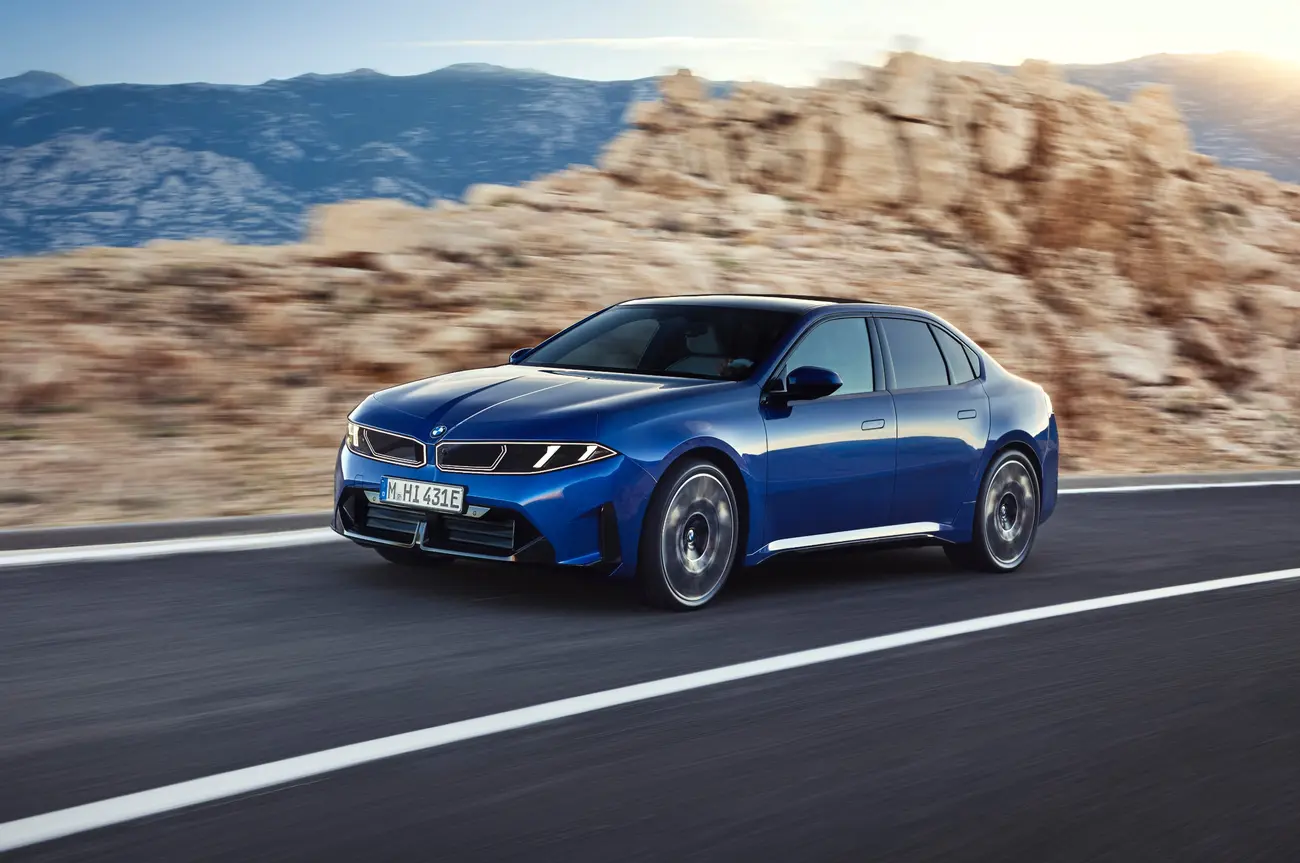
BMW i3 50 xDrive vs Tesla Model 3 AWD: the head-to-head we've been waiting for
912 km of WLTP range against 660 km. 400 kW charging against 250 kW. And, by our latest numbers, a price gap of around €15,000 in Portugal. The new BMW i3 has just been through its first press drives in the south of France, and everyone is asking the same question: is it better than the Tesla Model 3?
We've run the BMW i3 vs Tesla Model 3 comparison with Portugal-based buyers in mind. In the BMW corner sits the i3 50 xDrive, the most powerful version and the only one with an official Portuguese price so far. In the Tesla corner, its direct all-wheel-drive rival: the Model 3 Premium AWD (formerly the Long Range AWD). The first reviews are in — Electrifying.com gave it 9/10, CarExpert called it "a benchmark for the segment" and France's Caradisiac scored it 14.3/20 — so there's now real-world data to put next to the spec sheet.
The numbers side by side
| BMW i3 50 xDrive | Tesla Model 3 Premium AWD | |
|---|---|---|
| Usable battery | 108.7 kWh | 79.0 kWh |
| Architecture | 800 V | 400 V |
| Power / torque | 345 kW (469 hp) / 645 Nm | 366 kW (498 hp) / 493 Nm |
| 0-100 km/h | 4.7 s | 4.0 s |
| Top speed | 200 km/h | 201 km/h |
| WLTP range | 912 km | 660 km |
| Real-world range (EV Database) | 720 km | 555 km |
| Max DC charging | 400 kW | 250 kW |
| 10-80% DC | 21 min | 28 min |
| AC charging | 11 kW (22 kW optional) | 11 kW |
| Length / wheelbase | 4,760 / 2,897 mm | 4,720 / 2,875 mm |
| Weight | 2,280 kg | 1,899 kg |
| Boot / frunk | 420 L / 31 L | 594 L / 88 L |
| Towing (braked) | 1,800 kg | 1,000 kg |
| Battery warranty | 8 years / 160,000 km | 8 years / 192,000 km |
| Price in Portugal | €65,500 | around €49,000 (reference) |
Price difference in Portugal: how much more is the BMW?
The i3 50 xDrive carries an official Portuguese price of €65,500, with the First Edition at €74,000. The cheaper i3 40 xDrive has no confirmed price here yet — in Germany and France it starts at €59,900.
On the Tesla side, the big-battery, all-wheel-drive Model 3 cost around €49,000 in Portugal when we last checked, in May 2026. Tesla adjusts prices often and has since renamed the range (Long Range became Premium), so it's worth confirming the current figure in the online configurator. Germany gives a cleaner reference point: €65,900 for the i3 50 xDrive against €50,970 for the Model 3 Premium AWD.
The exact gap depends on Tesla's current price, but the order of magnitude is clear: the BMW costs a lot more, somewhere in the region of €15,000. And if you simply want a Model 3, the entry-level RWD was around €37,000 at our last check — roughly half the price of an i3 First Edition.
BMW i3 vs Tesla Model 3 real-world range: the i3 wins comfortably
No contest here. Using the same methodology for both cars, EV Database estimates 720 km of real-world range for the i3 50 xDrive and 555 km for the Model 3 Premium AWD — roughly 30% more for the BMW. In practice, a Lisbon-Porto return trip without stopping to charge stops being wishful thinking.
There's a catch. The i3 gets there with a 38% bigger battery and nearly 380 kg of extra weight. The Tesla is slightly more efficient: 142 Wh/km in real-world use versus 151 Wh/km for the BMW. On its Australian first drive, CarExpert measured 19.3 kWh/100 km over a 175 km mixed loop, driven with some enthusiasm — good for more than 560 km. Drive gently and the estimate rises to 600-700 km.
What about winter motorway driving?
This is the scenario that punishes EVs the most, and the i3 keeps its lead. At 110 km/h in mild weather, EV Database puts the BMW at 695 km and the Tesla at 535 km. In the cold, those figures drop to 525 km and 400 km respectively.
On a trip with a single charging stop, the i3 covers 895 km against the Model 3's 654 km. If you regularly drive Lisbon-Algarve or Porto-Algarve, this is the BMW's strongest argument.
BMW i3 vs Tesla Model 3 charging speed: 400 kW versus Superchargers
The i3's 800-volt architecture allows peaks of 400 kW and a 10-80% charge in 21 minutes, averaging 230 kW. The Model 3, on 400 V, tops out at 250 kW and needs 28 minutes for the same window. On an ultra-fast charger, the BMW saves seven minutes while filling a much bigger battery.
The thing is, most of the fast chargers you'll find on Portuguese motorways don't reach 400 kW. On a 150 kW unit the result flips: 38 minutes for the i3 against 33 for the Tesla, simply because there's more battery to fill. On a 50 kW charger the gap widens to 96 versus 70 minutes.
Then there's the network. Tesla has its Supercharger network, easy to use and well spread along the main routes. The i3 counters with Plug & Charge (plug in and go, no cards or apps), optional 22 kW AC charging and bidirectional charging: 3.7 kW V2L to power devices, plus V2H/V2G for your home or the grid. If you charge mostly at home and only occasionally use MOBI.E — Portugal's national public charging network — these differences matter little day to day.
Boot space and rear seats: the Tesla carries more
On cargo space, the Model 3 wins outright: 594 litres in the back plus 88 litres in the frunk, against 420 + 31 litres for the i3. That's almost 230 litres more in total — the difference between fitting the pushchair and the holiday luggage at the same time, or not. Both have a saloon-style opening, and The Irish Times notes the i3's is on the small side.
The rear seats are a closer call. Electrifying found the i3's back seats roomier than the Model 3's, thanks to the 2,897 mm wheelbase. CarExpert and The Irish Times, on the other hand, flag limited foot room when the front seats are set low. The flat floor at least makes the middle seat usable.
Driving and onboard tech
BMW buyers want their car to drive like a BMW, and the first reviews say it does. Electrifying describes the steering as more engaging than both the Model 3 and the Mercedes C-Class. The Irish Times confirms it feels like a 3 Series, though the 2,280 kg shows in corners, with the nose feeling heavy at times.
The Tesla keeps some clear advantages. It's quicker off the line — 4.0 s versus 4.7 s, with the Performance version doing 2.9 s — and its driver-assistance software remains more advanced, according to ArenaEV and Autoblog.
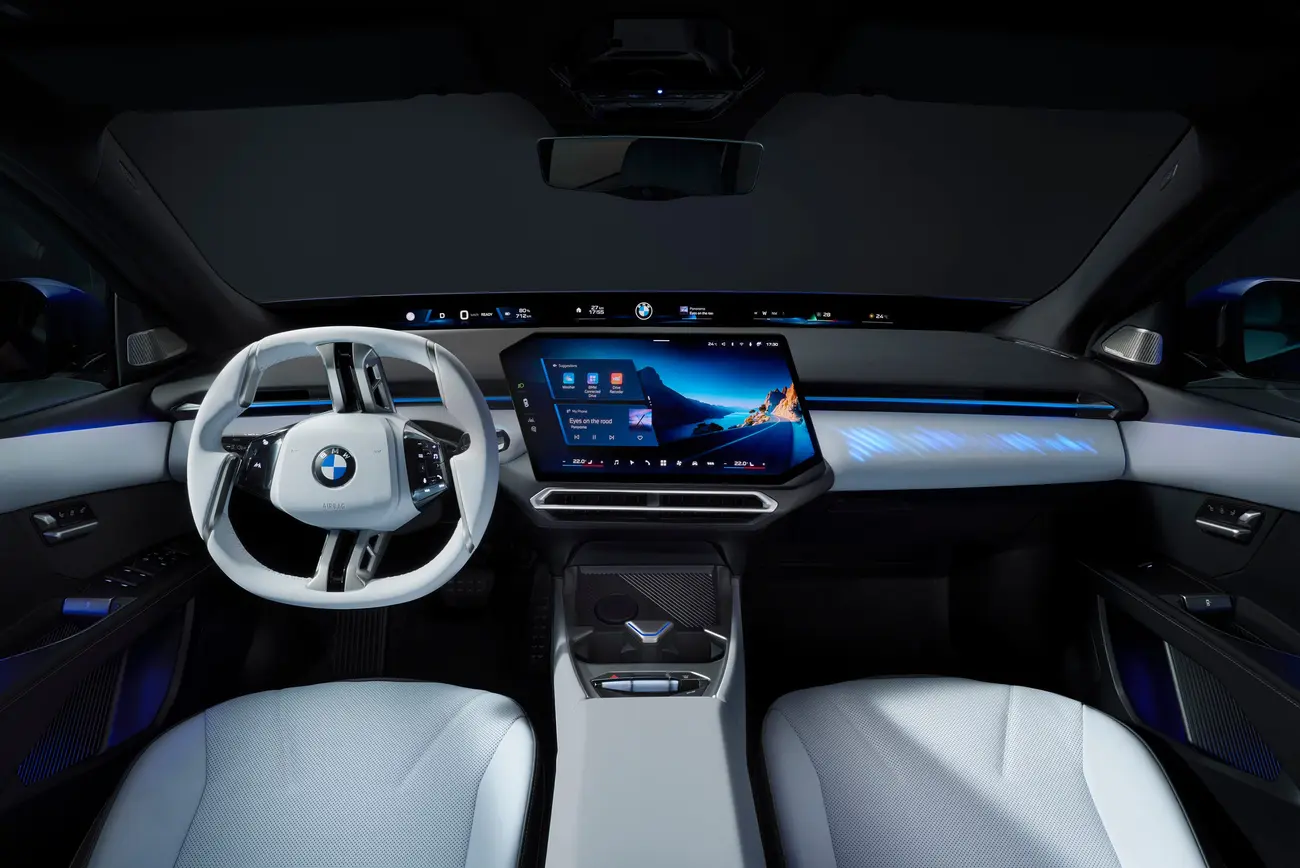
Inside, the i3 relies on Panoramic Vision, a digital strip running along the base of the windscreen, and a 17.9-inch central screen versus the Tesla's 15.4 inches. CarExpert rates the material quality as "uniformly superb". The downside: almost every control goes through the touchscreen, and the haptic steering-wheel buttons won't win everyone over.
Company car buyers: ISV, IUC and VAT deduction
For fleets and business owners, the rules are the same for both cars. As EVs, both are exempt from ISV (Portugal's vehicle registration tax) and IUC (the annual road tax). Both also sit below the €62,500 ex-VAT threshold (around €76,875 including VAT) that allows a company to deduct VAT on the purchase — the i3 50 xDrive comfortably, and even the €74,000 First Edition.
In practice, when buying through a company, the real price gap shrinks because VAT is recovered on both. Even so, the Tesla starts from a much lower base.
Frequently Asked Questions
The BMW i3 50 xDrive. According to EV Database, at 110 km/h in cold weather the i3 covers around 525 km, against 400 km for the Tesla Model 3 Premium AWD — an advantage of more than 30%. The gap comes mainly from battery size: 108.7 kWh usable in the BMW versus 79 kWh in the Tesla, since the Model 3 is actually slightly more efficient (142 vs 151 Wh/km in real-world driving).
It depends on the charger. On an ultra-fast unit, the i3's 800-volt architecture peaks at 400 kW and goes from 10-80% in 21 minutes, versus 28 minutes for the Model 3 (250 kW). But on a 150 kW charger, very common on Portuguese motorways, the Tesla comes out ahead: 33 minutes against 38 minutes for the BMW, which has a bigger battery to fill.
The i3 50 xDrive costs €65,500 in Portugal, while the all-wheel-drive Model 3 was around €49,000 at our last check (a reference figure — confirm it in Tesla's configurator). For the extra outlay, the BMW gives you 165 km more real-world range (720 vs 555 km), 400 kW ultra-fast charging, a 1,800 kg braked towing capacity and bidirectional V2L/V2H/V2G charging. In return, the Tesla has a bigger boot (594 + 88 L vs 420 + 31 L), quicker acceleration and a longer battery warranty mileage (192,000 vs 160,000 km).
The tax rules are the same for both: as EVs, they are exempt from ISV (registration tax) and IUC (annual road tax). Both sit below the €62,500 ex-VAT threshold (around €76,875 including VAT) that lets a company deduct VAT on the purchase — including the €74,000 i3 First Edition. With VAT recovered, the effective price gap between the two narrows, but the Tesla still starts from a lower base.
Production of the new BMW i3 started in August 2026, with first European deliveries expected in autumn 2026; in France, the commercial launch is scheduled for December 2026. The i3 50 xDrive already has an official Portuguese price (€65,500, or €74,000 for the First Edition), while the cheaper i3 40 xDrive is still awaiting local pricing — in Germany and France it starts at €59,900.
BMW i3 or Tesla Model 3: which to buy in Portugal?
Go for the BMW i3 50 xDrive if you cover a lot of motorway kilometres, want the longest range in the segment and value driving feel and a more premium cabin. 720 km of real-world range and 525 km on a cold motorway put it on a level the Model 3 can't reach.
Go for the Tesla Model 3 if budget matters, you need a proper boot, or you value the Supercharger network and driver assistance. For roughly €15,000 less, it delivers 555 km of real-world range, quicker acceleration and far more luggage space.
Among premium electric saloons in Portugal in 2026, the i3 is the first rival to beat the Model 3 clearly on both range and charging. The next thing to watch is the i3 40 xDrive's Portuguese price: if it lands close to €60,000, it could be the version that narrows the gap to the Tesla.