
BMW i3 2027 Price in Portugal: 40 xDrive vs 50 xDrive and 912 km Range
Published: 10/10/2026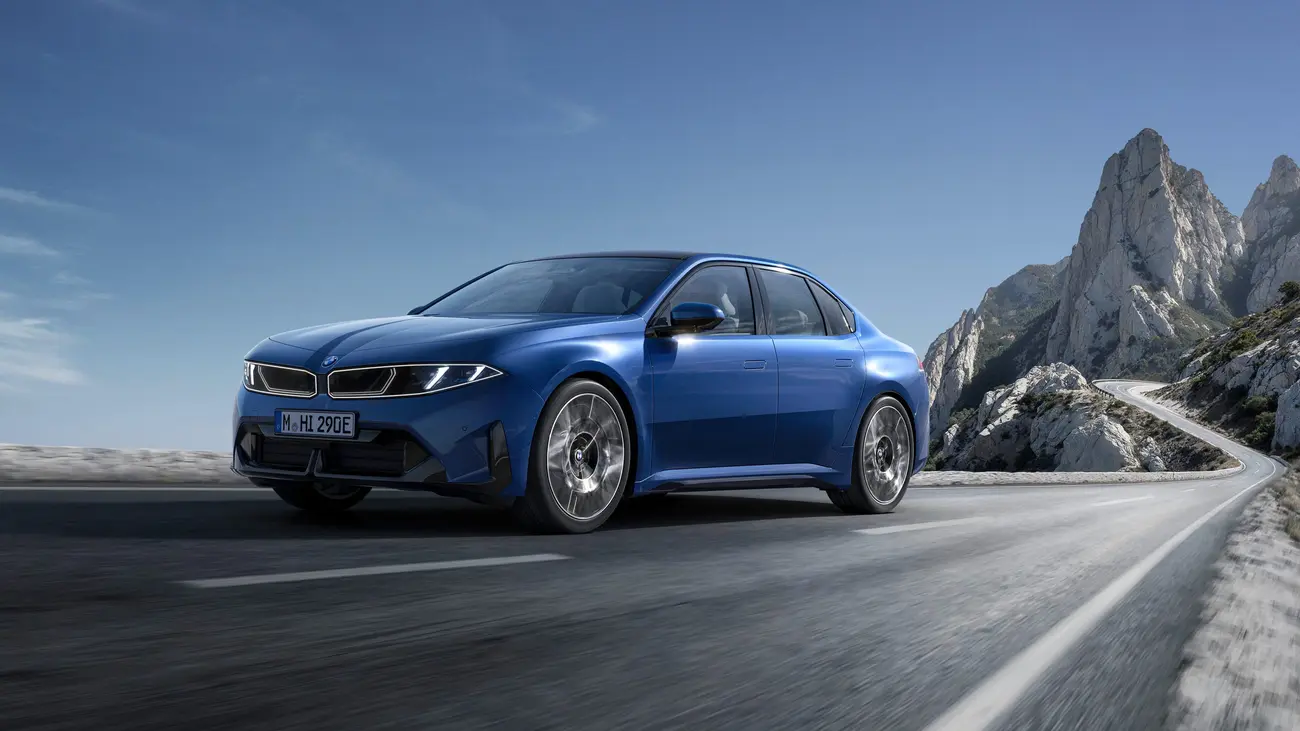
BMW i3 2027 price in Portugal: €65,500 for the 50 xDrive
912 km of WLTP range in a saloon the size of a 3 Series. That's the headline BMW delivered on 30 September, when it unveiled the new G50-generation 3 Series with a fully electric version: the i3. For anyone running the numbers in Portugal, the most useful figure was already out in June — the BMW i3 2027 price in Portugal starts at €65,500 for the i3 50 xDrive, while the First Edition costs €74,000.
What's new this month is a second version, the i3 40 xDrive: cheaper, with 710 km of range. Choosing between the 40 xDrive and the 50 xDrive is now the key decision for anyone shopping for a premium electric saloon here.
| Version | Portugal | Germany | France | UK |
|---|---|---|---|---|
| i3 40 xDrive | Not announced | €59,900 | €59,900 | £47,925 |
| i3 50 xDrive | €65,500 | €65,900 | €65,400 | £53,005 |
| i3 50 xDrive First Edition | €74,000 | €75,340 | €74,850 | £57,905 |
The Portuguese prices come from BMW Group PressClub Portugal, published in June when First Edition orders opened. At that point the German 50 xDrive price was still provisional (€65,300) and later settled at €65,900, so a small adjustment in Portugal at launch can't be ruled out.
How much will the BMW i3 40 xDrive cost in Portugal?
A Portuguese price? Not yet. Germany and France both list the i3 40 xDrive at exactly €59,900, and the Portuguese 50 xDrive landed almost level with those two markets (€65,500 against €65,900 and €65,400). If BMW Portugal follows the same pattern, expect something around the €60,000 mark — but treat that as an expectation, not a confirmed price.
BMW i3 40 xDrive vs 50 xDrive: what separates them
Both get two motors and xDrive all-wheel drive. Up front sits the same 123 kW asynchronous motor in each; at the rear, an electrically excited synchronous unit. The differences come down to battery and power.
| Spec | i3 40 xDrive | i3 50 xDrive |
|---|---|---|
| Power | 275 kW / 374 hp | 345 kW / 469 hp |
| Torque | 520 Nm | 645 Nm |
| 0-100 km/h | 5.4 s | 4.7 s |
| Top speed | 200 km/h | 200 km/h |
| Battery (usable) | 82.8 kWh | 108.7 kWh |
| WLTP range | 710 km | 912 km |
| WLTP consumption | 17.9-14.3 kWh/100 km | 18.0-13.4 kWh/100 km |
| Max DC charging | 300 kW | 400 kW |
| DC 10-80% | 21 min | 21 min |
| AC 11 kW / 22 kW (0-100%) | 8h15 / 4h15 | 11h / 5h30 |
In practice, 374 hp and 0-100 km/h in 5.4 seconds is more than most drivers will ever use on the A1 motorway or the IC19 into Lisbon. The case for the 50 xDrive is mostly the battery: 26 kWh more, which works out to roughly 200 km of extra WLTP range.
Charging: 21 minutes on both
Here's a curious detail. With 400 kW on the 50 xDrive and 300 kW on the 40 xDrive, BMW quotes the same 21 minutes from 10% to 80% for both. Picking the cheaper car doesn't mean more time at the charger — you just add fewer kilometres per stop. For the 50 xDrive, BMW claims 423 km added in 10 minutes on a 400 kW charger.
Portugal's reality matters here. Ultra-fast chargers above 300 kW are still scarce on MOBI.E, the national public charging network, so the 50 xDrive will rarely hit its peak. At home, the standard 11 kW onboard charger is enough for a full overnight charge on a wallbox; 22 kW is optional (and standard on the First Edition).
Both support bidirectional charging: V2L at 3.7 kW to power devices, V2H to supply your home and V2G at 11 kW to feed energy back to the grid.
912 km range: what to expect on the motorway
The 912 km is a WLTP figure and, like any homologation number, won't survive a trip at a steady 120 km/h. Still, the maths is encouraging. With 108.7 kWh usable, consumption of 18 kWh/100 km — the top of BMW's own WLTP range — gives around 600 km; at 20 kWh/100 km you still get over 540 km.
For the 40 xDrive, the same consumption figures give roughly 460 km and 410 km. Either version covers Lisbon to Porto (about 310 km) without stopping. With the 50 xDrive, a same-day return trip becomes realistic — something few EVs on sale in Portugal can manage.
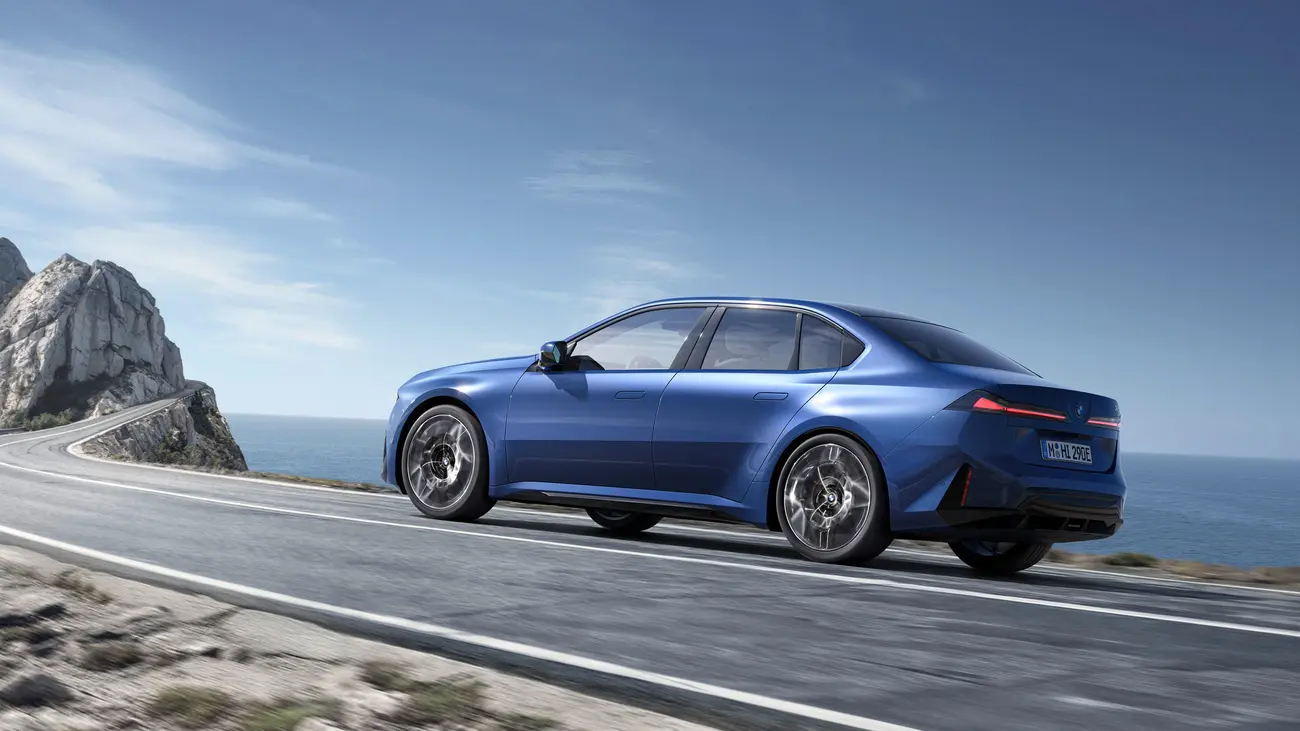
The dimensions tell the same practical story: 4.76 m long, 1.87 m wide, a 420-litre boot plus a small 31-litre front trunk. It can tow up to 1,800 kg (braked), enough for a trailer or a small caravan.
BMW i3 vs 3 Series petrol: what going electric costs
BMW launched both versions side by side, so the comparison is unavoidable. In France, the petrol 3 Series starts at €55,450, about €4,500 below the i3 40 xDrive. The Portuguese price for the new G50 combustion 3 Series hasn't been published yet.
In Portugal, that gap is likely to narrow. The i3 is exempt from ISV (the one-off registration tax) and from IUC (annual road tax), while a petrol 3 Series pays both — and the 320 is rated at 169 g/km of CO2, the M350 xDrive at 187 g/km. Add the running-cost gap between charging at home and burning 8.2 l/100 km (the M350's official figure), and the electric car can come out ahead within a few years for high-mileage drivers.
On performance, the 443 hp M350 xDrive is still the quickest of the family (4.1 s to 100 km/h), despite having less power than the i3 50 xDrive. Weight explains it: the electric version is considerably heavier.
BMW i3 vs Tesla Model 3 and Mercedes: which to buy in Portugal
The Tesla Model 3 remains the price benchmark. In the UK it starts at £37,990, almost £10,000 below the i3 40 xDrive; in the US, the gap is around $25,000. Where the BMW clearly wins is range and charging: 400 kW versus the Model 3's 250 kW.
Against Mercedes, it's a closer fight. The electric C-Class has a 94.5 kWh battery and charges at 330 kW, and in the UK it starts at £57,995 — above the i3 50 xDrive's £53,005. The electric CLA charges at 320 kW and is more affordable, but plays a segment below.
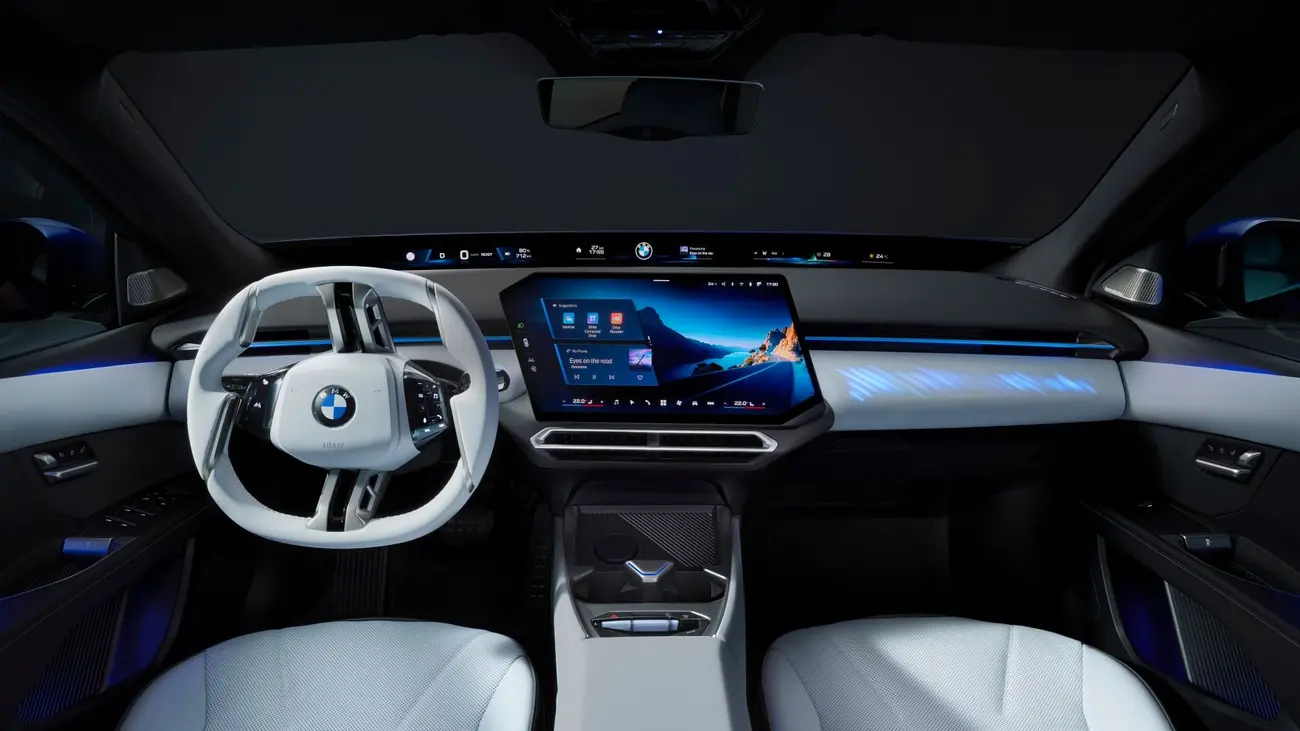
Inside, the i3 gets Panoramic iDrive with a 17.9-inch central display angled towards the driver and Panoramic Vision running along the bottom of the windscreen. The Motorway Assistant allows hands-free driving up to 130 km/h in 21 countries — a strong argument if you spend a lot of time on motorways.
What matters for buyers in Portugal
With the official Portuguese price now known, the maths for private buyers is simple: no ISV, zero IUC and energy costs far below a petrol 3 Series, especially if you charge at home on a two-period (bi-horária) electricity tariff.
For companies, the magic number is €62,500 excluding VAT — the acquisition-cost ceiling for deducting VAT and avoiding autonomous taxation (tributação autónoma) on electric company cars. The 50 xDrive's €65,500 works out to about €53,250 before VAT, and even the €74,000 First Edition comes in around €60,160. There's room for options, but not unlimited: above roughly €76,875 including VAT, the benefit is lost. Worth checking with your accountant before finalising the spec.
BMW i3 First Edition: is it worth it?
It costs €8,500 more than the standard 50 xDrive in Portugal. In return you get the M Sport package, electric multifunction seats, three-zone climate control, a 3D head-up display, Harman Kardon sound with Dolby Atmos, illuminated kidney-grille contours and a 22 kW AC charger. BMW Portugal quoted a range of 758 to 906 km for this version. It makes sense if you wanted all that kit anyway and want to be among the first to get one — otherwise the regular 50 xDrive or the 40 xDrive offer better value.
Frequently Asked Questions
According to BMW Group PressClub Portugal, the BMW i3 50 xDrive costs €65,500 and the First Edition €74,000, with orders open since June 2026. The Portuguese price of the i3 40 xDrive has not been announced yet; it costs €59,900 in Germany and France, so a figure around €60,000 is expected. As a fully electric car, the i3 is exempt from ISV registration tax and pays zero IUC road tax.
Both have two motors and xDrive all-wheel drive. The 40 xDrive delivers 374 hp, an 82.8 kWh battery, 710 km of WLTP range and up to 300 kW charging; the 50 xDrive steps up to 469 hp, 645 Nm, 108.7 kWh and 912 km WLTP, charging at up to 400 kW. The 0-100 km/h sprint drops from 5.4 s to 4.7 s, and both top out at 200 km/h.
The 912 km is a WLTP figure and won't be matched at a steady 120 km/h. With 108.7 kWh usable, consumption of 18 kWh/100 km gives around 600 km, and at 20 kWh/100 km you still get over 540 km; the 40 xDrive manages roughly 460 km and 410 km at the same rates. Either version covers Lisbon to Porto (about 310 km) without a charging stop.
On a DC fast charger, both versions go from 10% to 80% in 21 minutes, and the 50 xDrive adds up to 423 km in 10 minutes at 400 kW. On AC, a full charge takes 8h15 (40 xDrive) or 11h (50 xDrive) at 11 kW, and 4h15 or 5h30 with the optional 22 kW charger. Chargers above 300 kW are still scarce on Portugal's MOBI.E network, so the 400 kW peak will rarely be used.
Series production started in August 2026 at BMW's Munich plant, and BMW Portugal targets autumn 2026 for the market launch of the i3 50 xDrive. The i3 M60 xDrive, single-motor rear-wheel-drive versions and the i3 Touring estate are due in 2027. Portuguese prices for these versions have not been announced yet.
Built in Bavaria, and what's coming in 2027
The i3 has been built at BMW's Munich plant since August 2026, and from 2027 that site will produce only Neue Klasse EVs. High-voltage batteries come from the new Irlbach-Straßkirchen plant, also in Bavaria, while drive system components are made in Steyr, Austria. The combustion 3 Series stays in Dingolfing.
Lined up for 2027 are the i3 M60 xDrive, single-motor rear-wheel-drive versions (as already offered on the iX3), the i3 Touring estate and navigation-guided assisted driving in town.
If you're torn between the two current versions, think of it this way: the 40 xDrive is the sensible i3, with more than enough range for everyday life in Portugal; the 50 xDrive is for people who regularly drive Lisbon to the Algarve or Porto to Madrid and don't want to think about chargers. The next number to watch is the Portuguese price of the 40 xDrive — that's what will decide whether the i3 can take on the petrol 3 Series on equal terms.