
XPeng G9L in Portugal: Price Expectations, Real Range and Launch Date
Published: 14/08/2026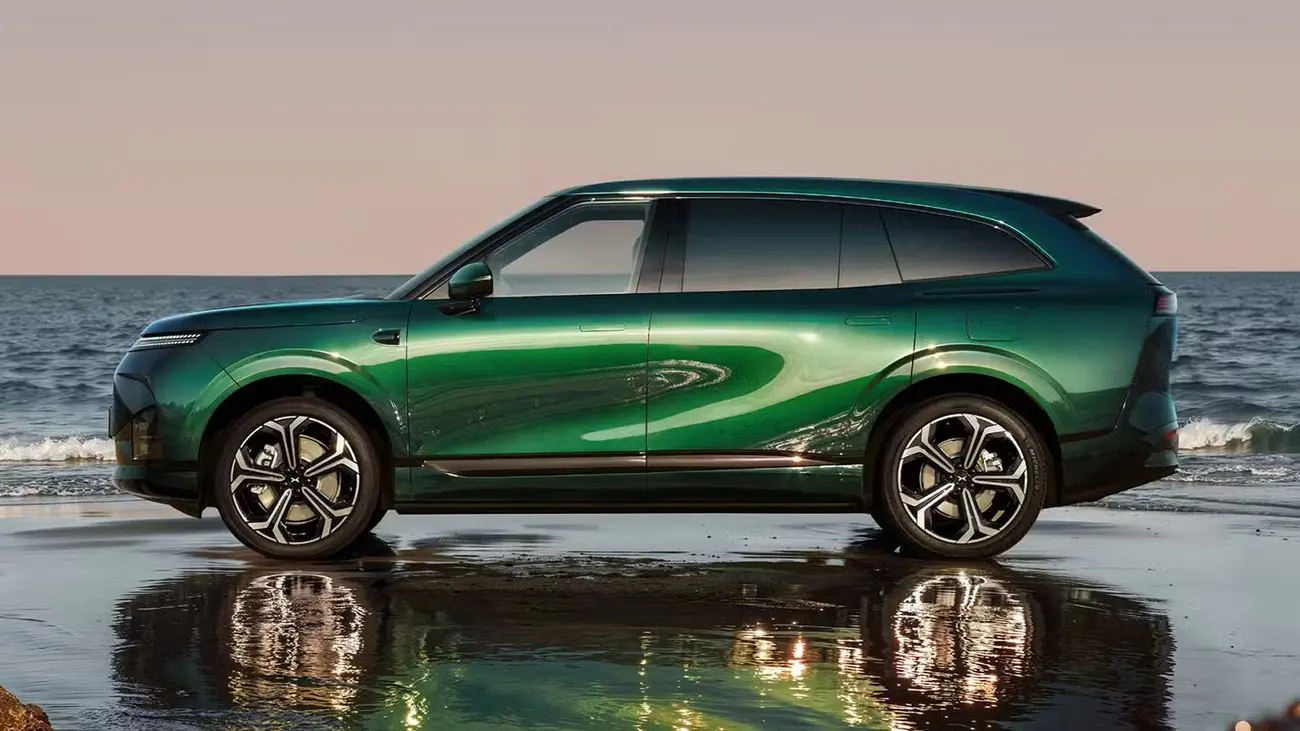
What we know about the XPeng G9L ahead of its world debut
Three years of development, road testing in 26 countries, more than 6.74 million kilometres covered. That is the CV XPeng brings to Guangzhou on 11 August 2026 — noon Portuguese time — for the world debut of the G9L, the large electric SUV the Chinese brand has promised to bring to Europe. And that promise has a date attached: the G9L makes its European premiere at the Mondial de l'Auto in Paris in October 2026.
If you are shopping for a large electric SUV in Portugal, this matters for one straightforward reason — XPeng already sells here. The G6, G9 and P7 are all available in the country, the brand delivered 22,787 units across Europe in 2025 (up 126% year on year), and it builds the G6 and G9 with Magna in Austria. The G9L would slot in above today's G9 as the brand's flagship.
A 5.12-metre SUV — longer than a BMW X5
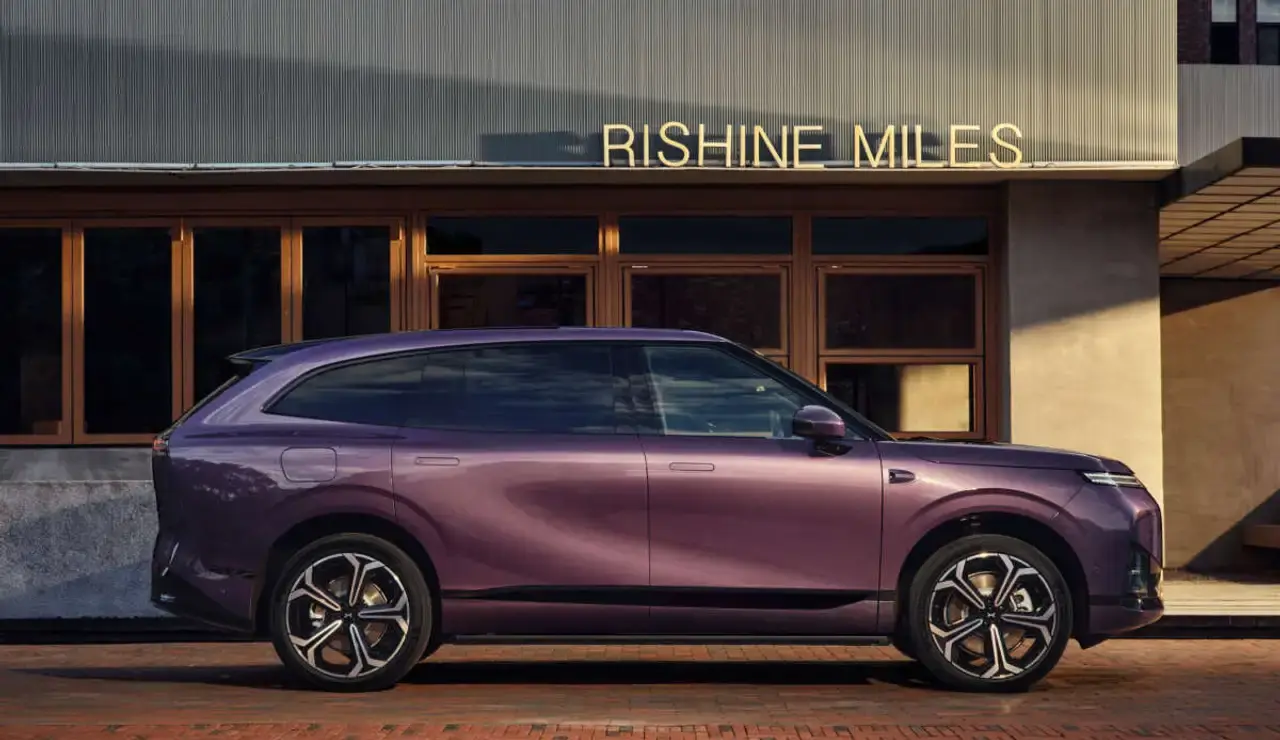
The G9L measures 5,120 mm long, 1,999 mm wide and between 1,782 and 1,795 mm tall, depending on trim. Wheelbase is 3,100 mm. In plain terms: 198 mm longer than a BMW X5 (G05) and 135 mm more between the axles than a Tesla Model X.
These are American-scale dimensions on Portuguese streets. In a Lisbon shopping-centre car park, or on a narrow street in Porto's older quarters, five metres twelve makes itself felt. So does the weight: 2,720 to 2,740 kg kerb.
What you get in return is space — 5.1 m² of usable cabin area, over 1 m² per occupant, and a 1,152-litre boot. In China the G9L is strictly a five-seater, a decision taken to protect the six-seat GX. Europe gets something China does not: an exclusive six-seat configuration.
XPeng G9L range: why 805 km will not be 805 km here
The headline number is 805 km. It needs unpacking before it settles in.
The G9L uses 91.9 kWh or 110 kWh battery packs and claims 672 to 805 km across six trims. That figure comes from the CLTC cycle — the Chinese standard, and a considerably more generous one than Europe's WLTP. In practice, a CLTC number typically drops 15% to 25% when converted to WLTP. That puts the G9L in a realistic window of roughly 500 to 680 km WLTP, depending on battery and drivetrain. Still a lot. Just not 805 km.
Then there is the real world, which is different again. Motorway at 120 km/h, air conditioning running through an Alentejo August, nearly 2.75 tonnes to shift — expect less. Official European figures for the G9L only arrive in Paris in October.
800V charging: 450 km in 9 minutes, with a Portuguese caveat
The architecture is 800 volts, and XPeng quotes 450 km recovered in 9 minutes. It is the most eye-catching number in the release, and also the one that depends most on where you plug in.
Those 9 minutes assume high-power ultra-fast chargers. Portugal's MOBI.E network (the national public charging network) covers the country well, but 350 kW posts remain a minority and cluster along the A1, A2 and A6 motorway corridors. On a 50 kW charger — still common away from the main axes — an 800V architecture cannot work miracles. If your driving is mostly Lisbon-Porto on the A1, you will feel the benefit. If you charge at home and top up in an inland town at weekends, far less so.
XPeng G9L specs: what is confirmed so far
| Specification | Value |
|---|---|
| Length | 5,120 mm |
| Width | 1,999 mm |
| Height | 1,782 / 1,788 / 1,795 mm (by trim) |
| Wheelbase | 3,100 mm |
| Kerb weight | 2,720–2,740 kg |
| Seats | 5 (China) / 6-seat exclusive to Europe |
| Boot | 1,152 L |
| Architecture | 800 V |
| Battery | 91.9 kWh or 110 kWh |
| Range | 672–805 km CLTC (WLTP will be lower) |
| Charging | 450 km in 9 minutes |
| Motor (RWD) | 270 kW |
| Motors (AWD) | 160 kW front + 270 kW rear = 430 kW / 577 hp |
| Top speed | 200 km/h |
| EREV version | 1.5-litre range extender, 110 kW, 63.3 kWh LFP battery |
| EREV electric range | 325–350 km WLTC |
| Compute | 2,250 TOPS, 4 AI Turing chips |
| Wheels | 22 inch |
The all-wheel-drive version puts out 430 kW, or 577 hp, and tops out at 200 km/h. The entry point is rear-wheel drive with a single 270 kW motor. There is also an EREV variant, with a 1.5-litre, 110 kW range extender, a 63.3 kWh LFP pack and 325 to 350 km of electric-only running (WLTC).
Pay attention to that last one if you are buying in Portugal. An EREV is not a pure EV for tax purposes. It does not qualify for the ISV exemption (ISV is Portugal's vehicle registration tax) that applies to fully electric cars, nor for the more favourable IUC annual road tax band. Between the BEV and the EREV, the total cost of ownership gap here can be wider than the list-price gap.
Inside: an 88-inch AR-HUD and seats that read you
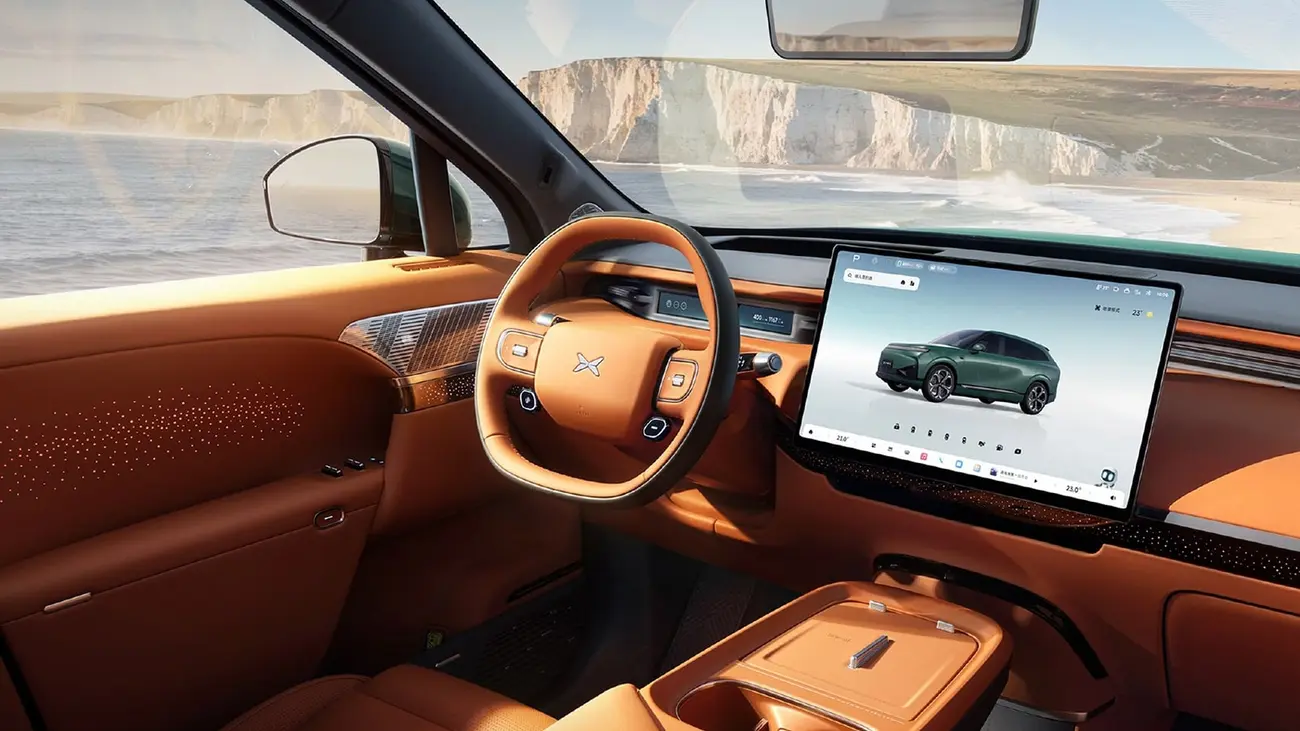
XPeng calls it a "first-class cabin", and for once the phrase has numbers behind it. The AR-HUD projects across 88 inches, at 12,000 nits sustained brightness with static distortion under 1%. In the back sits a 21.4-inch 3K touchscreen with a 7.4 mm bezel and 75 degrees of tilt adjustment.
The zero-gravity seats carry 91 pressure sensors able to detect 2-gram shifts and adjust in real time. Add 33 speakers, a dual-zone fridge, a 9-inch digital rear-view mirror, 50 W wireless charging pads and powered soft-close doors. Driving electronics run on 2,250 TOPS from four in-house AI Turing chips, powering the second generation of XPeng's Vision-Language-Action model — badged NGP in Europe.
G9L, G9 and GX: which is which in the XPeng range
Easy to confuse, and that "L" changes everything.
- XPeng G9 — the SUV launched in 2022, already on sale in Portugal, built in Austria with Magna. It is the model most searches surface.
- XPeng G9L — the new flagship, where "L" stands for Luxury. Bigger, more powerful, 800V platform, five seats in China and six in Europe. Debuts 11 August 2026.
- XPeng GX — the six-seat SUV launched in China on 20 May 2026 from 279,800 yuan. The G9L's twin: same family, different brief.
XPeng frames the G9L and GX as twin flagships — two range-toppers for two kinds of buyer. The G9L leans on space and technology for five occupants (six in Europe); the GX was designed around six seats from the start.
XPeng G9L price in Portugal: no number yet, and for good reasons
In China, the target is the 300,000 yuan segment (around USD 44,400). Do not convert that to euros and treat it as a Portuguese price — that would be a mistake.
Between a Chinese factory and a Lisbon showroom sit shipping, EU tariffs on China-built electric cars, European homologation, a service network, 23% VAT and the importer's margin. European pricing only lands in Paris in October 2026, alongside trim structures, available drivetrains and a market-by-market arrival schedule.
In the Portuguese buyer's favour: as a full EV, the G9L BEV is exempt from ISV and pays reduced IUC, which narrows the gap against combustion rivals of the same size. Against: Portugal's direct purchase incentives come with price caps that an SUV of this size is unlikely to fall under.
Frequently Asked Questions
There is no European or Portuguese price yet. In China the G9L targets the 300,000 yuan segment (around USD 44,400), but converting that to euros does not give a Portuguese figure: shipping, EU tariffs on China-built electric cars, European homologation, importer margin and 23% VAT all sit on top. European pricing is only announced at the Mondial de l'Auto in Paris in October 2026. As the flagship above the G9 already sold in Portugal, expect it to land above today's G9.
The quoted 672 to 805 km comes from China's CLTC cycle, which is considerably more generous than Europe's WLTP. A typical conversion knocks off 15% to 25%, putting the G9L in an estimated 500 to 680 km WLTP window depending on the battery (91.9 kWh or 110 kWh) and drivetrain. In real use — motorway at 120 km/h, air conditioning in summer, nearly 2.75 tonnes to move — expect less again. Official WLTP figures arrive with the European spec sheet in October 2026.
The G9 is the SUV launched in 2022, already on sale in Portugal and built in Austria with Magna. The G9L is the new flagship, where "L" stands for Luxury: 5,120 mm long on a 3,100 mm wheelbase (198 mm longer than a BMW X5 G05), an 800V architecture, up to 430 kW / 577 hp in all-wheel-drive form and 2,250 TOPS of compute from four in-house AI Turing chips. They are separate models — the G9L debuts on 11 August 2026 and sits above the G9 in the range.
XPeng has confirmed a six-seat configuration exclusive to Europe — in China the G9L is strictly a five-seater, to protect the six-seat GX. European distribution starts after the Paris premiere in October 2026, as part of a planned rollout across 65 international markets. Portugal has not been named individually, but XPeng already sells the G6, G9 and P7 here and delivered 22,787 units across Europe in 2025, so arrival is a reasonable expectation rather than a confirmed fact.
No. The EREV pairs a 1.5-litre, 110 kW range extender with a 63.3 kWh LFP battery and 325 to 350 km of electric-only running (WLTC), but it is not a fully electric vehicle for tax purposes: it does not qualify for the ISV registration-tax exemption or the more favourable IUC road-tax band that pure EVs receive. In Portugal, the total cost of ownership gap between the BEV and the EREV can be wider than the list-price gap.
When does the XPeng G9L arrive in Portugal?
The confirmed calendar looks like this:
- 11 August 2026 — world debut and start of pre-sales in China, in Guangzhou.
- October 2026 — European premiere at the Mondial de l'Auto in Paris, with European specs, pricing and an availability timeline.
- After Paris — planned rollout across 65 international markets.
Portugal has not been named specifically. But XPeng already operates here with its own network, and a European launch built around a six-seat version designed for the continent is unlikely to skip a market where the brand already sells.
If you are choosing a large electric SUV right now, the practical question is whether waiting pays. Need a car in the next six months? Then no — the G9L will not arrive in time and its price is unknown. Can you hold out until 2027 and want 1,152 litres of boot with 800V charging? Put October in the diary — Paris is where this car stops being a Chinese spec sheet and becomes a real option in our market.