
smart #2 in Portugal: Price, Trims, Specs and When It Arrives
Published: 28/10/2026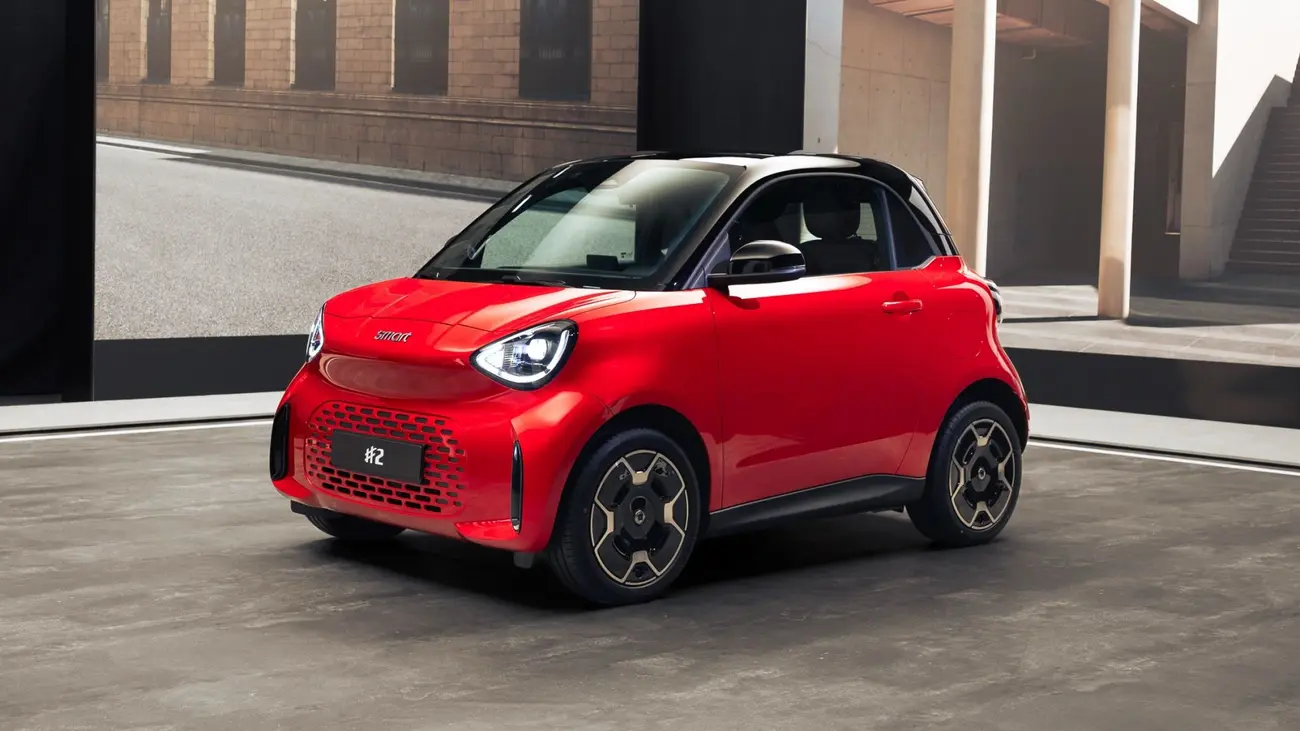
smart #2: official price from €19,990 and orders now open
€19,990. That's the starting price of the smart #2, and it's identical in the Netherlands, Germany, France, Italy and Spain. The electric successor to the smart fortwo was unveiled on 12 October at the 2026 Paris Motor Show, and orders opened the very next day. Four trims make up the range, topping out at €25,690 for the Couture Edition.
If you're wondering about the smart #2 price in Portugal, the news is good. When the prototype appeared, estimates for our market hovered around €23,000 — we covered that when we looked at the Smart Concept #2. The production car lands roughly €3,000 below that, with twice the battery the old EQ fortwo ever had and, for the first time, DC fast charging.
smart #2 trims and prices in Europe
All four trims share exactly the same drivetrain. What changes is the equipment — and one detail that matters more than it seems: AC charging power.
| Trim | Price (incl. VAT) | What it adds |
|---|---|---|
| Pure | €19,990 | 7.4 kW single-phase AC charger |
| Pure+ | €20,990 | 11 kW three-phase AC charger, heated driver's seat |
| Premium | €24,490 | Fixed glass panoramic roof, synthetic leather upholstery, heated front seats, 7-speaker Sennheiser audio |
| Couture Edition | €25,690 | Everything in Premium + matte Atelier White paint with Platinum Gold roof, wireless phone charging, navigation |
The Couture Edition is a launch series limited to 999 units across Europe. In the Netherlands, the Pure's fiscal catalogue price is €18,925 (excluding delivery), but the recommended retail price is €19,990. In Spain, Plan Auto+ incentives and CAE energy-saving certificates bring the Pure down to €15,815.
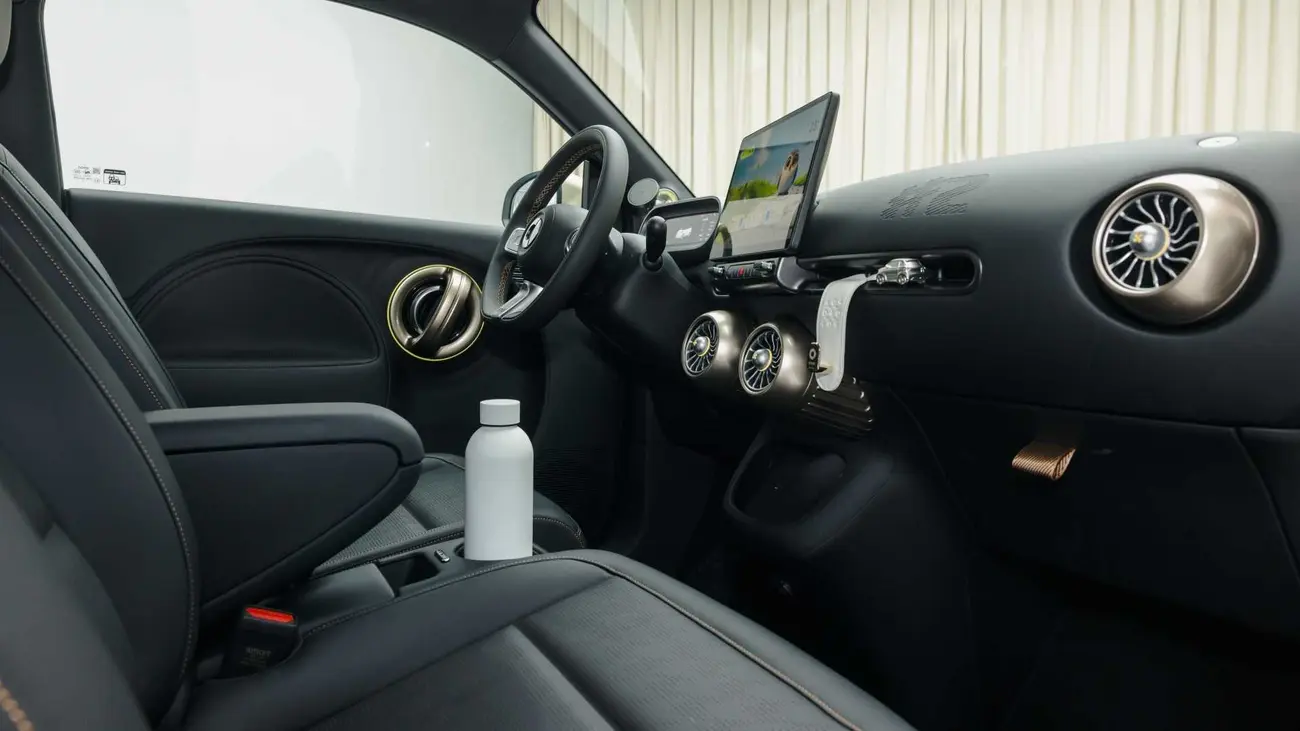
Even the Pure isn't stripped out. Every trim gets adaptive cruise control with stop-and-go, LED headlights, lane assist, traffic sign recognition, parking sensors, climate control, a digital instrument cluster and V2L (vehicle-to-load, letting you power external devices from the battery via an adapter).
smart #2 Pure vs Pure+: is the extra €1,000 worth it?
For most buyers, yes. The €1,000 gap mainly buys you the 11 kW three-phase charger instead of the 7.4 kW single-phase unit, plus a heated driver's seat.
If you charge almost exclusively at home overnight, the Pure is fine: the 35.8 kWh battery fills up in a night even at 7.4 kW. But if you rely on public AC chargers on the MOBI.E network — Portugal's national public charging network, and the typical setup for anyone living in a Lisbon or Porto apartment without a garage — 11 kW makes those stops noticeably shorter. Dutch press reviewers make the same call: Pure+ for regular public-charger users.
smart #2 specs: what's changed from the old fortwo
The smart #2 sits on the new ECA (Electric Compact Architecture) platform, developed by Mercedes-Benz and Geely, with the battery in the floor and the motor at the rear. It's built in China by Geely — according to smart, European production would have delayed the launch by one to two years, though the brand hasn't ruled it out later.
| Specification | smart #2 |
|---|---|
| Length | about 2.75 m |
| Width | 1,669 mm |
| Height | 1,555 mm |
| Wheelbase | 1,875 mm |
| Turning circle | 6.95 m |
| Kerb weight | about 1,130-1,140 kg |
| Boot | 305 l (527 l to the roof) |
| Seats / doors | 2 / 2 |
| Motor | 60 kW (82 PS), 130 Nm, rear-wheel drive |
| 0-100 km/h | 11.6 s |
| Top speed | 140 km/h |
| Battery | 35.8 kWh LFP (CATL cells) |
| Range | 290 km WLTP (provisional); 410 km CLTC |
| DC charging | 65 kW, 10-80% in about 20 min |
| AC charging | 7.4 kW (Pure) / 11 kW (other trims) |
Length figures vary slightly between sources (2,746 to 2,764 mm), hence "about 2.75 m". More importantly, the 6.95 m turning circle keeps those impossible U-turns on narrow streets that made the fortwo famous.
Compared with the last smart EQ fortwo (2020-2024), the jump is substantial: battery up from 17.6 to 35.8 kWh, WLTP range from 133 to 290 km, and DC fast charging — which simply didn't exist before — now reaches 65 kW. Motor output stays at 60 kW.
smart #2 range and charging in daily use
The 290 km WLTP figure is provisional, as the car isn't yet homologated in Europe. In practice, expect enough real-world range for a week of commuting around Lisbon without visiting a charger.
On the motorway, it's a different story. With 82 PS and a 140 km/h top speed, a Lisbon-Porto run is doable, but it's not where the #2 shines — Spanish reviewers point this out too. The upside: a 20-minute stop at a fast charger takes the battery from 10 to 80%.
smart #2 vs Renault Twingo electric, Dacia Spring and Fiat Topolino
The closest rival costs exactly the same. The new Renault Twingo E-Tech also starts at €19,990 (German price), but offers five doors and four seats in a car around 3.79 m long.
| Model | Length | Seats | WLTP range | Max DC | Reference price |
|---|---|---|---|---|---|
| smart #2 | about 2.75 m | 2 | 290 km | 65 kW | from €19,990 |
| Renault Twingo E-Tech | about 3.79 m | 4 | 262 km | 50 kW | from €19,990 (DE) |
| Dacia Spring (new gen) | — | 4 | — | — | €16,900-17,900 (DE) |
| Fiat Topolino | 2.535 m | 2 | about 75 km | — | about €9,890 (IT) |
The smart wins on range and charging, and it's roughly a metre shorter than the Twingo. It loses on rear seats — there aren't any. The Dacia Spring is the cheapest four-seat option, while the Fiat Topolino plays in a different league entirely: it's a quadricycle limited to 45 km/h with a 5.4 kWh battery. Also on the horizon is the VW ID. Every1, expected at around €20,000 in 2027.
The question for each buyer is simple: is a tiny parking footprint worth more than an emergency back seat?
How much the smart #2 costs in Portugal and when it arrives
Portuguese media already report the smart #2 as orderable here from €19,990, in line with the rest of the eurozone. The exact Portuguese price still needs confirming on smart's official price list, but there's a strong hint: smart is charging the same figure in markets with VAT ranging from 19% (Germany) to 22% (Italy), which suggests it will absorb Portugal's 23% too.
On the tax side, electric cars in Portugal are exempt from ISV (the one-off vehicle registration tax) and IUC (the annual road tax), so there's no registration tax to add on top. Do watch for delivery and registration costs — in Germany they add €990, and in Spain they're not included in the advertised price.
As for timing: orders have been open since 13 October, online sales start in the first half of 2027, and Spanish deliveries are expected in Q2 or summer 2027. Portugal should follow the same Iberian schedule.
Frequently Asked Questions
The smart #2 is reported as orderable in Portugal from €19,990 for the Pure trim, the same price charged in the Netherlands, Germany, France, Italy and Spain. As a fully electric car it is exempt from ISV registration tax and IUC road tax, so nothing is added on top of the price including 23% VAT. Delivery and registration fees may be charged separately: in Germany they add €990. The final Portuguese price still needs to be confirmed on the brand's official price list.
Orders for the smart #2 opened on 13 October 2026, the day after its debut at the Paris Motor Show. Online sales start in the first half of 2027, and Spanish deliveries are scheduled for Q2 or summer 2027. Portugal is expected to follow the same Iberian timeline, although an official date has not yet been announced.
On a DC fast charger the smart #2 accepts up to 65 kW and goes from 10 to 80% in about 20 minutes. On AC, the 35.8 kWh battery fills in roughly 5 to 6 hours on the Pure (7.4 kW single-phase) and around 3.5 to 4 hours on the Pure+, Premium and Couture (11 kW three-phase), based on estimates. If you rely on public MOBI.E chargers, the Pure+ with 11 kW is worth the extra €1,000.
The smart #2 claims 290 km WLTP (a provisional figure pending European homologation) and 410 km on the Chinese CLTC cycle, more than double the 133 km of the old smart EQ fortwo. In the city that is enough for a week of commuting without charging. A Lisbon-Porto trip is doable with one 20-minute fast-charging stop, but with 82 PS and a 140 km/h top speed the motorway is not its natural habitat.
Yes, the smart #2 keeps the fortwo's two-seat, two-door formula, measuring about 2.75 m long with a 6.95 m turning circle. The boot holds 305 litres, or 527 litres when loaded to the roof. Buyers who need four seats for the same money should look at the Renault Twingo E-Tech, also from €19,990, but roughly one metre longer.
smart #2 Brabus and cabrio confirmed for 2027
smart has already released the first teasers of the smart #2 Brabus, captioned "More Brabus. Still unmistakably smart." The images show extra air intakes in the front bumper and red accents. Power? Not announced yet, but it's expected to land just over 100 PS, up from 82 PS in the standard car.
Wolfgang Ufer, smart's head of Europe, noted that the more powerful versions of the brand's other models are among the most popular. Both the Brabus and a cabrio version are planned for 2027.
If you drive mostly in town and want an EV that parks anywhere, the smart #2 arrives at a sharper price than anyone expected. The Pure+ at €20,990 looks like the sweet spot of the range. Before ordering, it's worth waiting for European homologation to confirm the final range — and for smart's official Portuguese price list.