
Smart Concept #2 in Portugal: Price, Specs and Twingo Comparison
Published: 24/04/2026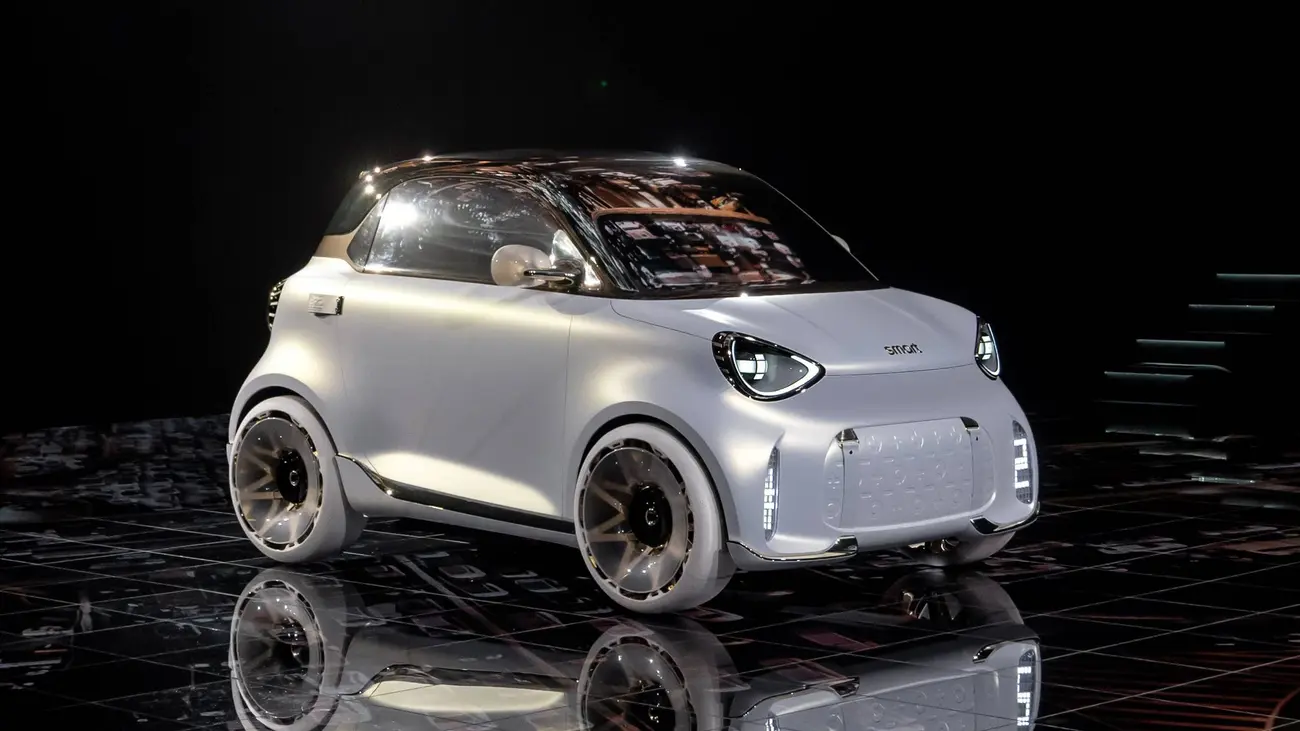
The two-seater city EV comeback: what the Smart Concept #2 means for Portugal
City cars have been quietly starved of interesting launches for years. The Smart Concept #2 changes that. Revealed on 22 April 2026 in Beijing, with the production model set for a world premiere at the Paris Motor Show in October, it is the spiritual successor to the ForTwo — more grown-up, genuinely fast to charge, and landing in Portugal at an expected price of around 23,000 euros.
If you live in Lisboa, Porto, or any older European centre with narrow streets and tight parking, this is probably the most relevant electric launch of 2026. The Smart #2 two-seater electric car is not trying to out-range a Renault 5 or Hyundai Inster. It goes the opposite way: 2,792 mm long, with a 6.95-metre turning circle that no other A-segment rival can match.
Smart ForTwo successor: what changed since the old EQ
The Concept #2 was designed by Mercedes-Benz's Global Design Team, led by Kai Sieber, and rides on the new Electric Compact Architecture (ECA) — developed together with Geely, which owns 50% of Smart alongside Mercedes-Benz. The platform is EV-only, which means the small battery sits under the cabin floor and the motor lives between the rear wheels.
Three practical jumps over the old Smart EQ ForTwo stand out:
- Range: roughly 300 km on the CLTC cycle, against 135 km (84 miles) on the EQ ForTwo. Double, give or take.
- DC fast charging: 10% to 80% in under 20 minutes. The old one had no meaningful fast-charging at all.
- V2L (Vehicle-to-Load): the car becomes a power source for an e-bike, a power tool, or a small appliance on a camping weekend.
The motor stays in the back and the car remains rear-wheel drive, keeping the Smart tradition alive. Driving position is slightly raised compared to the old ForTwo, which helps visibility and urban manoeuvres.
Smart #2 range specs: the numbers that matter
| Specification | Value |
|---|---|
| Length | 2,792 mm |
| Turning circle | 6.95 m |
| Configuration | 2 doors, 2 seats |
| Platform | ECA (Electric Compact Architecture) |
| Drive | Rear-wheel, motor between rear wheels |
| Battery location | Under cabin floor |
| Target range | around 300 km (CLTC cycle) |
| DC charging | 10% to 80% in under 20 minutes |
| V2L | Yes |
| Concept debut | 22 April 2026, Beijing |
| Production premiere | October 2026, Paris Motor Show |
| Markets | Europe and UK first (not coming to the US) |
Battery capacity in kWh, motor power, width, height, and boot space have not been disclosed. Smart has also only published a CLTC figure — the Chinese test cycle, which typically reads 10 to 15% higher than the European WLTP standard. Translated, the real WLTP range could land closer to 260 km than to the headline 300 km.
Smart Concept #2 vs Renault Twingo and the rest of the city EV pack
This is where the Smart #2 either wins or loses, depending on what you need the car to do.
| Model | Length | Range (WLTP/CLTC) | Turning circle | Estimated price (Portugal) |
|---|---|---|---|---|
| Smart #2 | 2,792 mm | around 300 km CLTC | 6.95 m | around 23,000 euros |
| Renault Twingo E-Tech | 3,789 mm | TBC | over 10 m | TBC |
| Fiat 500e | 3,632 mm | up to 320 km WLTP | 9.7 m | from 29,000 euros |
| Hyundai Inster | 3,825 mm | 370 km WLTP (229 mi) | over 10 m | from 27,000 euros |
| Renault 5 E-Tech | 3,920 mm | up to 400 km WLTP (252 mi) | 10.3 m | from 27,900 euros |
The Smart #2 is 840 mm shorter than a Fiat 500e and nearly a metre shorter than the new Renault Twingo E-Tech. In Alfama or in the old streets of Porto, that is the difference between parking and circling for another twenty minutes. The 6.95 m turning circle compares with 9.4 m on the Toyota Aygo X and 10.3 m on the Renault 5 — the Smart effectively pivots on itself.
The trade-off is real: only two seats, less homologated range, less luggage room. For a daily commute of 60 km around town, none of that matters. For a Lisboa-Porto weekend trip, it does.
Smart #2 price Portugal: what to expect on the window sticker
UK trade press (Auto Express, What Car?) points to a starting price between £20,000 and £25,000, with a base estimate near £21,000. Once converted and adjusted for the Portuguese market — including VAT and the ISV exemption that electric cars currently enjoy in Portugal until 2027 — you end up close to the 23,000 euros being quoted in the Portuguese press.
Three tax factors tilt the scale in the Smart #2's favour for a Portuguese buyer:
- ISV exemption for EVs: Portugal's vehicle registration tax does not apply to fully electric cars, so the final price avoids the usual combustion-engine penalty.
- Reduced IUC (annual circulation tax) for pure EVs, averaging 20 to 30 euros per year.
- Company car benefits: EVs still sit in the most favourable autonomous taxation bracket for fleet use.
At 23,000 euros, the Smart #2 would be the cheapest two-seater electric car in Portugal. The Fiat 500e starts above 29,000 euros and, despite being a larger four-seater, is less agile. The closest in price, the Dacia Spring, gives you four seats but a much smaller range and no premium badge appeal.
When the Smart #2 arrives in Portugal
Smart's official calendar puts the production world premiere in Paris in October 2026, with European deliveries following shortly. In practice, expect Portuguese order books to open in late 2026 and first deliveries between the first and second quarter of 2027.
A useful detail for Portuguese buyers: Smart sells through the Mercedes-Benz retail network, which means existing infrastructure covers the new model from day one. The brand's new European "smart care" after-sales service launches mid-2026, ahead of the #2 itself reaching showrooms.
Frequently Asked Questions
UK trade press (Auto Express and What Car?) points to a starting price between £20,000 and £25,000, with a base estimate around £21,000. Converted and adjusted for the Portuguese market — including VAT and the ISV registration tax exemption that fully electric vehicles keep until 2027 — the price should land near 23,000 euros, potentially making it the cheapest two-seater electric car in Portugal. The official figure will only be confirmed after the production premiere at the Paris Motor Show in October 2026.
The production-model world premiere is scheduled for the Paris Motor Show in October 2026, with European deliveries following shortly after. In practice, Portuguese order books should open in late 2026 and the first deliveries are expected between Q1 and Q2 of 2027. Sales will go through the Mercedes-Benz retail network, which already covers the whole country.
Smart has only published a CLTC (Chinese test cycle) figure of around 300 km so far. Because CLTC typically reads 10 to 15% higher than the European WLTP standard, the real homologated range in Europe should land closer to 260 km. At motorway speeds of 120 km/h, real-world consumption rises and the practical range typically drops to 180-200 km, which makes the Smart #2 essentially an urban vehicle.
At 2,792 mm the Smart #2 is about 997 mm shorter than the new Renault Twingo E-Tech and 840 mm shorter than a Fiat 500e, and its 6.95 m turning circle is the best in the A-segment (Fiat 500e: 9.7 m; Renault 5: 10.3 m). The trade-offs are two seats only and lower homologated range: the Hyundai Inster reaches 370 km WLTP and the Renault 5 hits 400 km WLTP. For strictly urban driving in Lisboa or Porto the Smart #2 wins; for intercity trips the four-seat rivals remain more versatile.
Fully electric vehicles in Portugal enjoy three relevant tax advantages that apply to the Smart #2: full ISV (vehicle registration tax) exemption until 2027, a reduced IUC (annual circulation tax) averaging 20 to 30 euros per year, and favourable autonomous taxation treatment for company car use. Combined, these benefits can represent several thousand euros of total savings compared with a combustion equivalent and are one of the reasons the 23,000 euro price tag becomes competitive in the A-segment.
Is this the city car Portugal actually needs?
For a strictly urban life, almost certainly yes. The Smart #2 combines three things that rarely show up together: a price under 25,000 euros, dimensions that fit medieval streets, and enough range for a week of city driving on a single charge.
The open question is highway range. If WLTP homologation lands around 260 km, and real-world cruising at 120 km/h cuts that to 180-200 km, this is strictly a city car — and that is a trade-off each buyer has to accept. If you have a second car in the household for long trips, the Smart #2 is probably the most rational choice in the current wave of A-segment EVs. If you are relying on a single car, it is worth waiting for the final WLTP figures before reserving.
The next six months leading up to Paris should fill the gaps: battery size, power output, official WLTP number, and confirmed Portuguese pricing. That is when the case actually closes.