
Peugeot e-208 in Portugal: Prices, Trims and Range for the 2027 Line-up
Published: 27/11/2026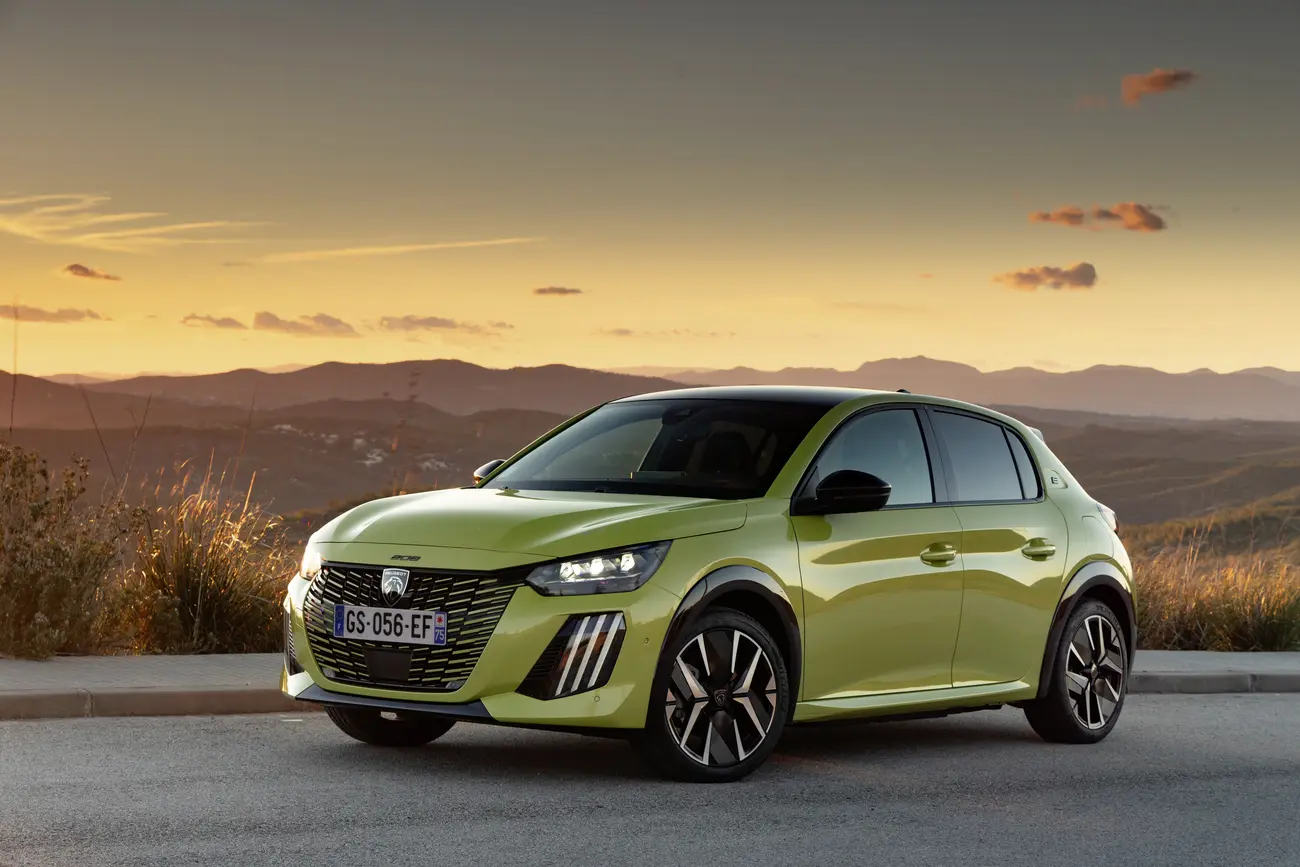
Peugeot e-208 in Portugal: the 2027 range in four trims
A brand-new e-208 for under €26,000. That's where the current dealer campaign starts, running until 30 November 2026, and it lands just as Peugeot has reshuffled the car's line-up for model year 2027. The old Allure and GT trims are gone; in their place come Style, Edition, Allure Plus and GT Plus, each offered with one of two electric motors.
If you're trying to pin down the Peugeot e-208 price in Portugal, the confusion is understandable: old price lists are still floating around, list prices don't match campaign prices, and trim names change from country to country. Orders for the revised range opened on 9 November, with production starting in December 2026. Here's what separates the trims and prices, which of the two batteries makes more sense, and how the e-208 stacks up against the Renault 5 and the new Volkswagen ID. Polo.
Peugeot e-208 trims and prices: the campaign running until 30 November
The figures below are campaign prices published by the Caetano Peugeot dealer network, checked on 9 November 2026. They apply to private buyers paying cash, with VAT (IVA) included.
| Trim | Motor / usable battery | WLTP range | Campaign price |
|---|---|---|---|
| Style | 136 hp / 46 kWh | 363 km | €25,561 |
| Style | 156 hp / 51 kWh | 433 km | €26,306 |
| Edition | 136 hp / 46 kWh | 363 km | €25,807 |
| Edition | 156 hp / 51 kWh | 431 km | €26,552 |
| Allure Plus | 136 hp / 46 kWh | 363 km | €26,902 |
| Allure Plus | 156 hp / 51 kWh | 431 km | €27,647 |
| GT Plus | 156 hp / 51 kWh | 424 km | €29,175 |
There's a big asterisk on these numbers. The entry price already includes an €8,749 promotional discount, which puts the list price of the Style 136 hp at roughly €34,310. Price lists published earlier in the Portuguese motoring press pointed to list prices between about €34,500 and €39,160 for the other trims, but we couldn't confirm those with Peugeot, so treat them as indicative only.
The campaign comes with small print, too: it's limited to existing stock, excludes registration and delivery costs, and is subject to dealer confirmation. Until 31 December 2026 there's also a free wallbox and Charging Pass offer. If you'd rather finance, the published example is €219/month over 60 months with a €4,990 deposit (6.25% nominal rate, 8.3% APR) for an Edition 136 hp with options.
Style, Edition, Allure Plus or GT Plus: what changes in the equipment
The price ladder is short. Style to Edition is €246; Edition to Allure Plus is another €1,095; and the GT Plus asks €1,528 more than the 156 hp Allure Plus.
- Style — the base car already has a 10-inch touchscreen, wireless Apple CarPlay and Android Auto, automatic climate control, the Safety Pack and six airbags.
- Edition — sits between Style and Allure Plus. Peugeot Portugal hasn't yet spelled out what it adds; in the Netherlands, the trim of the same name brings a rear camera, front parking sensors and power-folding mirrors. Check with the dealer before you sign.
- Allure Plus — based on the structure announced for model year 2027, this is where you get i-Connect Advanced navigation with four years of connected services, wireless phone charging, a 180° rear camera, front sensors and adaptive cruise control.
- GT Plus — 156 hp only, adding Drive Assist Plus (lane positioning, semi-automatic lane change, blind-spot monitoring), Full LED headlights, a heated steering wheel, a contrasting roof and V2L.
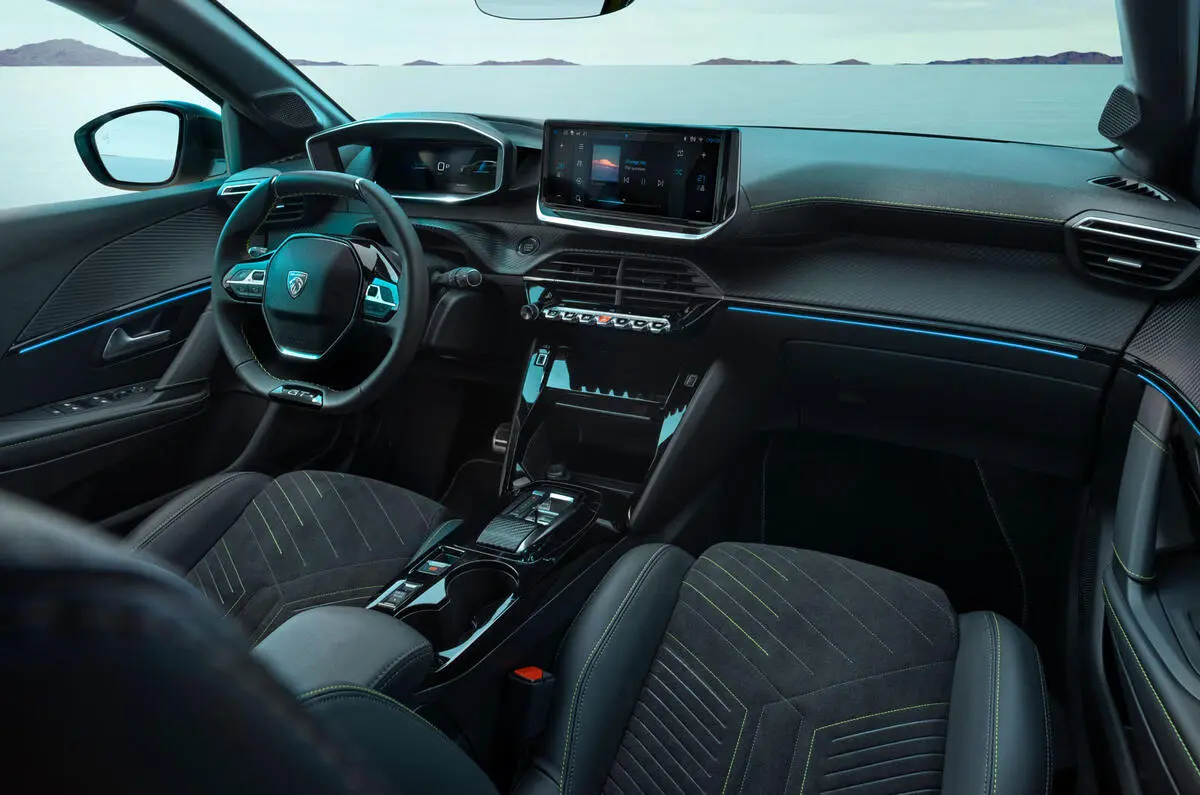
Our take: Allure Plus is the sweet spot. Adaptive cruise and the camera make a real difference day to day, and the step up to GT Plus mostly suits drivers who want the motorway assistance systems. If performance is what you're after, there's the e-208 GTi with 281 hp from €44,900, but that's a different kind of car altogether.
Peugeot e-208 136 hp vs 156 hp: range and battery
There's a €745 gap between the two motors, whatever the trim. For that, the 156 hp version adds up to 70 km of WLTP range. It's the easiest decision in the whole line-up.
| 136 hp | 156 hp | |
|---|---|---|
| Power | 100 kW | 115 kW |
| Battery | 50 kWh gross / 46 kWh usable | 51 kWh usable |
| WLTP range | 363 km | 424–433 km (trim-dependent) |
| WLTP consumption | 15.4 kWh/100 km | 14.0–14.5 kWh/100 km |
| 0–100 km/h | 9.0 s | 8.2 s |
| Top speed | 150 km/h | 150 km/h |
| DC charging 20–80% | 25 min | 27 min |
The 156 hp car's advantage isn't really about battery size, which is almost identical. It's efficiency: the motor uses less energy, and battery management was reworked in 2025, when range rose by 23 km, from 410 to 433 km. At the time, that was the best range in the segment — and Germany's ADAC motoring club had already named the e-208 the most efficient car on the European market in its 2024 Ecotest.
In practice, the Peugeot e-208's WLTP urban range reaches 498–598 km, which covers weeks of commuting in Lisbon or Porto. At 120 km/h on the motorway, expect well below the WLTP figure. A Lisbon–Porto run, just over 300 km, is doable in the 156 hp car, but plan a short stop if you don't want to arrive on fumes.
Charging: 100 kW DC and 11 kW at home
Both motors accept up to 100 kW of DC fast charging. At a rapid charger on MOBI.E — Portugal's national public charging network — 20 to 80% takes 25 minutes in the 136 hp car and 27 in the 156 hp: about the length of a coffee stop at a motorway service area.
At home, with an 11 kW three-phase wallbox, the same window takes around 3h05 (50 kWh battery) or 2h55 (51 kWh). The navigation also has a trip planner that works out charging stops and arrival charge, plus an option to cap charging at 80% to go easy on the battery. With the right adaptor, V2L (vehicle-to-load) can power external devices at up to 3.5 kW.
Peugeot e-208 vs Renault 5 and Volkswagen ID. Polo
The e-208 isn't alone. The Renault 5 E-Tech is already a common sight on Portuguese roads, and the ID. Polo is just starting to reach its first European markets. Here's how they line up:
| Peugeot e-208 | Renault 5 E-Tech | VW ID. Polo | |
|---|---|---|---|
| Max WLTP range | 433 km | about 406 km | about 450 km (provisional) |
| Batteries | 50 / 51 kWh | 40 / 52 kWh | 37 / 52 kWh |
| DC charging | 100 kW, 25–27 min (20–80%) | 100 kW, about 30 min (15–80%) | 105 kW, about 23–24 min |
| Boot | 309 L | up to 326 L | 441 L |
| Entry price in France | — | €24,990 | €24,995 |
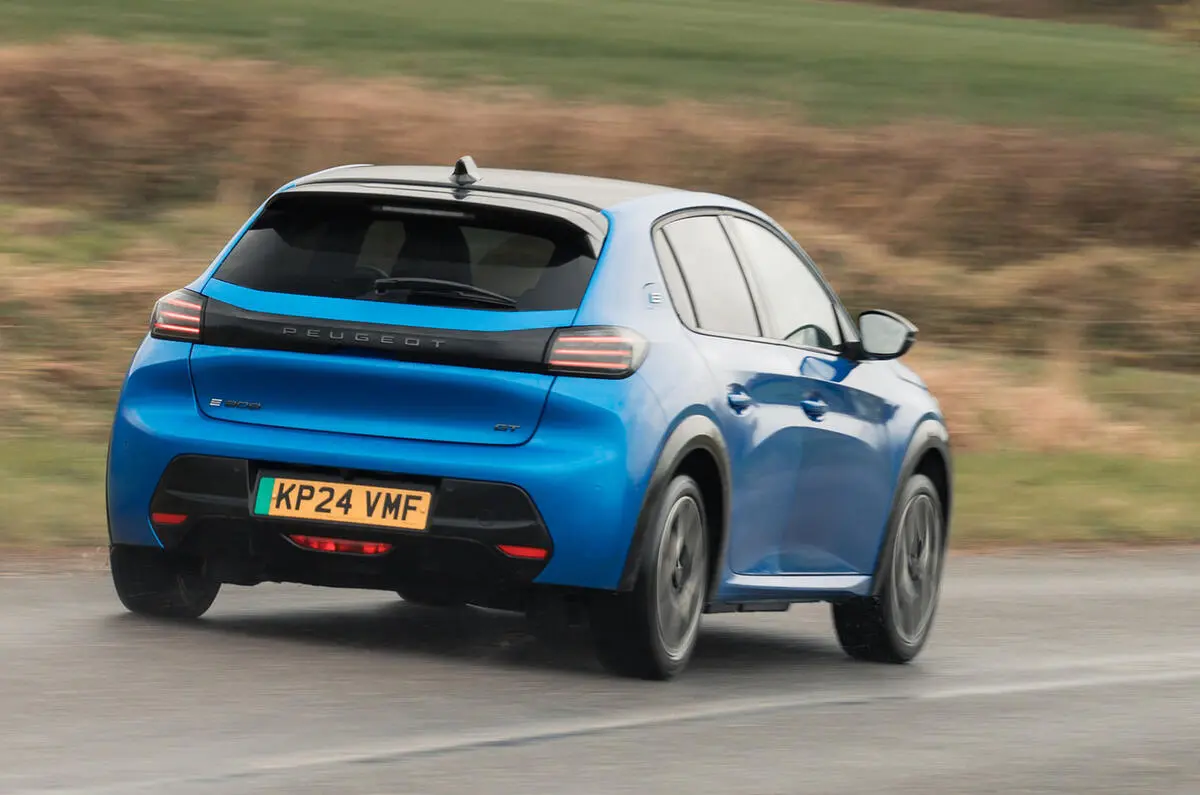
Boot space is the Peugeot's weak spot: 309 litres against 441 in the ID. Polo. If you regularly carry a pushchair or weekend luggage, you'll notice. In return, the e-208 offers the sportiest drive and the most dynamic styling of the three.
On price, both rivals start at around €25,000 in France, but there's no comparable Portuguese price list for the ID. Polo yet. This is where the Peugeot e-208's price in Portugal works in its favour: on the current campaign, the Style sits at practically the same level — with up to 433 km of range. The ID. Polo's range figure is still provisional, so wait for the homologated number before letting it decide things for you.
Frequently Asked Questions
On the combined WLTP cycle, the 136 hp e-208 is rated at 363 km and the 156 hp version at 424 to 433 km depending on trim; the WLTP urban figure rises to 498–598 km. With rated consumption of 15.4 kWh/100 km (136 hp) and 14.0–14.5 kWh/100 km (156 hp), it is one of the most efficient B-segment EVs. At 120 km/h on the motorway, real range falls well below WLTP, so a Lisbon–Porto trip in the 156 hp car usually calls for a short charging stop.
Under the dealer campaign running until 30 November 2026, a new e-208 costs between €25,561 (Style 136 hp) and €29,175 (GT Plus 156 hp) for private cash buyers, VAT included, according to the Caetano Peugeot network. Those prices already include an €8,749 discount, putting the Style 136 hp list price at roughly €34,310, and they exclude registration and delivery costs. Once the campaign ends, expect prices closer to list; the 281 hp e-208 GTi starts at €44,900.
In most cases, yes: it costs €745 more in every trim and adds up to 70 km of WLTP range (433 km vs 363 km), while cutting 0–100 km/h from 9.0 s to 8.2 s. Most of the gain comes from efficiency, since usable battery capacity only rises from 46 to 51 kWh. The 136 hp version only makes sense if you drive almost exclusively in town and want the lowest entry price.
On a 100 kW DC fast charger on Portugal's MOBI.E network, 20–80% takes about 25 minutes in the 136 hp car and 27 minutes in the 156 hp car. On an 11 kW three-phase home wallbox, the same window takes around 3h05 (50 kWh battery) or 2h55 (51 kWh). Until 31 December 2026, Peugeot includes a free wallbox and Charging Pass with a new e-208.
It can be, especially to lower the upfront cost, as e-208s have been on the Portuguese market since 2020. Check which motor it has (136 or 156 hp), ask for a battery health report, and see whether it postdates the April 2025 update that lifted range from 410 to 433 km. Always compare it with a new Style on campaign at €25,561, which is exempt from ISV registration tax and carries Peugeot Care cover of up to 8 years or 160,000 km when serviced within the Peugeot network.
Warranty, taxes and what's coming next
Peugeot Care covers the car for up to 8 years or 160,000 km, as long as servicing is done within the Peugeot network. Like every fully electric car in Portugal, the e-208 is exempt from ISV, the one-off vehicle tax paid at registration, which helps keep it competitive against petrol versions. It's also worth checking whether any Fundo Ambiental (the government's environmental fund) EV incentive is open when you buy.
There's one more thing on the calendar: Peugeot has already announced an all-new electric 208 for the second half of 2027. Buying now means getting a model at the end of its cycle — but also the most refined version of it, at a discount unlikely to be repeated when the new generation launches.
Used Peugeot e-208: an alternative worth considering
A used e-208 can cut the entry cost considerably, and there's been supply on the Portuguese market since 2020. Before buying, check which motor it has (136 or 156 hp), ask for a battery health report, and find out whether it predates the April 2025 update that brought the 433 km figure. Always compare the price with a new Style on campaign: the gap may be smaller than you'd think.
Whether you're choosing between new and used or among the four trims, the maths is simple: the 156 hp motor is worth the extra €745, Allure Plus is the best balance of equipment, and campaign prices are only guaranteed until 30 November. After that, expect figures closer to list price.