
Opel Astra Electric 2026 in Portugal: Price, Range and Full Specs
Published: 20/05/2026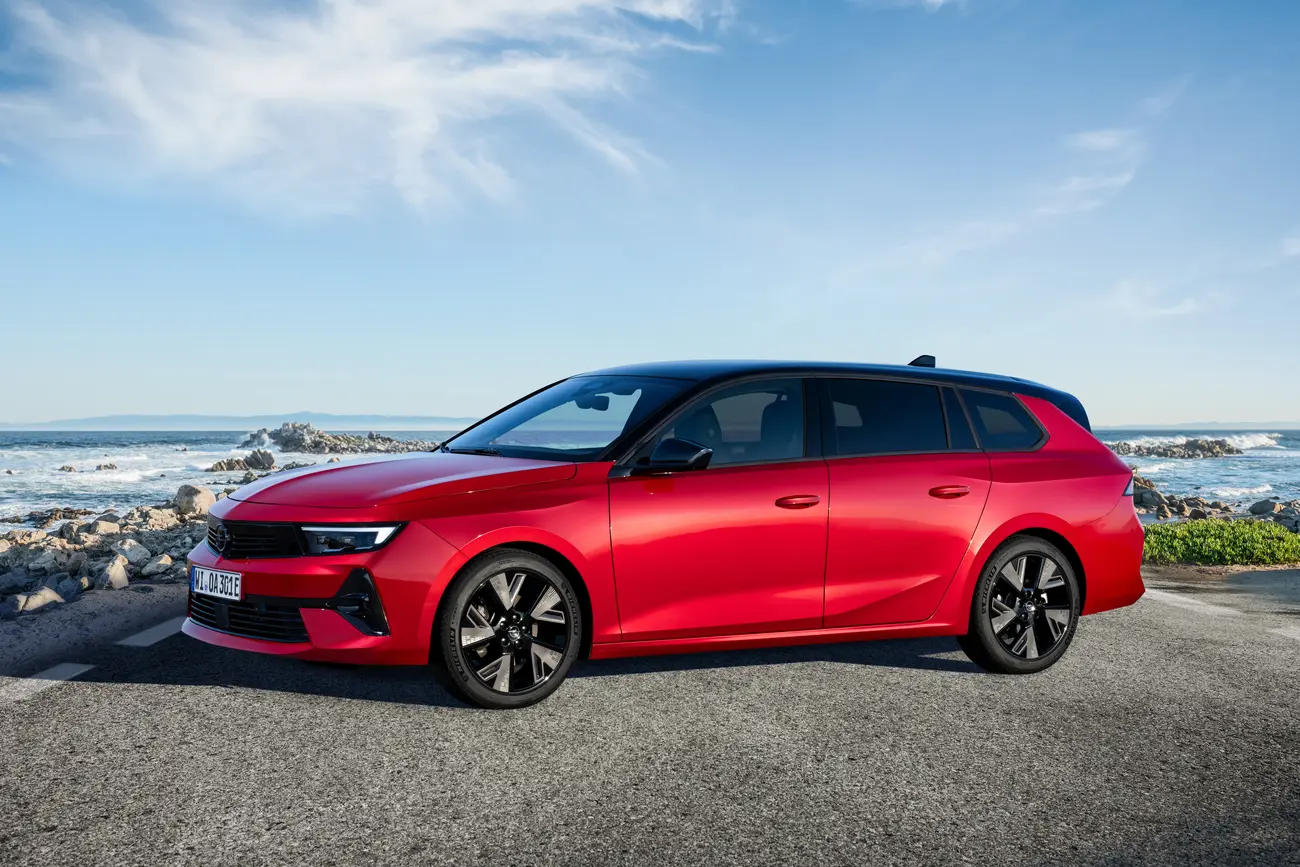
What changes in the 2026 Opel Astra Electric
Another 38 km of range, the same sticker price. That's the play Opel made with the refreshed Astra Electric, unveiled at the Brussels Motor Show in early 2026. The battery grows from 54 to 58 kWh, WLTP range climbs to 454 km, and the rest of the mechanical package stays largely the same. For Portugal-based buyers eyeing the C-segment EV space, the Opel Astra Electric Portugal proposition deserves a serious look — especially as a quieter alternative to the Volkswagen ID.3 or the Renault Megane E-Tech.
Opel is not killing off the diesel Astra, despite some headlines suggesting otherwise. In 2026 the compact still comes as a 1.5 diesel, a mild-hybrid petrol, a plug-in hybrid and a full EV. But the marketing energy is clearly aimed at the electric version, and what the Portuguese price tag ends up being will depend on how Opel.pt translates the new European numbers for our market.
58 kWh battery, 454 km WLTP and what that means on the road
The new battery uses NMC811 chemistry with 102 prismatic cells and a 400 V architecture. The raw figures: 58.4 kWh total capacity, 55.4 kWh usable. Official WLTP range moves up to 454 km — a meaningful jump from the previous 416 km.
The number that matters more is real-world consumption. According to EV Database estimates, the Astra Electric covers around 345 km in mixed use, with a band from 290 km in cold winter weather up to 400 km in mild conditions. For most Portuguese drivers that's plenty for a full week of urban commuting. A non-stop Lisboa-to-Porto run is off the table — you'll need a rapid charge somewhere near Coimbra.
Power stays at 115 kW (156 hp) with 270 Nm of torque. Zero to 100 km/h takes 9.2 seconds and top speed sits at 170 km/h. It's not a knock-out launch like the 220 hp Megane E-Tech, but the delivery is linear and more than enough for daily driving.
Charging: 100 kW DC plus new V2L
DC fast charging maxes out at 100 kW via CCS. On a compatible charger, 20 to 80 percent takes 25 to 32 minutes — in line with direct rivals, though well short of the 170 kW peaks the latest ID.3 versions can hit. At home, AC charging tops out at 11 kW three-phase, which means a full charge in about 6 hours.
The new trick is Vehicle-to-Load (V2L) at 3.5 kW. You can use the car's battery as a power outlet for external gear — a water pump, a camping fridge, power tools. A small detail that earns its keep when you actually need it.
Pricing in Portugal: what to expect
Opel hasn't published final Portuguese price lists yet, but the European numbers give a solid baseline. In Germany the Astra Electric starts at 37,990 EUR for the hatchback and 39,490 EUR for the Sports Tourer estate. In the Netherlands it opens at 36,499 EUR. In the UK, Vauxhall made an aggressive cut and the entry trim drops to 29,995 GBP.
Based on Opel.pt's recent pricing history, expect somewhere between 38,000 EUR and 42,000 EUR for the hatchback in Portugal, depending on trim. The good news for the budget calculation: as a fully electric car, it qualifies for full ISV exemption (the Portuguese vehicle registration tax), a heavily discounted IUC annual road tax, and eligibility for the Fundo Ambiental incentive for private buyers when the next application window opens.
How it stacks up against rivals
| Model | WLTP range | Power | Entry price (DE) |
|---|---|---|---|
| Opel Astra Electric | 454 km | 156 hp | 37,990 EUR |
| Peugeot e-308 | 416 km | 156 hp | 38,000 EUR |
| Renault Megane E-Tech | up to 470 km | 220 hp | around 38,000 EUR |
| VW ID.3 | up to 570 km | 228 hp | 40,000 EUR |
| Cupra Born | up to 425 km | 204 hp | 39,000 EUR |
The Astra Electric is the cheapest of the group at entry level and beats its platform sibling Peugeot e-308 on range. It loses out on power to the more muscular German and French rivals, and on maximum range to the ID.3 and the 60 kWh Megane. It's a balanced car, not a car of extremes.
A refreshed face and the illuminated Blitz
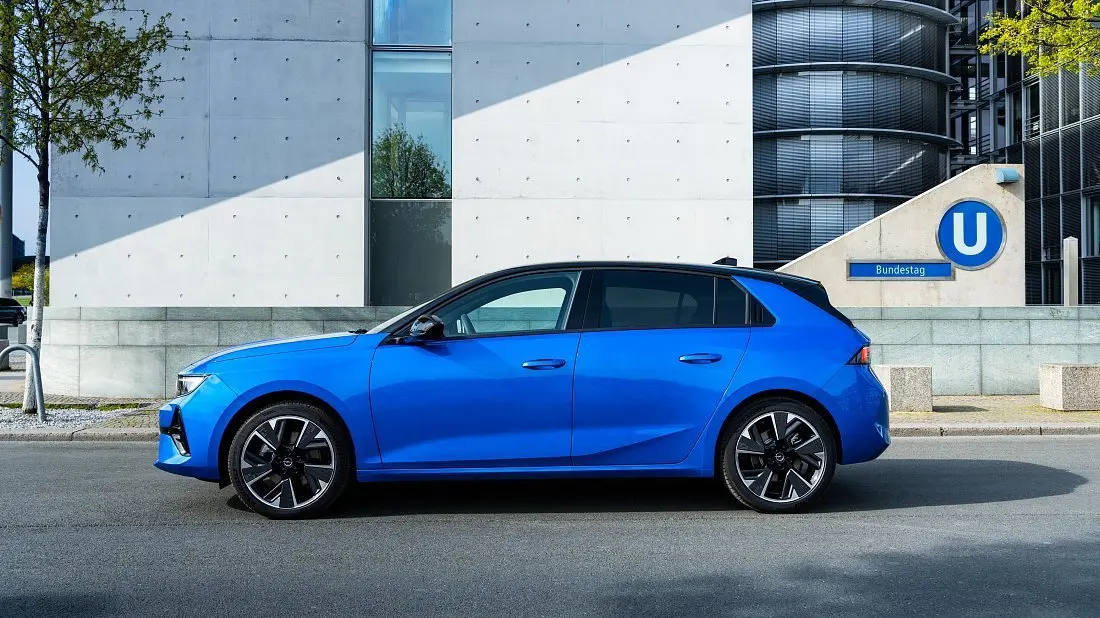
The front gets the updated Opel Vizor treatment — for the first time on an Astra, the central Blitz logo is illuminated. New 17 or 18-inch wheels arrive in fresh designs, and the colour palette gains Kontur White and Klover Green. The Intelli-Lux HD headlights now pack over 50,000 LED matrix elements that can shape the beam without dazzling oncoming traffic.
Inside, the Intelli-Seats with tailbone-relief cutouts remain a strong card — anyone doing regular long drives will notice the difference. ReNewKnit recycled fabric and a vegan-leather steering wheel reinforce the sustainability story. Boot space sits at 352 litres in the hatchback (1,268-1,339 L with rear seats folded) and a generous 1,634 L in the Sports Tourer — the estate stays one of the most practical choices in the compact EV segment.
Frequently Asked Questions
Opel hasn't published an official Portuguese price list yet, but based on European numbers (37,990 EUR in Germany, 36,499 EUR in the Netherlands) you can expect between 38,000 EUR and 42,000 EUR for the hatchback, with the Sports Tourer adding roughly 1,500 EUR. As a fully electric car it qualifies for full ISV exemption and a heavily reduced IUC road tax, which can save several thousand euros compared with an equivalent combustion model.
Official WLTP range is 454 km with the new 58 kWh battery, but in real-world use EV Database estimates around 345 km in mixed driving. In cold winter conditions that drops to roughly 290 km, while mild weather can push it close to 400 km — enough for most urban and suburban driving in Portugal without needing a midweek charge.
On a 100 kW CCS rapid charger, 20 to 80 percent takes 25 to 32 minutes. At home with an 11 kW three-phase wallbox, a full charge takes about 6 hours. The new feature in the 2026 refresh is 3.5 kW Vehicle-to-Load (V2L), which lets you use the car's battery to power external devices such as camping fridges or power tools.
The Astra Electric (156 hp, 454 km WLTP) is the cheapest of the three at entry level, but it has less power than the Megane E-Tech (220 hp) and a shorter top-spec range than the VW ID.3 Pro S (up to 570 km). What it offers in return is the best price-equipment balance of any C-segment Stellantis EV, and the Sports Tourer's 1,634 L boot has no direct rival among fully electric estates under 45,000 EUR.
As a fully electric vehicle, the Astra Electric is fully exempt from ISV (the vehicle registration tax) and pays a heavily reduced annual IUC road tax (around 30 to 40 EUR rather than the hundreds owed on equivalent combustion models). Private buyers can also apply for the Fundo Ambiental incentive for new EVs (up to 4,000 EUR in previous rounds) when the next funding window opens, subject to that year's price caps and budget availability.
Is it worth it for the Portuguese buyer?
The Astra Electric isn't the fastest electric car in its class, nor the longest-range. But it offers the most coherent price-equipment-build balance of any C-segment Stellantis EV, and Opel has a well-established service network across Portugal — which matters once the car needs maintenance outside Lisboa or Porto.
The Sports Tourer Electric is, in our view, the strongest argument in the range: very few fully electric estates offer 1,634 L of cargo space for under 45,000 EUR. If your driving is mostly urban and suburban with occasional long trips, this is one of the most sensible compact EVs you can buy today. Now it's down to Opel Portugal to publish the official price list so buyers can do the final maths.