
Mercedes C-Class Electric vs Audi A6 e-tron in Portugal: Best for Long Trips?
Published: 21/10/2026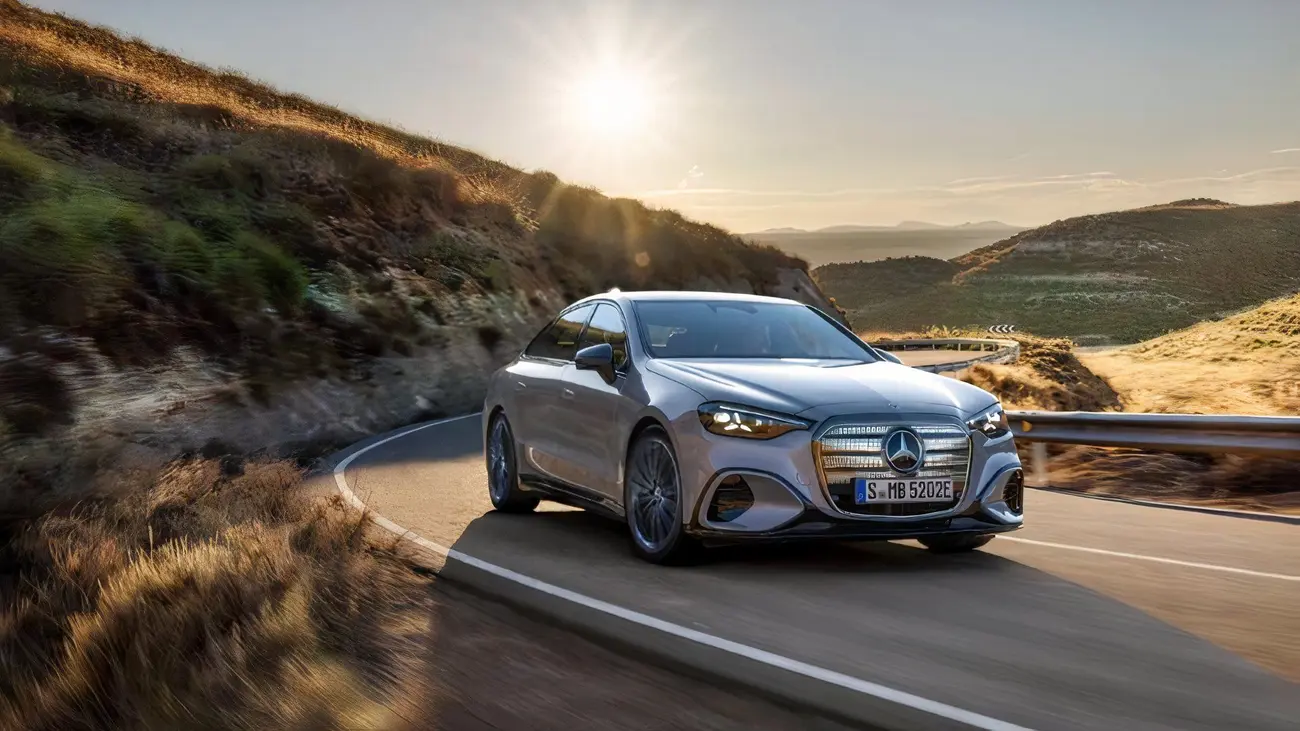
Mercedes C-Class electric vs Audi A6 e-tron: an old rivalry goes electric
For decades, the diesel C-Class and A6 were the default choice for anyone driving Lisbon to Porto every week. Both now come as fully electric cars, and the question has changed: which of these executive saloons handles a long trip with the fewest stops? For buyers here, Mercedes C-Class electric vs Audi A6 e-tron in Portugal comes down to three things: real-world range, charging speed and price.
There's an imbalance from the start. Mercedes launches with a single version, the 489 hp all-wheel-drive C 400 4MATIC. Audi offers four power levels and two body styles. So this is less "car versus car" and more a choice between one fully loaded package and a range where you pick your own balance of price, range and performance.
Head to head: the spec sheets side by side
To keep it fair, we put the C 400 4MATIC against the whole A6 Sportback e-tron line-up. Audi's WLTP figures vary slightly by market and homologation date, so we show the range.
| Spec | Mercedes C 400 4MATIC | Audi A6 Sportback e-tron |
|---|---|---|
| Length / width / height | 4,883 / 1,892 / 1,503 mm | approx. 4,930 / 1,920 / 1,490 mm |
| Wheelbase | 2,962 mm | 2,950 mm |
| Drag coefficient (Cd) | 0.22 | 0.21 |
| Drive | AWD, 2 motors | RWD (base, performance) or AWD (quattro, S6) |
| Power | 360 kW (489 hp), 800 Nm | 286 / 367 / 428 / 503 hp |
| 0–100 km/h | 4.0 s | 7.0 / 5.4 / 4.7 / 4.1 s |
| Usable battery | 94 kWh | 75.8 kWh (base) / 94.9 kWh (others) |
| WLTP range | up to 762 km | 627–634 / 750–773 / 716–729 / 670–675 km |
| Max DC charging | 330 kW | 225 kW (base) / 270 kW |
| 10–80% | approx. 22 min | approx. 21 min |
| AC charging | 11 kW (22 kW optional) | 11 kW (22 kW optional on some versions) |
| Boot / frunk | 470 L / 101 L | 502 L (1,330 L) / 27 L |
| Kerb weight | 2,460 kg | not published |
Two cars of almost identical size, both on 800V architecture, both with aerodynamics among the best on sale. The differences are in the details — and in the price.
Real-world range: which one goes further on a long trip
On paper, the electric C-Class (up to 762 km WLTP) and the A6 e-tron performance (750 to 773 km, depending on homologation) are practically tied. The Mercedes advantage is that its figure comes with all-wheel drive and 489 hp; on the Audi, the best numbers belong to the rear-wheel-drive version. The A6 e-tron quattro, the closest match in layout, manages 716–729 km.
Mercedes C-Class electric: real-world range close to 670 km
The most thorough test so far comes from UK site Electrifying: 4.4 miles/kWh in mixed driving and mild weather, which works out at about 668 km of real range. That's a strong result for a 2,460 kg twin-motor car, helped by a front motor that disconnects when it isn't needed — cutting drag losses by up to 90%, according to Mercedes.
There's no independent motorway-only test at 120 km/h yet. In our April analysis we estimated 550 to 620 km at that speed in moderate temperatures, and the real-world data available so far doesn't contradict it.
Audi A6 e-tron motorway range: between 400 and 520 km
Audi has more road data behind it. Over a two-week test, electrive measured around 18.1 kWh/100 km in the A6 Sportback e-tron performance at 120–130 km/h, and 23 kWh/100 km at a 150 km/h average. In plain terms: over 400 km at a brisk motorway pace, and up to about 520 km if you drive gently.
The A6 Avant e-tron quattro estate covered around 490 km at recommended speeds, dropping to roughly 340 km when cruising at 180 km/h on an unrestricted German autobahn. That scenario doesn't apply in Portugal, but it shows how much speed matters in an EV. And if you care about baseline efficiency, the A6 Sportback e-tron holds the Guinness record of 1,338 km on a single charge — at a 30 km/h average, nowhere near real-world use.
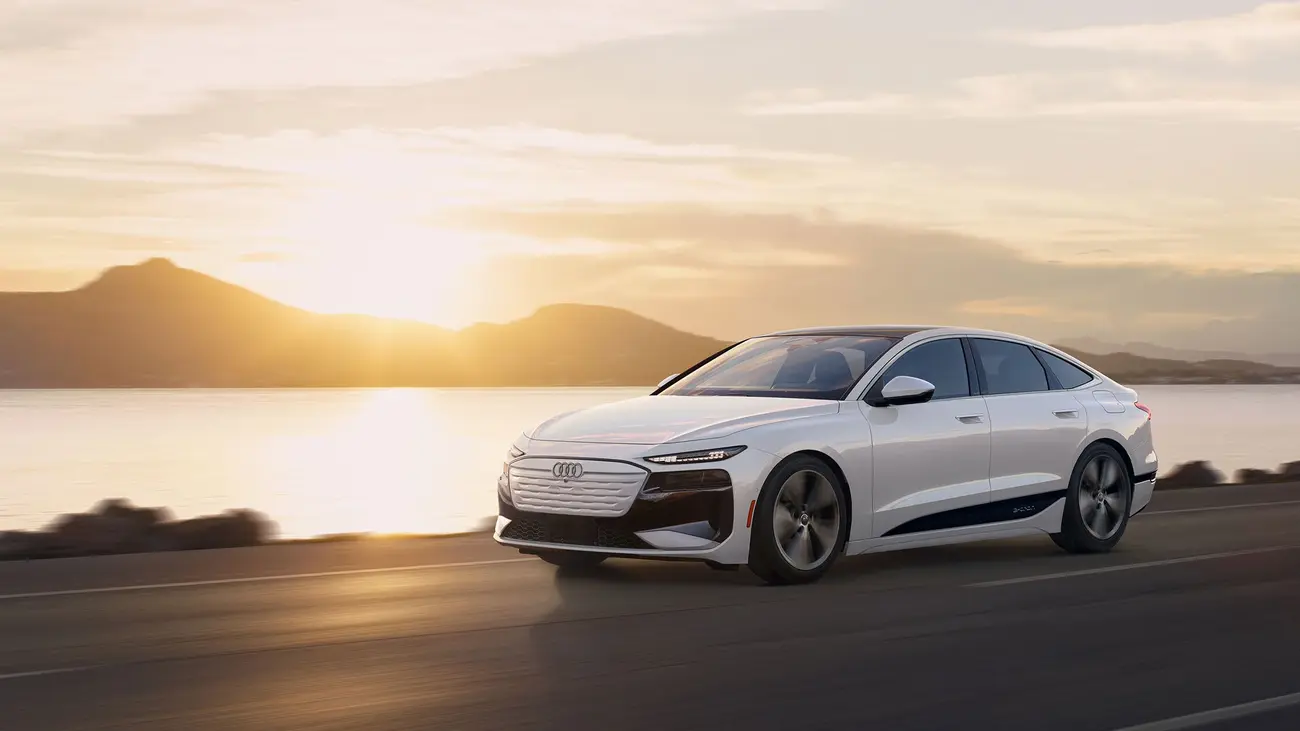
Lisbon to Porto without stopping in either car?
The A1 motorway between Lisbon and Porto is about 310 km. Based on the figures above, either car makes the trip non-stop with margin to spare, even at the 120 km/h limit. Lisbon to the Algarve works too. The return trip on the same day is different: both will almost always need a stop, and that's where charging decides who loses less time.
Charging: 330 kW vs 270 kW, but the clock is nearly level
The electric C-Class charges at up to 330 kW DC, against 270 kW for the A6 e-tron (225 kW on the base version). That peak gap almost vanishes on the stopwatch: 10–80% takes about 22 minutes in the Mercedes and 21 minutes in the Audi. In electrive's test, the A6 actually peaked at around 280 kW, slightly above the official figure.
Where Mercedes pulls ahead is the first few minutes. Ten minutes on an 800V charger adds up to 325 km WLTP to the C 400, against up to 290 km for the A6 Sportback e-tron quattro. Over a coffee stop, that's roughly 35 km more in the battery.
On MOBI.E — Portugal's national public charging network — those speeds are only reachable at the high-power chargers along the motorways. On a 150 kW unit, both cars are limited by the charger and the gap between them shrinks. If you still rely on plenty of 400V chargers, Mercedes offers an optional DC converter; check whether it's included in your spec.
Mercedes scores two more points: bidirectional charging (V2L, V2H and V2G, according to Electrifying), handy for powering equipment or even your home, and a 22 kW AC on-board charger as an option. On the Audi, 22 kW is only available on some versions, and electrive's test car was limited to 11 kW.
Line-up and powertrains: one version against four
For now, the electric C-Class only comes as the C 400 4MATIC: two synchronous motors, 360 kW (489 hp), 800 Nm, 0–100 km/h in 4.0 seconds and a 210 km/h top speed. It gets a two-speed gearbox on the rear motor, rear-axle steering (up to 4.5° when manoeuvring) and optional AIRMATIC air suspension. A rear-wheel-drive version with around 800 km WLTP arrives in 2027.
Audi offers more choice, built on its PPE platform:
- A6 e-tron — 286 hp, rear-wheel drive, 75.8 kWh battery, up to 634 km
- A6 e-tron performance — 367 hp, rear-wheel drive, 94.9 kWh, the most efficient in the range
- A6 e-tron quattro — 428 hp, all-wheel drive, 0–100 km/h in 4.7 s
- S6 e-tron — 503 hp, all-wheel drive, 0–100 km/h in 4.1 s
On outright performance, only the S6 gets close to the C 400. But not everyone needs 4 seconds to 100 km/h, and the A6 e-tron performance — slower, but with class-leading range — is probably the most sensible version for high-mileage drivers.
Space on board: boot, frunk and the Avant option
At the back, the Audi wins: 502 litres in the Sportback, 1,330 litres with the seats folded, against 470 litres in the Mercedes. Up front, it flips. The C-Class frunk holds 101 litres, enough for charging cables and an overnight bag; the A6's is just 27 litres.
Add it all up and the Mercedes actually offers more total volume. For families, though, the deciding factor may be something else: the A6 e-tron also comes as an Avant, a proper electric estate. Mercedes has confirmed an electric C-Class estate, but without a date. The C 400 can also tow up to 1.8 tonnes, useful if you pull a trailer or a small caravan.
Interior and tech: Hyperscreen vs Digital Stage
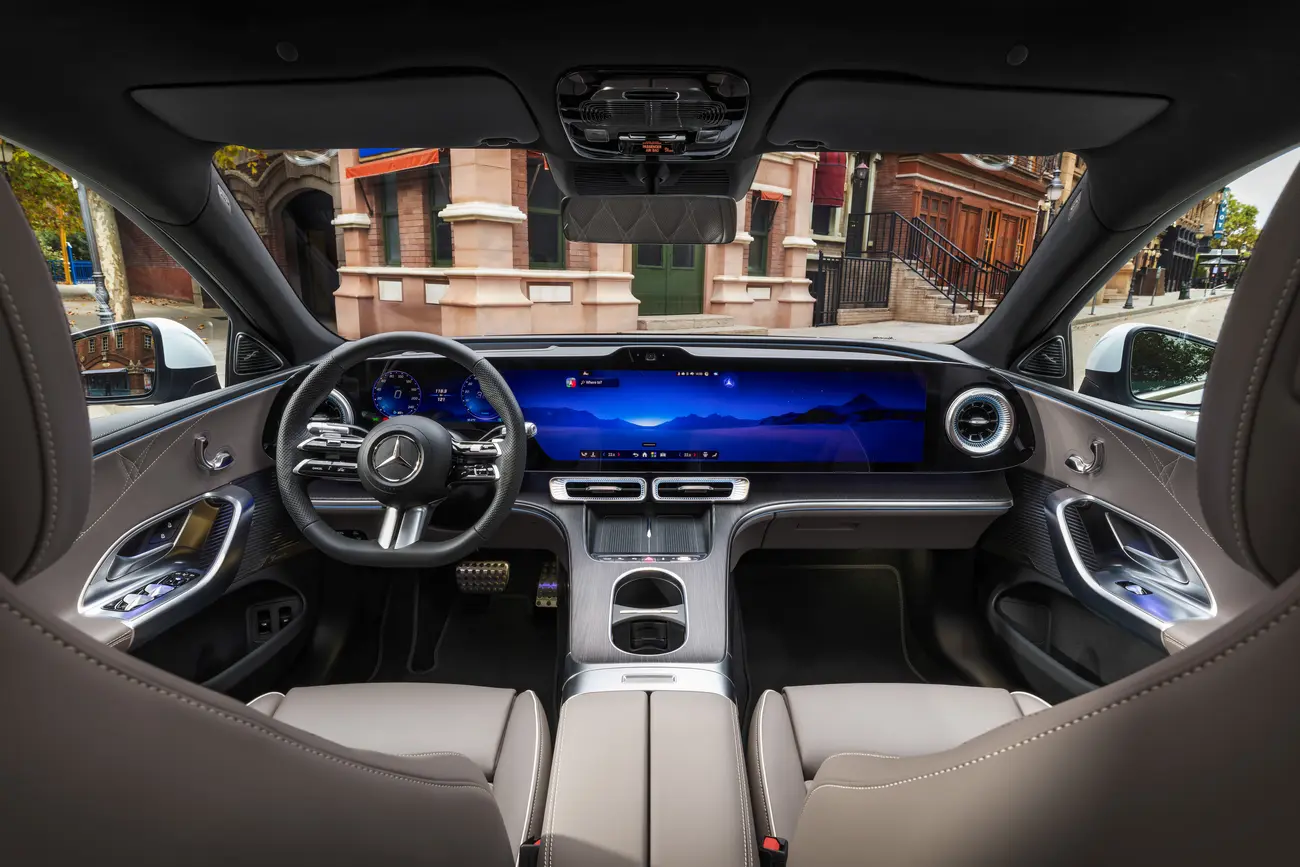
Mercedes goes all-in on visual impact. The optional MBUX Hyperscreen is a single 39.1-inch pane of glass spanning the dashboard, run by the new MB.OS operating system with over-the-air updates. There's an augmented-reality head-up display, a Sky Control roof with 162 illuminated stars and, as standard, a heat pump — a detail that matters for range on cold days.
Audi answers with its "Digital Stage": an 11.9-inch driver display, a 14.9-inch OLED centre screen and an optional 10.9-inch passenger screen. It also has an augmented-reality head-up display, optional virtual mirrors and digital OLED tail lights. The weak spot, flagged by electrive, is material quality that falls short of the price tag, plus an unconvincing voice assistant.
On the road, both are praised for comfort and a quiet cabin. Electrifying calls the C-Class calm and confident, and more agile than its size suggests thanks to rear-axle steering. Electrive highlights the A6's chassis and its well-tuned one-pedal driving mode.
What they cost in Portugal and how tax affects the bill
According to Portuguese outlet Observador, the electric C-Class costs €70,600 in Avantgarde trim and €74,200 as an AMG Line in Portugal. That's slightly below the €72,000 to €80,000 we estimated before prices were announced — good news if you've been waiting.
For the Audi A6 e-tron, our sources don't include a confirmed official Portuguese price list. The market data we've gathered points to an A6 Sportback e-tron from around €66,900 and an Avant from around €68,700; treat these as indicative. For comparison with other European markets:
| Market | Mercedes C 400 4MATIC | Audi A6 Sportback e-tron |
|---|---|---|
| Portugal | €70,600 / €74,200 | approx. €66,900 (indicative) |
| Italy | from €70,269 (up to approx. €89,240) | from €65,500 (Avant from €68,000) |
| Germany | €67,711 | €62,800 (base) / €75,600 (performance) / €79,800 (quattro) |
Germany is where it gets interesting. The base A6 is cheaper, but the comparable all-wheel-drive Audi, the 428 hp quattro, costs €79,800 — over €12,000 more than the more powerful C 400 4MATIC. If that pattern holds in Portugal, the Mercedes is the better deal on kit per euro, while the Audi is the cheaper way in.
On tax, they start level. As electric cars, both are exempt from ISV (Portugal's vehicle purchase tax) and from IUC (the annual road tax). For company buyers, both sit close to or above the €62,500 threshold beyond which VAT deduction and favourable autonomous taxation (tributação autónoma) stop applying in full. Run the numbers with your accountant before signing — depending on spec, the base A6 may be the only one that fits under the limit.
Frequently Asked Questions
On WLTP they are almost level: up to 762 km for the Mercedes C 400 4MATIC and 750 to 773 km for the A6 e-tron performance. On the road, the C-Class managed about 668 km in mixed driving and we estimate 550 to 620 km at 120 km/h, while the A6 e-tron performance used around 18.1 kWh/100 km at 120–130 km/h, giving over 400 km at a brisk pace and up to about 520 km when driven gently. Either car covers the roughly 310 km between Lisbon and Porto without stopping.
On an 800V rapid charger, the electric C-Class charges at up to 330 kW and goes from 10 to 80% in about 22 minutes, adding up to 325 km WLTP in 10 minutes (versus up to 290 km for the A6 Sportback e-tron quattro). On Portugal's MOBI.E network, at 150 kW units, the car is limited by the charger's output. At home or work it charges at 11 kW AC, or 22 kW with the optional on-board charger.
According to Observador, the electric C-Class costs €70,600 in Avantgarde trim and €74,200 as an AMG Line. For the A6 Sportback e-tron, market data points to around €66,900, and around €68,700 for the Avant; these are indicative figures without a confirmed official price list. Both are exempt from ISV and IUC, but company buyers should note they sit close to or above the €62,500 threshold beyond which VAT deduction and favourable autonomous taxation stop applying in full.
Yes, but only from Audi for now: the A6 Avant e-tron is already on sale from around €68,700 (indicative), and the quattro version covered about 490 km of real range at recommended speeds. Mercedes has confirmed an electric C-Class estate, but without a launch date. Meanwhile, the C-Class saloon makes up for it with a 470-litre boot, a 101-litre frunk and a towing capacity of up to 1.8 tonnes.
It depends on how you drive. The single-motor rear-wheel-drive version arrives in 2027 with around 800 km WLTP, more than the 762 km of the current C 400 4MATIC. If you need a car now and want all-wheel drive with 489 hp, the C 400 4MATIC is the only option; if range and price matter most, the rear-wheel-drive A6 e-tron performance is the one to compare in the meantime.
C-Class electric or A6 e-tron: which should you choose?
Go for the Mercedes C-Class electric if you want all-wheel drive, strong performance and faster charging in the first few minutes without paying A6 quattro money. It's also the right pick if you value the more striking interior, the big frunk and bidirectional charging. The entry price is higher and, for now, there's no cheaper version in the range.
Go for the Audi A6 e-tron if you need an estate (Avant), a bigger rear boot or a lower starting price. The A6 e-tron performance is the most rational choice for heavy motorway users: benchmark range, 21-minute charging and over 400 km of real range at motorway pace.
For long trips across Portugal, neither will let you down. The decision will mostly come down to the final price of each configuration — and to the 2027 arrival of the rear-wheel-drive C-Class with around 800 km WLTP, which could reshuffle the numbers again.