
Mercedes C-Class Electric in Portugal: 762 km Range, 482 hp and Price
Published: 29/04/2026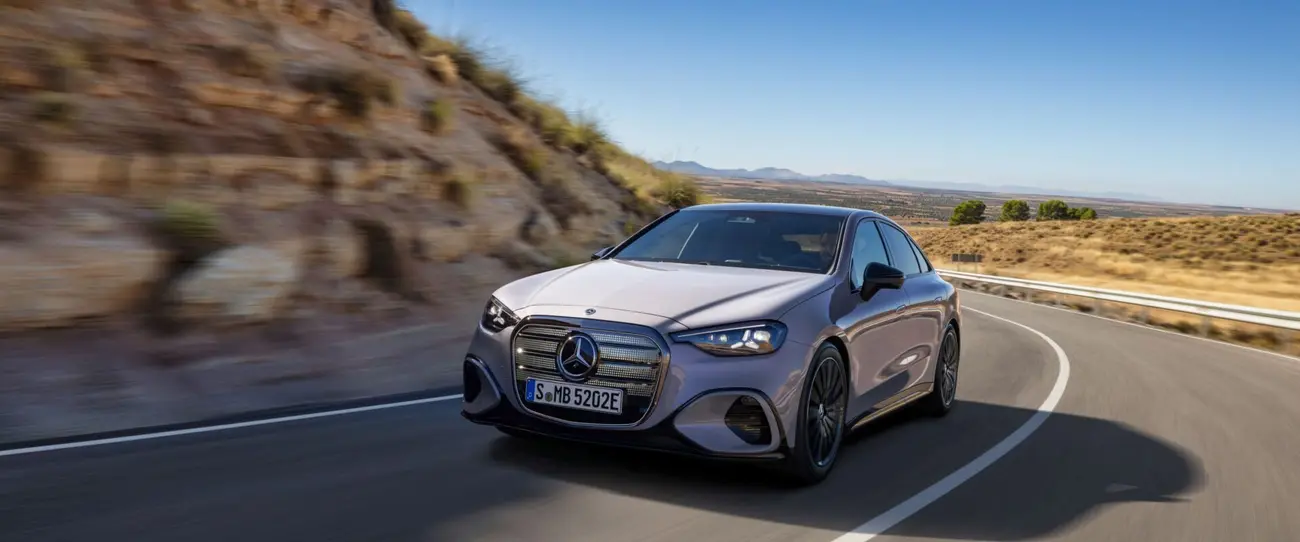
762 km per charge: the Mercedes C-Class Electric wants to reset the premium D-segment in Portugal
Mercedes-Benz unveiled the first all-electric C-Class in South Korea on 20 April. The launch trim is the C 400 4MATIC, with 482 hp, a 94 kWh battery and up to 762 km of WLTP range. For Portuguese buyers — where the petrol C-Class still starts at around €55,000–€60,000 — the most important question remains open: what will the Mercedes C-Class Electric cost in Portugal?
Mercedes CEO Ola Källenius is not shy about it. He says the car is "redefining the mid-size segment for electric vehicles" and calls it "the most spacious and intelligent C-Class ever." Marketing language aside, the numbers back up most of the story.
What the Mercedes C 400 4MATIC actually is
This is the first C-Class built on a dedicated EV platform — MB.EA-M, shared with the upcoming GLC EV. 800-volt architecture, two motors (one per axle), all-wheel drive, and a two-speed transmission on the rear motor — uncommon for an EV in this class. The front motor mechanically decouples when not needed, cutting highway energy use.
The 94 kWh usable battery is smaller than the one in its direct rival, the BMW i3 Neue Klasse (108.7 kWh), but efficiency closes part of the gap. Drag coefficient starts at 0.22, close to the best in the class. Mercedes does the math for us: every 0.01 reduction in Cd adds around 2.5% of range on a long trip.
Range, charging and what it means in Portugal
Official WLTP range is 762 km. Under real Portuguese conditions — motorway at 120 km/h, mild temperatures — a realistic expectation is 550 to 620 km. That is enough for a Lisbon–Porto round trip on a single charge, provided you leave fully topped up.
A single-motor rear-wheel-drive variant is planned for 2027, expected to reach close to 800 km WLTP. An AMG version and a station wagon are confirmed too, but without a date.
On DC fast charging, the Electric C-Class peaks at 330 kW. In 10 minutes connected to an 800 V charger it adds roughly 325 km of WLTP range. A 10–80% stop takes about 22 minutes. Fast, but not class-leading: the BMW i3 50 xDrive goes up to 400 kW and recovers 400 km in the same 10 minutes.
For a driver in Portugal, the practical upshot: on a Lisbon–Algarve trip, a single 15-minute coffee stop at a MOBI.E fast charger or Ionity hub resolves any range anxiety. V2L bidirectional charging is also included — you can plug an e-bike or a coffee machine directly into the car. (MOBI.E is Portugal's nationwide public charging network, roaming-compatible across all major operators.)
Performance: the fastest C-Class ever
Mercedes is explicit about positioning: "the sportiest C-Class ever." The 482 hp (360 kW) and 800 Nm of torque put the C 400 4MATIC ahead of the BMW i3 50 xDrive (469 hp, 645 Nm) in raw numbers.
- 0–100 km/h: 3.9 seconds
- Top speed: 210 km/h (electronically limited)
- All-wheel drive with a 2-speed gearbox on the rear axle
- AIRMATIC air suspension optional
- Rear-axle steering up to 4.5° (Comfort and Agility Package)
Four-wheel steering changes the experience of a 4.88-metre car. In town, the turning radius closes in on a hatchback. On motorways, it adds stability during quick lane changes.
39-inch MBUX Hyperscreen and a redesigned cabin
The interior is the car's most visual argument. The optional MBUX Hyperscreen is a single 993 mm pane of glass spanning the whole dashboard, with around 10 million pixels. Standard setup is the MBUX Superscreen: 10.3-inch driver cluster, 14-inch central display, and optionally a 14-inch passenger screen.
The AR head-up display projects a virtual image equivalent to 18 inches. The operating system is now MB.OS and integrates AI from three different sources — ChatGPT-4o, Microsoft Bing and Google Gemini — inside the MBUX assistant. It is a pragmatic approach: instead of betting on one partner, Mercedes picks the best model per query type.
Other details worth noting:
- Burmester 4D sound with speakers integrated into the seats
- Heat pump warms the cabin twice as fast as a combustion engine while using about 50% less energy
- Massage, heating and ventilation on the front seats, standard on higher trims
- Certified vegan materials available; Softtorino leather standard, Twisted Diamond Nappa optional
Spec sheet: Mercedes C-Class Electric vs BMW i3 Neue Klasse
| Specification | Mercedes C 400 4MATIC | BMW i3 50 xDrive |
|---|---|---|
| Usable battery | 94 kWh | 108.7 kWh |
| WLTP range | 762 km | 900 km |
| Combined power | 482 hp (360 kW) | 469 hp |
| Torque | 800 Nm | 645 Nm |
| 0–100 km/h | 3.9 s | around 4.5 s |
| Peak DC charging | 330 kW | 400 kW |
| Range in 10 min | 325 km | 400 km |
| Length | 4,880 mm | 4,760 mm |
| Wheelbase | 2,962 mm | 2,895 mm |
| Boot space | 470 L plus 101 L frunk | not disclosed |
| Architecture | 800 V | 800 V |
| Bidirectional charging | V2L | V2L, V2H, V2G |
Mercedes wins on power, torque, acceleration and perceived interior quality. BMW wins on range, charging speed and bidirectional versatility. The philosophical split is clear: Mercedes bets on open luxury (Hyperscreen, illuminations everywhere), BMW on "shy tech" and driving focus.
Dimensions, space and boot
The Electric C-Class grew in every relevant dimension. It is 4,880 mm long (12 cm more than the i3) with a 2,962 mm wheelbase — 97 mm longer than the petrol C-Class. The result: 12 mm more legroom at the front, and the standard panoramic roof adds 22 mm of headroom at the front and 11 mm at the rear.
The rear boot holds 470 litres. The frunk adds another 101 litres — handy for storing charging cables without eating into main luggage space. On a family trip, a C-Class Electric easily swallows four people's weekend luggage.
When it arrives in Portugal and what it should cost
Mercedes has confirmed European deliveries starting late 2026, with the bulk of the rollout landing in the first half of 2027. In the US it goes on sale in 2027, with pricing expected above the current ICE C 300 4MATIC's $51,650 — American estimates put it at $55,000–$65,000.
Official Portuguese pricing? Still to be confirmed. But we can approximate a figure. A C-Class 300 hybrid currently starts around €60,000 in Portugal, ISV and VAT included. The C 400 4MATIC Electric is clearly a higher trim in power and tech content. Full ISV exemption for EVs and reduced IUC cushion the premium positioning, but not entirely. (ISV is Portugal's vehicle registration tax; IUC is the annual road tax — both run much lower for EVs.)
Realistic estimate: the Mercedes C-Class Electric should start between €72,000 and €80,000 in Portugal for the C 400 4MATIC, with well-optioned configurations sailing past €90,000. The rear-drive 2027 variant, presumably cheaper, could land close to €65,000.
That puts the Electric C-Class in line with the BMW i3 in Portugal, and clearly above the Tesla Model 3 Long Range (from around €52,000). If you want a premium German electric saloon, this will be a choice between two philosophies, not two prices.
Portuguese tax incentives: what changes
Three factors ease the numbers compared with a combustion equivalent:
- ISV: full exemption for 100% electric vehicles (versus several thousand euros charged on an ICE C-Class)
- IUC: reduced annual road tax compared with a combustion car of equivalent displacement class
- Professional use: VAT deduction on electric cars up to €62,500 (the threshold is reviewed each year in the state budget)
For companies and self-employed professionals, this combination can make the Electric C-Class cheaper in TCO (total cost of ownership) over four years than an equivalent plug-in hybrid, even starting from a higher sticker price.
Frequently Asked Questions
Official Portuguese pricing has not been announced by Mercedes-Benz Portugal yet. Based on the C-Class 300 hybrid positioning (around €60,000) and US estimates of $55,000–$65,000, a realistic estimate is €72,000 to €80,000 for the C 400 4MATIC, with well-optioned configurations sailing past €90,000. The single-motor rear-drive variant planned for 2027 could land closer to €65,000.
Mercedes-Benz has confirmed European deliveries starting late 2026, with the bulk of the rollout landing in the first half of 2027. For Portugal, the most likely scenario is first units reaching dealers during the first half of 2027, with reservations opening a few months earlier. No official Portuguese launch date has been announced.
Official WLTP range is 762 km from the 94 kWh battery. Under real Portuguese conditions — motorway at 120 km/h, mild temperatures — a realistic expectation is 550 to 620 km per charge, enough for a Lisbon–Porto round trip without stopping. In winter or with more aggressive driving, real-world range can drop to 480–520 km.
They are different categories despite similar size. The Tesla Model 3 Long Range starts at around €52,000 in Portugal, with 629 km WLTP and 0-100 km/h in 4.4 seconds. The Mercedes C 400 4MATIC starts above an estimated €72,000, offers 762 km WLTP, 482 hp, 0-100 in 3.9 s and a premium cabin with optional MBUX Hyperscreen. For German luxury buyers, the Mercedes wins; for best price-to-range ratio, the Tesla remains unbeatable.
Being 100% electric, the C-Class qualifies for full ISV exemption (saving several thousand euros versus a combustion equivalent) and a reduced annual IUC road tax. Companies and self-employed professionals can deduct VAT on electric cars up to €62,500, a threshold reviewed each year in the state budget. These incentives can make the four-year TCO competitive against a plug-in hybrid equivalent, despite the higher sticker price.
Worth waiting for?
If you are considering a premium D-segment EV and don't need to replace your car before mid-2027, it is worth tracking the announcements ahead. The two relevant launches — Mercedes C-Class Electric and BMW i3 Neue Klasse — arrive within months of each other. Side-by-side comparison at Portuguese dealers will only be possible in summer 2027, and that is when official prices and the first test drives will enable a properly informed decision.
For now, here is the gist: Mercedes delivers 762 km WLTP, 482 hp, 330 kW charging and a cabin that can feature a nearly one-metre-wide screen. Portuguese pricing is the last piece missing — and it is worth watching Mercedes-Benz Portugal's announcements over the coming months.