
Li Auto i9 Specs: The Six-Seat Flagship Electric SUV Explained for Portugal
Published: 21/09/2026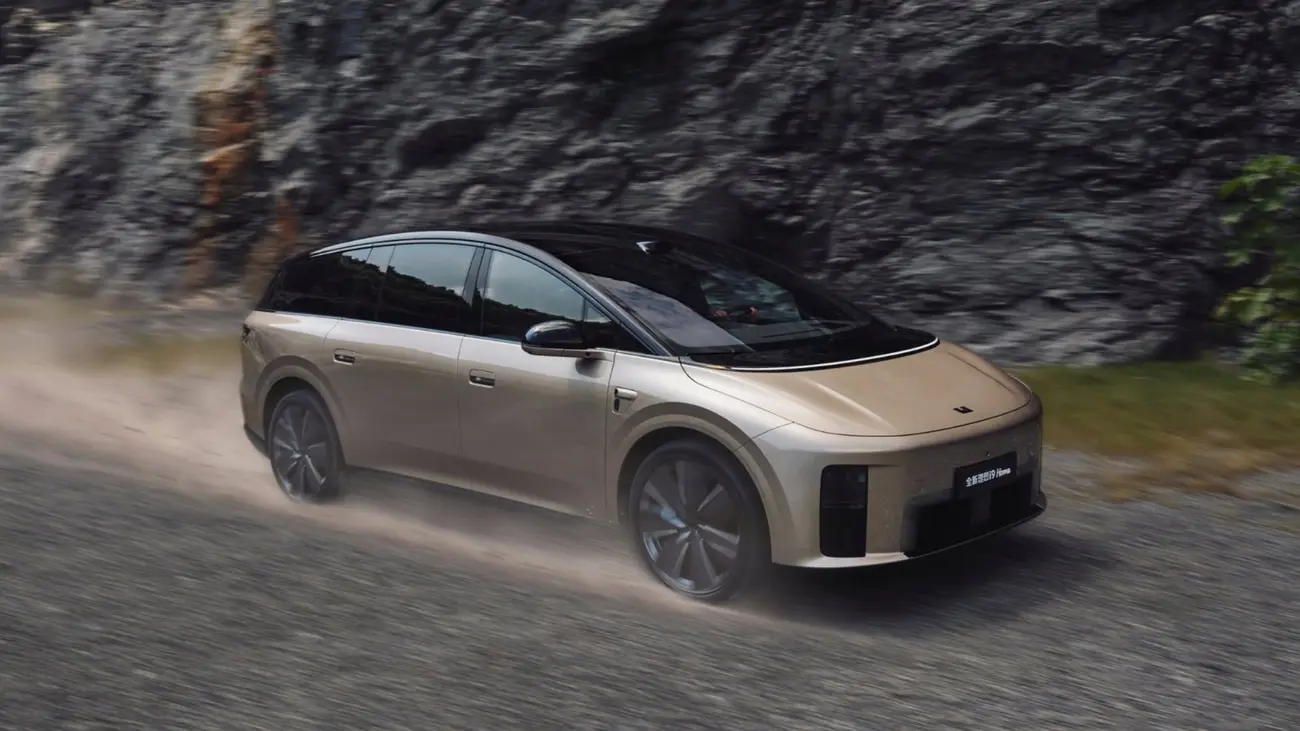
Li Auto i9: the six-seat electric SUV Li Auto wants to feel like an apartment
A drag coefficient of 0.215. That's the number Li Auto led with for the i9, and it's a good one: the brand claims it's the most aerodynamic mass-production SUV in the world. The Li Auto i9 electric SUV launched in China on 16 September 2026, with deliveries starting the same week, and it becomes both the brand's largest SUV and the new flagship of its fully electric range.
If you've been following Li Auto's move into Europe, the i9 isn't the car arriving first — that job belongs to the i6. But the Li Auto i9 specs show how far the brand can push, and hint at what could follow. One thing to be clear about up front: there is no European price and no WLTP rating for this model, so we're working with Chinese figures throughout.
What the Li Auto i9 is and where it sits in the range
One configuration, called "Home". Li Auto kept it simple: the i9 comes in a single spec with six seats, and it's the brand's second Home model after the Li Mega MPV.
Founder Li Xiang explained the difference between the two with a property analogy. The Mega Home is "a suburban villa suited to large families"; the i9 Home is "a luxury city-center apartment", built around space efficiency, views and comfort. The message is clear — this is a family car designed around the cabin, not around chasing range records.
It's also the first flagship built on Li Auto's second-generation battery-electric platform, joining the Li Mega, i8 and i6 in the brand's EV line-up.
Li Auto i9 vs Li i8: the differences
The i8 is its closest sibling, and the i9 grows in every direction a family would care about:
- Length: 5,225 mm, 140 mm more than the i8's 5,085 mm
- Wheelbase: 3,168 mm, 118 mm more than the i8's 3,050 mm
- China price: 30,000 yuan (about 8.8%) more than the i8 AWD Performance
Against the Li Mega, the maths flips: the i9 is 140,000 yuan cheaper.
Li Auto i9 specs: the full sheet
| Spec | Li Auto i9 |
|---|---|
| Body / seats | Large SUV, 6 seats |
| Trim | Home (single configuration) |
| Length | 5,225 mm |
| Width | 1,970 mm |
| Height | 1,752 mm |
| Wheelbase | 3,168 mm |
| Drag coefficient | 0.215 Cd |
| Turning diameter | 10.6 m |
| Powertrain | Dual motor AWD (150 kW front + 250 kW rear) |
| Power / torque | 400 kW (536 hp) / 660 Nm |
| 0-100 km/h | 4.9 s |
| Battery | 101 kWh, ternary lithium, 5C |
| Range | 705 km (CLTC cycle) |
| Charging | +500 km in 10 minutes |
| Suspension | Dual-chamber, dual-valve air suspension |
| Steering | Steer-by-wire + rear-wheel steering (standard) |
| Airbags | 11 |
Li Auto i9 range: 705 km, but on the CLTC cycle
The 101 kWh battery is rated at 705 km — with an important caveat. That figure comes from China's CLTC test cycle, which is noticeably more generous than the WLTP standard used in Europe. No WLTP figure exists for the i9 yet, so we won't guess one.
For a sense of the gap, EV Powered UK quotes the i6 at around 719 km CLTC versus roughly 636 km WLTP-equivalent (447 and 395 miles). That's a pointer to how the cycles differ, not a prediction for the i9.
5C charging: 500 km in 10 minutes
This is where the i9 really stands out. With a battery built for 5C charging, Li Auto promises to add 500 km (CLTC) in just 10 minutes. In practice that needs very high-power chargers, which are still scarce in Portugal — on a typical fast charger on the MOBI.E network (Portugal's national public charging network), the charger, not the car, would set the pace.
Early cars use CATL cells. Later, Li Auto switches to its own in-house designed packs, with cells made by Sunwoda.
Chassis and performance
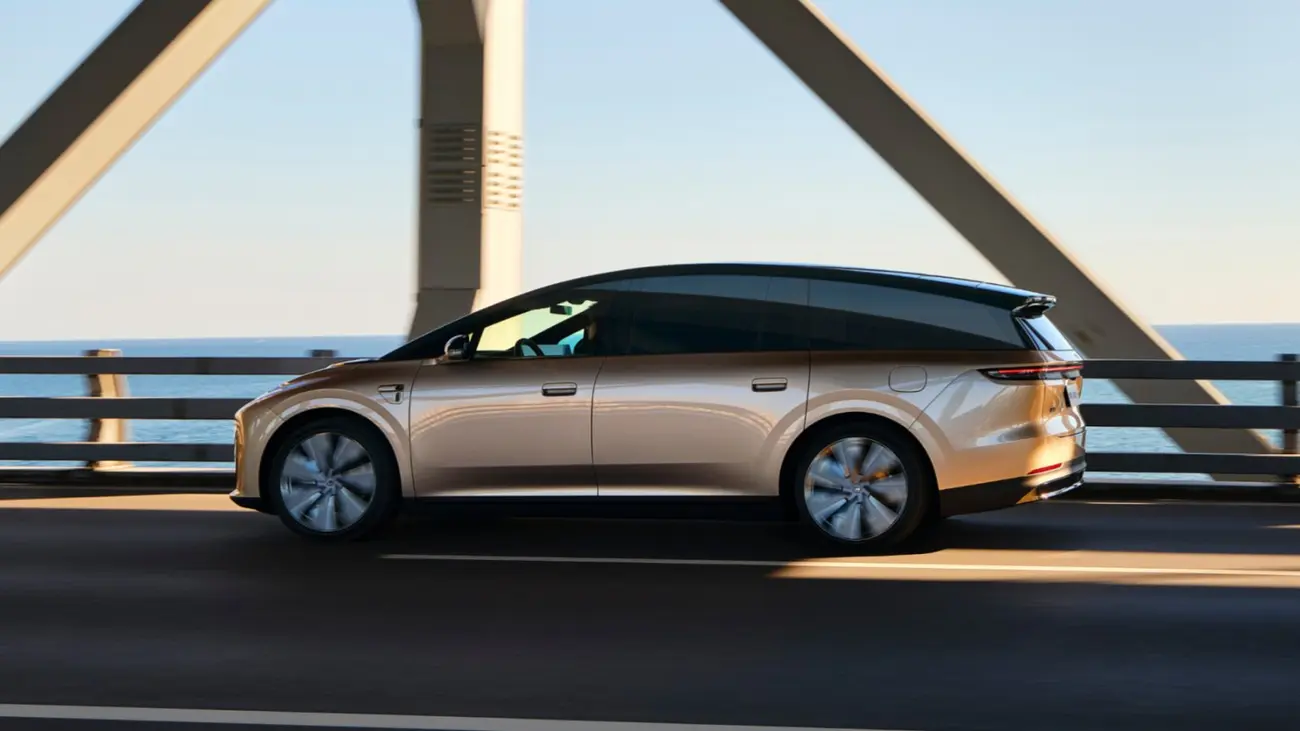
Two motors, 400 kW and 0-100 km/h in 4.9 seconds — sports-car numbers in an SUV over 5.2 metres long. More useful day to day is the chassis package: air suspension, steer-by-wire and standard rear-wheel steering give a 10.6 m turning circle, handy in underground car parks and narrow old-town streets.
A living room on wheels: interior and tech
The cabin is where the i9 earns its Home badge. The full-size second-row seats swivel electrically, so passengers can sit face to face with the third row — a small lounge on the move.
- 4 zero-gravity seats, usable at the same time
- 29-inch 6K panoramic display up front
- 21-inch 4K rear screen that slides forward and back
- 10-litre fridge that can cool or heat
- 9.3.6-channel audio with 29 speakers and 4,960 W peak output
- Qualcomm Snapdragon 8797 chip running the infotainment
On safety, Li Auto highlights 11 airbags, a 2,000 MPa integrated door-ring structure and a redundant power supply.
Driver assistance: LiDAR as standard, optional upgrade
As standard, the i9 gets Li Auto's in-house Mach M100 chip, one forward-facing LiDAR and the Mach VLA driving model. The optional "Embodied Intelligence" package costs 30,000 yuan and adds a second M100 chip (1,280 TOPS combined) plus side and rear LiDAR sensors, for four in total.
Li Auto i9 price: how much it costs in China
The Li Auto i9 costs 369,800 yuan in China, about $54,680 at the rate quoted by CnEVPost. There is no Portuguese or European price, and a straight conversion to euros would tell you little: it ignores import duties, the EU's additional tariffs on Chinese-built EVs, homologation and dealer margins.
| Model | China price |
|---|---|
| Li i8 RWD long range | 309,800 yuan |
| Li i8 AWD Performance | 339,800 yuan |
| Li i9 Home | 369,800 yuan |
| Li Mega | 509,800 yuan |
The price ladder is still useful for positioning: the i9 sits between the i8 and the Mega as a luxury family SUV, not as a stand-in for the MPV.
Frequently Asked Questions
The Li Auto i9 costs 369,800 yuan in China (about $54,680) in a single Home trim. That is 30,000 yuan more than the i8 AWD Performance and 140,000 yuan less than the Li Mega. There is no price for Portugal or Europe, and a straight euro conversion ignores customs duties, EU tariffs on Chinese EVs, homologation and dealer margins.
Li Auto has not announced any European plans for the i9 so far. The brand's European entry starts with the i6, which debuts at the Paris Motor Show in October 2026, with sales from Q4 2026 and Benelux as the first market. Li Auto says all new models are engineered with overseas regulatory adaptations from the R&D stage, which would make a future export easier but does not guarantee it.
The i9 is a fully electric SUV with a 101 kWh battery and 705 km of CLTC range, built on Li Auto's second-generation EV platform. The L9 is the brand's flagship extended-range (EREV) SUV, pairing electric drive with a combustion engine that acts as a generator. Despite the similar names, they are different vehicles.
No WLTP figure has been published for the Li Auto i9 yet. The claimed 705 km is measured on China's CLTC cycle, which is typically more optimistic than the WLTP cycle used in Europe. As a reference for the gap between cycles, the i6 is quoted at around 719 km CLTC and roughly 636 km WLTP-equivalent, but that is not a forecast for the i9.
The Li Auto i9 has 6 seats, including 4 zero-gravity seats that can all be used at the same time. The full-size second-row seats swivel electrically so passengers can sit face-to-face with the third row. At 5,225 mm long with a 3,168 mm wheelbase, it is Li Auto's largest SUV to date.
Li Auto i9 Europe availability: will it come to Portugal?
For now, there are no announced plans to bring the i9 to Europe. Li Auto's European entry is built around the i6, which makes its European debut at the Paris Motor Show in October 2026, goes on sale from Q4, and launches first in Benelux. Right-hand-drive versions for the UK are due by the end of the year.
One detail keeps the door open. The brand runs an R&D centre in Munich and says every new model will now include overseas regulatory adaptations from the development stage. The i9 launched after that commitment — no guarantee of anything, but it makes a future export technically easier.
What it would mean for buyers in Portugal
If it ever arrives, the i9 would be exempt from ISV (Portugal's vehicle registration tax) as a fully electric car, but it would land in a segment where the final price matters enormously. A six-seat electric SUV with this much kit would be up against large European premium models, and its price here would hinge on tariffs and Li Auto's commercial strategy — none of which is settled.
The sensible move is to watch the i6 arrive first and see what price Li Auto sets for Europe. That will be the best signal of how the brand wants to position itself here — and of what an i9 might cost if it ever follows the same route.