
Li Auto i6 Reaches Europe in Q4: Estimated Price in Portugal
Published: 04/09/2026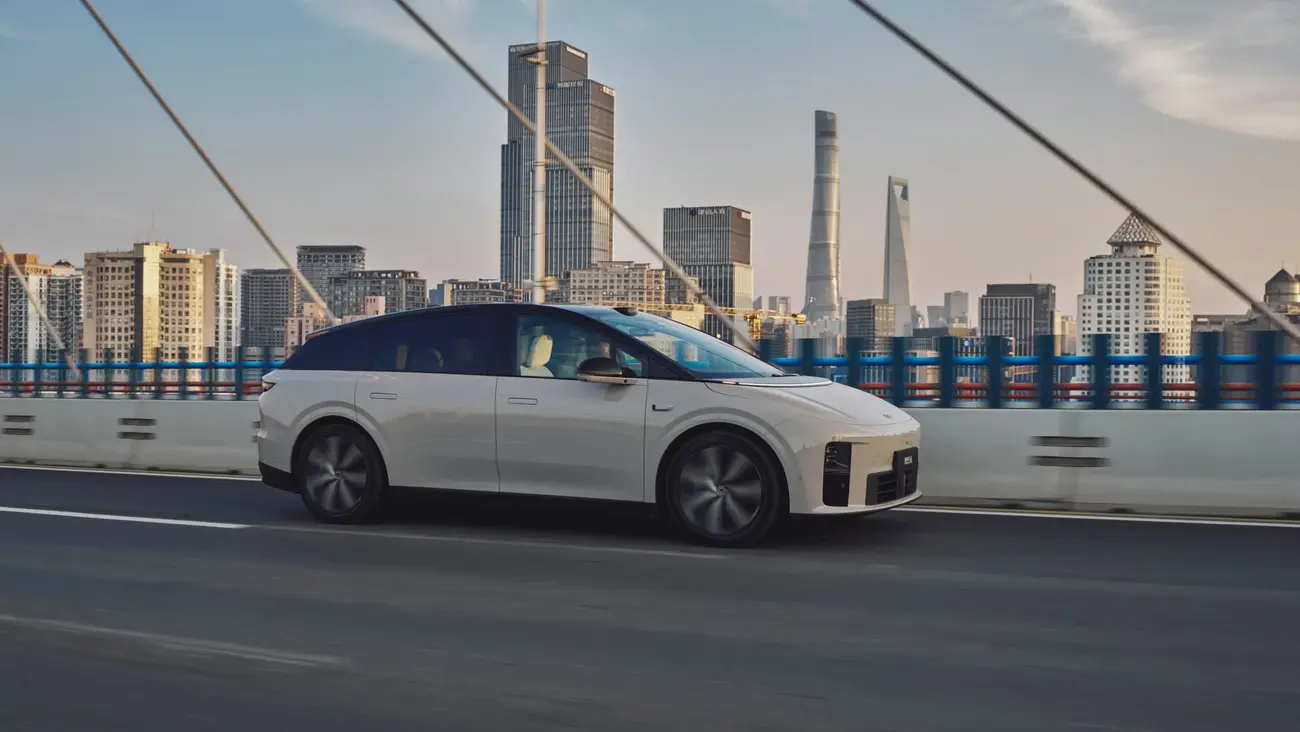
There is finally a quarter on the calendar: European sales start in Q4
The timing is no longer vague. On its second-quarter earnings call on 27 August, Li Auto confirmed that European sales of the i6 begin in the fourth quarter of 2026, following the car's public debut at the Paris Motor Show in October. Until now the company had only said "second half of the year" — now there is a quarter.
Almost everything else is still missing: which countries go first, through which dealer network, and at what price. For anyone in Portugal watching this segment, the Li Auto i6 Portugal price is a blank line under a car that now has a European schedule. What the announced strategy does reveal, though, is worth reading closely.
Europe gets pure EVs only — and that changes the argument
Li Auto has split the world into two lists. Europe receives battery-electric models only: the i-series, which includes the i6, plus the Mega minivan. The L-series — the extended-range SUVs, which carry a petrol engine on board purely as a generator — is not coming. Those go to the Middle East and Central Asia instead.
That matters more than it sounds for a Portuguese buyer. In China, Li Auto built its reputation on exactly those range extenders: cars that drive as EVs day to day and, on a long trip, stop depending on chargers altogether. It is the argument that dismantles range anxiety. Here, that argument simply will not exist. The i6 has to win as a pure electric SUV, judged against rivals that have been on sale here for years, with service networks in place and known residual values.
In practice: anyone currently cross-shopping a Tesla Model Y, an XPeng G6 or a BYD Sealion 7 will judge the i6 on the same terms — battery, real-world range, price, and where you plug it in. No petrol-tank plan B.
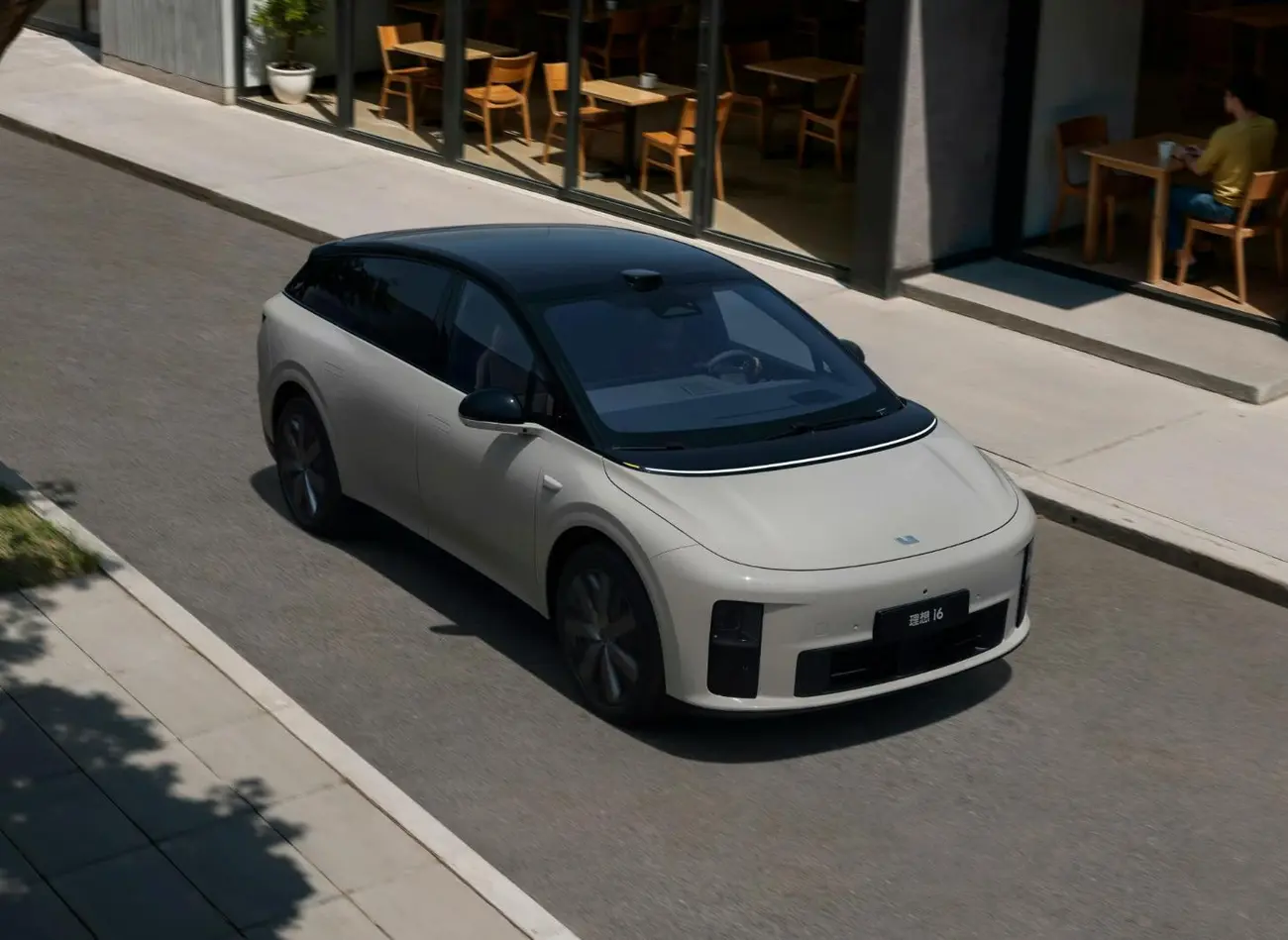
Technically the essentials stand: an 87.3 kWh LFP battery on an 800 V architecture, range certified on China's CLTC cycle, and very fast charging when the charger can keep up. We already covered the full spec sheet, dimensions and the CLTC-versus-WLTP gap in our dedicated piece on the car — see the full Li Auto i6 specs and range if you want every number.
The wider overseas map: Dubai, Kazakhstan, Hong Kong
Europe is only one piece. The Li L9 arrives in Dubai in September, formally opening Middle East sales, after launching in Kazakhstan and Uzbekistan back in July. In Kazakhstan there is also a strategic partnership with the Allur group covering local assembly and adaptation — not pure export, but production at the destination.
A right-hand-drive i6 is planned before the end of the year too, alongside the electric Mega, for Hong Kong and Singapore. Put together, the logic is clear: where charging is thin and distances are long, sell range extenders; where there is infrastructure and regulatory pressure on emissions, sell pure battery. Europe falls in the second group, Portugal with it.
What the Li Auto i6 could cost in Portugal
Let us be blunt: no European price has been announced at all. What follows is our own estimate, with the reasoning on the table so you can disagree with it.
The starting point is China, where the i6 opens at 249,800 yuan and rises to 277,800 yuan for a fully loaded all-wheel-drive car. Converting that straight into euros produces a number no importer will ever charge, and the reason is fiscal before it is commercial: an EV built in China and sold in the European Union pays the standard 10% import duty plus the countervailing duties Brussels imposed on Chinese electric vehicles. On top of that come shipping, European type approval, importer and dealer margin, 23% VAT, and the cost of building a service network from scratch in a market where nobody knows the brand.
Adding it up, our estimate points to an entry price between 50,000 and 58,000 euros in Portugal for the rear-wheel-drive version, with all-wheel drive potentially nudging 65,000. Again: an estimate, not an official figure. And there is a scenario where we are too high — if Li Auto decides to buy market share at the expense of margin, as it already did in China with the 239,800 yuan launch promotion, the European number could land well under that.
Portuguese tax rules help either way. As a full battery-electric car, the i6 is exempt from ISV (the registration tax charged on combustion cars) and sits in the lowest band of IUC, the annual road tax. For companies, VAT deductibility and the autonomous taxation rules keep EVs the rational choice above the 40,000-euro mark.
An expansion launched from red numbers
It helps to know what shape the brand is in as it heads to Paris. In Q2 2026 Li Auto delivered 98,330 vehicles, down 11.5% year on year, and posted a net loss of 1.7 billion yuan. Q1 was worse still: a 2.3 billion yuan loss, with gross margin falling from 20.5% to 7.9%.
There are two sides to that for a buyer. The good one: a brand that needs to break into a market usually arrives with sharp pricing and generous equipment, and Li Auto had 87.5 billion yuan in cash to fund the operation at the end of June. The one to watch: buying a car from a brand with no history in Portugal means betting it will still be here in five years, with parts available, certified workshops and a warranty someone honours. Before you sign, ask who handles service and where — that answer is worth as much as the spec sheet.
Frequently Asked Questions
European sales begin in the fourth quarter of 2026, confirmed by Li Auto on its earnings call of 27 August 2026. Before that, the i6 makes its European public debut at the Paris Motor Show in October. Until now the company had only said "second half of the year", so this is the first time a specific quarter has been given.
No European price has been announced at all — what follows is an estimate. Starting from the 249,800 yuan rear-wheel-drive version in China and adding the 10% import duty, the EU countervailing duties on Chinese EVs, shipping, European type approval, importer and dealer margins and 23% VAT, we estimate an entry price between 50,000 and 58,000 euros, with all-wheel drive nudging 65,000. That is a reasoned estimate, not an official figure, and it could land lower if Li Auto enters with aggressive pricing.
The company split its expansion into two lists: Europe gets battery-electric models only — the i-series, which includes the i6, plus the Mega minivan — while the extended-range L-series goes to the Middle East and Central Asia. The logic is infrastructure and regulation: where charging is dense and emissions rules bite, sell pure battery. In practice the i6 reaches Portugal without the generator engine that made Li Auto's name in China.
Most likely not. Several outlets point to the Benelux as the first European region, but Li Auto has not officially confirmed that or any other country list. Chinese brands typically start with the large northern European markets and work south afterwards, so Portugal should sit outside the initial Q4 2026 wave.
Li Auto enters Europe in a fragile financial position: in Q2 2026 it delivered 98,330 vehicles, down 11.5% year on year, and posted a net loss of 1.7 billion yuan, following a 2.3 billion yuan loss in Q1. It held 87.5 billion yuan in cash to fund the push, but buying from a brand with no history here means betting it will still be around in five years. Before signing, confirm who honours the warranty, where the certified workshops are, and how long parts take to arrive.
What is still unconfirmed
Two things remain open. First, the markets: several outlets report the Benelux as the first European region, but Li Auto has not officially confirmed that or any other list of countries. Second, the price: only in Paris, or later still, will we see the European i6 with WLTP homologation, standard equipment and a price list.
Portugal almost certainly will not be in the first wave — Chinese brands tend to start with the big northern markets and work south. If you are deciding now, you do not need to wait. If you are planning the purchase after this one, October gives you a good reason to watch Paris before you commit.