
Li Auto i6 in Portugal: Specs, Range and When It Arrives
Published: 02/06/2026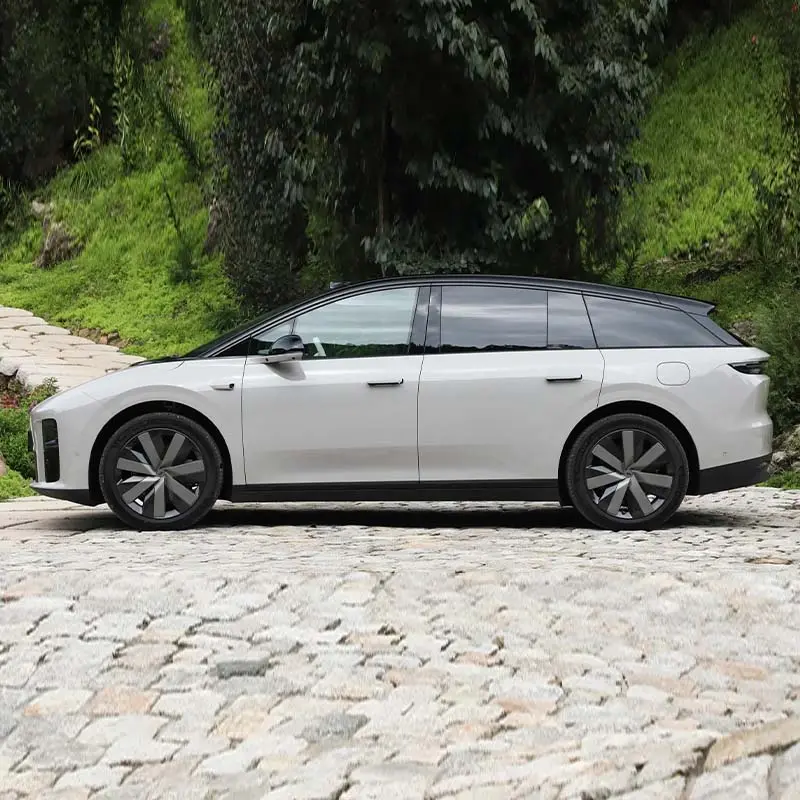
Li Auto is finally coming to Europe — and the i6 leads the way
Another Chinese brand is heading to the old continent. Li Auto, best known in China for its range-extender SUVs, has confirmed it will bring the Li Auto i6 to Europe in the second half of 2026. It's a fully electric SUV with a claimed 720 km of range on the Chinese cycle and 800V charging — and it makes its public debut at the Paris Motor Show in October 2026.
If you're in Portugal keeping an eye on the premium Chinese EV scene, this one's worth understanding. Li Auto arrives late — well behind XPeng, Nio, BYD and Geely — but it shows up with a car whose spec sheet is hard to ignore.
What the Li Auto i6 is, and why it matters
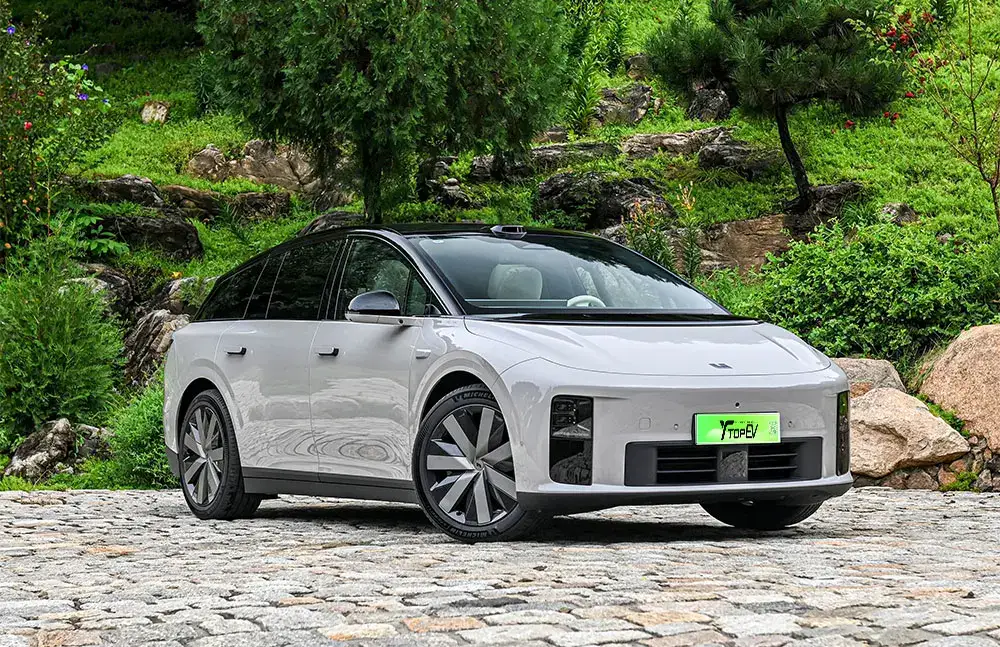
The i6 is a five-seat electric crossover/SUV measuring 4,950 mm long with a 3,000 mm wheelbase. That puts it roughly in Tesla Model Y territory, just a little larger. It's Li Auto's third fully electric model, after the i8 and the Mega minivan.
The brand picked the i6 as its European spearhead for a simple reason: it fits what European buyers actually want — a mid-size electric SUV with strong range and fast charging. It isn't an EREV (a range-extender with a small petrol engine on board), it's a pure battery EV.
Specs: battery, range and charging
The i6 is built around an 87.3 kWh LFP battery made by CATL. It comes in two configurations:
| Specification | RWD (rear-wheel drive) | AWD (all-wheel drive) |
|---|---|---|
| Power | 250 kW (~335 hp) | 400 kW (536 hp) |
| 0-100 km/h | 6.5 s | 4.5 s |
| Range (CLTC) | 720 km | 660 km |
| Battery | 87.3 kWh LFP CATL | 87.3 kWh LFP CATL |
| Architecture | 800V, 5C charging | 800V, 5C charging |
| Length | 4,950 mm | 4,950 mm |
One detail matters a lot for a Portuguese buyer. The 720 km figure is measured on China's CLTC cycle, which is more optimistic than Europe's WLTP. In real-world driving, expect noticeably less — and the WLTP number, once the car is homologated for Europe, will likely be more modest. Even so, after that discount it remains an SUV with comfortable range for a Lisbon-Porto run with no stops.
Charging is the real headline. The 800V architecture with 5C technology can recover around 500 km of range in 10 minutes on a fast enough charger. A coffee stop at a motorway service area is enough to top up for the next leg. The catch: Portugal's MOBI.E network still has few points capable of those high outputs, so that 10-minute figure depends entirely on the charger you find.
Interior and on-board tech
Li Auto didn't hold back on equipment. The i6 packs two 15.7-inch central screens, a 16.8-inch head-up display replacing the traditional instrument cluster, and — optionally — a 21.4-inch screen mounted in the roof for rear passengers. There's also an 8.8-litre fridge, a 20-speaker sound system, 10-point massage front seats and nine airbags.
The driver-assistance suite is called AD Max and runs on Nvidia's Thor chip with 700 TOPS of compute and a roof-mounted LiDAR. It's cutting-edge — though in Europe, autonomous-driving functions are limited by regulation, so not everything that works in China will be available here.
How much the Li Auto i6 costs — and when it reaches Portugal
Here's the honest part: there is no European or Portuguese price announced. The only official figure is from China, where the i6 starts at 249,800 yuan (about $35,000), with a launch promotion dropping it to 239,800 yuan and the fully loaded 4WD version at 277,800 yuan (about $38,900).
Don't convert that straight into euros. A car imported from China to Europe carries shipping, homologation and importer-margin costs, and above all the extra tariffs the European Commission imposed on Chinese EVs in October 2024. Add it all up and the European price tends to land well above the Chinese one. For segment reference, a Tesla Model Y in Portugal sits around €45,000 — the i6, when it arrives, will play in that league.
As for availability: the first European market is the Benelux (Belgium, the Netherlands and Luxembourg). Portugal isn't in the first wave. Li Auto has set up an R&D centre in Munich, hired executives from XPeng and Chery, and joined the China Chamber of Commerce to the EU — but it still hasn't given a concrete date for sales to start in Europe, let alone Portugal. The realistic read is that Portugal follows only once the Benelux is established.
What about the Li Mega? That one isn't coming here (yet)
It's worth clearing up some confusion that's been going around. Li Auto will launch a right-hand-drive version of the Li Mega minivan, but that model is destined for Asia-Pacific — Hong Kong and Singapore — by the end of 2026. Right-hand drive doesn't suit continental Europe, and Portugal drives on the left. The right-hand-drive Mega is not coming to Portugal.
That said, the left-hand-drive Mega is on the list of electric models Li Auto eventually intends to bring to Europe. It's a seven-seat electric minivan (2+2+3 layout) with impressive figures:
- CATL Qilin battery of 102.7 kWh
- 575 km WLTP range (710 km on the CLTC cycle)
- 536 hp, 0-100 km/h in 5.5 s
- 800V charging peaking around 520 kW — 10 to 80% in roughly 10.5 minutes
- 5,350 mm long, with a drag coefficient of 0.215 Cd, the lowest of any production minivan
But it's a niche model with no European date. For the vast majority of Portuguese buyers, the car to watch is the i6.
Frequently Asked Questions
The Li Auto i6 makes its public debut at the Paris Motor Show in October 2026 and enters Europe in the second half of 2026, with the Benelux (Belgium, the Netherlands and Luxembourg) as its first market. Portugal isn't in the first wave, and Li Auto hasn't announced a concrete date for sales to start in the country. The realistic read is that Portugal will follow only once the Benelux rollout is established.
There is no European or Portuguese price announced — any figure is speculative. The only official price is from China, where the i6 starts at 249,800 yuan (about $35,000). In Europe, shipping, homologation and importer-margin costs, plus the extra tariffs the European Commission imposed on Chinese EVs in October 2024, tend to push the price well above the Chinese one. For segment reference, a Tesla Model Y in Portugal sits around €45,000.
Li Auto claims 720 km for the RWD version and 660 km for the AWD, but those figures are measured on China's CLTC cycle, which is more optimistic than Europe's WLTP. Once the i6 is homologated for Europe, the WLTP number will likely be more modest, and in real-world driving you should expect even less. Even after that discount, it remains comfortable range for a Lisbon-Porto run with no stops.
The 87.3 kWh CATL LFP battery uses an 800V architecture with 5C charging technology, capable of recovering around 500 km of range in just 10 minutes on a fast enough charger. In practice that time depends on the charger's output: Portugal's MOBI.E network still has few points capable of such high rates, so the 10-minute figure is only achievable at ultra-fast chargers.
No. The right-hand-drive version of the Li MEGA minivan is destined for Asia-Pacific — Hong Kong and Singapore — by the end of 2026, and it doesn't suit continental Europe or Portugal, which drives on the left. The left-hand-drive MEGA is on the list of models Li Auto eventually intends to bring to Europe, but it's a niche model with no confirmed date. For most Portuguese buyers, the car to watch is the i6.
One more premium Chinese brand in the queue — what changes for us
Li Auto enters a market where it's no longer alone. XPeng, Nio, BYD, Geely and Leapmotor are already here or arriving, and that's good news for buyers: more competition, more choice, pressure on prices. Li Auto's own CEO, Li Xiang, admitted the brand fell behind — and its move into Europe is partly a response to the price war and weak demand it faces back in China.
For a Portuguese buyer, the calendar is what counts. The i6 debuts in Paris in October 2026, opens sales in the Benelux next, and only after that — with no confirmed date — might it reach us here. Until then the technical numbers look promising, but the European price is the unknown that will decide everything. It's worth tracking the next announcements, especially once the WLTP homologation and the first European price list land.