
Used Electric Cars to Avoid in Portugal: 8 Models and What to Check
Published: 23/10/2026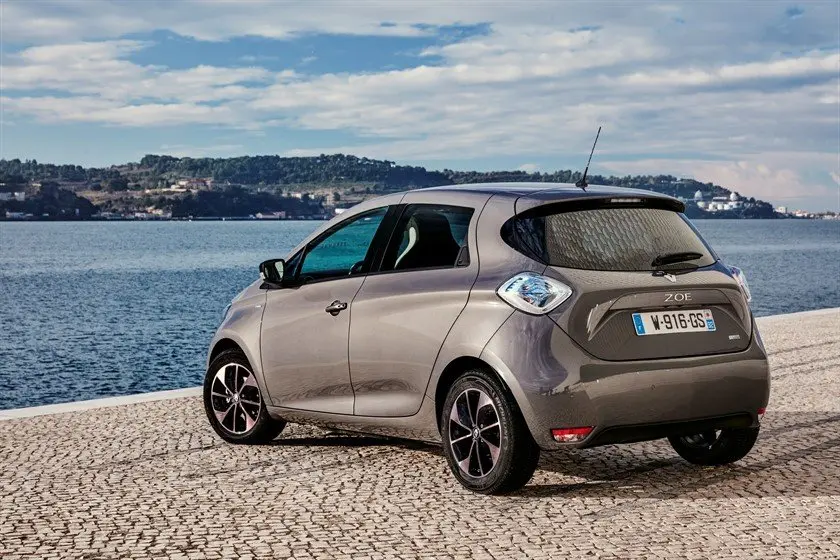
Used electric cars to avoid in Portugal: the motor is rarely the problem
A cheap used EV can turn into a very expensive one. Not because of the motor, which has few moving parts and rarely fails, but for four recurring reasons: the brand went bust and parts dried up, the battery has an open recall, the battery cooling is weak, or the battery doesn't even come with the car. This list of used electric cars to avoid in Portugal brings together the clearest cases and explains, model by model, what can go wrong.
Nearly every model here can be found on Portuguese roads, many of them imported from France, Germany or the Netherlands. So rather than just ranking the worst used EVs to buy, treat this as a guide to what to check before you hand over any money.
| Model | Main problem | Risk for the buyer |
|---|---|---|
| Fisker Ocean | Brand bankrupt (2024) | No warranty, no OTA updates, hard-to-source parts |
| Hyundai Kona Electric (1st gen) | Battery fire-risk recall | Car with an outstanding recall |
| Nissan Leaf (24 and 30 kWh) | Air-cooled battery, degradation | Range well below original |
| Renault Zoe (up to late 2019) | Leased battery | €69 to €124 per month |
| Smart ForFour EQ | 17.6 kWh battery | Around 130 km of range |
| Mazda MX-30 | 200 km WLTP, 50 kW DC | Impractical outside town |
| Citroën ë-C4 (early versions) | Poor efficiency | Real range below the claim |
| Toyota bZ4X (1st gen) | Higher consumption than promised | Unreliable range estimates |
Orphaned brands: when the manufacturer disappears
A car from a brand that no longer exists has no warranty, no official dealer network and, in a modern EV, none of the software updates that keep everything running. It's the hardest risk to fix, because no independent garage can stand in for an entire manufacturer.
Fisker Ocean: plenty of car, no support
On paper, the Ocean is impressive: a family SUV with up to 564bhp and a claimed range of up to 440 miles (around 708 km). Reality is different. Fisker filed for Chapter 11 in June 2024 after building around 11,000 cars and leaving more than $1 billion in debt.
Owners lost over-the-air (OTA) updates, connected services and warranty support. An attempt to keep the software alive through American Lease, in a deal worth around $2.5 million, was never formally signed. The result: remote connectivity was cut off and a pending recall was blocked.
One detail makes this relevant here. The Ocean was assembled by Magna in Graz, Austria, and sold across Europe. Owners formed the Fisker Owners Association, with around 4,000 members, which even set up a European mobile repair programme known as the "Flying Doctors". It works, but it runs on goodwill. The infotainment system, for what it's worth, was heavily criticised even while the company was still trading.
In the UK, a used Ocean sells for around £16,000, far below its launch price. It looks like a bargain. Before buying a used Fisker Ocean in Portugal, ask yourself who will be fixing it three years from now.
Neta, Skywell and other brands without a network
Fisker isn't alone. China's Neta (Hozon Auto) entered bankruptcy proceedings in June 2025, with more than 400,000 owners. In Thailand, some owners waited up to 10 months for parts. Nikola, Canoo and Arrival are other EV makers that have shut down.
The Skywell BE11 is a different story with the same practical outcome: fewer than 100 are registered in the UK and there's no official brand support. It was also criticised for its materials, charging speed, infotainment and driving experience. With newly arrived brands, the rule is simple: confirm there's a dealer and an authorised workshop near you before you sign.
Battery recalls: the Hyundai Kona Electric case
In Portugal the Kona is sold as the Kauai, and the first-generation Kona Electric sits at the centre of one of Europe's biggest battery recalls. Germany's KBA database (reference 16242R) lists 104,011 vehicles worldwide, built between 24 January 2018 and 15 July 2023.
The fault lies in the battery management software (BMS), which may not detect thermal instability in the high-voltage battery in time. In plain terms: fire risk. The fix is a BMS update that monitors voltage differences between cells more closely and, in some cases, a full precautionary battery replacement. All free of charge under the official campaign.
It isn't the first time. In 2020, Hyundai recalled more than 25,000 cars in South Korea over possible LG Chem cell defects, and in 2021 a global action covering around 82,000 vehicles, including the Ioniq Electric, replaced LG battery packs after fires. The Chevrolet Bolt, sold in Europe as the Opel Ampera-e, had its batteries fully replaced in 2021 over the same type of risk.
How to check the recall by VIN
A first-generation Kona Electric isn't a car to avoid by definition. It's a car to avoid if the recall hasn't been done. It came with 39.2 kWh and 64 kWh batteries, and it's still unclear exactly which versions are affected, so checks have to be done car by car:
- Ask the seller for the VIN (chassis number), shown on the Documento Único Automóvel, Portugal's vehicle registration document.
- Contact a Hyundai dealer and confirm every recall campaign has been completed.
- Get written proof of the work.
The second generation (2023 onwards) uses different batteries and isn't affected.
Used Nissan Leaf: battery degradation and air cooling
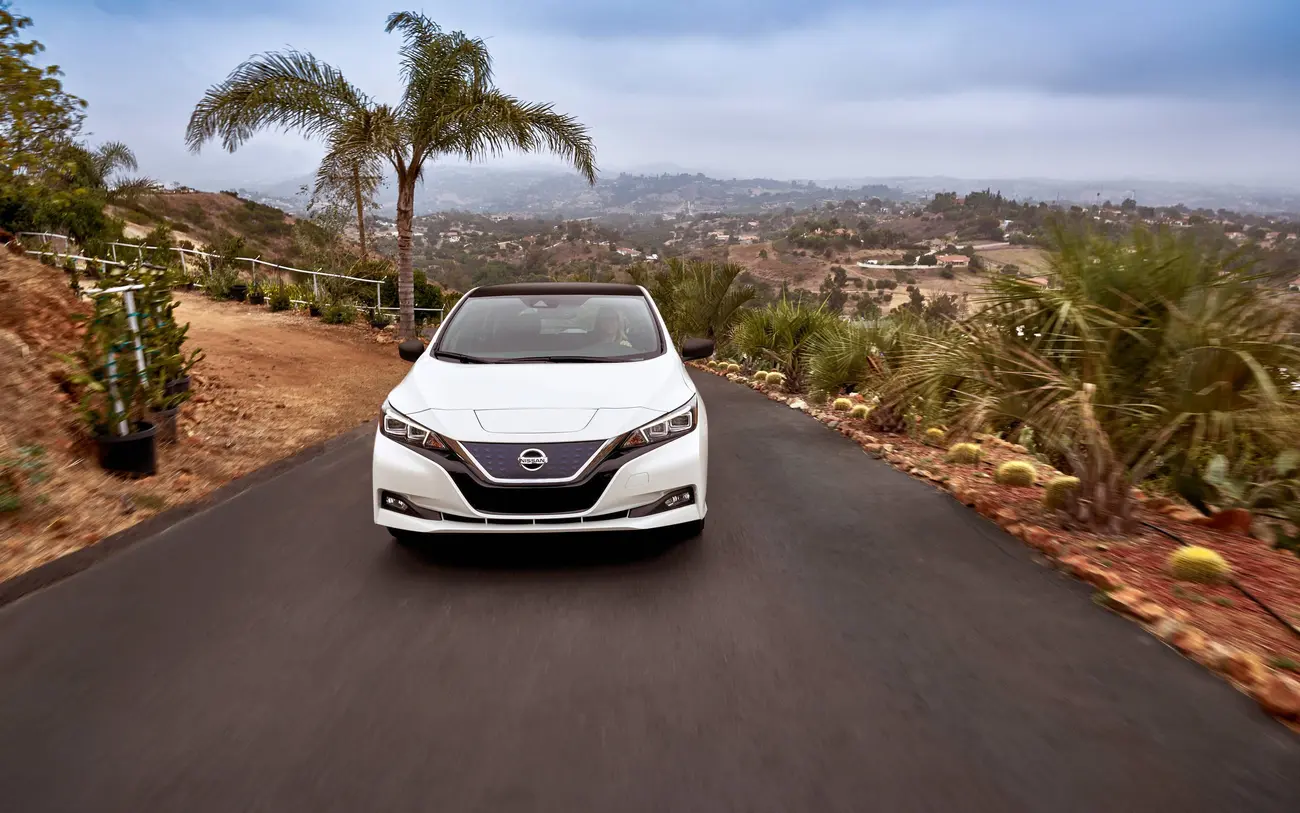
For years the Leaf was the easiest EV to find second-hand, and it's still a reasonable alternative to many cars on this list. But it has a structural weakness: every version up to 2024 uses a passively air-cooled battery with no liquid thermal management. Heat is the main enemy of these packs, and Portuguese summers count.
Battery age makes all the difference:
| Battery | Years | Condition |
|---|---|---|
| 24 kWh | 2011–2015 | Most degraded today |
| 30 kWh | 2016–2017 | Also above-average degradation |
| 40 kWh | 2018 onwards | Suffers from "Rapidgate" |
| 62 kWh (e+) | 2019 onwards | Suffers from "Rapidgate" |
"Rapidgate" is the throttling of DC charging power after two or three back-to-back rapid charges, because the pack overheats. On a Lisbon–Algarve run with consecutive stops, that means longer and longer waits. Peak charging is modest to begin with: 50 kW, taking around 43 minutes to add 160 km.
Then there's the plug. Every Leaf up to 2024 uses CHAdeMO, a standard being phased out. The number of compatible rapid chargers is likely to shrink, which makes the car heavily dependent on home charging.
Recurrent's data, based on more than a billion real-world miles, isn't alarming for newer versions: on average, 93% of original range after 3 years and 91% after 5. The problem is concentrated in older packs and in cars that have lived in hot climates.
How to check a Leaf's battery health
The dashboard shows 12 capacity bars when the battery is new, and every lost bar is capacity that won't come back. But the bars are a rough guide. To get battery state of health (SOH) as a percentage, use the LeafSpy app with an OBD-II reader. If the seller won't let you run the test, that's an answer in itself.
Renault Zoe battery lease: the import trap
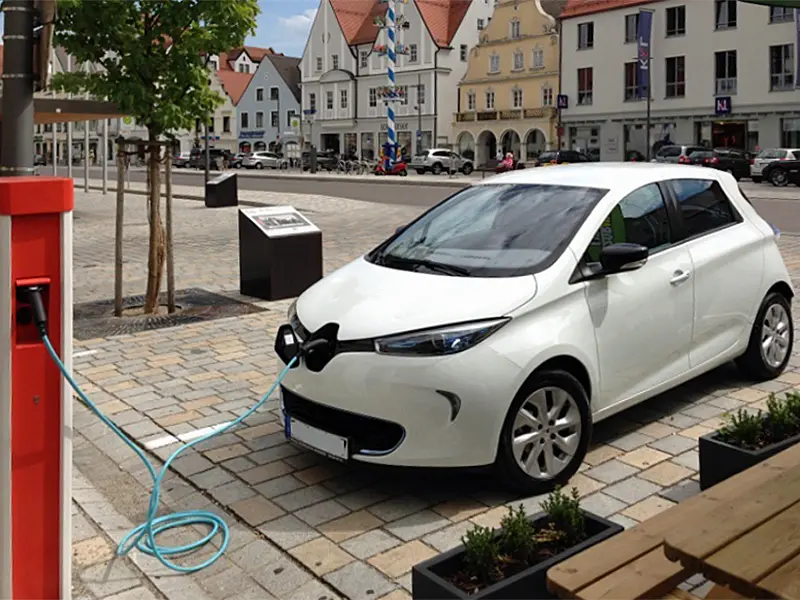
This is probably the most Portugal-specific case on the list, because many used Zoes arrive as imports from France. Until the late-2019 facelift, the Zoe could be sold with the battery bought outright or with the battery leased. If it's leased, you own the car but the battery still belongs to Renault's finance arm, and you pay a monthly fee.
The European packages for older Zoes give an idea of the cost:
| Package | Annual mileage | Monthly fee |
|---|---|---|
| Z.E. Flex | 7,500 km | €69 |
| Z.E. Flex | 17,500 km | €114 |
| Z.E. Relax | Unlimited | €124 |
At €114 a month, that's €1,368 a year just for the right to use the battery. A "cheap" Zoe stops being cheap once you do the maths. You can buy the battery out through a dealer or Renault Finance, but the lump sum is high, and early termination can involve excess-mileage and cancellation fees.
There is an upside, though sources conflict: some contracts guarantee repair or replacement if capacity falls below around 75% (some early 22 kWh contracts cite 60%).
Real-world range of the first-generation Zoe
Even with the battery included, keep expectations in check:
| Version | Claimed range | Real-world range |
|---|---|---|
| 22 kWh (launch) | 209 km | around 113 km |
| R240, 22 kWh (2015) | 240 km | around 113 km |
| Z.E. 40 (from Nov 2016) | 402 km (NEDC) | around 240 km |
The Z.E. 40 is the one to look for. Watch German listings too: "ohne Batterie" means the battery is leased, "mit Batterie" means it's included. The same trap can apply to the first-generation Nissan Leaf (leases from around €80 a month), the Kangoo Z.E., Twizy, Fluence Z.E., Master Z.E. and e-NV200.
Small batteries: EVs with too little range
A small battery isn't a flaw in itself, as long as the price and your use case match. The trouble starts when the car costs the same as alternatives that go twice as far.
- Smart ForFour EQ: 17.6 kWh, 81bhp and around 130 km of range. For similar money, a used Nissan Leaf gives you twice the range and more space.
- Mazda MX-30: 200 km on the WLTP cycle and DC charging at just 50 kW. Add rear-hinged back doors, cramped rear seats and dated infotainment. Is a used MX-30 worth it? Only if it will never leave town.
- Citroën Ami: around 77 km of range and a 45 km/h top speed. It's a quadricycle, not a car. A used Leaf or Zoe at the same price is a far more versatile buy.
EVs that simply don't convince
Some models don't have one serious flaw, but they stack up enough weaknesses that better options exist:
- Citroën ë-C4 (early versions): 50 kWh battery and 136bhp, with poor real-world efficiency and unreliable range estimates. The later 54 kWh version is better.
- Toyota bZ4X (first generation): the powertrain is less efficient than Toyota claimed, and the range figures can't be trusted. The 2025-onwards model is much improved.
- GWM Ora Funky Cat (later Ora 03): launched in 2023 as a rival to the VW ID.3 and MG4, criticised for its driving experience, real-world range, small boot, user interface and driver assistance.
- Tesla Model X: seven seats and up to 1,000bhp, but large for European roads, with question marks over reliability and material quality.
- Reva G-Wiz: 77 to 121 km of range, an 80 km/h top speed and crash-test safety that has been widely questioned. A curiosity, not a daily driver.
Frequently Asked Questions
Yes, as long as the battery is healthy and the brand still has service support in Portugal. EVs remain exempt from ISV registration tax and IUC annual circulation tax, and Recurrent data from over a billion real-world miles shows newer EVs keep on average 93% of their original range after 3 years and 91% after 5. The risk is concentrated in specific cases: bankrupt brands, outstanding recalls, older air-cooled batteries and leased batteries.
Ask for a battery state of health (SOH) report as a percentage, done by a dealer or with an OBD-II reader, rather than relying on the dashboard gauge. On a Nissan Leaf, the 12 capacity bars are only a rough guide, while the LeafSpy app gives the exact figure. Also check how much of the battery warranty is left, often 8 years from new, and whether it transfers to you.
On Zoes sold with a leased battery up to the late-2019 facelift, European packages cost €69 a month (7,500 km/year), €114 (17,500 km/year) or €124 (unlimited mileage). At €114 a month, that's €1,368 a year just to use the battery. You can buy it out through a dealer or Renault Finance, but the lump sum is high and excess-mileage or early-termination fees may apply; in German listings, "ohne Batterie" means the battery is leased.
Ask the seller for the VIN, shown on the Documento Único Automóvel, and have a Hyundai dealer confirm that every campaign is complete, with written proof. The recall (KBA reference 16242R) covers 104,011 first-generation cars built between 24 January 2018 and 15 July 2023 over a fire risk, and the fix is free. In Portugal the model is sold as the Kauai, and the second generation from 2023 onwards is not affected.
It's a high-risk purchase. Fisker filed for Chapter 11 in June 2024 after building around 11,000 Oceans, and owners lost warranty cover, OTA updates and connected services, with a pending recall left blocked. The Fisker Owners Association, with around 4,000 members, runs mobile repairs across Europe, but it can't replace an official parts and service network.
Buying a used electric car in Portugal: checks before you sign
Is it worth buying a used electric car in Portugal? Yes, and EVs' exemption from ISV (the vehicle registration tax) and IUC (the annual circulation tax) still helps the numbers. But only after these checks:
- Battery health report (SOH). Ask for a percentage diagnosis, not just the dashboard gauge.
- Recalls completed, by VIN. Confirm with the brand that every campaign is done, especially on a first-generation Kona Electric.
- Manufacturer present in Portugal. Parts, authorised workshops and software updates all depend on it.
- Battery ownership. Check the paperwork to see whether the battery is owned or leased, especially on pre-2020 Renaults.
- Charging plug. CHAdeMO increasingly limits rapid charging; CCS is the European standard.
- Real range vs your longest trip. Compare realistic range, not the WLTP or NEDC figure, with the journey you make most often.
- Battery warranty. Many manufacturers offer 8 years; check how much is left and whether it transfers to you.
A used EV with a healthy battery, recalls up to date and a brand with service support in Portugal is still one of the cheapest ways to go electric. Not every model on this list is off-limits. They're cars where asking the right question before you buy saves you a headache worth thousands of euros.