
Which EV Brand Keeps the Most Range After 100,000 km: A Used EV Buying Guide
Published: 25/07/2026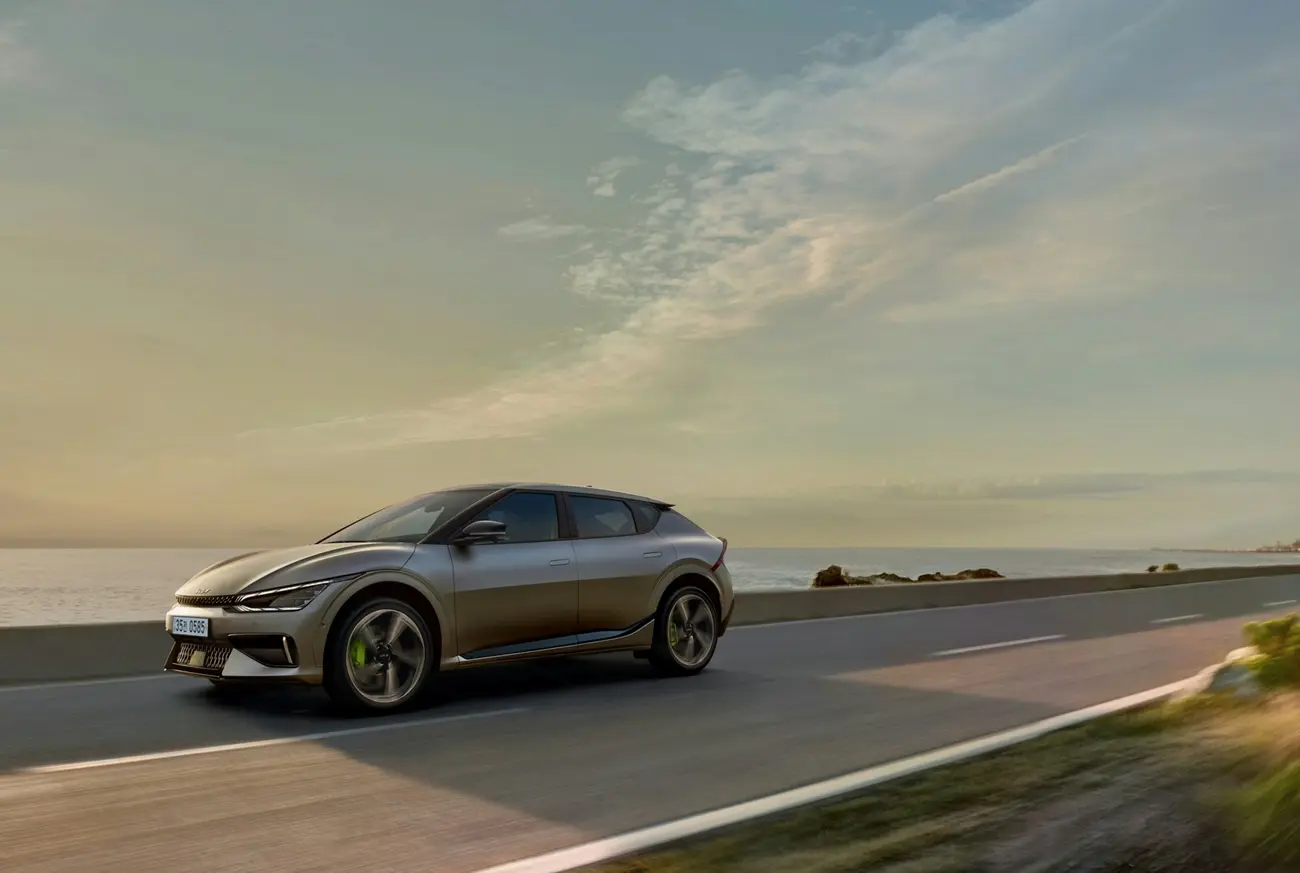
Which EV brand keeps the most range after 100,000 km
97.25% of original battery capacity — that's what a Kia e-Niro still has after more than 100,000 km on the road. At the other end of the table, one Tesla Model 3 configuration drops to 88.2%. Same badge category, very different outcomes. That gap is exactly what anyone chasing a used EV battery health Portugal buying guide needs to understand before signing anything.
The numbers come from Carla, a Swedish used-car marketplace, which analyzed 9,954 real-world battery health tests carried out between 2022 and 2026 using AVILOO diagnostic equipment. The dataset covers Tesla, Audi, BMW, Kia, Hyundai, Volvo, Polestar and Volkswagen, among others. For anyone shopping the used-EV market in Portugal, this finally puts a number on a question most listings never answer: how healthy is this specific battery, really?
Korean brands dominate the top of the ranking
The top three spots all belong to Korean models. The Kia e-Niro (64 kWh) leads with 97.25% capacity retained, closely followed by the Hyundai Kona Electric at 97.18%. The Kia EV6 (77.4 kWh) rounds out the podium at 95.95%.
What's striking is that these aren't the newest platforms on the market — and they still beat far more modern rivals. The explanation is engineering, not age: liquid-cooled battery packs paired with DC charging capped under 80 kW put much less thermal stress on the cells over time. Less heat, less wear, more range retained mile after mile.
The Kia EV6 is the exception that proves the rule the other way around. With its 800V architecture and charging roughly three times faster than the e-Niro or Kona, you'd expect more wear — not less. The data says otherwise, and it's a useful reminder that fast charging, done well, doesn't automatically wreck a battery.
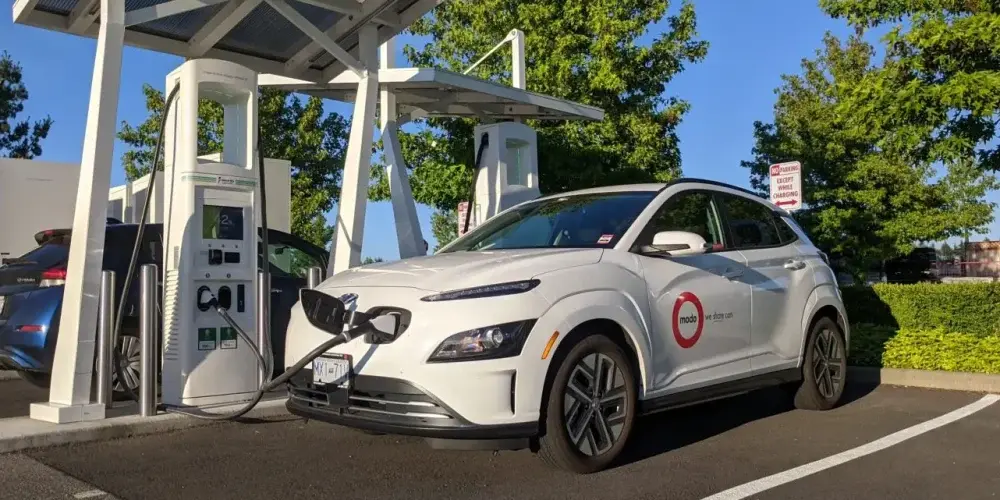
One caveat on the Kona: Hyundai replaced entire battery packs in early units due to an LG Energy Solution fire-risk recall. If the study captured some of those replacement batteries — effectively newer packs — the Kona's average could be inflated relative to an untouched original unit.
The Tesla Model 3 is the most interesting case — and the trickiest
Here's the number every used Model 3 shopper should remember: within the same model, battery health can swing by 5.1 percentage points depending purely on which cell supplier built the pack.
| Model 3 configuration | Pack | Retention |
|---|---|---|
| CATL LFP (60.5 kWh) | Strongest | 93.3% |
| LG Chem | Mid-range | 91.5% |
| Panasonic (77.8 kWh) | Weaker | 89.8% |
| Panasonic (52.4 kWh) | Lowest disclosed | 88.2% |
Translated into real range: on a car that left the factory with roughly 300 miles of range, 97% retention means losing about 9 miles. At 88.2%, that loss grows to around 35 miles — enough to notice on a long highway run, especially in cold weather or with the AC running hard.
The practical problem is that two cars badged "Model 3" can be, in effect, different cars. The base Model 3 RWD ships with CATL LFP cells; the Long Range AWD and Performance trims use Panasonic packs; the Long Range RWD uses LG Chem. None of that shows up in a used-car listing. Before closing a deal, it's worth asking for a battery State of Health (SoH) report and, where possible, confirming the cell supplier through documentation or service history — this is doubly true if you're buying in Portugal, where ISV (the car registration tax) already makes used EVs a significant purchase and getting the battery detail wrong is expensive.
What about Volvo, Polestar, BMW and Volkswagen?
The middle of the table brings good news for anyone considering a European alternative:
- Volvo XC40 Recharge (69 kWh, CATL cells): 94.70% retention
- Polestar 2 (78 kWh, CATL cells): 94.35%
- BMW i3 (120 Ah, ~42.2 kWh): 93.77%
- Volkswagen ID.3: 91.79%, closing out the published top 20
The most reassuring finding in the whole study: across all 20 models tracked, none dropped below roughly 91–92% capacity at the 100,000 km mark. The fear that an EV battery just "dies" suddenly after a few years doesn't match the data — degradation is real, but it's gradual and, in most cases, barely noticeable day to day.
Portugal's climate is a variable worth weighing
One thing the Swedish study doesn't cover directly, but that matters for anyone buying in Portugal: these tests were run in a cold, Nordic climate. Heat accelerates chemical degradation in lithium-ion cells, particularly in packs without strong active thermal management. That doesn't mean Portuguese results would be dramatically worse — but it's reasonable to expect somewhat faster degradation here than in these Swedish figures, especially in older models or those with less sophisticated cooling.
A second, independent study from the US — Recurrent Auto, covering roughly 15,000 vehicles — backs up the same pattern: degradation is non-linear, steepest in the first 15,000–20,000 km and then flattening out. Only 1.5% of vehicles in that study needed a non-recall battery replacement. The higher-risk exceptions flagged were early first-generation Nissan LEAFs — with no active thermal management, and replacement rates up to 8.3% for 2011 models — and early Tesla Model S cars with 100 kWh packs.
Frequently Asked Questions
In the Swedish Carla/AVILOO study, the BMW i3 (120 Ah battery, roughly 42.2 kWh) retained 93.77% of its original capacity at around 100,000 km — a degradation of just 6.23%. That's a strong result for an older platform, thanks to liquid cooling and a moderate charging profile, but it's still worth confirming the actual battery condition with a State of Health report before buying.
It depends heavily on the version: in the same study, the Model 3 with CATL LFP cells (60.5 kWh) retained 93.3% capacity, while the Panasonic-equipped variant (52.4 kWh) dropped to 88.2% — a 5.1 percentage-point gap within the same model. Before buying a used Model 3, confirm the cell supplier (CATL, LG Chem, or Panasonic) and always request a battery health report.
Yes — the Kia e-Niro (64 kWh) tops the Carla/AVILOO study ranking with 97.25% capacity retained at 100,000 km, the best result of any model tested. This is attributed to its liquid-cooled battery pack and DC charging limited to under 80 kW, which reduces cell heat stress over time.
Across the 20 models in the Swedish study, none fell below roughly 91-92% capacity retention at 100,000 km, and a second US study by Recurrent Auto (around 15,000 vehicles) confirms most EVs lose under 20 miles (about 32 km) of range at that mileage. Degradation is real but gradual, not the dramatic capacity cliff many buyers fear.
Likely yes: the Carla/AVILOO tests were carried out in Sweden's cooler climate, and heat speeds up the chemical degradation of lithium-ion cells, especially in batteries without effective active thermal management. This doesn't invalidate the study's figures, but it's reasonable to expect some difference for Portuguese conditions — another reason to always request an up-to-date State of Health report before buying.
What this means for buying a used EV
Buying a used electric car in Portugal is no longer a blind bet, but it still calls for more questions than buying a used combustion car. Three practical takeaways for anyone browsing listings:
- Always ask for a State of Health (SoH) report. Think of it as the EV equivalent of an engine inspection — and more serious sellers already offer one.
- Ask which cell supplier built the pack, especially on models like the Model 3, where the difference between configurations can be worth several percentage points of range.
- Use battery health as a negotiating point. A pack in strong condition justifies a price near the top of the range; a more degraded one is a legitimate reason to negotiate down.
The reassuring part, backed by two independent studies on two different continents, is that most used EVs with 100,000 km on the clock still hold over 90% of their original range. A used electric car is still worth buying — it's just that, like mileage and service history, the specific battery in front of you deserves checking before you sign, not after.