
BYD Atto 2 Electric vs DM-i in Portugal: Which Is Cheaper to Own Over 5 Years
Published: 23/11/2026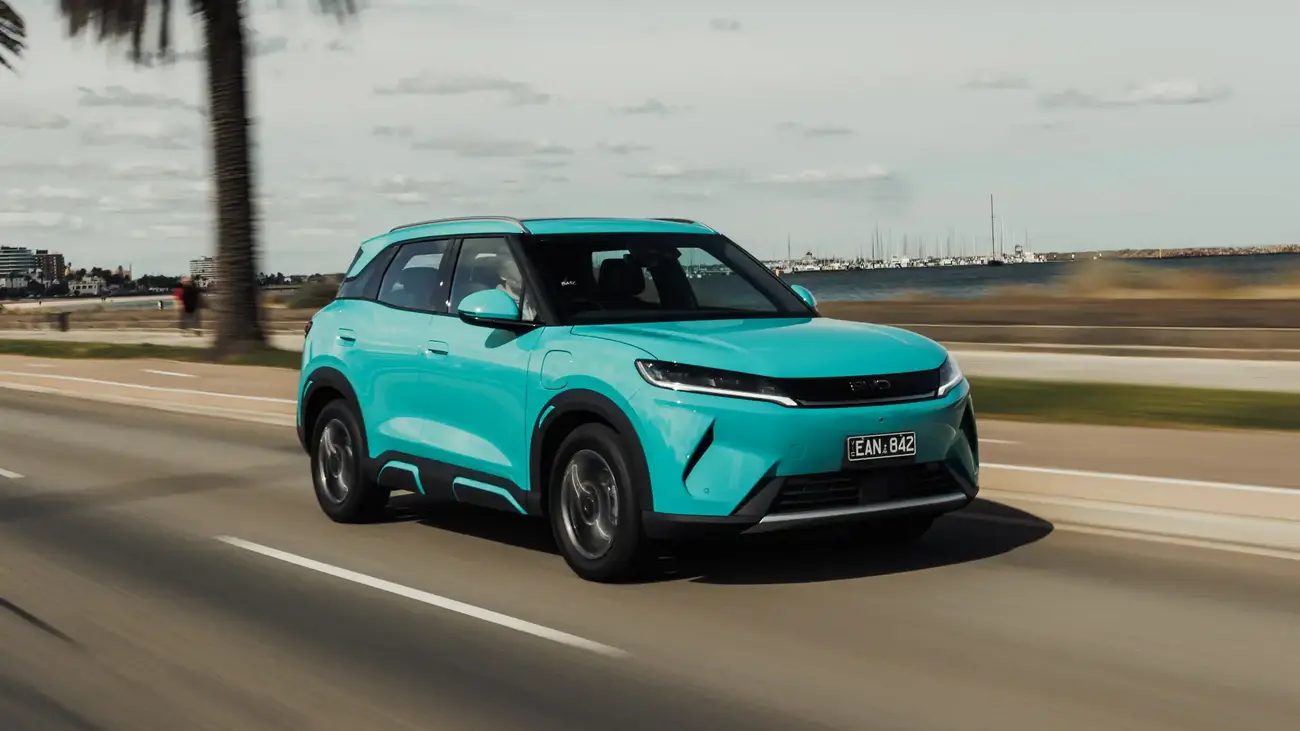
BYD Atto 2 electric vs DM-i in Portugal: same body, two very different bills
Roughly €4,000 separates the two most popular BYD Atto 2 versions in Portugal. On one side sits the fully electric Comfort with a 64.8 kWh battery. On the other, the DM-i Boost: a plug-in hybrid with 90 km of WLTP electric range and a 1.5-litre petrol engine as backup. If you're weighing up the BYD Atto 2 electric vs DM-i in Portugal, the question that matters is which one is cheaper after five years of ownership.
French outlet Bevolt (formerly Automobile Propre) ran both cars head to head, with consumption measured on real roads. Their verdict was blunt: the EV's price premium is "hard to recoup". French prices aren't Portuguese prices, though. We took the measured figures from that test and reran the maths with Portuguese list prices — and the answer depends far more on how you drive than on the spec sheet.
BYD Atto 2 EV or plug-in hybrid: what actually differs
From the outside, very little. The EV is 4,310 mm long and the DM-i 4,330 mm, both 1,830 mm wide and 1,675 mm tall. Underneath, it's a different story.
| Atto 2 electric (Comfort) | Atto 2 DM-i (Boost) | |
|---|---|---|
| Battery | 64.8 kWh LFP (61.5 kWh usable) | 18 kWh LFP (about 13.5 kWh usable in EV mode) |
| Powertrain | Electric, 204 hp, 310 Nm | 1.5 Atkinson petrol + electric, 212 hp, 300 Nm |
| WLTP range | 430 km | 90 km electric |
| WLTP consumption | 17.4 kWh/100 km | 1.8 l/100 km (41 g/km CO2) |
| DC charging | 155 kW (10-80% in about 25 min claimed) | None |
| AC charging | — | 6.6 kW |
| 0-100 km/h | 7.7 s | 7.1 s (hybrid mode, full battery) |
| Weight | 1,720 kg | 1,610 kg |
| Boot | 400 L | 425 L / 1,335 L |
Technical data and 0-100 km/h per Bevolt; boot figures per Auto Express and CompleteCar.ie.
The DM-i is lighter, slightly quicker and has 25 litres more boot space. The EV hits back with 155 kW fast charging, something the hybrid doesn't offer at all.
Prices in Portugal: what each version costs
Portuguese launch coverage puts the BYD Atto 2 electric price in Portugal from €37,990 for the Comfort. The DM-i Boost — the version Bevolt tested — starts at €33,990. That's a €4,000 gap before you've driven a metre.
In France the gap is wider: €35,990 for the EV Comfort against €29,990 for the DM-i Boost (the base DM-i is €26,990). Hence the "around €6,000" premium Bevolt talks about. In Portugal the EV starts at less of a disadvantage, and that shifts the numbers.
Check the price with a dealer before deciding. Offers and trims change often: at launch, the EV also came in entry versions with a smaller battery (Active at €31,490 and Boost at €32,990), which undercut the DM-i Boost but charge more slowly and go less far.
BYD Atto 2 real-world consumption: electric and petrol
15.9 kWh/100 km. That's the mixed consumption Bevolt measured, identical for both cars when running on electricity. From there, they part ways:
- EV: real-world range of about 387 km on a mixed route. At 130 km/h on the motorway, consumption rises to 24.6 kWh/100 km.
- DM-i with a full battery: about 85 km of real electric range, averaging 0.8 l/100 km while the battery lasts.
- DM-i with an empty battery: 5.2 l/100 km. At 130 km/h in EV mode it used 26.2 kWh/100 km.
Other tests line up. CompleteCar.ie in Ireland recorded 5.5 l/100 km with the DM-i depleted, and Auto Express saw more than 62 mpg (about 4.6 l/100 km) over a 240 km mixed route with the battery helping out.
That 5.2 l/100 km figure is the most important number in this article. Whenever the DM-i runs without charge in its battery, it's a petrol car with decent economy — and that's what you pay for.
BYD Atto 2 cost per km in Portugal: charging at home
In Bevolt's numbers, home charging at €0.20/kWh works out at €3.8/100 km for the EV and €3.9/100 km for the DM-i in EV mode. That implies roughly 19 kWh billed per 100 km — the 15.9 kWh measured plus charging losses.
With that baseline, the cost per 100 km is easy to work out for your own tariff. The electricity and petrol prices below are examples, not official tariffs — swap in the figures from your own bill and your local pump.
| Electricity price (example) | EV (19 kWh/100 km) | DM-i in EV mode (19.5 kWh/100 km) |
|---|---|---|
| €0.10/kWh | €1.90 | €1.95 |
| €0.15/kWh | €2.85 | €2.93 |
| €0.20/kWh | €3.80 | €3.90 |
For the DM-i on an empty battery at 5.2 l/100 km, every 10 cents on the price of a litre adds about €0.52 per 100 km. With petrol at €1.80/l (example), that's €9.36/100 km — more than three times the cost of driving on electricity charged at home at €0.15/kWh. If you're on a Portuguese dual-rate (bi-horária) tariff and charge overnight in the off-peak window, you'll sit at the cheap end of the table.
Does the BYD Atto 2 DM-i make sense without home charging?
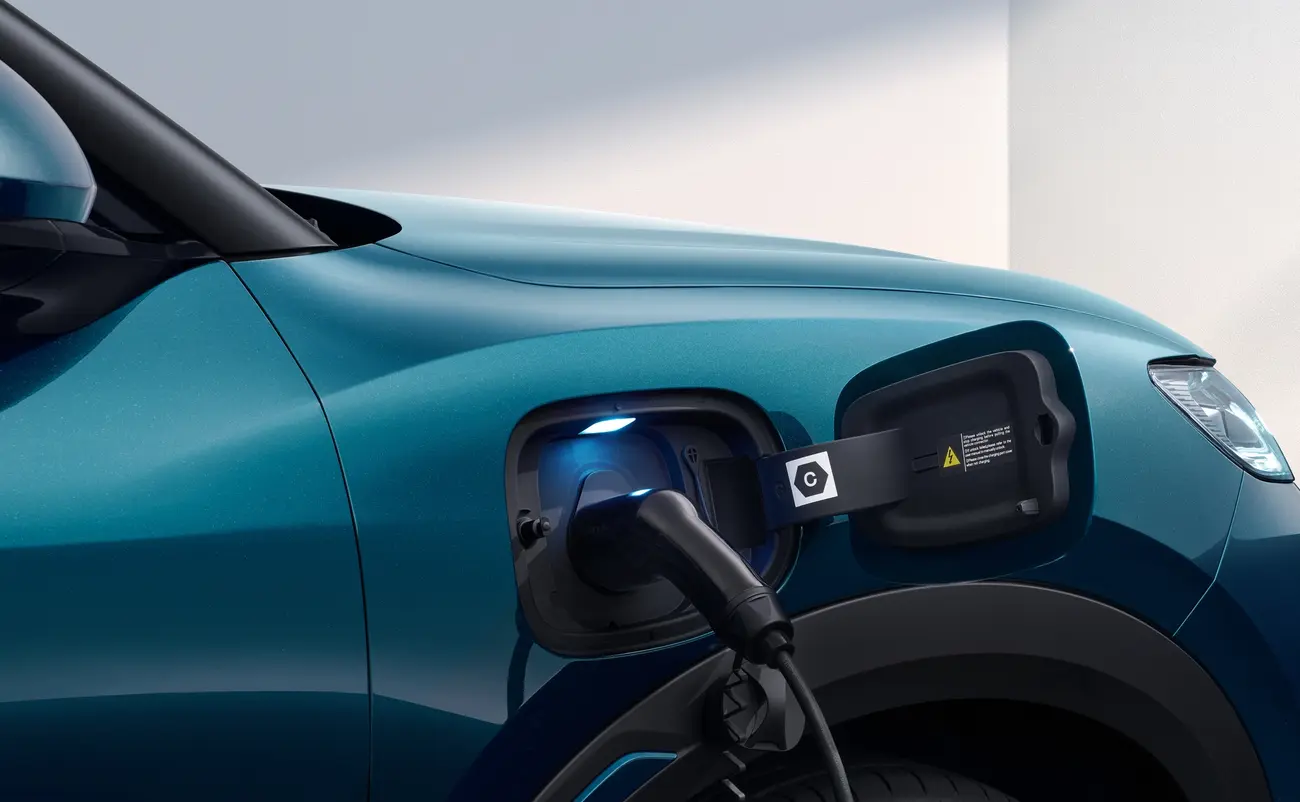
Hardly. The DM-i has no DC charging: it charges on AC at up to 6.6 kW, about three hours for a full battery according to Auto Express. Without a socket at home or work, you'd be relying on public posts on Mobi.E, Portugal's national charging network, for a battery that gives 85 real kilometres — or, more likely, running on petrol most of the time.
The EV also suffers away from the home socket. In France, Bevolt calculated €8.5/100 km on public AC (€0.45/kWh) and €10.9/100 km on DC (€0.59/kWh). With petrol at €1.80/l, the break-even sits around €0.49/kWh: above that, the EV on public charging costs more per kilometre than the DM-i on petrol. Australian site AussieMotor reached the same conclusion with its own prices.
BYD Atto 2 total cost of ownership over 5 years
We put it all into one scenario: 15,000 km a year, 75,000 km over five years, home charging at €0.15/kWh and petrol at €1.80/l (both examples). To keep it simple, the DM-i's electric kilometres are counted at 19.5 kWh/100 km and the rest at 5.2 l/100 km.
| Scenario | Energy over 5 years | Difference vs EV |
|---|---|---|
| EV, always charged at home | €2,140 | — |
| DM-i, 80% of km electric | €3,160 | +€1,020 |
| DM-i, 50% electric | €4,610 | +€2,470 |
| DM-i, 20% electric | €6,050 | +€3,920 |
| DM-i, never plugged in | €7,020 | +€4,880 |
Now the part that decides it. The EV starts €4,000 dearer. Add its servicing advantage (about €940 over 75,000 km, see below) and see what's left:
| Scenario | Energy + servicing in the EV's favour | Balance against the €4,000 price gap |
|---|---|---|
| DM-i, 80% electric | about €1,960 | DM-i cheaper by about €2,040 |
| DM-i, 50% electric | about €3,410 | DM-i cheaper by about €590 |
| DM-i, 20% electric | about €4,860 | EV cheaper by about €860 |
| DM-i, never plugged in | about €5,820 | EV cheaper by about €1,820 |
Insurance, tyres, finance and the cost of a wallbox are left out. Even so, the picture is clear: if you'll plug the DM-i in almost every day, the hybrid wins in Portugal. If you'll treat it as a petrol car, the EV earns back its premium.
Servicing and maintenance
The EV is serviced every 2 years or 30,000 km, at about €350 (Bevolt's French figures). The DM-i adds an oil change every year or 15,000 km. Bevolt estimates a €1,000-1,500 gap over 100,000 km. Scaled to 75,000 km, that's roughly €750-1,125 — we used the midpoint, €940.
Auto Express in the UK quotes service intervals of 24 months for the EV and 12 months for the DM-i. Warranty is the same on both: 6 years or 150,000 km for the car and 8 years for the battery.
Resale value: the DM-i's hidden advantage
This is where the EV loses most ground. According to Auto Express, an electric Atto 2 is worth about 40-42% of its price after three years, against roughly 50% for the plug-in hybrid. The data is British, but the trend repeats across several European markets.
Applied to Portuguese prices, a €33,990 DM-i would be worth about €17,000 and a €37,990 EV about €15,600. In other words, the car that's cheaper to buy may still be worth more when you sell it — around €1,400 in the DM-i's favour, on top of the sums above.
BYD Atto 2 DM-i or EV: IUC, ISV and company cars
Tax tips the scales towards the EV, though less than you'd expect for a private buyer.
- ISV (Portugal's one-off registration tax): fully electric cars are exempt. The DM-i, with more than 50 km of electric range and emissions under 50 g/km, qualifies for the reduced plug-in hybrid rate. Either way, ISV is already built into the list price — it's not an extra cost at purchase.
- IUC (annual road tax): the EV is exempt. The DM-i pays IUC every year, based on engine size and emissions; check the figure on the Portal das Finanças simulator for your case, since it isn't included in our sums.
- Companies and self-employed (ENI): this is where the EV pulls ahead. Fully electric cars get more favourable treatment on autonomous taxation (tributação autónoma) and VAT recovery than plug-in hybrids. For a fleet, that can outweigh the entire energy scenario above — worth running the numbers with your accountant.
If a Fundo Ambiental (Environmental Fund) incentive is open when you buy, check the conditions: these schemes typically target fully electric vehicles and exclude plug-in hybrids.
Motorways and long trips: the DM-i has the edge
On a 500 km Lyon-Paris run, Bevolt took about 4h55 in the DM-i and 5h15 in the EV, which needed two charging stops. Filling the hybrid took 1 minute 20 seconds; the EV averaged 29 minutes to go from 10% to 80% (26.5 minutes at best, longer in hot weather).
On cost, motorway driving is nearly a draw: €16.1/100 km for the EV on DC at €0.59/kWh against €16.9/100 km for the DM-i, in French figures. With a subscription at €0.39/kWh, the EV drops to €10.7/100 km. For the occasional Lisbon-Porto trip, either will do. If you're on the A1 and A2 every week, the DM-i is less hassle.
Frequently Asked Questions
According to Portuguese launch coverage, the Atto 2 electric Comfort (64.8 kWh) starts at €37,990 and the DM-i Boost at €33,990, a €4,000 gap that is smaller than the roughly €6,000 seen in France. At launch there were also entry-level EV versions with a 51.1 kWh battery (Active at €31,490 and Boost at €32,990), offering 345 km of WLTP range and DC charging up to 82 kW. Prices and offers change often, so check the current figure with a dealer.
With real-world consumption of 15.9 kWh/100 km plus charging losses, every 100 km costs about €2.85 at €0.15/kWh and €1.90 at €0.10/kWh on an off-peak dual-rate (bi-horária) tariff. Filling the EV's 61.5 kWh of usable capacity from empty comes to around €11 at €0.15/kWh, good for about 387 real-world km of mixed driving. In the DM-i, a full charge of the 18 kWh battery costs roughly €2.40 and gives about 85 km of electric driving.
The DM-i does not support DC fast charging: it charges on AC only, at 6.6 kW in the Boost (18 kWh battery, around three hours to fill) and 3.3 kW in the Active (7.8 kWh battery and 39 km of electric range). The electric Comfort charges at up to 155 kW DC and, in Bevolt's test, went from 10% to 80% in 29 minutes on average. The electric Boost, with its 51.1 kWh battery, is limited to 82 kW and takes about 40 minutes.
At 130 km/h Bevolt measured 24.6 kWh/100 km in the EV, which works out to about 250 km from its 61.5 kWh of usable capacity, compared with 387 real-world km in mixed driving and 430 km WLTP. The DM-i used 26.2 kWh/100 km in EV mode at the same speed, so only around 50 km of electric driving before switching to petrol, where it uses 5.2 l/100 km. On a 500 km trip, the DM-i arrived 20 minutes earlier because refuelling took just 1 minute 20 seconds.
The Atto 2 EV is exempt from both ISV registration tax and annual IUC road tax, while the DM-i, with more than 50 km of electric range and under 50 g/km of CO2, pays the reduced plug-in hybrid ISV rate (already in the list price) plus IUC every year. For companies and sole traders, fully electric cars get more favourable treatment on autonomous taxation and VAT deduction. Fundo Ambiental grants, when available, are typically reserved for fully electric vehicles and exclude plug-in hybrids.
BYD Atto 2 electric or DM-i: which one pays off?
For most private buyers with a garage and a socket, the DM-i Boost is the more rational choice in Portugal. It costs €4,000 less, spends almost the same per kilometre if you charge it daily, and should hold its value better. Bevolt and Auto Express reach the same conclusion by different routes.
The electric Comfort makes sense for three specific profiles: buying through a company, drivers who can't or won't plug in every day (the DM-i on petrol loses its edge), and anyone who wants to skip oil changes and IUC. It's also the pick for high-mileage drivers with cheap home charging.
Before you sign, run three numbers of your own: how many kilometres you drive a day, what you pay per kWh off-peak, and what the DM-i's IUC comes to. With those three figures, the tables above will tell you which Atto 2 is yours.