
BYD Atto 2 DM-i in Portugal: Is the Cheapest Plug-in Hybrid Any Good?
Published: 06/06/2026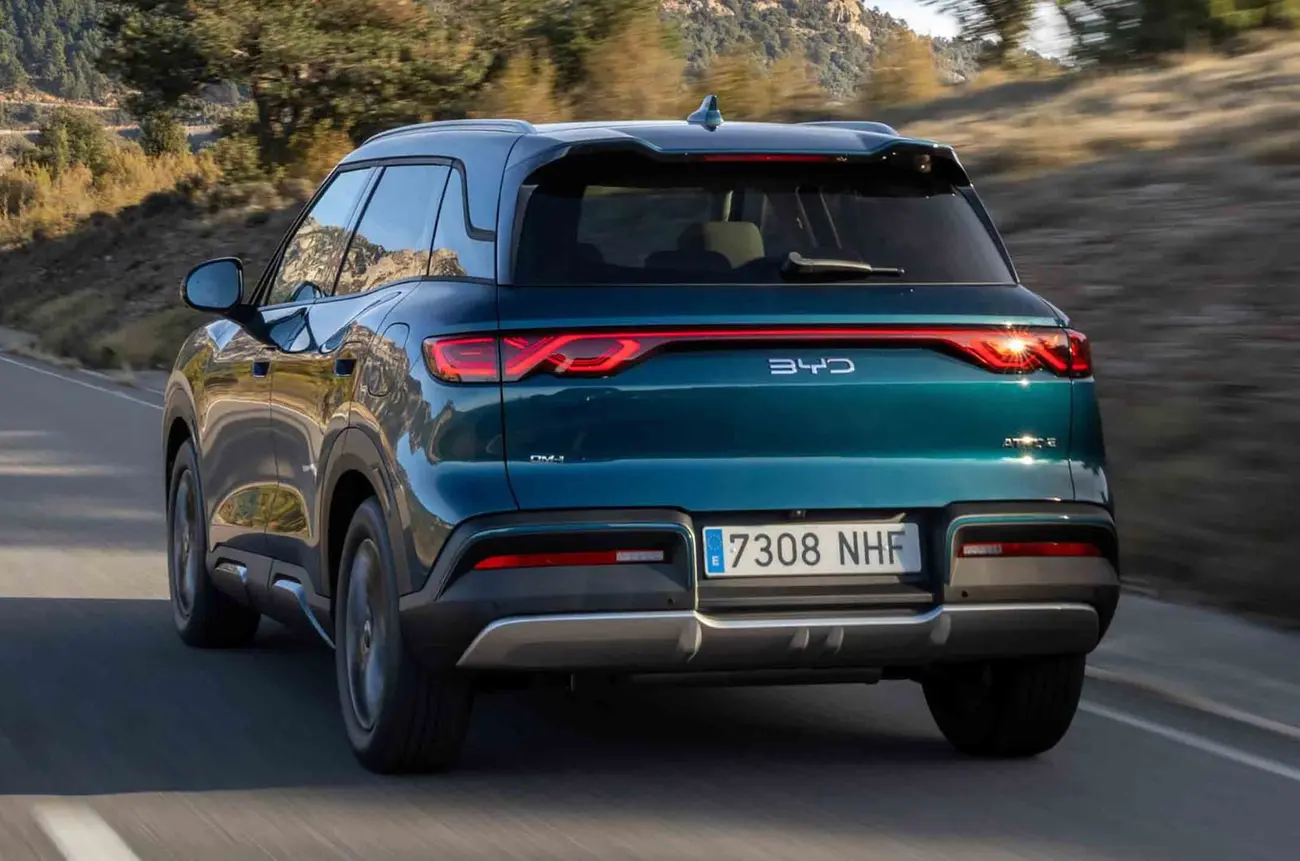
Europe's cheapest plug-in hybrid lands in Portugal
BYD has paired two things that rarely go together: a plug-in hybrid with genuine electric range and a price tag closer to a hatchback. The BYD Atto 2 DM-i is the PHEV version of the small Atto 2 urban SUV, and the Chinese brand pitches it as the cheapest plug-in hybrid on sale in Europe. In Portugal, the Boost trim starts at €33,990 — a hard offer to ignore for anyone who drives in town every day but doesn't want to depend on a charger.
The idea is simple. You drive it like an EV day to day, with around 90 km of battery range, and a petrol engine steps in when you need to go further. No range anxiety, no planning charging stops on a run up to Lisbon.
Two motors, three modes: how the DM-i system works
DM-i stands for Dual Mode intelligent, the backbone of nearly every BYD hybrid. The heart of it is a front electric motor rated at 145 kW (197 hp) and 300 Nm, which does most of the driving. The petrol engine — a 1.5-litre Atkinson-cycle unit with 98 hp and 122 Nm, called Xiaoyun — works mainly as a generator charging the battery, and only connects directly to the wheels at motorway speeds.
In practice the car runs in three modes: pure electric, series hybrid (the petrol engine feeds the battery while the electric motor drives the car) and a direct mechanical link at higher speeds. Testers describe the result as a smooth, quiet drive that gives "an excellent impression of being an EV" — the combustion engine is rarely heard in normal driving.
There are two battery setups. The Active has 7.8 kWh and a 122 kW (166 hp) system. The Boost — the one sold in Portugal — steps up to an 18 kWh battery and 156 kW (212 hp), with more kit and V2L (vehicle-to-load, which lets you power external devices from the car).
BYD Atto 2 DM-i electric range: 90 km that change the maths
The number that matters: 90 km WLTP of electric range on the Boost. In one favourable-conditions test, the car got close to a real 100 km before dropping to 25% battery. For a car at this price, that's a lot.
If your life is mostly urban, that means driving in electric mode almost all the time. A typical commute around Lisbon or Porto fits comfortably within a single charge. The petrol engine stays reserved for what actually needs it — the weekend trip, the Lisbon-Porto run.
The Active makes do with a 7.8 kWh battery and roughly 40 km of electric range (UK figures quote 25 to 31 miles, depending on the source) — enough for the daily urban hop, but without the same buffer.
Real-world economy and the charging catch
In hybrid mode with a flat battery, the Atto 2 DM-i sits around 4.0 L/100 km on a favourable route and rises to about 6.0 L/100 km on the motorway. BYD claims combined WLTP economy up to 470.8 mpg (close to fantasy, since it depends on keeping the battery topped up) and a combined range of up to roughly 1,000 km.
There's one important catch: there's no DC fast charging. Charging is AC only — 3.3 kW on the Active, 6.6 kW on the Boost — and takes around 3 hours from 15% to 100%. In practice you charge at home or at work overnight or during the working day. For a car built around urban use and home charging, that's logical. Anyone without somewhere to charge regularly loses most of the advantage.
Running cost is the strong argument: roughly €2 to €3 per 100 km in electric mode, against the ~€5 per 100 km of a conventional hybrid that always burns petrol.
Space, screen and kit for the money
At 4.33 metres long, the Atto 2 DM-i plays in the urban SUV class, alongside the Peugeot 2008, Renault Captur, MG ZS and Dacia Duster. The boot holds 425 litres — 25 more than the previous version, 25 less than the electric Atto 2. Rear space is one of its strengths: it seats tall adults with room to spare for legs and heads.
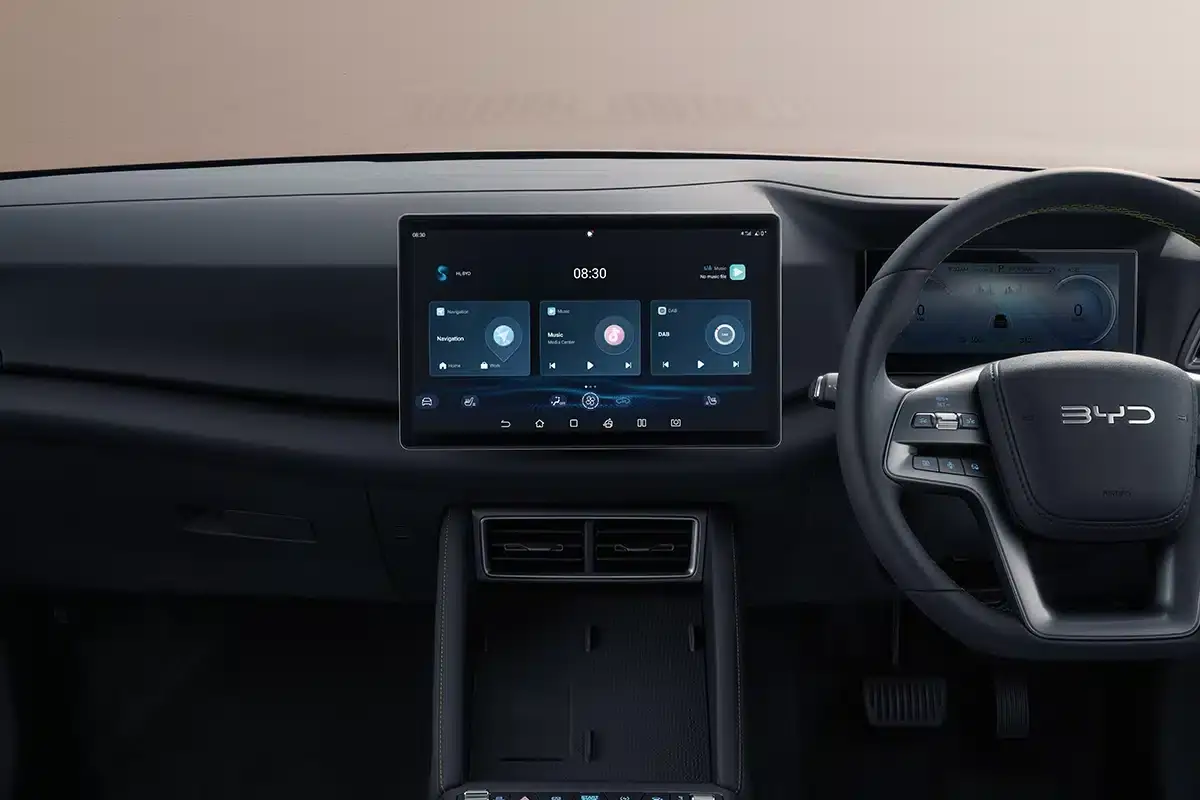
Inside, there's a fixed 12.8-inch central screen with integrated Google services (Google Maps, Play Store, Assistant) plus wireless Apple CarPlay and Android Auto, alongside an 8.8-inch digital cluster. The Boost adds a 360° camera, heated and electric front seats, a heated steering wheel and a panoramic roof.
Material quality is described as acceptable for the price, but not without complaints: some plastics and door handles give away the cost-cutting, and a few reviewers note rattles in the rear seat backs.
Is the BYD Atto 2 DM-i worth it? Where it stumbles
This needs honesty. International reviews scored it between 3/5 and 3.3/5, and the verdict is consistent: the car impresses more on paper than on the road.
The weak points repeat across every test. The steering is vague and feedback-free, with "no feeling whatsoever through the wheel". The suspension is firm and uncomfortable over poor surfaces and motorway expansion joints. There's body roll in corners, and the styling is bluntly called "bland". Several journalists reach the same conclusion: the electric Atto 2 is the better car to drive, with softer suspension and more torque.
Frequently Asked Questions
In Portugal the Boost trim is on sale starting at €33,990. Continental Europe launch prices put the Active at €26,990 and the Boost at €29,990, so it's worth confirming the final figure with the dealer and factoring in ISV and IUC, which are more favourable on a plug-in hybrid than on an equivalent combustion model.
The Boost trim claims 90 km WLTP of electric range, and in one favourable-conditions test it got close to 100 km before dropping to 25% battery. The Active makes do with roughly 40 km (25 to 31 miles, depending on the source). For everyday urban use around Lisbon or Porto, that means driving in electric mode almost all the time.
Charging is AC only and takes around 3 hours from 15% to 100% — 3.3 kW on the Active and 6.6 kW on the Boost. There is no DC fast charging, so the car is built to be charged at home or at work. Anyone without somewhere to charge regularly loses most of the plug-in advantage.
For a little more than the Boost costs in Portugal, the fully electric Atto 2 (Comfort, €35,990) offers 430 km WLTP. If you always charge at home and rarely leave town, the EV may make more sense. If you need longer trips without relying on fast chargers — which the DM-i can't even use — the plug-in solves that with its petrol engine.
Its big advantage is running cost: roughly €2 to €3 per 100 km in electric mode, against the ~€5 of a conventional hybrid. It's also the cheapest plug-in hybrid on sale in Europe. The trade-off is that international reviews scored it 3 to 3.3 out of 5, citing vague steering, firm suspension and bland styling. It makes sense for anyone clocking a lot of urban kilometres who wants to cut the fuel bill.
BYD Atto 2 DM-i or the rivals: who it's for
Against the affordable hybrids in the class, the DM-i's trump card is unique: real electric range. Continental Europe launch prices put the Active at €26,990 and the Boost at €29,990, against rivals like the Jaecoo 5 (€26,990), the MG ZS Hybrid+ (€27,490) and the Dacia Duster Hybrid 155 (€28,500) — all conventional hybrids, none of them plug-in.
| Model | Type | Electric range | Reference price |
|---|---|---|---|
| BYD Atto 2 DM-i Boost | Plug-in hybrid | 90 km WLTP | €33,990 (PT) |
| Dacia Duster Hybrid 155 | Hybrid | — | €28,500 |
| MG ZS Hybrid+ | Hybrid | — | €27,490 |
| Renault Captur E-Tech | Hybrid | — | — |
| Atto 2 Comfort (electric) | Electric | 430 km WLTP | €35,990 |
Look at that last row: for a little more than the Boost costs in Portugal, there's the fully electric Atto 2, with 430 km WLTP. If you always charge at home and rarely leave town, the EV may make more sense. If you need to take longer trips without relying on fast chargers — which the DM-i can't even use — the plug-in solves the problem.
The Atto 2 DM-i isn't the most refined SUV, nor the best-looking. But it's the cheapest way to drive on electric power day to day without losing the freedom to fill up and keep going. For anyone clocking a lot of urban kilometres and wanting to cut the fuel bill, it's worth checking the confirmed prices and doing the maths on your own use before deciding.