
Audi E5 Sportback Import Ban: What Changes for Buyers and Owners in Portugal
Published: 04/10/2026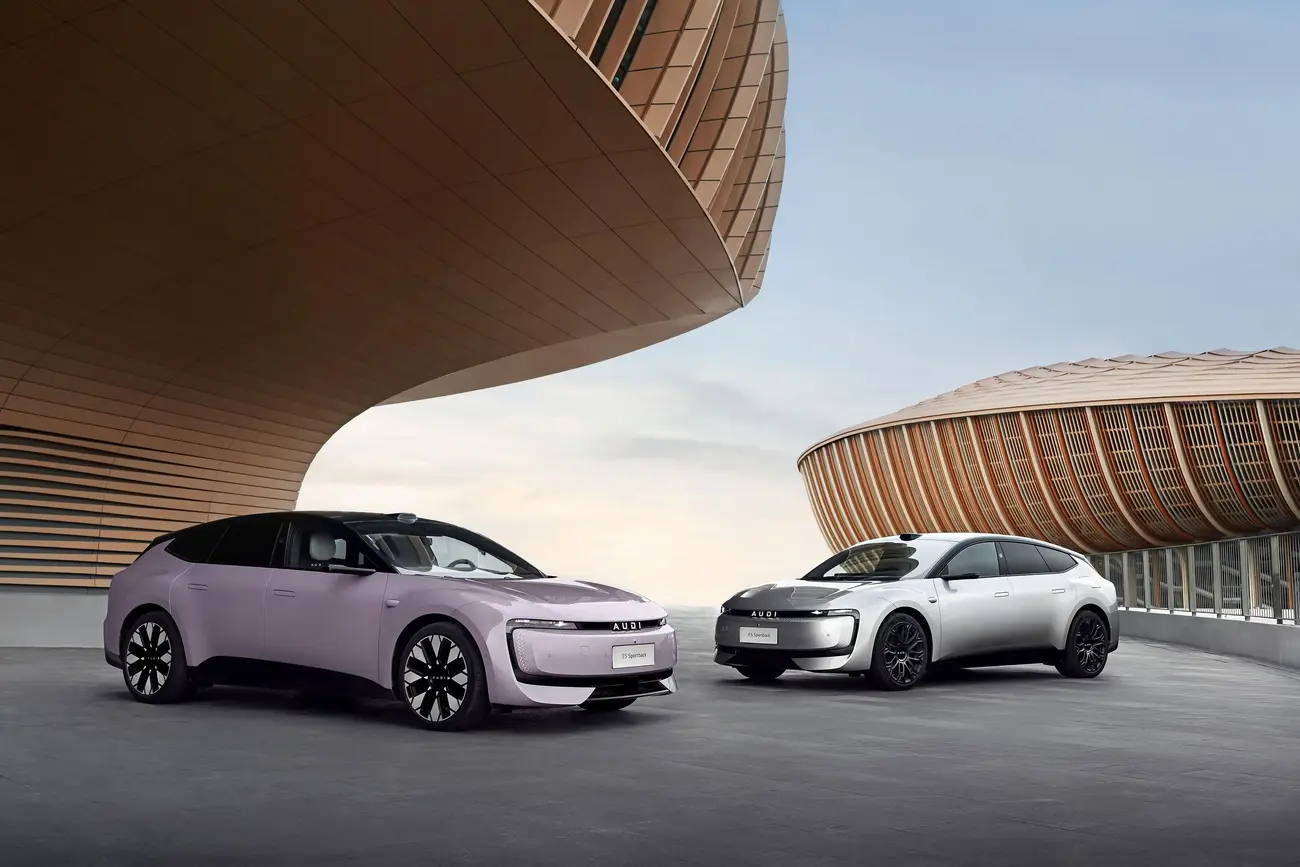
Audi's lawsuit against the AUDI E5 Sportback importer: what happened
It lasted barely a month. In August, German importer Auto China started selling the AUDI E5 Sportback and AUDI E7X — the EVs Audi developed with SAIC exclusively for China. By September, both had vanished from its website. The reason: Audi has taken legal action against the importer, and for now that amounts to an effective AUDI E5 Sportback import ban in Europe — with knock-on effects for anyone hoping to get one into Portugal.
"We have initiated legal proceedings against the importer and will consistently enforce our rights," an Audi spokesperson told Automobilwoche. Which proceedings, exactly? Audi won't say, citing the ongoing case. The effect, though, was immediate.
If you read our earlier piece on the Chinese Audi E5 price in Europe, this is the next chapter. And it changes the maths considerably for anyone in Portugal who had one of these cars on their shortlist.
What we know so far
- Who: Auto China, a German direct importer that buys cars in China, gets them individually approved and sells them in Germany.
- What: the E5 Sportback (listed from €59,980) and the E7X (from €72,900) have been pulled from the website. Li Auto models disappeared too.
- What's still on sale: Xiaomi, Zeekr, SAIC, Maextro and Jetour.
- Cars already delivered: several units were sold before the delisting and have been spotted in Hamburg and Frankfurt.
- Status: there is no court ruling yet. The importer declined to say whether the delisting was down to Audi's pressure.
One important caveat: all available reporting concerns Germany. So far there's no confirmation of similar action in other countries.
Why Audi can block parallel imports of its own cars
It sounds contradictory. The car says AUDI, it was built by an Audi joint venture — so how can Audi stop anyone selling it? The answer lies in trademark law, not in the spec sheet.
Trademark exhaustion and the European Economic Area
Under German law (§24 of the Trademark Act, MarkenG), as under EU trademark law generally, the principle of exhaustion applies: a brand owner loses the right to block resale of a product once it — or someone with its consent — has put that product on the market inside the European Economic Area (EEA).
The E5 Sportback and E7X have only ever been put on the market in China. So in Europe, Audi's trademark rights remain fully intact. And the EU Court of Justice ruled out so-called "international exhaustion" in its 1998 Silhouette judgment: selling a product outside the EEA does not free it up for resale inside.
Because this is an EU-wide principle, it applies in Portugal too. Parallel import of trademarked cars from outside the EEA isn't just a German problem.
Audi has added further arguments. According to AUTO BILD, the company's spokesperson said the models "have no EU type approval" and that Audi dealers outside China can't service them, since they're treated as a third-party make.
The precedent: 22 VW ID.6 CROZZ ordered destroyed in Hamburg
Audi isn't starting from scratch. In March 2026, the Hamburg Regional Court sided with Volkswagen in a very similar case (case no. 312 O 182/23):
- It concerned 22 China-built VW ID.6 CROZZ, advertised by a Berlin dealer on an online platform in February 2023.
- VW obtained preliminary injunctions in February and March 2023; the cars were seized and stored in a warehouse.
- VW relied on its "VW im Kreis" (VW-in-a-circle) trademark, the "ID." and "ID.6" marks and the model's EU registered design.
- The court ordered all 22 cars handed over for destruction. It found this proportionate because the VW logo is on the car and in the software, making it practically impossible to remove. Shipping them back to China was rejected.
- VW's claimed storage costs — €530,000, plus up to €15,000 a month — were pushed to separate proceedings.
The judgment isn't final and can be appealed. But it gives Audi a ready-made playbook.
What happens to owners of imported Chinese Audi E5s
There's good news and bad news. The good: trademark law prohibits using someone else's mark "in the course of trade". A private owner simply driving their car isn't the target. Some commentators have raised the risk of authorities ordering the cars off the road, but no source documents that actually happening.
The bad news is everything else.
Service at Audi dealers: the door is closed
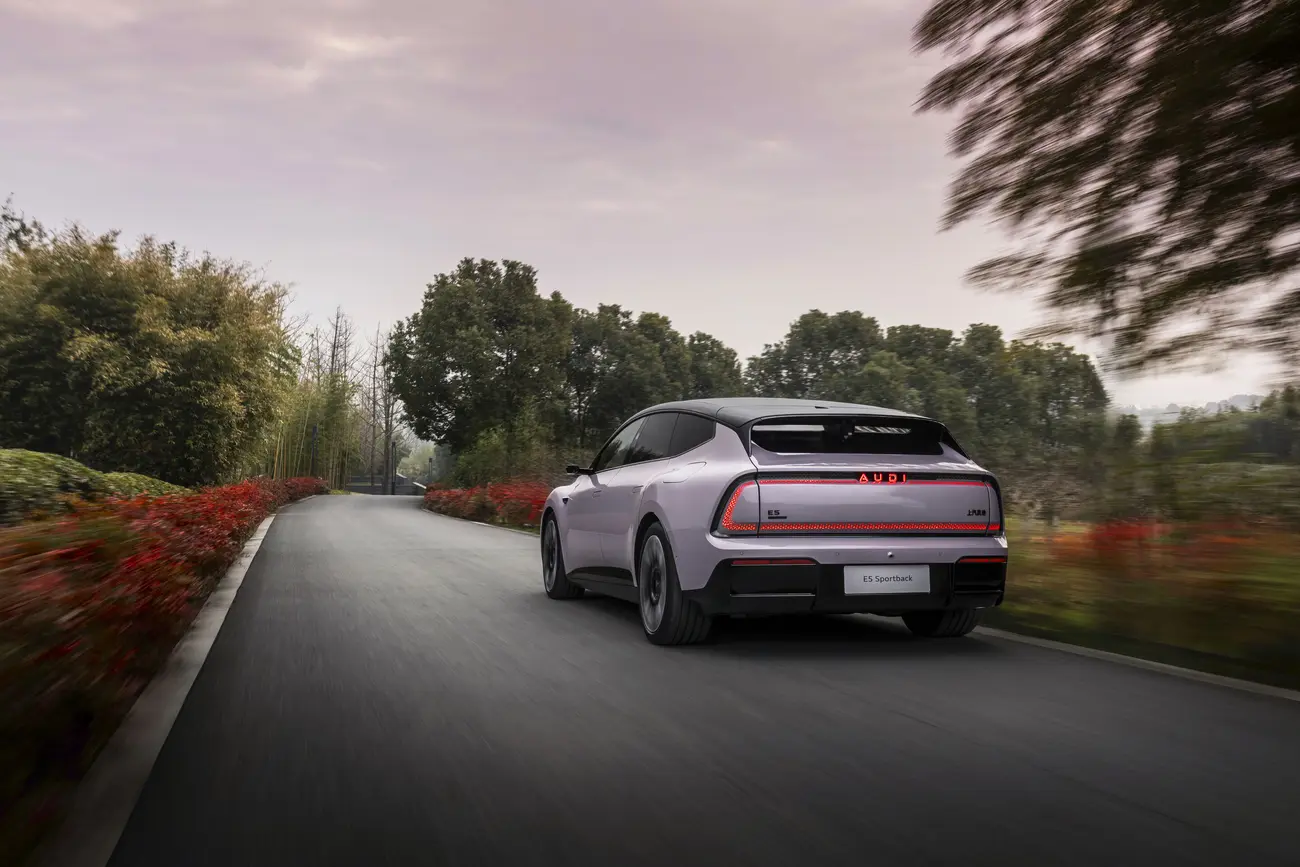
Audi is explicit about it: outside China, its dealers treat the E5 and E7X as a third-party make and won't service them. Parts come from China, outside Audi's European distribution network. If you assumed an AUDI built on an Audi platform would be easy to look after at any Audi workshop in Lisbon or Porto, that's not the case.
On top of that come the issues we already knew about: an importer warranty of just 2 years or 80,000 km, with cover capped at €10,000 per claim; a Chinese GB/T charging port instead of the European CCS standard (the adapter costs around €950); and over-the-air updates tied to the Chinese ecosystem.
Resale: fine between private parties, tricky through a dealer
Selling the car to another private buyer isn't, in principle, a problem. Selling it through a dealer is commercial activity, though — and that's exactly where trademark law bites. Fewer potential buyers plus no official service means depreciation is likely to be much steeper than on an EV bought through the official network.
Can I buy a Chinese Audi E5 in Portugal?
Short answer: not through any official channel, and less and less through a parallel one.
Audi has no plans to launch the E5 or E7X in Europe. The AUDI brand is openly China-exclusive, with more China-only models on the way. The main commercial channel that did exist — Auto China — has stopped. And any other professional importer trying the same thing, whether in Germany, Spain or Portugal, faces the same legal exposure, because exhaustion works the same way across the whole EEA.
Parallel importing Chinese EVs into Portugal is still workable for brands that sell officially in Europe or don't object to it. The AUDI E5 and AUDI E7X are no longer in that group.
Importing one for personal use: legal in principle, but costly
A private individual importing a car for their own use isn't acting "in the course of trade", so trademark law doesn't hit them in the same way. The problem is the rest of the bill:
- Customs duties: the standard 10% import duty plus a 35.3% countervailing duty on SAIC-built EVs, in force since 30 October 2024.
- VAT (IVA) on the imported value. For reference, TeslAnt estimates that an E5 costing just under $34,000 in China lands in Germany at around €71,400 including VAT.
- Approval: without EU type approval, the car needs individual vehicle approval. The Portuguese legalisation and registration process for these specific models isn't covered by the sources we consulted — check everything before committing.
- After purchase: GB/T charging, no Audi service, no European factory warranty.
Fully electric cars are exempt from ISV, Portugal's vehicle purchase tax, which helps. It doesn't make up for the rest.
Official Audi EV alternatives in Portugal
If the E5 Sportback caught your eye, the safer route is Audi's official line-up: the A6 Sportback e-tron and A6 Avant e-tron, or the Q6 e-tron and SQ6 e-tron SUVs. They come with EU type approval, a factory warranty, a service network in Portugal and CCS charging.
They cost more — no getting around that. In Germany, AUTO BILD puts the S6 e-tron Sportback from €99,500 and the SQ6 e-tron from €93,800, which goes some way to explaining why a 787 hp AUDI for under €60,000 drew so much attention. For current Portuguese prices, Audi's own configurator is the most reliable reference.
Some Chinese brands are taking a different route altogether: GAC builds EVs at Magna in Austria, which gives it EU type approval and a legal sales channel. That's where the future of Chinese EVs in our market lies — not in parallel imports of models the brand itself wants to keep in China.
Frequently Asked Questions
Yes, when the cars were never officially sold in the European Economic Area. Under trademark exhaustion, Audi only loses control over resale of products it has itself put on the EEA market, and the AUDI E5 Sportback and E7X have only ever been sold in China. Since the EU Court of Justice's 1998 Silhouette ruling, a sale outside the EEA does not free a product for resale inside it, and the same rule applies in Portugal.
A private owner who simply drives the car is not the target, because trademark law prohibits using another's mark in the course of trade, and no source documents any cars being taken off the road. The risk lies in resale: selling to another private buyer is fine in principle, but selling through a dealer counts as commercial activity. In the similar VW ID.6 CROZZ case, the Hamburg Regional Court ordered 22 of a dealer's cars destroyed in March 2026, a ruling that can still be appealed.
No. According to Audi itself, dealers outside China treat the E5 and E7X as a third-party make and will not service them, and parts come from China, outside Audi's European network. Owners are left with the importer's warranty of 2 years or 80,000 km, capped at €10,000 per claim, well short of the 8-year or 160,000 km battery warranty typical of EVs sold in Europe.
In principle yes, because a private individual importing for their own use is not acting in the course of trade. But they pay a 10% import duty plus the 35.3% countervailing duty on SAIC-built EVs in force since 30 October 2024, on top of VAT; TeslAnt estimates around €71,400 including VAT for an E5 landed in Germany. As an EV it is exempt from Portugal's ISV purchase tax, but without EU type approval it needs individual vehicle approval, so check the registration process before buying.
The closest alternatives are the A6 Sportback e-tron and A6 Avant e-tron, plus the Q6 e-tron and SQ6 e-tron SUVs, all with EU type approval, a factory warranty, CCS charging and a service network in Portugal. At their 2024 Portuguese launch, the A6 Sportback e-tron started at €66,900 and the Q6 e-tron 55 quattro cost €82,949. For current prices, Audi's own configurator is the most reliable reference.
What to watch next
Audi's case hasn't been decided, and the de facto AUDI E5 Sportback import ban could still be lifted. But the signal is clear: on top of tariffs, trademark law can put some Chinese EVs out of reach for European buyers. If you were weighing up an imported AUDI E5 Sportback, the sensible move is to wait for the court's decision — and in the meantime, take a close look at what's officially on sale here.