
Audi A2 e-tron Specs and Price in Portugal: Comparing All Four Versions
Published: 13/09/2026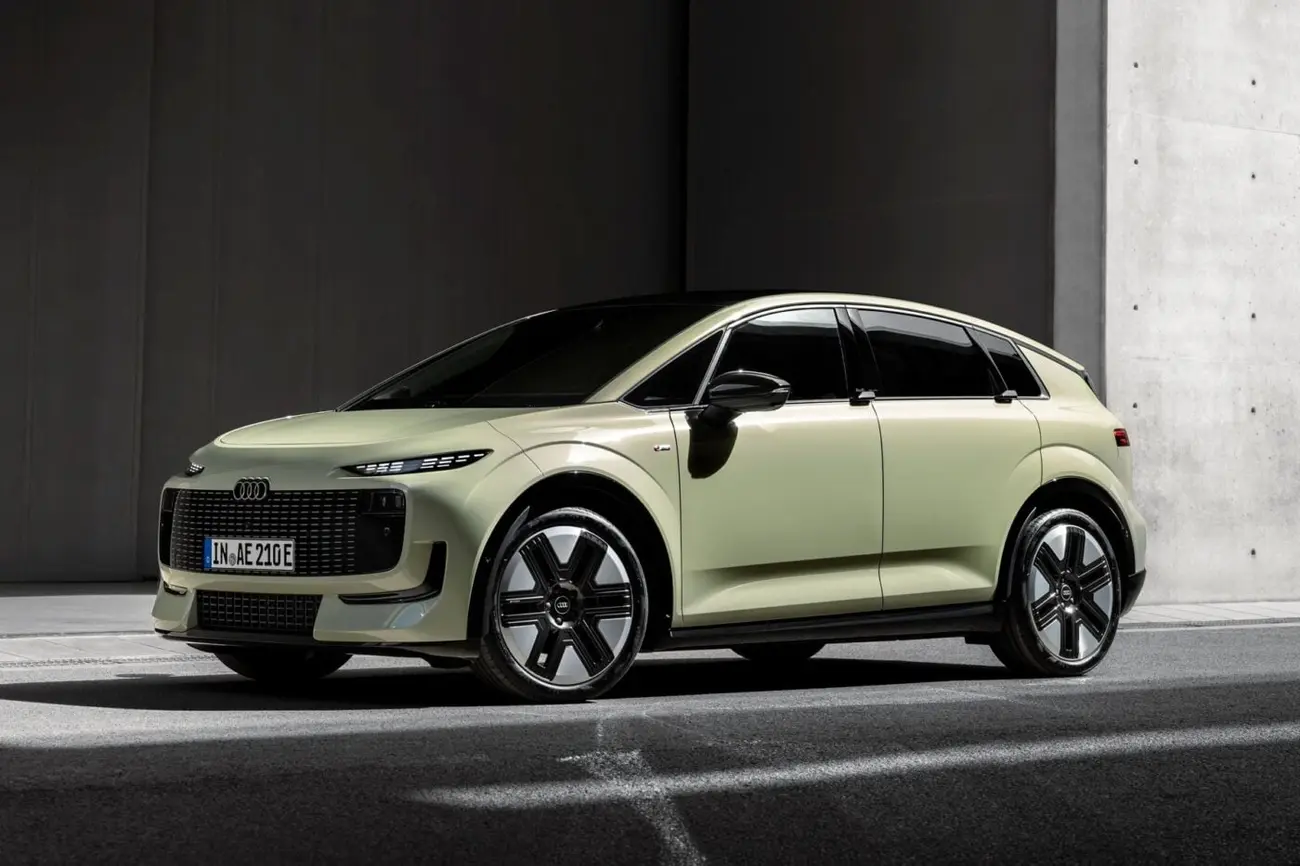
12.8 kWh/100 km: the number Audi is really selling
The most efficient version of the new Audi A2 e-tron isn't the one with the biggest battery. It's the middle one — 140 kW, 61 kWh — and it returns 12.8 kWh/100 km on the WLTP cycle with the optional efficiency package. Audi calls it the most efficient production car it has ever built, and here's what that means for a buyer: 515 km of certified range from just 61 kWh, more than plenty of EVs carrying far larger packs.
We've already covered the reveal itself. This piece does something different: it puts all four versions side by side, explains what actually changes between them, and answers the question that matters if you're spending the money — which one makes sense in Portugal.
Audi A2 e-tron specs: all four versions side by side
Three batteries, four power outputs, all rear-wheel drive with a single permanent-magnet synchronous motor. There is no all-wheel-drive version. The capacities below are gross figures, as Audi quotes them — usable capacity works out at roughly 50, 58 and 79 kWh.
| Specification | 125 kW | 140 kW | 170 kW | 240 kW |
|---|---|---|---|---|
| Power (hp) | 170 | 190 | 231 | 326 |
| Torque (Nm) | 350 | 350 | 350 | 545 |
| Gross battery (kWh) | 52 LFP | 61 LFP | 84 NMC | 84 NMC |
| WLTP range (km) | up to 423 | up to 515 | up to 646 | up to 630 |
| Consumption (kWh/100 km) | from 13.7 | from 12.8 | from 13.9 | from 14.2 |
| 0-100 km/h (s) | 8.8 | 7.9 | 7.0 | 5.7 |
| Top speed (km/h) | 160 | 160 | 160 | 200 |
| Max DC charging (kW) | 100 | 105 | 183 | 183 |
| DC 10-80% (min) | 24 | 26 | 29 | 29 |
| Price in Germany | €38,200 | €41,900 | €48,900 | €51,200 |
The two smaller packs use LFP cells in a cell-to-pack layout. That brings a practical everyday benefit: you can charge them to 100% daily without hurting battery life. The 84 kWh pack is NMC with modular construction — denser in energy, but with the usual rules attached: 80% for routine charging, 100% only when you need it.
Range and consumption: why the bigger battery isn't the efficient one
Maximum range for the Audi A2 e-tron is 646 km, from the 170 kW version with the 84 kWh battery. But that version uses 13.9 kWh/100 km, against 12.8 for the 61 kWh car. The reason is straightforward: a bigger battery weighs more, and the extra weight eats into the gain.
Behind the number sits a stack of engineering decisions rather than one clever trick. A 0.24 drag coefficient (the VW ID.3 manages 0.26), a controllable front air intake, a largely enclosed underbody, wheel-arch gap reducers, aero wheels and flush wing-shaped electric door handles. On the electrical side: silicon-carbide power electronics, thinner motor laminations and a lower-friction transmission.
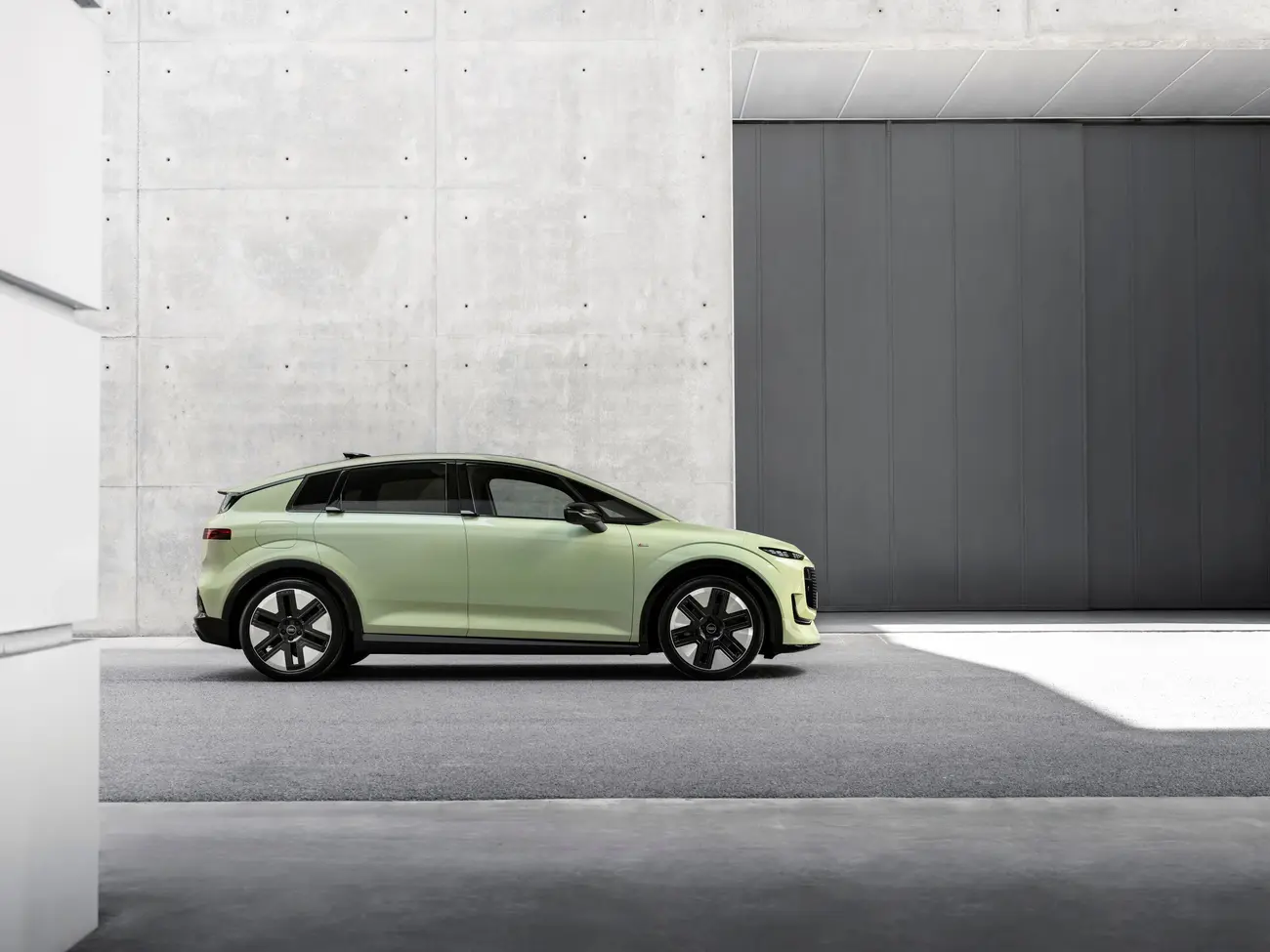
On the road, early UK testing of the 61 kWh version returned between 4.4 and 5.55 miles per kWh — the equivalent of 410 to 518 km in the real world, depending on how you drive. So the 515 km WLTP figure is reachable, but it takes a light right foot. For context: Lisbon to Porto is about 300 km, and every version here covers that without stopping to charge.
Is the efficiency package worth it?
The efficiency package — aero wheels, sport suspension and S line trim — saves around 0.9 kWh/100 km on its own. Over 15,000 km a year that's roughly 135 kWh, or about €20 to €30 of home electricity. The real payoff isn't the bill: it's the extra kilometres per charge, which is what keeps you off the charger on a long run.
Charging: 10 to 80% in 24 to 29 minutes
Charging times on the A2 e-tron are good rather than exceptional, and remarkably close to each other across the three batteries.
- 52 kWh: up to 100 kW, 10-80% in 24 minutes
- 61 kWh: up to 105 kW, 10-80% in 26 minutes
- 84 kWh: up to 183 kW, 10-80% in 29 minutes
The detail that counts: the big battery takes only five minutes longer than the small one, and recovers far more range in that time. A 29-minute stop at a motorway rapid charger puts around 450 km back into the 84 kWh version. In practice, that's a coffee and a bathroom break.
Regenerative braking runs through three levels selected with steering-wheel paddles (D1 at −0.6 m/s², D2 at −1.0, D3 at −1.5), plus a B mode for one-pedal driving.
V2L yes, V2H no — at least here
Bidirectional charging is on board, but with an important caveat for anyone buying in Portugal. V2L (vehicle-to-load), which powers external equipment from the battery, is standard on every version. V2H — running your house off the car — launches restricted to Germany, Austria and Switzerland. In Portugal, at launch, don't count on it.
Dimensions and boot space: where the A2 e-tron falls short
At 4.32 m long and 1.79 m wide (excluding mirrors), the A2 e-tron is compact on the outside. The 2.77 m wheelbase delivers interior space comparable to the Q4 e-tron, and rear legroom drew praise in the first drives.
The boot is the weak point: 396 litres, 1,336 litres with the seats folded, plus a 13-litre frunk on the 170 and 240 kW versions. That's less than the Kia EV3, Škoda Elroq and Ford Puma Gen-E — and less than the VW ID.Polo, Renault 4 and Cupra Raval, which are cheaper cars. If you regularly carry bikes, pushchairs or family luggage, measure before you sign.
Standard kit includes an 11.9-inch digital instrument display, a 12.8-inch curved touchscreen, wireless CarPlay and Android Auto, navigation, voice control, adaptive cruise, a reversing camera and rear cross-traffic alert. Options run to a 1.6 m² panoramic roof, an augmented-reality head-up display and a 14-speaker, 660 W Sonos sound system.
Price and when it arrives in Portugal
Let's be direct about this: no Portuguese price or launch date has been announced. What exists is the German list, which starts at €38,200 for the 125 kW version and runs to €51,200 for the 240 kW. UK pricing opens at £32,200.
Order books opened on 10 September 2026, with first deliveries in December 2026 in Germany and the Netherlands. Italian showrooms get the car in January 2027. Following that sequence, a Portuguese arrival in the first quarter of 2027 is the realistic expectation — but that's our estimate, not an Audi announcement.
On price, EVs in Portugal are exempt from ISV (the vehicle registration tax that inflates most new-car prices here) and pay a reduced IUC road tax, which helps. Even so, Portuguese prices for premium imports typically sit above the German list, so treat €38,000 as an optimistic floor rather than a street price.
Against the Renault 5, VW ID.Polo and Cupra Raval
| Model | Entry price | Note |
|---|---|---|
| Audi A2 e-tron | €38,200 (Germany) | 423-646 km WLTP |
| Renault 5 E-Tech | £21,495 (UK, with grant) | already on sale in Portugal |
| VW ID.Polo | from €25,000 | launch versions above €30,000 |
| Cupra Raval | around €26,000 | two battery chemistries, four power levels |
On numbers alone, the A2 e-tron asks for a big jump over its direct size rivals. But it isn't fighting on the same ground: none of them offers 646 km WLTP or a premium cabin. The A2 e-tron is the expensive, long-legged answer to that class, not a price alternative to it.
Frequently Asked Questions
Audi has not announced Portuguese pricing yet. The official reference is Germany, where the range starts at €38,200 for the 125 kW version and climbs to €51,200 for the 240 kW, with €41,900 and €48,900 in between. Since electric cars are exempt from ISV and IUC in Portugal, prices close to the German ones are a reasonable expectation — but any local figure is still only an estimate.
There is no official Portuguese date. Order books opened on 10 September 2026, the first deliveries land in December 2026 in Germany and the Netherlands, and Italian showrooms get the car from January 2027. Following that rollout, the first quarter of 2027 is the realistic expectation for Portugal — our estimate, not an Audi confirmation.
On WLTP the four versions claim 423 km (52 kWh gross), 515 km (61 kWh), 646 km (84 kWh, 170 kW) and 630 km (84 kWh, 240 kW). Usable capacities are roughly 50, 58 and 79 kWh. Early UK road tests returned 4.4 to 5.55 miles per kWh, which works out at roughly 410 to 518 real-world kilometres on the 61 kWh battery — very close to the official figure.
It depends on your priority. The most efficient version is not the one with the biggest battery: the 140 kW (190 hp) with the optional efficiency package is rated at 12.8 kWh/100 km and 515 km, the best consumption ever homologated for a production Audi — the package alone is worth about 0.9 kWh/100 km. For maximum range, the 170 kW (231 hp) covers 646 km and charges at 183 kW, against 100 and 105 kW for the LFP-battery versions.
It holds 396 litres, or 1,336 litres with the rear seats folded, plus a 13-litre frunk exclusive to the 170 and 240 kW versions. This is the car's weak spot: at 4.32 m long, 1.79 m wide and with a 2.77 m wheelbase, cabin space approaches the Q4 e-tron, but the boot trails rivals such as the Kia EV3, Škoda Elroq, VW ID.Polo and Cupra Raval.
Which version to buy
If your driving is mostly city and suburbs, the 125 kW with 52 kWh is plenty — 423 km covers a week of commuting in Lisbon or Porto with a weekend top-up at home.
The 140 kW is the rational pick for most people. It's the efficiency champion, its 515 km handles the occasional long trip, and the LFP pack lets you charge to 100% without worrying. It's also where the efficiency package earns its money.
The 170 kW with 84 kWh makes sense if you cover serious motorway distance and want the full 646 km plus 183 kW charging. The 240 kW, with 326 hp and 5.7 seconds to 100 km/h, is a want rather than a need — it gives up range against the 170 kW and costs €2,300 more.
What's still missing is the part that decides it: the Portuguese price and date. When Audi Portugal publishes its list, we'll find out whether the A2 e-tron lands as a genuine alternative to the Q4 e-tron or as a premium compact that asks too much for what it offers in the boot.