
Xpeng P7+ Review in Portugal: Real-World Range, Consumption and Prices
Published: 22/09/2026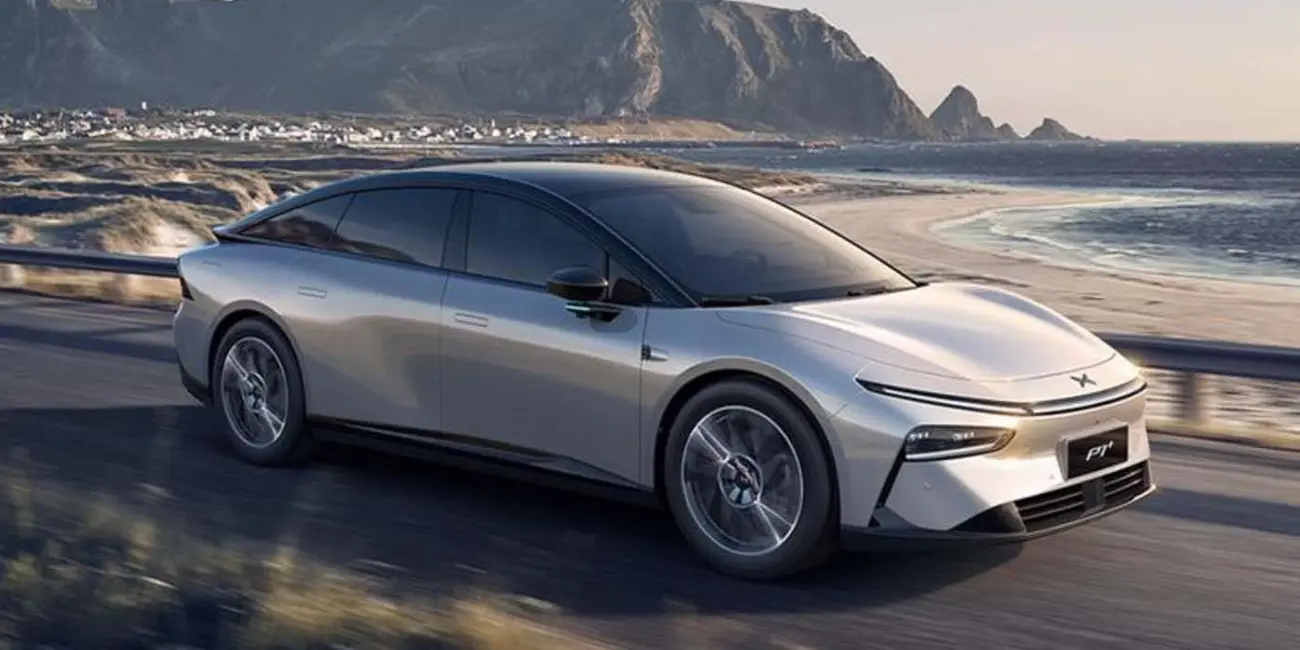
Xpeng P7+ review: what the real-world tests show
365 km on the motorway at 130 km/h, 440 km in mixed driving, and a stopwatch-verified 10–80% charge in 12 minutes. Those are the headline results from the most thorough European tests of the Xpeng P7+ Long Range so far, and they matter to anyone in Portugal considering an electric saloon for serious mileage.
This Xpeng P7+ review for Portugal pulls together Automobile Propre's standardised Supertest and week-long road test, Bjørn Nyland's range test in Norway, and early UK assessments. Unsurprisingly, the real world range falls well short of the 530 km WLTP figure. Still, the mix of space, equipment and charging speed makes it one of the most compelling cars under €60,000. So is it worth buying?
Xpeng P7+ real world range: town, open road and motorway
The tested car was the Long Range: a 74.9 kWh LFP battery, 230 kW (313 hp) and rear-wheel drive. On paper it promises 530 km WLTP and 16.4 kWh/100 km. On the road, results depend heavily on speed.
| Scenario | Consumption | Range | Source |
|---|---|---|---|
| WLTP (official) | 16.4 kWh/100 km | 530 km | Xpeng |
| Mixed, one week of use | 17.5 kWh/100 km | about 430 km | Automobile Propre (road test) |
| Mixed, Supertest protocol | 17.4 kWh/100 km | 440 km | Automobile Propre (Supertest) |
| Open road at 90 km/h | 14.2 kWh/100 km | over 500 km | Bjørn Nyland |
| Motorway at 120 km/h | 19.7 kWh/100 km | — | Bjørn Nyland |
| Motorway at 130 km/h | 20.9–21 kWh/100 km | 365 km | Automobile Propre |
Xpeng P7+ motorway consumption
At 130 km/h, consumption climbs to around 21 kWh/100 km. In Portuguese terms, Lisbon to Porto (roughly 310 km) is doable non-stop from a full battery, though you'll arrive with little to spare. Between rapid charges, using the usual 10–80% window, Automobile Propre works out 260 to 300 km per leg.
Below 100 km/h the 2,100 kg kerb weight shows. The 0.211 drag coefficient pays off at motorway speeds, but mixed-driving efficiency is nothing special against rivals. The Supertest also flags another weakness: the battery is small for the segment.
How far does the Xpeng P7+ go on a charge?
That depends on your right foot and the road. Drive gently on national roads and Nyland's 500-plus km is achievable. For normal mixed use, expect 430 to 440 km. On an all-motorway trip at 120–130 km/h, plan on about 365 km. Cold weather will cut these numbers.
Measured charging: where the P7+ shines
Xpeng claims a 446 kW peak. The highest figure measured was 396 kW on a 600 kW IONITY charger, but total time is what counts: 10–80% in exactly 12 minutes, the third-best result ever recorded in the Supertest and almost on par with a Lotus Emeya.
More relevant for Portugal is how it copes with less powerful units, which is what you'll find at most motorway stops here:
| Charger | 10–80% time |
|---|---|
| IONITY/Alpitronic 600 kW | 12 min |
| IONITY/ABB 350 kW | 12 min 26 s |
| Alpitronic 300 kW | 13 min 15 s |
| Total/ABB 175 kW | just over 21 min |
During the week-long test, Automobile Propre logged four real sessions. On a 300 kW unit it went from 21% to 79% in 11 min 52 s (48.3 kWh). On a 400 kW unit, 15% to 91% took 16 min 20 s, delivering 65.9 kWh at a 249 kW average. Even on 300 kW chargers, average power never dropped below 220 kW.
How many km does the Xpeng P7+ add in 15 minutes?
Around 290 km of motorway range. Only the Porsche Taycan (320 km) did better on that measure in the magazine's tests. A 30-minute stop adds 330 km, which puts it behind the Lucid Air, BMW iX3 and Mercedes CLA 250+.
There's a practical bonus too: the P7+ works at Tesla Superchargers open to other brands, widening your options beyond MOBI.E, Portugal's national public charging network. The downside? The cooling fans are loud while charging.
Is the Xpeng P7+ good for long trips?
This is where the P7+ earns its "road-tripper" reputation. On the roughly 500 km Lyon–Paris run it took 4 h 33 min with a single 9-minute stop, arriving with 20% left. That beat the Audi A6 e-tron by two minutes; only the Mercedes CLA was quicker (4 h 28 min). A 1,000 km route needed just three stops and 9 h 25 min in total.
Think Lisbon to the Algarve and back, or Porto to Madrid: the P7+ handles those distances with short stops, without your day revolving around the charger.
One warning: the built-in route planner is unreliable. Starting at 90%, it predicted running flat at 260 km. Use a third-party app instead.
Space and equipment: a 5-metre saloon with almost no options
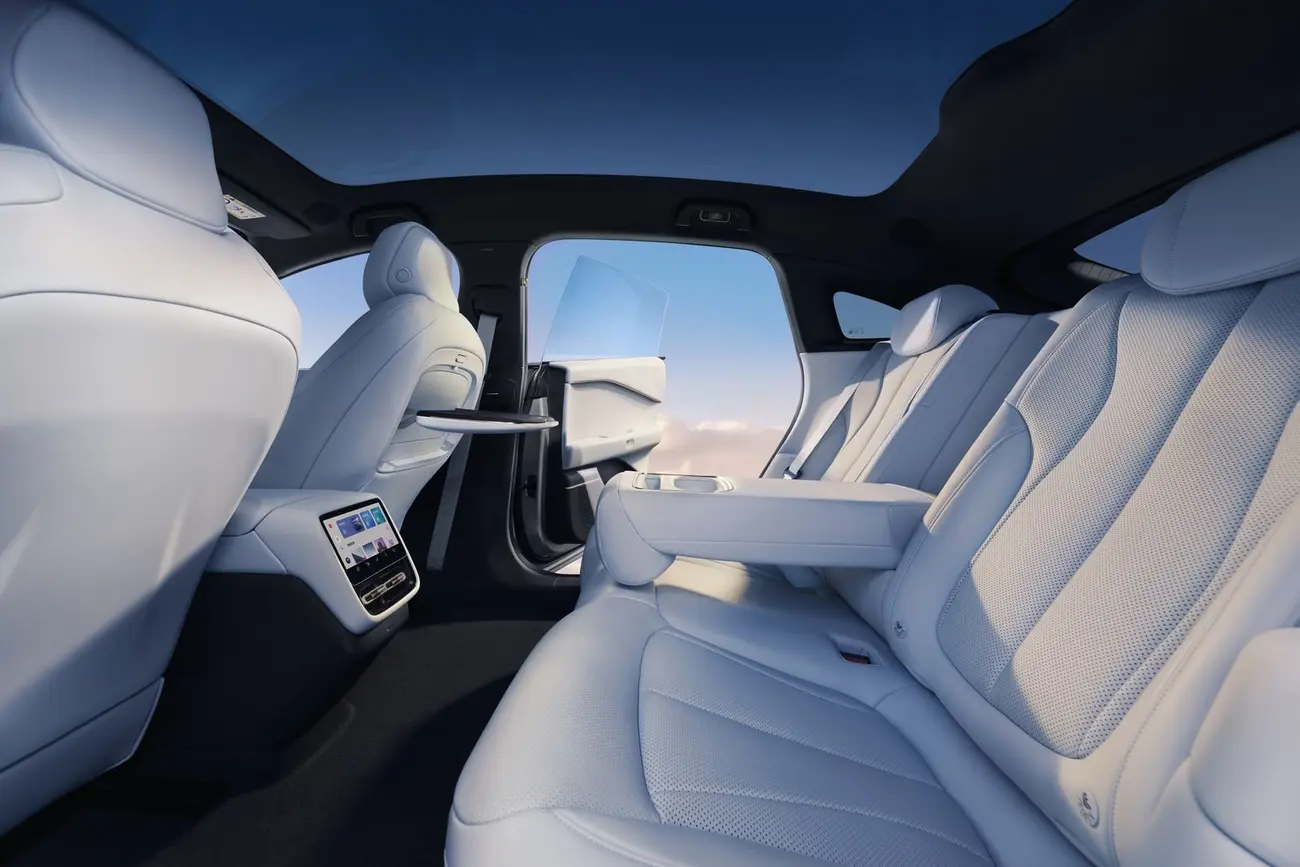
At 5.07 m long with a 3.00 m wheelbase, the P7+ is Tesla Model S-sized. Rear space is huge, although the high floor slightly reduces thigh support. The boot holds 573 litres, growing to over 1,900 litres with the seats folded.
Standard equipment is close to complete. The only European options are paint and an electric tow hitch:
- Nappa leather seats, heated, ventilated and massaging, front and rear
- 15.6" centre screen, head-up display and 8" rear screen
- 20-speaker sound system
- Adaptive suspension and heat pump
- 3.3 kW V2L to power external devices
- 1,500 kg towing capacity
- Just 67 dB of cabin noise at 130 km/h
What's missing? There's no front trunk, no parcel shelf, and the headlights aren't adaptive.
The weak spots the tests uncovered
It isn't perfect, and the European testers didn't hold back:
- Driver assistance (ADAS) poorly tuned for European roads: misread speed-limit signs, phantom braking and fatigue warnings after five minutes
- Vague steering and soft handling in corners; you feel all 2,100 kg
- Digital rear-view mirror with double reflections by day and glare at night
- Complex menus and a weak voice assistant
- Uncertain resale value, as with most electric saloons
- Stopgap model: in China the P7+ has already been replaced by the longer-range "Next P7"
Xpeng P7+ price in Portugal: versions and figures
The P7+ went on sale in Portugal in June 2026 with immediate delivery. Prices published at launch:
| Version | Battery | WLTP range | Price excl. VAT | Price incl. VAT |
|---|---|---|---|---|
| RWD Standard Range | 61.7 kWh | 455 km | €38,200 | €46,997 |
| RWD Long Range | 74.9 kWh | 530 km | €41,455 | €50,997 |
| AWD Performance | 74.9 kWh | 500 km | €46,300 | €56,997 |
Add €1,100 + VAT for registration and delivery on the mainland, while metallic paint costs €894.31 + VAT. Xpeng Portugal's current campaign, running until 30 September 2026 and limited to stock, advertises the Standard Range from €38,200 + VAT. Prices can change, so always check with the dealer.
For reference, the Long Range costs €49,990 in France and €49,600 in Germany. With Portugal's 23% VAT it just crosses the €50,000 mark here: about a thousand euros above the French price, before registration costs.
How much does the Xpeng P7+ cost for companies?
This is where the numbers get interesting. As an EV, the P7+ is exempt from ISV (Portugal's vehicle purchase tax) and IUC (the annual road tax). Companies and self-employed sole traders (ENI) can deduct VAT on electric cars costing up to €62,500, and every version comes in under that limit. In practice, the Long Range works out at €41,455 + VAT, a figure few electric saloons this size can match.
Long Range or Standard Range: which one?
The €4,000 difference (incl. VAT) buys 13.2 kWh more battery, 75 km more WLTP range, charging up to 446 kW instead of 350 kW and, according to Xpeng, massaging seats and the rear screen. If you do regular motorway runs, the Long Range is the logical pick. The Standard Range suits mostly urban and suburban use. As for the Performance, with 370 kW and 0–100 km/h in 4.3 s, it only makes sense if you really want the acceleration, since it gives up 30 km of range.
Xpeng P7+ vs Tesla Model 3 and BYD Seal
Its natural rivals in Portugal are the Tesla Model 3, BYD Seal, Hyundai Ioniq 6 and Polestar 4. Further upmarket, the VW ID.7 and BMW i5 play in a different price league: in France the ID.7 Pro S starts at €62,690 and the i5 eDrive40 at €76,250.
Against the Tesla Model 3, the P7+ offers far more space, especially in the back, and more standard comfort kit. The Supertest sums it up neatly: a Model S-sized saloon for the price of a Model 3 Long Range AWD. Tesla still leads on driver-assistance software and low-speed efficiency.
Against the BYD Seal, the P7+ is bigger and charges faster thanks to its 800V architecture. It's worth test-driving both, as they make the same pitch: a lot of car for the money.
Frequently Asked Questions
At 130 km/h on the motorway, the Xpeng P7+ Long Range covers roughly 260 to 300 km per leg when charging between 10 and 80%. In Automobile Propre's test it drove about 500 km with a single 9-minute stop, and 1,000 km with three stops in 9 h 25 min in total. The built-in trip planner proved unreliable, so a third-party route planning app is the safer bet.
Yes, the Xpeng P7+ can charge at Tesla Superchargers open to other brands, as well as on Portugal's MOBI.E network and operators such as IONITY. A 10-80% charge takes 12 minutes on a 600 kW unit, 13 min 15 s on a 300 kW charger and just over 21 minutes on a 175 kW charger. The Standard Range version peaks at 350 kW, versus a claimed 446 kW for the 74.9 kWh versions.
The Xpeng P7+ has a 573-litre boot that grows to more than 1,900 litres with the rear seats folded. As a fastback with a full liftgate, loading is easier than in a conventional saloon. On the downside there is no front trunk and no parcel shelf, but it can tow up to 1,500 kg.
European road tests mainly criticised driver assistance systems poorly tuned for Europe, with misread speed limit signs, phantom braking and fatigue warnings after just 5 minutes. Testers also flagged the digital rear-view mirror (double reflections by day, glare at night), vague steering and loud cooling fans while charging. Resale value is another question mark, especially with the Next P7 already on sale in China.
The Xpeng P7+ AWD Performance delivers 370 kW and 670 Nm, reaching 0-100 km/h in 4.3 seconds versus 6.2 s for the 230 kW Long Range. It costs €56,997 including VAT in Portugal, €6,000 more than the Long Range, and gives up 30 km of WLTP range (500 km vs 530 km). For buyers focused on long trips and efficiency, the Long Range is the more balanced choice.
Is the Xpeng P7+ worth buying?
If you want a large, comfortable electric saloon that charges quickly and you cover plenty of motorway miles, yes. Bjørn Nyland called it "possibly the best buy out there, if you don't want an SUV", and the test data largely backs him up: 365 km of real motorway range, 290 km added in 15 minutes, and a spec sheet German brands charge a premium for.
The compromises are real. Driver assistance needs European tuning, the driving experience is merely average, and future resale value is an open question, especially with the Next P7 already on sale in China. For companies, which can reclaim VAT on top of the ISV and IUC exemptions, it's one of the strongest offers in the segment. Private buyers should keep an eye on the campaign running to the end of September and book a motorway test drive before deciding.