
Xpeng L03: A 1000 km Range Extender EV for Portugal and Tesla Model Y Rival
Published: 16/07/2026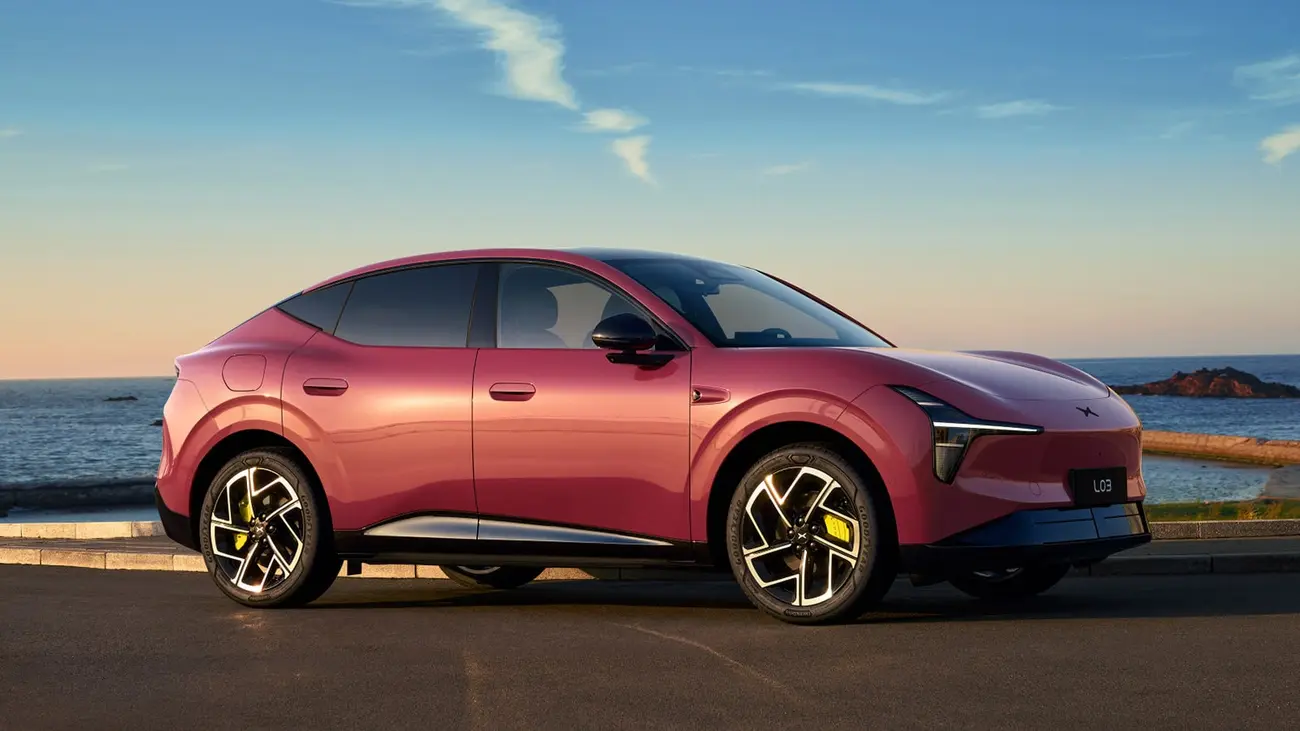
More than 1,000 km on one tank: Xpeng's clever move
A thousand kilometres without stopping. That is the number Xpeng wants stuck in your head when it unveils the L03 on 16 July in Munich. The trick is not a giant battery — it is a small petrol engine that works purely as a generator. And this is where the Xpeng L03 range extender in Portugal stops being marketing and becomes a real answer for anyone still nervous about going fully electric.
The European debut happens at the same moment as the Chinese one, at 1pm Munich time (7pm in Beijing). It is Xpeng's first model to launch simultaneously in both markets, with plans for roughly 64 countries. The brand already sells here — the G6, G9 and P7 are on Portuguese roads — so the L03 has a clear path to national showrooms.
How the range extender works
The version that gives the car its headline is an EREV, an electric car with a range extender. In practice: the wheels are always driven by the 183 kW (246 hp) electric motor. The 1.5-litre, 70 kW petrol unit never connects directly to the wheels — it only charges the battery once it runs low.
The result is two ranges that stack. In pure electric mode the L03 EREV covers 315 km CLTC, enough for a week of home-to-work trips without burning a drop of fuel. When the battery is depleted, the generator kicks in and combined range climbs to 1,330 km CLTC — around 1,000 km on the WLTP cycle, which is more realistic for European roads. Claimed consumption is 5.16 L/100 km.
For a Portuguese driver, this attacks range anxiety head-on. Lisbon to Faro and back with no charging. A trip into the interior, where fast chargers are still thin on the ground, without planning stops. It is Xpeng's first EREV in Europe, and it is the strongest argument of this launch.
Xpeng L03 vs Tesla Model Y: the numbers
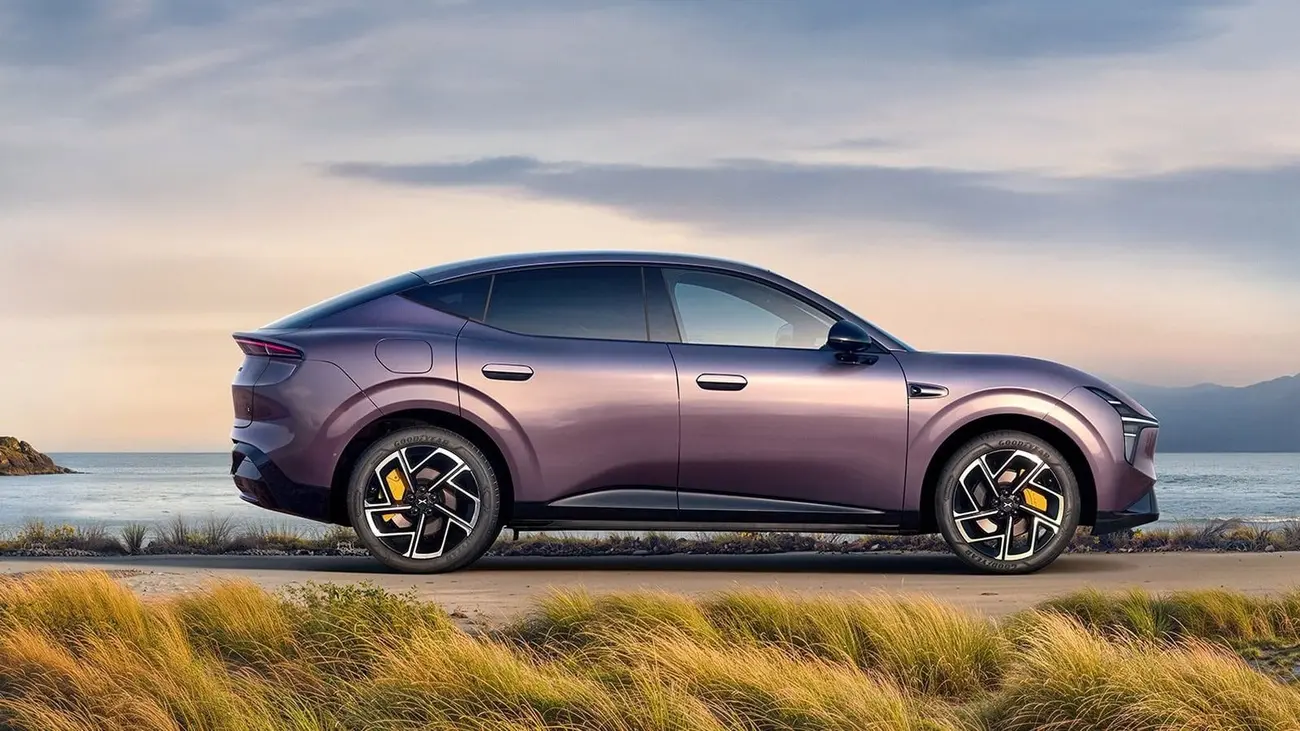
The L03 was built to beat the base Tesla Model Y, and Xpeng makes no secret of it. It measures 4,650 mm long — 144 mm shorter than the Model Y — 1,920 mm wide and 1,600 mm tall, with a 2,850 mm wheelbase. The design comes from Juanma Lopez, the ex-Ferrari hand behind the Purosangue, and delivers a drag coefficient of 0.228.
| Specification | Xpeng L03 (BEV) | Tesla Model Y (base) |
|---|---|---|
| Length | 4,650 mm | 4,794 mm |
| Power | 183 kW (246 hp) | — |
| Range | 525 / 625 km CLTC | 593 km CLTC |
| 0-100 km/h | 6.6 s | 5.9 s (China) |
| Charging 10-80% | 18-19 min | 25 min |
| Weight | 1,855 kg | — |
Where the L03 wins: it charges faster (10-80% in about 19 minutes versus 25 for the Tesla), it has DCC adaptive dampers as standard — something the Model Y only gets on the Performance trim — and it carries more computing power on board. Where it loses: it is slower to 100 km/h and the electric version's range sits below the Tesla. Nothing dramatic, but worth saying plainly.
The Xpeng L03 EREV and BEV specs
If you only want the pure electric car, there are two CALB LFP batteries to choose from: 56 kWh or 69 kWh, good for 525 or 625 km CLTC (around 440 km WLTP for the larger pack). The single 183 kW motor does 0-100 km/h in 6.6 seconds, with consumption between 11.5 and 11.9 kWh/100 km.
Fast charging is one of the high points: a 3C architecture peaking at 220 kW, taking the battery from 10 to 80% in about 19 minutes. A coffee stop on the A1 motorway is enough to top up for the rest of the journey.
Technology on board
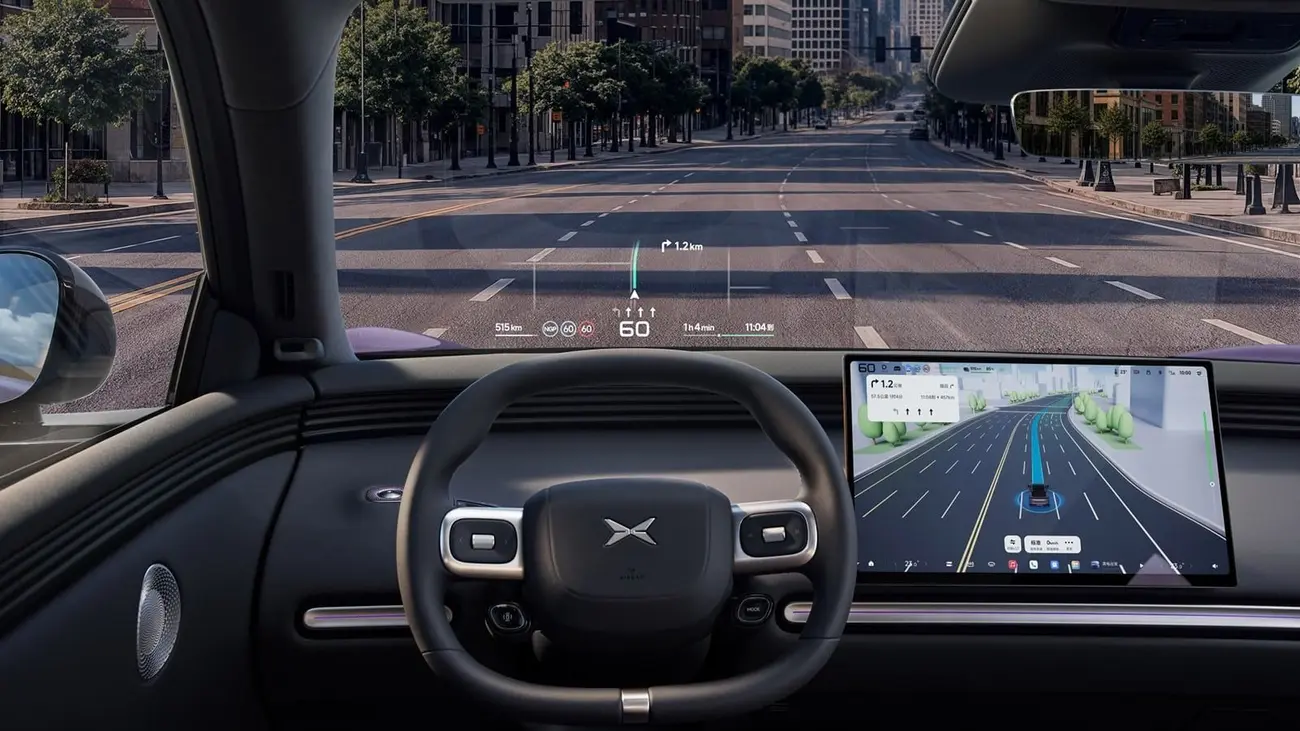
Inside, the L03 goes all in. A 15.6-inch 2.5K central screen, a 26.8-inch W-HUD replacing the instrument cluster, 20 speakers, and a passenger seat with 14-point massage and a zero-gravity recline. Xpeng's own Turing chip offers 750 TOPS on the Max trim and 1,500 TOPS on the Ultra SE, feeding the VLA 2.0 autonomous driving system — camera-based, no LiDAR.
For export markets, the interface arrives in English with Google Voice Assistant. The car has already been tested on Munich roads to validate its driving algorithms in real European conditions. Safety ratings are a full 5 stars across ANCAP, CNCAP and Euro NCAP.
Price and when it reaches Portugal
Here is where caution is needed. In China, pre-sales opened between RMB 143,800 and 165,800 — roughly 18,000 to 20,800 euros at the raw exchange rate. For comparison, the base Model Y RWD costs RMB 327,500 there, more than double. The EREV versions land between RMB 149,800 and 161,800.
But a direct exchange rate does not tell the whole story. European prices are not confirmed yet, and they will fold in shipping, homologation, margins and Portuguese taxes. As a fully electric car, the L03 BEV benefits from ISV exemption and reduced IUC (Portugal's registration and annual road taxes) — perks the EREV version, with its combustion engine, probably will not fully enjoy. One question also remains open: it is not even confirmed whether the EREV variant will reach Europe at all. That, and the official figures, we will learn on 16 July.
If the L03 arrives in Portugal near the price Xpeng charges for the G6, we get a coupe SUV with a thousand kilometres of range aimed squarely at the Tesla Model Y. It is worth watching what comes out of Munich — price is the only missing piece to know whether the magic 1,000 km number is actually worth it here.
Frequently Asked Questions
Xpeng claims up to 1,330 km of combined range on the CLTC cycle for the EREV version, which works out to around 1,000 km on the WLTP cycle that better reflects real European driving. In pure electric mode the EREV covers 315 km CLTC. The fully electric (BEV) version offers 525 or 625 km CLTC, roughly 440 km WLTP for the 69 kWh battery. Official homologated European figures will only be confirmed at the 16 July debut in Munich.
The L03 EREV is an electric car with a range extender: the wheels are always driven by the 183 kW (246 hp) electric motor, and the 1.5-litre, 70 kW petrol unit never connects directly to the wheels — it works only as a generator to recharge the battery once it runs low. Claimed consumption is 5.16 L/100 km. This is Xpeng's first EREV in Europe, though it is not yet confirmed whether this variant will actually reach the European market.
In China, pre-sales opened between RMB 143,800 and 165,800 (roughly 18,000 to 20,800 euros at the raw exchange rate), with the EREV versions between RMB 149,800 and 161,800. The European price is not yet confirmed and will be higher, since it factors in shipping, homologation, margins and Portuguese taxes. Xpeng's current G6 positioning in Portugal is a useful reference. Official figures are expected around 16 July 2026.
It depends on your priorities. The L03 charges faster (10-80% in about 19 minutes versus 25 for the Model Y), comes with DCC adaptive dampers as standard and more on-board computing power, and is 144 mm shorter. On the other hand, it is slower to 100 km/h (6.6 s versus 5.9 s) and the electric version's range sits slightly below the Tesla. If the Portuguese price stays close to China's, it becomes a very competitive rival — the final figure is the missing piece for a verdict.
The fully electric (BEV) version benefits from ISV exemption and reduced IUC, the main tax advantages for EVs in Portugal. The EREV version, with its combustion engine, is unlikely to enjoy the same exemptions in full and will face different taxation. It is worth confirming the exact tax treatment of each variant once European prices and homologations are made official.