
Home EV Charger Rules for 2027 in Portugal: What AFIR and ISO 15118-20 Change
Published: 26/11/2026
Home EV charger rules for 2027: what changes on 1 January
Under seven weeks to go. From 1 January 2027, any fixed wallbox installed in a garage, a house or an apartment building's car park must support the EN ISO 15118-20 communication standard. These new home EV charger rules come from AFIR, the EU's alternative fuels infrastructure regulation, and apply directly in Portugal with no national law needed.
If you already have a wallbox, relax: existing installations are not affected. Portable chargers that plug into a normal socket are out of scope too. The people with a real decision to make are those buying an EV in the coming months who haven't installed a home charger yet: install now, or choose more carefully in 2027.
Not to be confused with Decree-Law 93/2025
Several rules of Decree-Law 93/2025, Portugal's new electric mobility regime, also kick in on 1 January 2027. That law deals with public charging — operators, payments, and the end of the old CEME model, where you needed a contract with a charging supplier to use the Mobi.E network. It has nothing to do with the wallbox on your garage wall. Two different rules, same date, and plenty of online coverage mixes them up.
What AFIR says about your home charger
The rule sits in Delegated Regulation (EU) 2025/656, published on 18 June 2025, which amended Annex II of AFIR (Regulation (EU) 2023/1804). Point 2.1.3 says private recharging points "installed or renovated from 1 January 2027" must comply at least with:
- EN IEC 61851-1:2019, for Mode 2 charging (portable chargers);
- EN ISO 15118-20:2022, for Mode 3 or Mode 4 charging (a fixed AC wallbox, or a DC charger).
Two definitions matter a lot here. "Installed" means the initial placement of all the equipment — hardware, software and the electrical connection. "Renovated" means a major or complete replacement of that equipment. Swapping the cable or routine maintenance does not count as renovation.
| Standard | What it is | Where it's required |
|---|---|---|
| EN IEC 61851-1:2019 | General charging rules; basic signal between car and charger | Private Mode 2 chargers (from 2027) |
| EN ISO 15118-2:2016 | 1st-generation digital communication; what every current EV uses | New public chargers (since 8 Jan 2026) |
| EN ISO 15118-20:2022 | 2nd generation: advanced smart charging, bidirectional, multi-contract Plug & Charge | Private Mode 3/4 wallboxes and new public chargers (from 1 Jan 2027) |
| OCPP | Protocol between the charger and a management back-end | Not required by AFIR for private wallboxes |
That last row is worth stressing. Some articles talk about "ISO 15118 and OCPP" as if both were mandatory. They aren't: the regulation only covers how the car talks to the charger.
Bidirectional charging and Plug & Charge remain optional
There's an irony here. The regulation itself acknowledges that EVs on sale today only speak ISO 15118-2. The -20 standard brings new capabilities — more advanced smart charging, bidirectional charging (V2H, V2G) and multi-contract Plug & Charge — but none of them is mandatory.
An ISO 15118-20 wallbox doesn't mean your car will power your house at night. That also takes a bidirectional on-board charger, approval from the carmaker and compliance with grid connection rules. The standard is mandatory; the features are not.
Do I need to replace my wallbox in 2027?
No. The rule only applies to equipment installed or renovated from 1 January 2027. There is no obligation to replace or upgrade a wallbox that's already working, and it can stay in use indefinitely — until the day it gets renovated.
Austrian manufacturer KEBA adds a practical detail: the installation date counts, not the purchase date. A wallbox ordered in December and fitted in January must already meet the new standard.
Wallboxes already installed in houses and apartment buildings
In a condomínio (the Portuguese term for a shared apartment building), wallboxes already fitted in parking spaces stay as they are. New installations from 2027 — say, a neighbour who buys an EV next year — must be ISO 15118-20 compatible. If the charger will be shared or energy costs need splitting, a model with a MID-certified meter makes life easier.
Portable chargers: the new rules don't apply
Portable Mode 2 chargers — the ones that plug into a household or industrial (CEE) socket and have the control box built into the cable — are exempt from ISO 15118. They only need to meet EN IEC 61851-1:2019. The regulation explains why: for these devices, the -20 standard "would currently not bring any additional value to the end user". You can keep buying and using them in 2027 with no change at all.
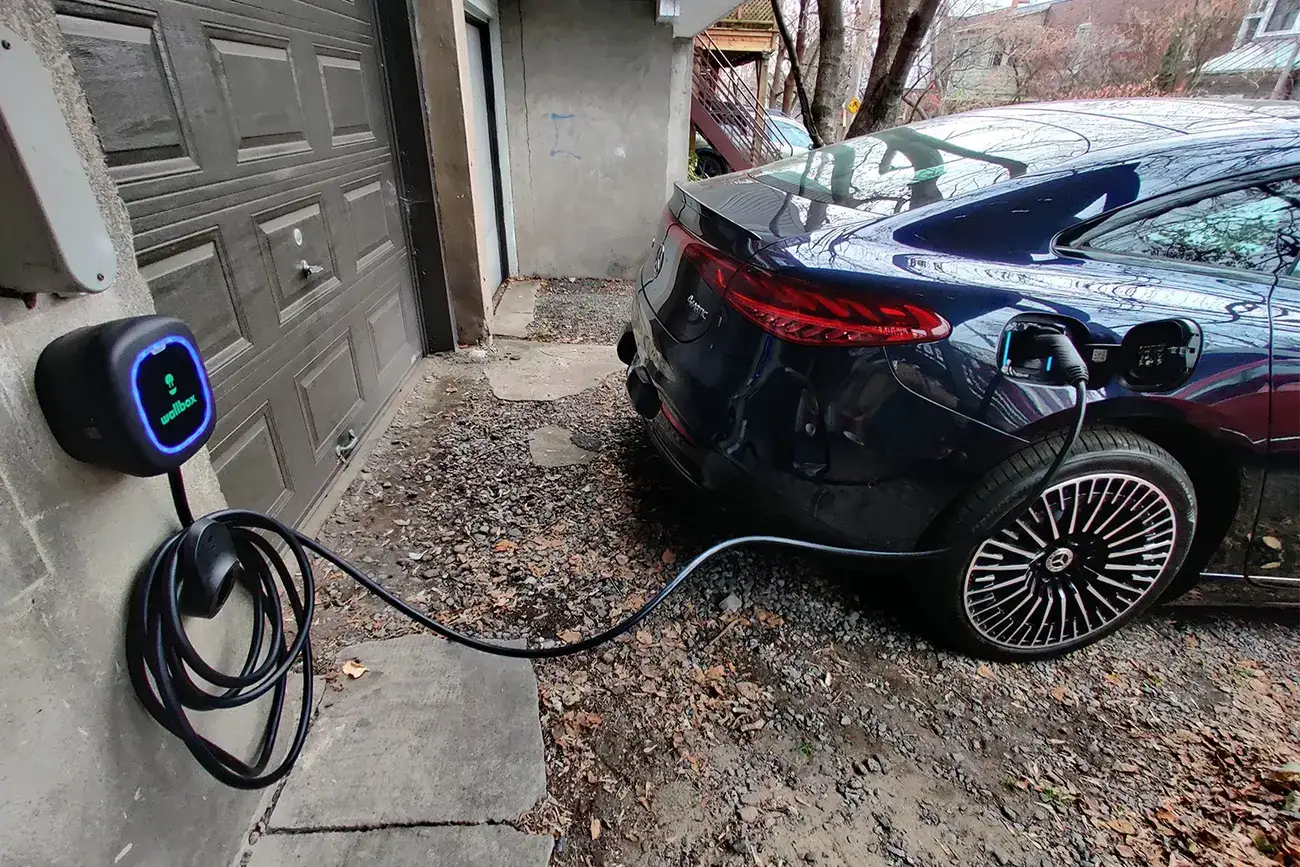
Which home EV chargers are ISO 15118-20 compatible
The most important detail is hardware: the wallbox needs a PLC modem, the component that talks to the car over the charging cable. Without one, no software update can make it compliant. Many brands also use the phrase "ISO 15118-ready", which often just means the hardware is in place and the software comes later.
Before buying, ask these five questions:
- Is the wallbox fixed (Mode 3) or portable (Mode 2)?
- Will it be connected before or after 1 January 2027?
- Does the datasheet explicitly say ISO 15118-20 — not just "ISO 15118" or ISO 15118-2?
- Is the feature already active, or only announced? Is there a firmware update date?
- Does it have a PLC modem fitted?
KEBA puts it bluntly: "hardware-ready" is not enough. The software must support ISO 15118-20 and the manufacturer should declare it.
Models that are already prepared
According to the manufacturers themselves, here's the picture as of November 2026:
| Model | ISO 15118-20 status |
|---|---|
| go-e Charger CORE / PRO (CABLE) | PLC modem already fitted; ISO 15118-2 since firmware 60.5; -20 update due early December 2026, over the air, including units already installed |
| KEBA KeContact P40 / P40 Pro (ISO 15118 version) | Firmware 1.6.0 in December 2026 with ISO 15118-2 and -20 running side by side, TLS 1.3 and certificate management |
| SMA eCharger | -2/-20 update planned for end of 2026, for new and existing units |
| Easee Charge Max | Easee says it already ships AFIR-compliant |
| Elli / VW ID. / CUPRA Charger Connect 2 | Uses ISO 15118-2; -20 status unclear |
| go-e Charger Gemini flex (portable) | Mode 2, exempt; stays on sale unchanged |
Note the dates. Several updates only land in December, weeks before the deadline — check that the firmware is actually available before booking the installation.
Models that may be phased out
German site Einfach E-Auto has published a list of wallboxes that, based on information gathered from manufacturers, can no longer be newly installed from 2027. It includes models well known in Portugal, such as the Tesla Wall Connector, Zaptec Go, myenergi Zappi, Ohme Home Pro, Huawei Smart Charger, ABB Terra AC and KEBA KeContact P30.
Treat that list with caution. It comes from a single source, covers the German market, isn't binding, and manufacturers may release new versions or updates. If one of these models is on your shortlist, ask the brand or your installer directly what their ISO 15118-20 plan is.
Frequently Asked Questions
No. Delegated Regulation (EU) 2025/656 only covers fixed wallboxes installed or renovated from 1 January 2027, so units already fitted in houses and apartment buildings can keep running indefinitely. The obligation only kicks in if the equipment is renovated, meaning a complete or major replacement. Swapping the cable or routine maintenance does not count as renovation.
If you already have an EV or are about to take delivery, yes: a wallbox installed and commissioned by 31 December 2026 stays outside the new rule, whatever the model. Note that the installation date counts, not the purchase date, so a unit bought in December but fitted in January must already support ISO 15118-20. With about seven weeks left before the deadline, book an electrician now and, if needed, request a higher contracted power from your supplier.
Not by itself. ISO 15118-20 is only the communication layer between car and charger: it makes bidirectional charging and Plug & Charge possible, but AFIR does not require either feature. V2H or V2G also needs a bidirectional on-board charger in the car, carmaker approval and compliance with grid rules. The regulation itself acknowledges that EVs on sale today only use ISO 15118-2.
Not the ISO 15118 part. Portable Mode 2 chargers, which plug into a household (Schuko) or CEE socket and have the control box in the cable, only need to meet EN IEC 61851-1:2019. The regulation explains that ISO 15118 "would currently not bring any additional value to the end user" for these devices. Models such as the go-e Gemini flex remain on sale unchanged.
Only if the wallbox already has a PLC modem, the component that talks to the car over the charging cable; without one, no update can make it compliant. go-e (Charger CORE/PRO) and KEBA (KeContact P40, firmware 1.6.0) plan ISO 15118-20 updates for December 2026, including for units already installed. Check that the datasheet explicitly says ISO 15118-20 rather than just "ISO 15118-ready". OCPP is not part of this rule and is not required for private wallboxes.
Is it worth installing a wallbox before 2027?
It depends on your timing. If you already have the car (or it's arriving soon) and you've picked a wallbox, getting it installed and running by 31 December 2026 keeps it outside the new rule for good — any model will do. The catch is practical: electricians are usually booked up at year-end, and you may need to raise your contracted power with your electricity supplier and E-REDES, the grid operator.
If you'll only install in 2027, no drama. Insist on ISO 15118-20 on the datasheet, a PLC modem and a concrete firmware date. Expect to pay a bit more: compliant models tend to be "smart" wallboxes, with an app, tariff management and, in some cases, solar integration. On the plus side, a compliant wallbox will be easier to resell, since a second-hand buyer can legally install it.
What could still change
The industry itself isn't fully ready. CharIN — the association behind the CCS plug, whose members include BMW, Mercedes-Benz, Schneider and Spanish brand Wallbox — published a position paper in April 2026 admitting that "fully compliant EVSE solutions are not yet available at scale", that no certification scheme for AC wallboxes exists yet, and that ISO 15118-20 conformance tests are still being developed. It asked the European Commission for a phased rollout and a postponed deadline.
So far, though, the deadline stands. Planning as if 1 January 2027 is final is the safer bet.
The short version: if you already have a wallbox, you don't need to do anything; if you use a portable charger, nothing changes either; and if you're installing in 2027, read the datasheet closely. The right question for the seller is no longer "is it smart?" but "does it have ISO 15118-20 active, and since which firmware?".