
Used VW ID.3 Buying Guide for Portugal: Years to Avoid, Battery and Faults
Published: 02/10/2026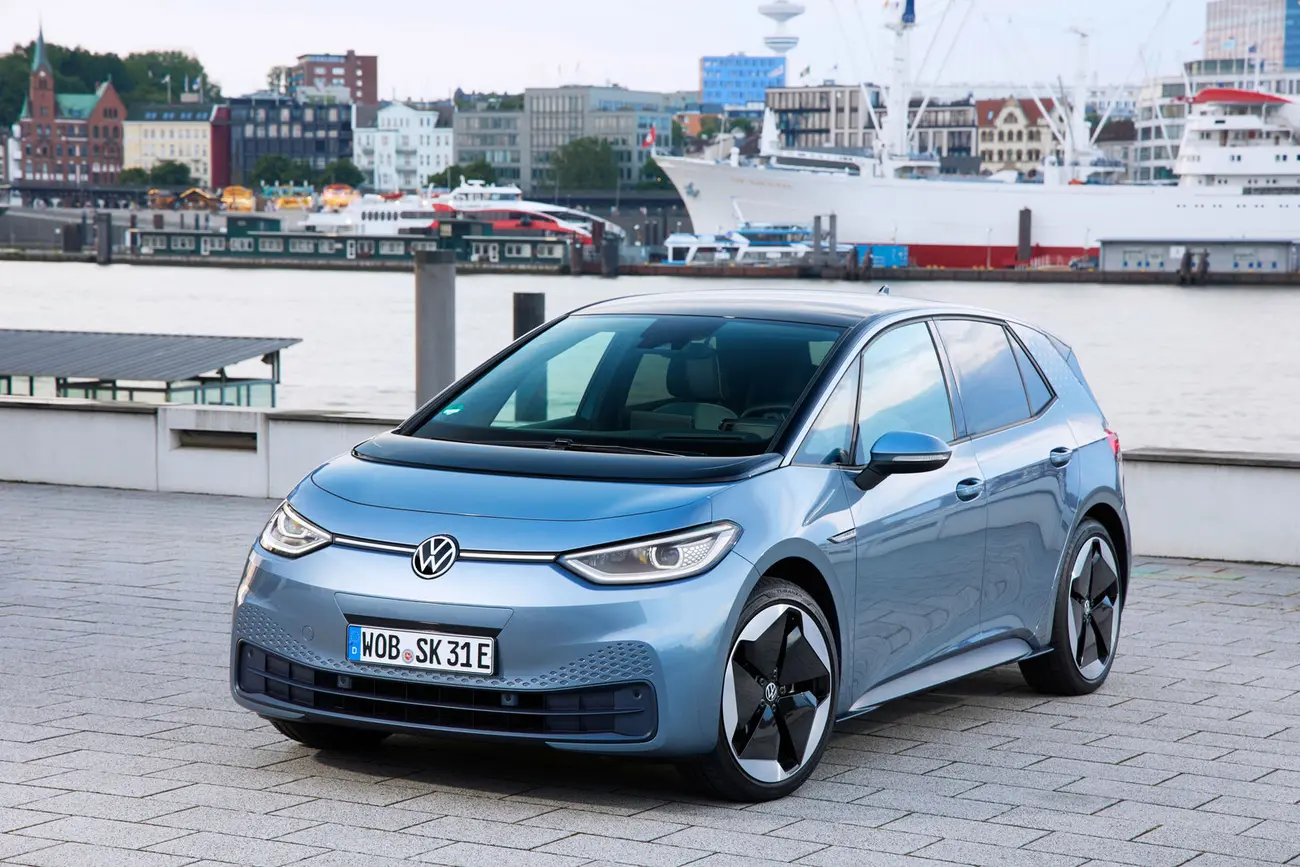
Used VW ID.3 in Portugal: build year matters more than trim
Two ID.3s can look identical, share the same battery and carry similar price tags, yet be very different cars. Volkswagen's first MEB-platform EV launched in 2020 with unfinished software, and the company spent the next three years fixing what should have worked on day one. The result is a model with two lives — and anyone shopping for a used VW ID.3 needs to know which one they're buying into.
This used VW ID.3 buying guide for Portugal covers what matters before you sign: which years to avoid, which battery to pick, which faults to check, how much capacity the battery loses over 200,000 km, and what prices to use as a benchmark. The good news first: chosen well, it's one of the most sensible used EVs you can buy.
The ID.3's two lives: before and after the 2023 facelift
2020–2021: the car that arrived before its software
The first ID.3s hit the road without Apple CarPlay, without a head-up display and without over-the-air (OTA) updates. The complaint list was long: a central screen that froze or went blank, a flaky rear camera, keys that stopped being recognised, unreliable navigation, and a 12V battery that drained while the car sat parked. VW ended up compensating some buyers with free Ionity charging and winter tyres.
Build quality fell short of VW's usual standard too. On some 2020–2021 cars the lacquer is thin on certain colours, and the front end chips easily from stones.
2022: the car VW meant to launch
Software 3.0, rolled out between 2021 and 2023, fixed most of the problems. Cars built in 2022 come with a faster system as standard, climate controls that behave properly and working OTA architecture. Versions 3.2, 3.5 and 3.7 followed through 2024 and 2025.
Even a fully updated 2020 car can feel less polished than a 2022 one. But the gap between an ID.3 on its original software and one on current software is huge — and a car still on version 2.x is a red flag.
VW ID.3 facelift differences worth knowing
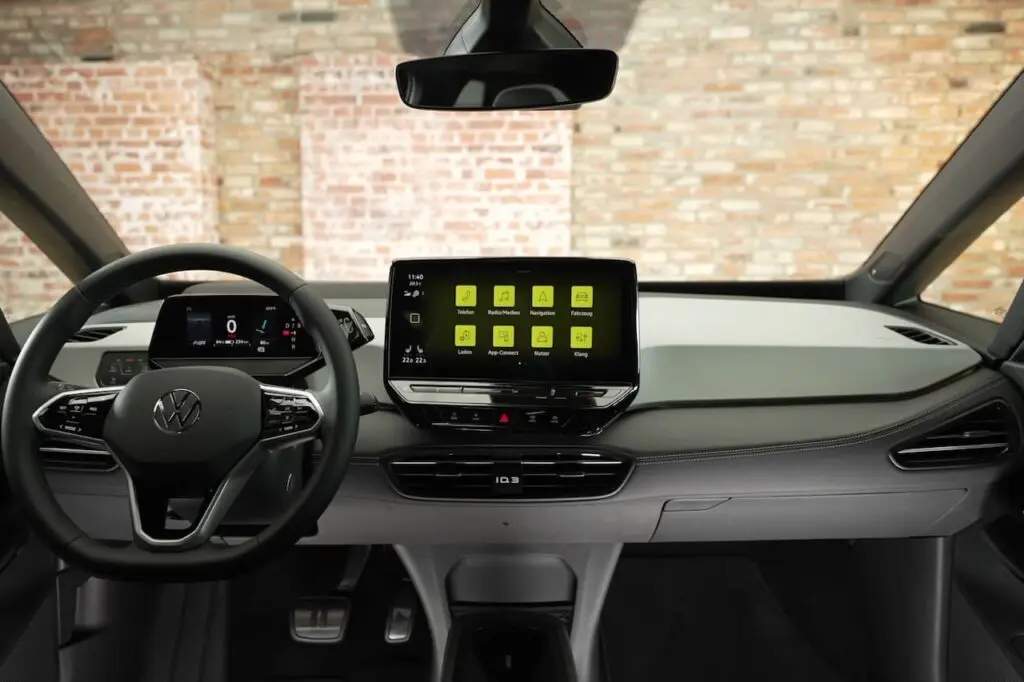
Revealed in March 2023, the facelift changed more inside than out. Outside, the black strip on the bonnet is gone and the bumpers are new. Inside, materials improve (soft-touch surfaces where there used to be hard plastic) and the heat pump, previously optional, becomes standard. The 77 kWh battery also stops forcing a four-seat layout: until 2023, the Pro S was only approved for four occupants because of its weight.
The 2024 update went further. It brought a 12.9-inch touchscreen running ID.7 software, backlit temperature sliders, a gear selector moved to a steering-column stalk, and a Pro S bumped to 170 kW with DC charging up to 175 kW and 559 km WLTP. The same year saw the GTX arrive, with a 79 kWh battery and 210 or 240 kW.
Which battery for a used ID.3: 45, 58 or 77 kWh?
There are four usable capacities on the market: 45 kWh (Pure), 58 kWh (Pro), 77 kWh (Pro S) and 79 kWh (GTX, facelift only). Since mid-2024 there's also an entry-level 52 kWh Pure. The table uses real-world ranges measured by a UK guide, converted from miles.
| Battery (usable) | Versions | Power | WLTP range | Real-world range | DC charging |
|---|---|---|---|---|---|
| 45 kWh | Pure / Pure Performance | 126 hp | about 350 km | 255–280 km | — |
| 58 kWh | Pro / Pro Performance | 145 or 204 hp | 426 km (facelift) | 350–400 km | 100–125 kW (pre); 120 kW (facelift) |
| 77 kWh | Pro S | 204 hp; 231 hp (2024) | 546 km; 559 km (2024) | 465–530 km | 125 kW (pre); 170–175 kW (facelift) |
| 79 kWh | GTX / GTX Performance | 285 or 326 hp | about 600 km | — | 175 kW |
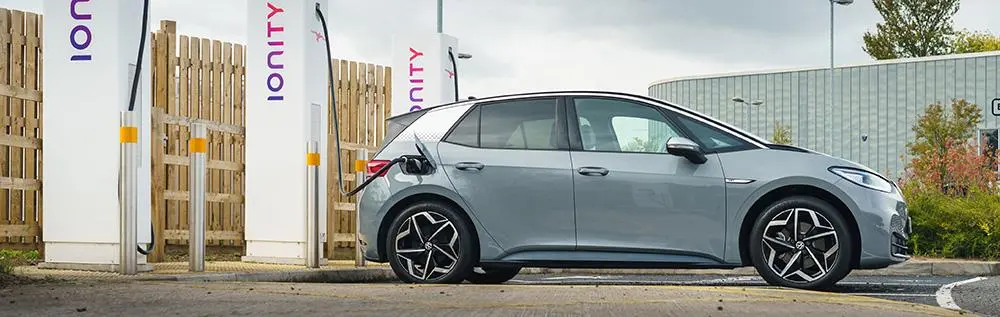
The 58 kWh pack is the sweet spot and the most common version. With 350–400 km of real range, it handles a Lisbon–Coimbra round trip without thinking about chargers, and Lisbon–Porto with one short stop. On a 7 kW home wallbox it fills up in about 7.5 hours — one night is enough. The Pro Performance (204 hp) is noticeably quicker than the 145 hp Pro, so it's worth hunting for.
The 45 kWh only makes sense if you charge at home and your daily driving is short and predictable. In winter, real range drops to roughly 210–235 km. The 77 kWh all but removes range anxiety on long trips, but the extra weight shows in the ride and handling compared with the 58 kWh.
Heat pump: the option that pays off in winter
Before the facelift the heat pump was optional — and it matters. It's around three times more efficient than resistive heating in moderate temperatures and cuts winter range loss considerably. In inland northern Portugal on a January morning, you'll feel the difference. On a pre-2023 car, confirm the spec via the factory build sheet, which a VW dealer can look up.
VW ID.3 common problems and how to check for them
Germany's TÜV inspection data tells a better story than the car's reputation. At 4–5 years old, 91.2% of ID.3s pass with no defects at all, against an average of 84.7% for all models. Only 5.5% have major defects (average: 10.0%). One caveat: German ID.3s cover 22–32% fewer kilometres than average.
Software version and the 12V battery
First check: the software version. Ask the seller, or have a VW dealer confirm that all updates have been applied. Cars built before week 16 of 2022 had a parasitic drain fault on the 12V battery. In Germany, pre-facelift cars should show "Serviceaktion 2.4" with a 12V battery replacement on record — ask for the service history and make sure this work was done.
Rear brakes, paint and the charging flap
The weak spot that shows up at inspection is the service brake, with a defect rate 2.5 times the average. The reason is a quirk of EVs: the rear drum brakes barely get used because regenerative braking does most of the work, so they can seize. Worth checking before the car's next IPO (Portugal's periodic roadworthiness inspection). Also look at the bonnet's leading edge and front bumper (paint chips on 2020–2021 cars), and test the charging flap actuator, which is sensitive to moisture.
There's no spare wheel and no room for one — just a repair kit. The boot holds 385 litres, less than a Golf, because the battery raises the floor.
Recalls: check by VIN
In March 2026, VW launched recall 16271R/93MI over possibly faulty high-voltage battery modules in cars built between 24 June 2023 and 23 August 2024 — 22,182 cars in Germany alone. The fix includes a software update and a module check. There was an earlier module recall in 2021–2022, and German authorities also logged recalls for a steering bushing (2021), passenger airbag fixing (2023) and a brake failure risk (2024). Any VW dealer can confirm with the chassis number (VIN) whether everything has been dealt with.
VW ID.3 battery degradation: the ADAC numbers
The battery is the strongest argument for a used ID.3. In the ADAC's long-term test, battery state of health (SOH) went like this:
| Mileage | SOH |
|---|---|
| 102,505 km | 93% |
| 169,651 km | 91% |
| 197,696 km | 90% |
| 220,158 km | 89% |
A UK example showed 91% after 87,000 miles (about 140,000 km), and most ID.3s keep more than 90% of their capacity at 80,000 km. The warranty covers 8 years or 160,000 km, with a 70% capacity minimum — on a 2021 car, there are still a few years left. Always ask for an SOH report, especially on high-mileage examples.
How much does a used VW ID.3 cost?
We don't yet have a sample of Portuguese asking prices solid enough for a year-by-year table. The most reliable benchmark is the German market, where supply is plentiful. These are July 2026 figures:
| Version | Battery | Power | Used price (Germany) |
|---|---|---|---|
| Pure | 45 kWh | 126 hp | €17,000–22,000 |
| Pro | 58 kWh | 145 hp | €18,000–23,000 |
| Pro Performance | 58 kWh | 204 hp | €20,000–27,000 |
| Pro S | 77 kWh | 204 hp | €22,000–30,000 |
| GTX | 79 kWh | 285 hp | €34,000–42,000 |
German press picks a well-documented 2022 to early-2023 Pro Performance 58 kWh as the best buy, at €20,000–26,000. For context, new prices in Germany in 2024 were €39,995 (Pro) and €47,595 (Pro S). In the UK, listings run from £9,500 (a 2020 car with 87,000 miles) to £39,000 for a nearly new Pro S.
Buying in Portugal, two things work in your favour. Electric cars are exempt from ISV, the one-off vehicle tax paid at registration, which makes importing from Germany a real option — you're left with transport, registration paperwork and inspection costs. They also pay no IUC, the annual road tax, so yearly ownership costs stay low. Before deciding, compare local asking prices with the table above.
Pre-purchase checklist
- Software version: current, and never 2.x.
- SOH report for the high-voltage battery.
- Recalls confirmed by VIN, including 16271R/93MI on cars built June 2023 to August 2024.
- 12V battery: proof of replacement on pre-facelift cars.
- Heat pump on pre-2023 cars.
- Rear brakes and inspection history.
- Paint on the bonnet edge and front bumper (2020–2021).
- Test drive: 5–10 minutes with the infotainment, rear camera, CarPlay/Android Auto, climate control and estimated range at 100%.
- Full service history at the VW network.
Frequently Asked Questions
There isn't yet enough Portuguese price data for a reliable table, so the German market is the best benchmark: in July 2026, a 58 kWh Pro was advertised at €18,000–23,000 and a 77 kWh Pro S at €22,000–30,000. Because EVs are exempt from ISV (Portugal's vehicle registration tax), importing from Germany is a real option, as long as you add transport, registration and inspection costs. Use these figures to judge whether a Portuguese asking price is fair.
Ideally, ask a VW dealer for an SOH report. You can also read it yourself with an OBD dongle and an app such as Car Scanner: divide the maximum available energy by the usable capacity (58 kWh on a Pro), and a result between 90% and 95% is normal. For reference, ADAC's long-term ID.3 was at 93% after 102,505 km and 89% after 220,158 km.
Yes. The high-voltage battery warranty covers 8 years or 160,000 km, with at least 70% capacity guaranteed, and it runs from first registration, not from when you buy the car. A 2021 ID.3 with under 160,000 km is covered until 2029. Before you buy, have a VW dealer check the VIN to confirm the warranty still applies and all recalls have been done.
Below freezing and on short trips, real-world range can drop by 30–40%. On the 58 kWh battery, that leaves roughly 180–220 km, compared with 350–400 km in mild weather. A heat pump saves around 10–15% of range at 0–10 °C, which is typical of a Portuguese winter. It was optional on pre-2023 cars, so check whether the car you're looking at has one.
The 58 kWh Pro is the most balanced pick: 350–400 km of real-world range and, in Germany, €4,000–7,000 cheaper than a Pro S. The 77 kWh Pro S manages 465–530 km and, after the facelift, charges at 170–175 kW DC. Watch out: until 2023, the Pro S was only approved for four seats.
Is a used VW ID.3 worth it?
Yes — as long as you get the year right. A 2022-or-later ID.3 with the 58 kWh battery, heat pump, current software and full history is a capable electric family hatchback, with a battery that ages better than almost anything in its class. Cars from 2020–2021 can be bargains, but only if the software and 12V battery are sorted. If the budget stretches, a post-facelift car removes most of the doubts — and as 2023 short-term leases come to an end, more of them will reach the market.