
Volvo XC60 Plug-in Hybrid With 200 km Range: XC90, Pricing and Tax in Portugal
Published: 19/09/2026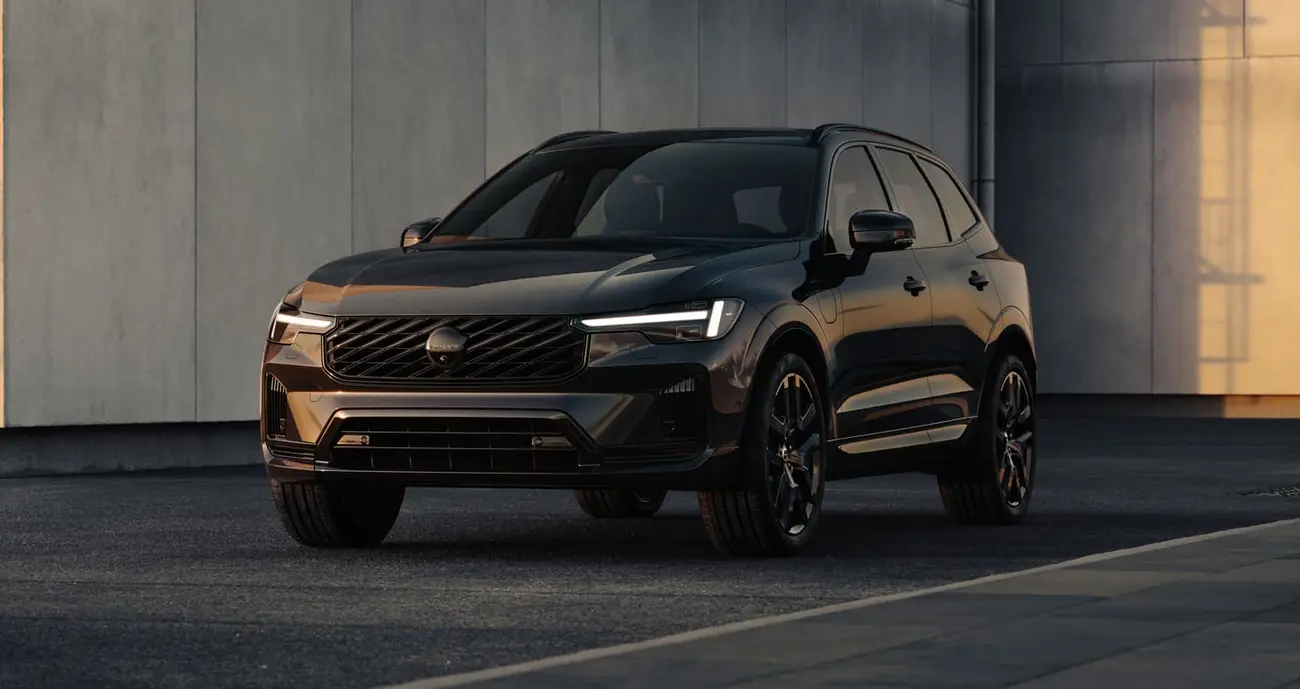
200 km without burning petrol: the new Volvo XC60 plug-in hybrid
Up to 200 km on electricity alone, measured on the WLTP cycle. That's Volvo's claim for the XC60 "Long Range" plug-in hybrid, revealed on 15 September in London and Gothenburg. The XC90 gets the same hardware and up to 164 km. These are the brand's first "Long-Range Plug-in Hybrids", and they put the Volvo XC60 plug-in hybrid's 200 km range ahead of anything its German rivals sell today. For buyers in Portugal, that's a big deal.
If you live here and are weighing up a premium electrified SUV, the maths changes. With 200 km on paper, most weeks could pass without the petrol engine starting, and the question shifts from "is a plug-in worth it?" to "do I still need a full EV?". Some key details are still missing: Portuguese pricing, CO2 figures, and what those mean for company car taxation.
A 41.2 kWh battery and a 130 kW electric motor
The extra range comes from a much bigger battery. It grows from 18.8 kWh to 41.2 kWh gross (37.9 kWh usable) and sits under the floor. The electric motor also gets stronger, from 115 kW (156 PS) to 130 kW (177 PS). The combustion side doesn't change: the same 2.0-litre turbocharged four-cylinder petrol engine, with all-wheel drive.
Volvo says electric range is more than 2.5 times that of its current plug-ins. The trade-off is weight. In the US, Volvo quotes roughly 200 lb (about 90 kg) extra for the XC60. Boot space stays the same despite the larger pack.
XC60 Long Range: 357 or 461 PS?
In Germany, the XC60 Long Range comes in two outputs: 262 kW (357 PS) and 339 kW (461 PS). The US version is called the T8 AWD Long Range and makes 455 hp, which is the same 461 PS in different units. It does 0-60 mph (0-97 km/h) in 4.5 seconds and has a top speed of 180 km/h. CarBuzz lists 420 hp, but every other source disagrees, so we're going with 461 PS.
One thing to note: 200 km is an "up to" figure. None of the sources we checked gives the exact range for each output. The more powerful version often certifies a little less. Before choosing between 357 and 461 PS, wait for the WLTP data sheet for each version.
Volvo XC90 plug-in hybrid: 164 km of electric range in a seven-seater
The XC90 uses the same 41.2 kWh battery and electric motor. It's bigger and heavier, and that shows in its electric range of up to 164 km WLTP. Some news agencies round it to 160 km. In Germany it's offered only with 339 kW (461 PS). US figures give it 0-60 mph in 4.9 seconds.
On the outside there's almost nothing to spot. The only visual change is a "Long Range" badge on the tailgate. The XC90 already got the 11.2" screen and Google Gemini in its previous update. For a family that does the school and office run on electricity and uses petrol for summer holidays, that's a strong case for a seven-seat SUV.
XC60 and XC90 Long Range: the numbers side by side
| Volvo XC60 Long Range | Volvo XC90 Long Range | |
|---|---|---|
| Battery (gross / usable) | 41.2 kWh / 37.9 kWh | 41.2 kWh / 37.9 kWh |
| Electric motor | 130 kW (177 PS) | 130 kW (177 PS) |
| Combustion engine | 2.0 turbo petrol, AWD | 2.0 turbo petrol, AWD |
| System output | 262 kW (357 PS) or 339 kW (461 PS) | 339 kW (461 PS) |
| WLTP electric range | up to 200 km | up to 164 km |
| US electric range | 78 miles (≈126 km) | 73 miles (≈117 km) |
| US total range | 590 miles (≈950 km) | 560 miles (≈900 km) |
| 0-60 mph (461 PS version) | 4.5 s | 4.9 s |
| German price | from €69,990 / €78,990 | from €90,990 |
Real-world range and charging: what to expect day to day
Treat 200 km WLTP as the best case. US figures are more conservative, at 78 miles (≈126 km) for the XC60 and 73 miles (≈117 km) for the XC90. Real-world range will probably land somewhere in between, depending on how you drive. Town and back-road driving will get you closer to WLTP. Sitting at 120 km/h on the A1 motorway will get you closer to the US number.
Even in the worst case, 120 km covers a return commute from Setúbal to Lisbon, or Braga to Porto, without touching the petrol tank. Nobody has tested the new car in the real world yet. Wait for the first proper road tests before making real-world range the main reason to buy.
How long does the Volvo XC60 plug-in take to charge?
Volvo quotes about 5.7 hours on a US Level 2 home charger (AC). In practice, you plug into a wallbox in the evening and it's full by morning. The sources we checked don't give the European AC charging power.
DC fast charging? Not confirmed for now. The current XC60 plug-in doesn't have it, and no source mentions it for the new versions. That's a real gap against the Mercedes GLC 300 e, which does accept DC. With a battery this large, a quick top-up at a rapid charger on MOBI.E, Portugal's public charging network, would make sense on long trips.
The new Volvo XC60 facelift: Matrix LED, Google Gemini and more safety tech
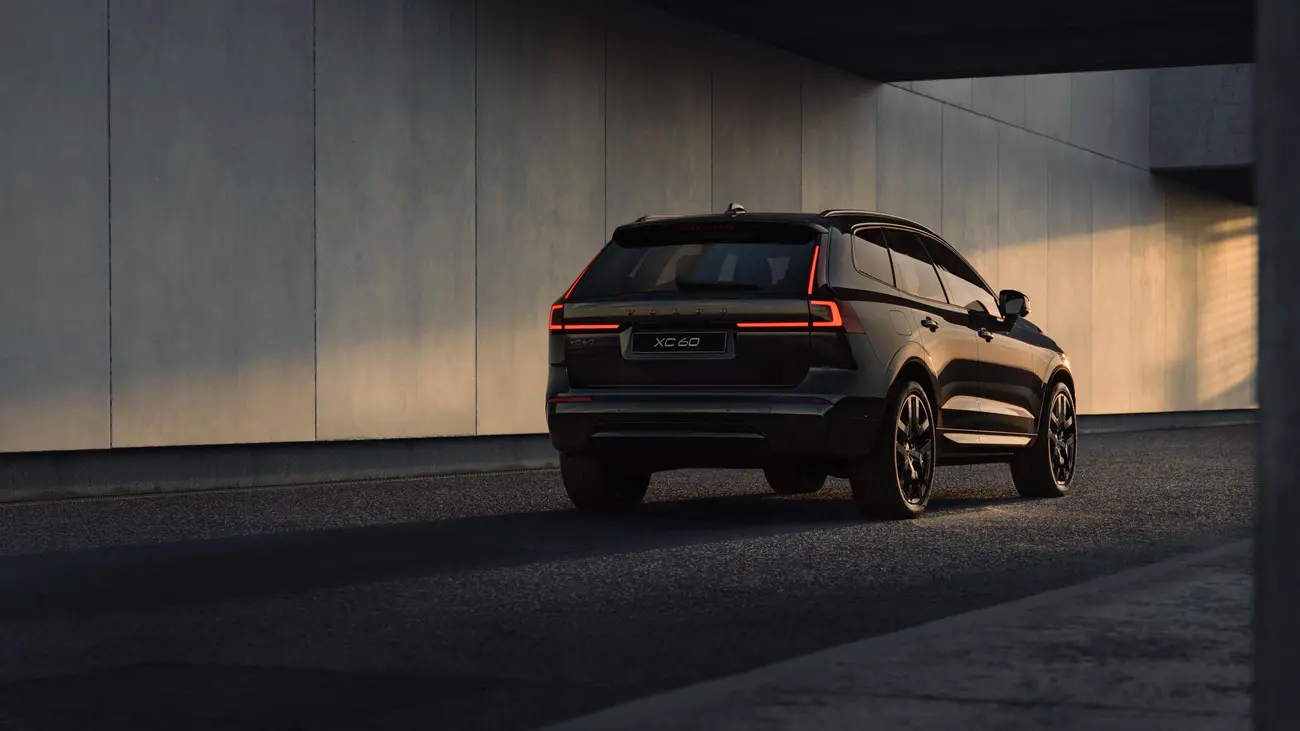
CEO Håkan Samuelsson calls the XC60 Volvo's best-selling model of all time, so the brand used this launch to refresh it. Everything ahead of the front doors is new: a slimmer grille, bonnet, wings and bumpers. The "Thor's Hammer" headlights now use 15-segment Matrix LED units that dim parts of the beam so oncoming drivers aren't dazzled. At the back there's a new tailgate, bumper and LED tail lights. There are also new 20- and 21-inch wheels and a new Heather Bronze paint colour.
Inside, the dashboard and door trims are new, and there's an option for ventilated Nappa leather in a warm brown called Cardamom. The 11.2" portrait touchscreen and 12.3" driver display carry over, now with Google Gemini for natural-language voice commands. The physical volume knob is still there.
Safety is where the changes are most concrete:
- Door-opening alert for approaching cyclists and vehicles
- Junction braking assist
- Automatic emergency steering for evasive manoeuvres
- Pilot Assist with assisted lane changes
- 360° camera with 3D view
- Extra front radar and a new processor, with over-the-air (OTA) updates
Volvo XC60 vs BMW X3 30e vs Mercedes GLC 300 e: the longest-range plug-in hybrid
This is where Volvo pulls ahead. Rival figures come from a Spanish comparison published in July 2026, with Spanish prices, so use them only to see where each car sits.
| Volvo XC60 Long Range | Mercedes GLC 300 e | BMW X3 30e | |
|---|---|---|---|
| Battery | 41.2 kWh | ≈31 kWh | 22.5 kWh |
| WLTP electric range | up to 200 km | ≈120 km | ≈90 km |
| System output | 357 PS or 461 PS | ≈310 PS | ≈300 PS |
| DC charging | not confirmed | yes | not mentioned |
| Reference price | from €69,990 (Germany) | ≈€79,100 (Spain) | ≈€67,300 (Spain) |
On range, the XC60 leads the GLC by about 80 km and more than doubles the X3. The 461 PS version is also far more powerful than either. The Mercedes has one clear advantage, DC charging. The BMW remains the cheapest way in.
If you drive 60 to 80 km a day and charge every night, all three will run on electricity almost all the time. The Volvo's edge shows up in weeks when you can't charge daily, or on 150 to 200 km weekend trips.
How much will the Volvo XC60 Long Range cost in Portugal?
Price? There's none for Portugal yet. The confirmed reference is Germany: the XC60 Long Range starts at €69,990 (357 PS) or €78,990 (461 PS), and the XC90 Long Range at €90,990.
You can't simply convert those figures. German VAT is 19% and Portuguese VAT (IVA) is 23%. That difference alone would push €69,990 to around €72,300, €78,990 to around €81,600 and €90,990 to around €94,000. That's a VAT calculation, not a price. It leaves out ISV (Portugal's vehicle registration tax), local standard equipment and Volvo Car Portugal's pricing policy.
For context, the current XC60 plug-in (79 km of range) starts at around €70,000 in Portugal, and business deals start at about €46,200 + IVA. The current XC90 T8 costs roughly €96,800 to €104,400. Those are prices for the outgoing models, not the Long Range versions. If you want to spend less, there are plenty of current-generation XC60 plug-ins on the used market.
When will the Volvo XC60 Long Range arrive in Portugal?
Production starts in autumn 2026, and the launch covers Europe and the US. US dealers get cars in early 2027, and South Africa in the first half of 2027. There's no confirmed date for Portugal. Our estimate is that the first cars will arrive during 2027, but Volvo hasn't confirmed that.
Plug-in hybrid company car tax in Portugal in 2026: where these Volvos fit
For companies and self-employed buyers, tributação autónoma (Portugal's autonomous taxation on company car costs) matters as much as the list price. Plug-in hybrids get lower rates than combustion cars, but only if they meet range and emissions rules:
- Cars homologated under Euro 6: at least 50 km of electric range and CO2 emissions under 50 g/km.
- Cars homologated under Euro 6e-bis: the 2026 State Budget lets them keep the reduced rate with emissions up to 80 g/km. Euro 6e-bis measures plug-in hybrid CO2 more strictly, which is why the limit went up.
With 200 km (or 164 km for the XC90), the range requirement is easily met. CO2 is the open question. Volvo hasn't published WLTP emissions or fuel consumption figures for these versions. Until it does, nobody can say which tax band each version falls into. A battery this large is a good sign, but check the exact figure on the data sheet, and with your accountant, before ordering.
There's more to consider. ISV is also lower for plug-ins that meet range and emissions rules. VAT deduction on company cars, however, has purchase-cost limits that a car at this price is unlikely to meet.
Frequently Asked Questions
Volvo Car Portugal hasn't announced pricing yet. In Germany, the XC60 Long Range starts at €69,990 (357 PS) or €78,990 (461 PS), and the XC90 Long Range at €90,990. The VAT gap alone (19% in Germany vs 23% in Portugal) would put those at around €72,300, €81,600 and €94,000, but that isn't a price: it excludes ISV and Portuguese standard equipment. For reference, today's XC60 plug-in with 79 km of range starts at about €70,000 in Portugal.
Production starts in autumn 2026, with the launch covering Europe and the US. US dealers get the first cars in early 2027 and South Africa in the first half of 2027. There is no confirmed date for Portugal. Our estimate is that the first cars will arrive during 2027.
The 200 km figure (164 km for the XC90) is an "up to" WLTP number, so treat it as the best case. The more conservative US rating gives 78 miles (about 126 km) for the XC60 and 73 miles (about 117 km) for the XC90. Real-world range should fall between the two: closer to WLTP in town and on back roads, closer to the US figure at 120 km/h on the motorway. No real-world tests have been published yet.
Not confirmed for now. The current XC60 plug-in doesn't accept DC charging, and none of the sources we checked mention it for the new Long Range versions. On AC, Volvo quotes about 5.7 hours to charge the 41.2 kWh battery (37.9 kWh usable) on a US Level 2 home charger. Its direct rival, the Mercedes GLC 300 e, does accept DC charging.
It can't be confirmed yet. The electric range easily meets the 50 km minimum, but Volvo hasn't published WLTP CO2 figures for these versions. Cars homologated under Euro 6 need emissions below 50 g/km, while the 2026 State Budget allows up to 80 g/km for Euro 6e-bis cars. Check the CO2 figure on the data sheet, and with your accountant, before ordering.
Is the Volvo XC60 Long Range worth waiting for?
If you want a premium plug-in SUV and can charge at home or work, yes, at least until Portuguese pricing and CO2 figures are out. With 200 km WLTP, the XC60 has the longest electric range of any plug-in hybrid in its segment, and the 164 km XC90 isn't far behind. If you need a car now, the current XC60 plug-in is still a good buy, especially used. Two missing numbers will decide this: Volvo Car Portugal's price list and the CO2 figure for each version.