
Volvo EX30 Cross Country in Portugal: Price, Range and Verdict
Published: 07/07/2026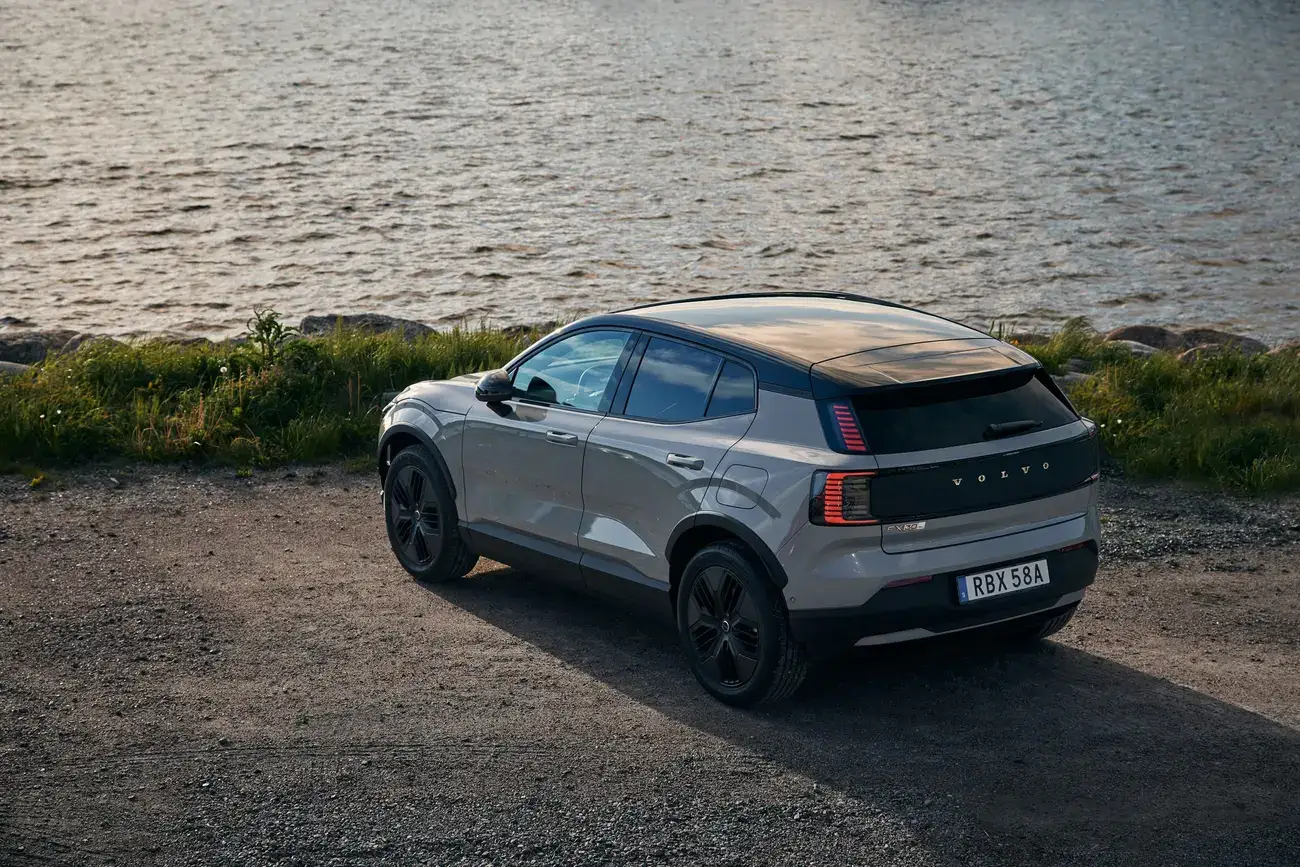
Volvo's fastest electric SUV puts on hiking boots
The Volvo EX30 Cross Country is the same EX30 you already know, but with all-wheel drive, extra ground clearance and a suit of black plastic armour around the wheel arches. It's the first Volvo EV to get the "Cross Country" treatment, a badge the brand keeps for its more adventurous versions. The twist is that underneath the rugged look sits the most powerful EX30 ever made: 315 kW (422 hp), two motors and 0 to 100 km/h in 3.7 seconds.
For anyone buying in Portugal the question is simple. Is it worth paying the Cross Country premium, or does the standard EX30 do the job just as well? We pulled together the numbers on price, range and off-road ability to answer it.
Volvo EX30 Cross Country price in Portugal
In Portugal the Volvo EX30 Cross Country starts at around €56,528, with launch campaigns bringing it down to roughly €51,600. That's firmly premium money for a compact SUV, and it sits above the single-motor EX30.
It helps to look at European prices to see where it lands. Germany asks €57,290, the Netherlands €52,995 and the UK £46,995. In Australia, tellingly, Volvo has already cut the price by A$7,000 (from A$69,990 to A$62,990), a sign that demand for premium EVs has cooled and that there's room to haggle.
One point that matters for buyers here: as a fully electric car, the EX30 Cross Country is exempt from ISV (Portugal's vehicle registration tax) and qualifies for reduced IUC (the annual road tax), which softens the entry price compared with a petrol or diesel equivalent.
Range and charging: 427 km WLTP, with an asterisk
The EX30 Cross Country's official range is 427 km WLTP (some sources quote up to 436-437 km depending on wheel size). But the figure that matters is the real one: EV Database estimates around 335 km in mixed use — 285 km in winter cold and 380 km in mild weather. Fine for daily driving, but it means a stop on a Lisbon-Porto round trip.
The reason is the nature of the version itself. The two motors of the all-wheel-drive system use more energy than a single motor, so the Cross Country consumes about 18.7 kWh/100 km on the WLTP cycle — and closer to 20.5 kWh/100 km in the real world, according to road tests.
On rapid charging, the EX30 Cross Country accepts up to 150-153 kW DC and does 10-80% in about 28 minutes. The architecture is 400V. At home or on AC chargers it takes up to 22 kW on three-phase, filling the battery in around 3h30. It also supports V2L (3.6 kW), handy for powering gear on a weekend getaway.
Volvo EX30 Cross Country full specs
| Specification | Value |
|---|---|
| Drivetrain | Dual-motor, all-wheel drive (AWD) |
| Power | 315 kW (422 hp / 428 PS) |
| Torque | 543 Nm |
| 0-100 km/h | 3.7 s |
| Top speed | 180 km/h |
| Battery (gross / usable) | 69 kWh / 65 kWh NMC |
| Range WLTP | 427 km (up to 437 km) |
| Real-world range (est.) | around 335 km |
| Consumption | 18.7 kWh/100 km WLTP |
| DC charging | up to 153 kW (10-80% in 28 min) |
| AC charging | up to 22 kW (three-phase) |
| Length / Width / Height | 4,233 / 1,850 / 1,573 mm |
| Wheelbase | 2,650 mm |
| Weight | 1,960 kg |
| Boot / frunk | 318 L (max 904 L) / 7 L |
| Towing (braked) | 1,600 kg |
| Euro NCAP | 5 stars (2024) |
| Platform | Geely SEA2 |
Cross Country vs standard EX30: which to buy
Here's the bit many buyers don't expect. The EX30 Cross Country is not the longest-range EX30 — it's the opposite. The standard EX30 Single Motor Extended Range, with a single rear motor and the same 69 kWh battery, reaches 480 km WLTP. In other words, the cheaper EX30 travels further than the range-topping Cross Country, because it doesn't carry the weight and consumption of two motors.
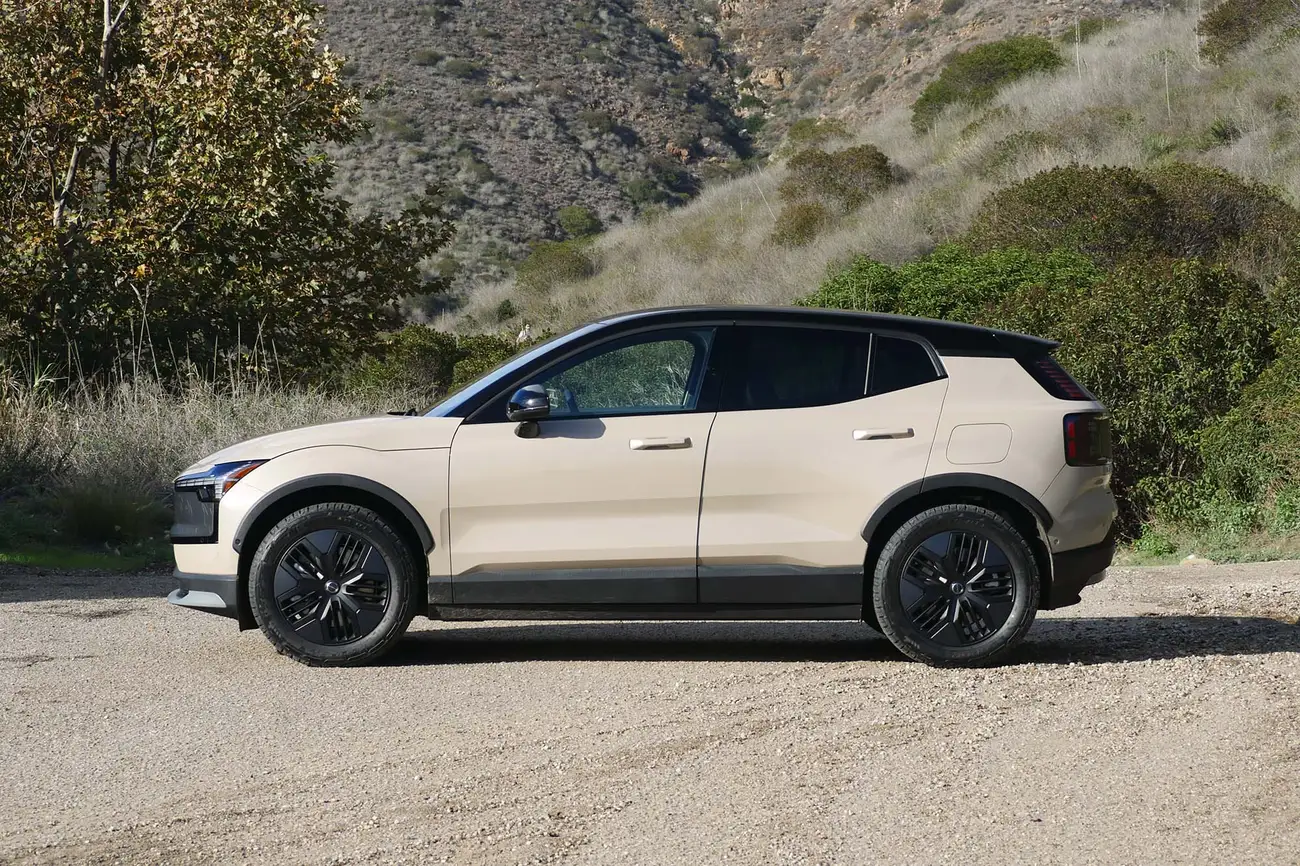
The Cross Country is also bigger on the outside: 1,573 mm tall versus 1,550 mm for the standard car, and 1,850 mm wide versus 1,836 mm. It gains the plastic cladding, front and rear skid plates, darkened alloys and the option of 18-inch all-terrain tyres.
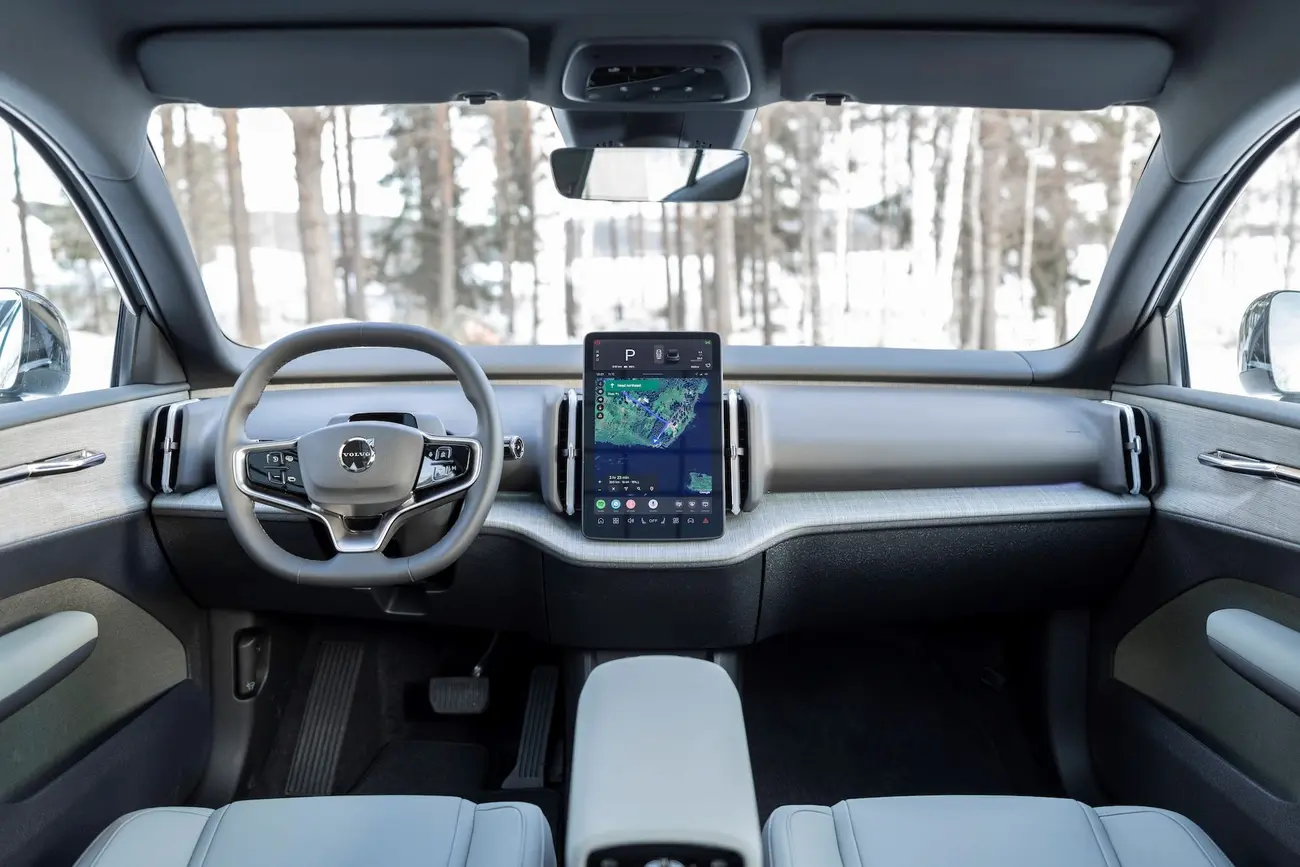
What both share is the worst part: the 12.3-inch Google-based touchscreen that controls almost everything — climate, glovebox, even the speedometer. There's no dedicated digital display behind the wheel. Anyone who values physical buttons will be equally frustrated in either version.
To sum up the choice:
- Pick the Cross Country if you want all-wheel drive, the absurd 3.7-second acceleration and the rugged look for weekend escapes.
- Pick the standard EX30 if your priority is maximum range, a lower price and mostly urban driving.
Genuinely off-road? Not really
Don't be fooled by the stance. The EX30 Cross Country is what the British press calls a softroader: it has all-wheel drive, cladding and hill-descent control, but no drive modes for mud, sand or snow like the combustion XC40 and XC60. It's adventurous styling, not green-laning capability.
Ground clearance is up on the standard EX30, though sources disagree on how much: British outlets cite +90 mm, while an Australian review reports just +19 mm. Actual ground clearance sits around 190 mm, against 177 mm for the standard EX30. Whatever the exact figure, the message from the tests is consistent: it's good for a dirt track or a light snow ramp, not for serious trails.
The suspension was softened to cope with rough surfaces, which translates into a comfortable, quiet motorway ride with little body roll through long bends. On twisty roads it stays nimble, helped by the compact 4.2-metre footprint.
Frequently Asked Questions
The Volvo EX30 Cross Country is already on sale, with the first deliveries expected in spring 2026. Because it only comes in the top Twin Motor Performance (dual-motor AWD) trim, waiting lists are shorter than for the single-motor EX30, but it's worth confirming timing with your dealer, as it varies by configuration and colour.
The official range is 427 km WLTP, but in real use EV Database estimates around 335 km. In winter cold that drops to roughly 285 km, rising to about 380 km in mild weather. On a Lisbon-Porto round trip you should plan at least one charging stop, especially in the colder months.
No. Despite its all-wheel drive, plastic cladding and Hill-Descent Control, the EX30 Cross Country has no dedicated modes for mud, sand or snow like the combustion XC40 and XC60. It's an adventurous-looking softroader, fine for a dirt track or light snow but not for serious trails. Ground clearance is around 190 mm, versus 177 mm for the standard EX30.
It depends on your priority. The Cross Country offers all-wheel drive and 422 hp with 0-100 km/h in 3.7 s, but it costs more (from about €56,528, or €51,600 on campaign) and has less range. The EX30 Single Motor Extended Range reaches 480 km WLTP and is cheaper. If you want power and a rugged look, the Cross Country makes sense; if you want more range per charge and a smaller bill, the standard car is the more rational pick.
As a fully electric car, the EX30 Cross Country is exempt from ISV (vehicle registration tax) and qualifies for reduced IUC (annual road tax), which softens the entry price versus an equivalent petrol or diesel SUV. Businesses can also reclaim VAT and benefit from more favourable autonomous taxation. Check the rules in force in your registration year, as state incentives for private buyers have changed over time.
Is the Volvo EX30 Cross Country worth it?
The EX30 Cross Country is, in the words of one reviewer, a heart-over-head car. It offers sports-car performance, quality materials with a strong sustainability story (recycled denim on the seats, recycled plastic on the dashboard) and a five-star Euro NCAP rating. But it charges a hefty premium for an off-road package that's more decorative than functional, and its range falls behind the cheaper EX30's.
For a buyer in Portugal who wants a compact EV with lots of power and a distinctive look, it makes sense. For anyone after the more rational EX30 — more kilometres per charge and fewer euros on the invoice — the standard Single Motor Extended Range remains the sensible pick. With price cuts already happening in other markets, it's worth waiting for the campaigns before signing.