
Volvo ES90 in Portugal: 692 km WLTP Range and a 22-Minute Charge
Published: 18/05/2026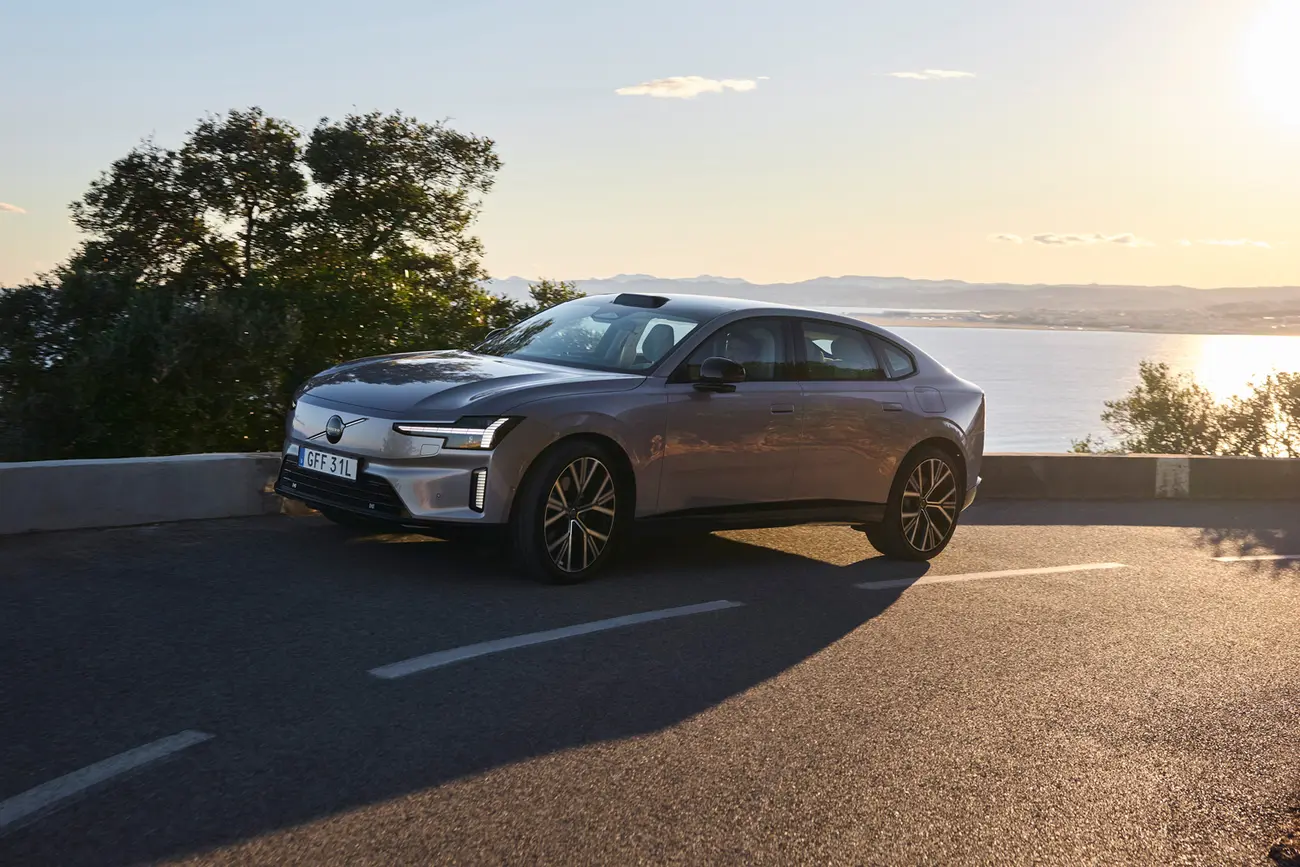
692 km WLTP and a 22-minute charge: the Volvo ES90 lands in Portugal
Volvo picked its new electric sedan to debut an architecture that changes the math: 800 volts, batteries up to 106 kWh and a peak DC charging rate of 350 kW. The practical numbers? Up to 692 km WLTP of range and a 20-to-22-minute stop to go from 10 to 80 percent. Portugal sits in the first wave of European launch markets.
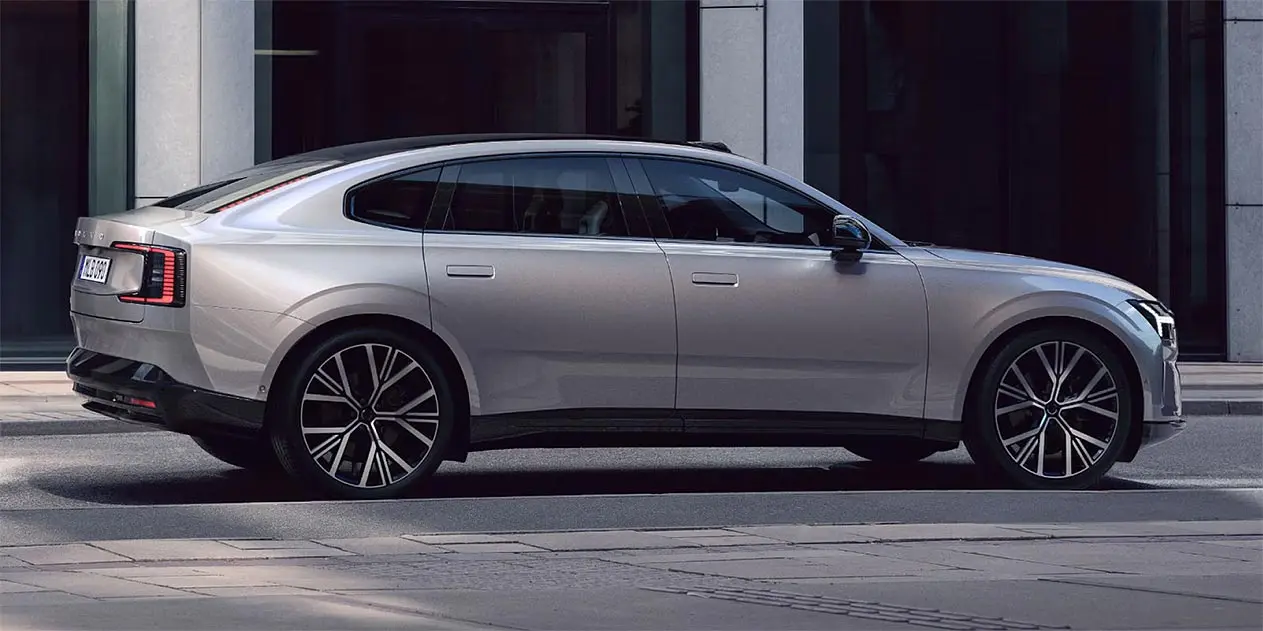
The ES90 shares the SPA2 platform with the EX90 and the Polestar 3, but swaps the SUV silhouette for the fastback/liftback shape Volvo has been refining since the S60. Five metres long, 1,942 mm wide, and a drag coefficient of 0.25 — the lowest in the brand's history. For a car this size, that is a striking number, and it explains a good chunk of the headline range.
Volvo ES90 Portugal price and what 692 km really means
The Twin Motor with the larger 106 kWh pack (102 kWh usable) is the one that hits 692 km on the WLTP cycle. The rear-drive Single Motor lands at 653-661 km, still ahead of most premium rivals in the segment. In real-world driving — motorway at 120 km/h, climate control on, normal cruising — expect 480 to 540 km depending on the trim. UK reviewers who have already driven it report around 547 km of usable range on the Twin Motor.
For a Portuguese driver, the headline translates into something concrete: Lisbon to Porto non-stop, and Lisbon to the Algarve in summer without charging anxiety. Porto to Bragança on a cold day also stops being a planning exercise.
Volvo ES90 charging time: what 800V actually changes
The 800V architecture is the real technical news. Until now, every Volvo EV ran a 400V system. The ES90 brings the brand in line with Porsche Taycan, Hyundai Ioniq 6, Kia EV6 and its Polestar 3 sibling.
In practice, three things follow:
- 350 kW DC peak on the Twin Motor (300 kW on the Single Motor), when plugged into a compatible charger.
- 10 to 80 percent in about 20 to 22 minutes.
- 300 km of WLTP range added in 10 minutes on an ultra-fast charger.
In Portugal, the MOBI.E network and the 350 kW chargers from Ionity, Iberdrola, EDP, Galp Electric and Repsol can deliver that peak. On a Lisbon-Porto run, a single coffee stop covers the energy you burned getting there. This is the type of EV that finally closes the practical gap to a diesel on long trips.
Volvo ES90 specs: three versions for three drivers
| Version | Usable battery | Power | 0-100 km/h | WLTP range |
|---|---|---|---|---|
| Single Motor (RWD) | 88 kWh | 329 hp | 6.7 s | 653-661 km |
| Twin Motor (AWD) | 102 kWh | 442 hp | 5.3 s | up to 692 km |
| Twin Motor Performance | 102 kWh | 670 hp | 3.9 s | up to 692 km |
Top speed is electronically limited to 180 km/h across the range — a Volvo-wide policy since 2020, on safety grounds. The Performance version weighs in at around 2,610 kg, in line with expectations for a 106 kWh sedan.
Boot capacity runs from 424 to 468 litres depending on configuration, plus a 22-litre frunk under the bonnet. It is not the most practical car in the segment — anyone needing outright space is probably better served by the EX90 — but it works for a small family and weekend luggage.
Bowers & Wilkins with 25 speakers: the premium argument
If the Tesla Model S leans on software and the Supercharger network, the ES90 plays a different game: comfort and sensory experience. The Bowers & Wilkins system on the Ultra trim runs 25 speakers, 1,610 W, Dolby Atmos, and an Abbey Road Studios mode tuned with the London studio's engineers. STEREO GUIDE scored its sound quality at 9.4 out of 10.
The tweeter-on-top arrangement on the dashboard — aluminium-dome tweeters firing upwards, reducing windscreen reflections — is the kind of engineering detail you hear more than you see. The Plus trim gets a 14-speaker Bose at 940 W; the base car runs a 10-speaker, 325 W setup. For anyone who actually listens to music while driving, Ultra is the trim that justifies its name.
Volvo ES90 vs Tesla Model S in Portugal
The unavoidable comparison is the Tesla Model S, the long-time benchmark in this segment. The ES90 offers more WLTP range than the Model S Long Range sold in Europe (around 634 km), charges faster on DC (350 kW vs 250 kW), and delivers a clearly more crafted cabin — Nordico, Tailored Wool, FSC-certified wood, adaptive ambient lighting.
Tesla still wins on three things: the Supercharger network is denser in Portugal than any rival, the driver-assist software is more mature, and the Plaid trim has no real performance peer. But for the typical Portuguese buyer — someone who prizes materials, acoustic refinement and Volvo's safety reputation — the ES90 brings a serious case.
The comparison runs further: Mercedes EQS, BMW i7, Porsche Taycan. The ES90 slots between the Taycan (sportier, less practical) and the EQS (roomier, less elegant). It plays in the same space as the BMW i7, but starts at much lower prices.
Pricing and Portugal arrival
Volvo has confirmed Portugal among the European launch markets. Official Portuguese prices are pending, but using the German starting figure — €70,490 for the Single Motor Core — and accounting for how electric cars are taxed here (full ISV exemption, the registration tax that applies to combustion cars), the likely Portuguese pricing structure looks like this:
- Single Motor (Core): from around €72,000 to €75,000
- Twin Motor (Plus): around €82,000 to €88,000
- Twin Motor Performance (Ultra): €95,000 to €105,000+
For context, in the UK the ES90 runs from £67,560 to £88,000+ on the Performance Ultra. Portuguese pricing should sit close to the German numbers, with minor adjustments for currency and logistics.
Electric cars in Portugal benefit from full ISV exemption, reduced annual road tax (IUC), tax deductibility for businesses (including reclaimable VAT and accelerated depreciation up to €62,500) and access to bus lanes in some cities. For companies and self-employed buyers, the ES90 falls into the most favourable tax bracket.
Frequently Asked Questions
Volvo has not yet announced official Portuguese pricing, but based on the German starting price of EUR 70,490 for the Single Motor Core, the ES90 is expected to start between EUR 72,000 and 75,000. The Twin Motor Plus should land between EUR 82,000 and 88,000, while the Twin Motor Performance Ultra could exceed EUR 95,000. Electric cars enjoy full ISV exemption in Portugal, which keeps prices competitive against the Mercedes EQS and BMW i7.
On the WLTP cycle, the Twin Motor ES90 reaches up to 692 km with the 106 kWh battery (102 kWh usable), while the rear-drive Single Motor lands at 653-661 km. In real-world Portuguese driving — motorway at 120 km/h with climate control on — expect 480 to 540 km depending on trim. UK reviewers have reported around 547 km of usable range on the Twin Motor, more than enough to cover Lisbon to Porto non-stop.
Thanks to its 800V architecture, the ES90 charges from 10 to 80 percent in just 20 to 22 minutes when plugged into a 350 kW DC charger. Only 10 minutes are needed to add 300 km of WLTP range. In Portugal, the Ionity, Iberdrola, EDP, Galp Electric and Repsol networks already operate 350 kW chargers capable of delivering that peak power, making long journeys with short stops genuinely practical.
The ES90 outranges the European Tesla Model S Long Range (around 634 km WLTP) and charges much faster on DC — 350 kW versus Tesla's 250 kW. It also offers a more crafted cabin with Nordico, Tailored Wool, FSC-certified wood, and a 25-speaker Bowers & Wilkins audio system. Tesla retains the edge on Supercharger density in Portugal and on the maturity of its driver-assist software.
As a fully electric vehicle, the Volvo ES90 qualifies in Portugal for full ISV exemption, reduced annual road tax (IUC), and tax deductibility for businesses — including reclaimable VAT and accelerated depreciation up to EUR 62,500. Self-employed buyers and companies gain a significant tax advantage over combustion equivalents. Some Portuguese cities also grant electric cars access to bus lanes and discounted parking.
How this lands in the Portuguese market
The premium electric sedan segment in Portugal has been a Tesla story, with the occasional Mercedes EQS or BMW i7. With the ES90 joining the Polestar 3 (same platform), the Audi A6 e-tron and the upcoming Mercedes CLA, premium EV buyers finally have real choice.
Volvo has historically courted the buyer who values safety and comfort over outright performance. The ES90 keeps that identity but updates the tech stack for 2026: standard LiDAR, five radars, seven cameras, dual NVIDIA DRIVE Orin chips with 508 TOPS of compute, and Plug & Charge support on compatible stations. It is a car designed to age well in software terms.
For anyone shopping a premium electric sedan, the smart move is to book a test drive once the first units land at Portuguese dealers. The first real-world numbers from the local market — and the final price in euros — will tell us whether the ES90 delivers on its promise as a credible Tesla Model S alternative here.