
VW ID.3 Neo in Portugal: 630 km Range, 79 kWh Battery and Real Buttons
Published: 21/04/2026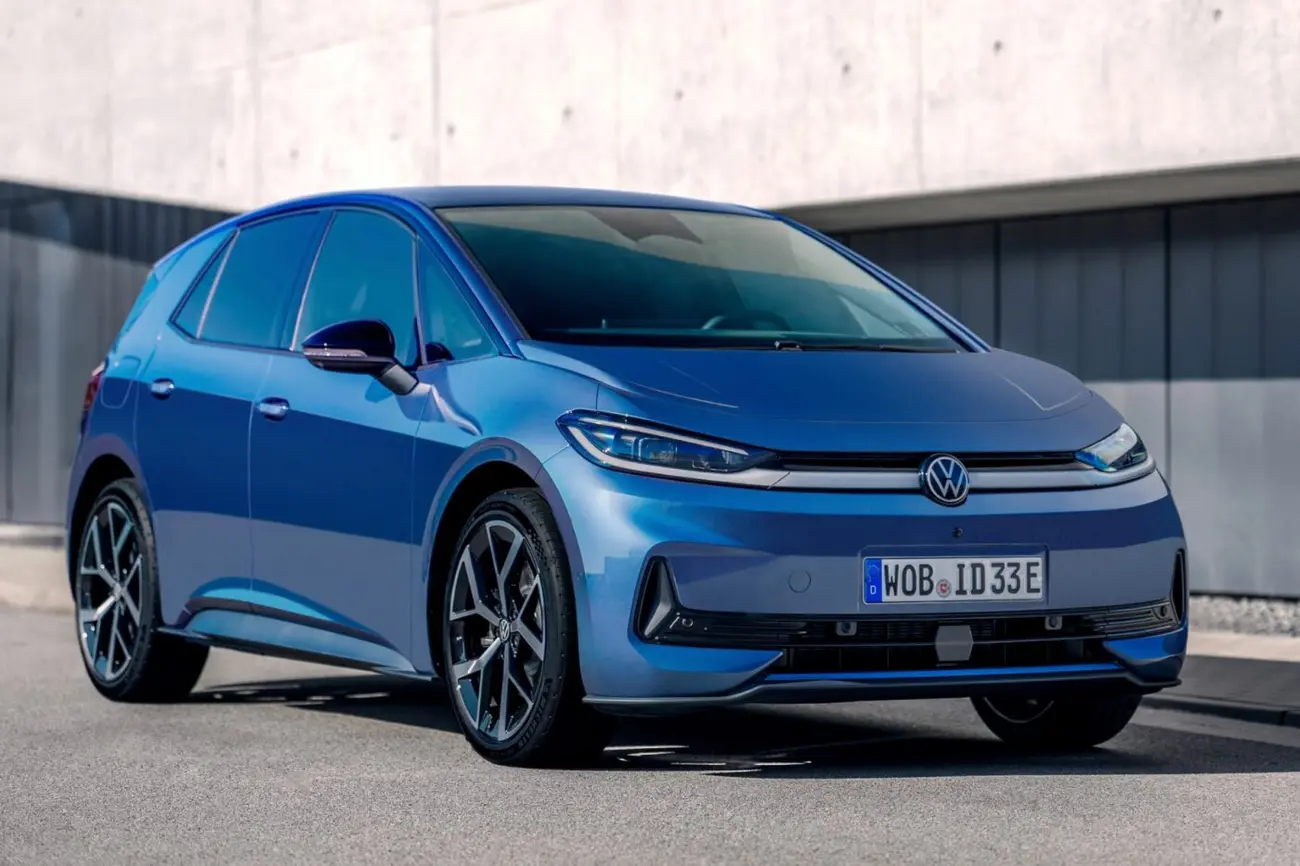
630 km of range and the return of buttons: what changes in the Volkswagen ID.3 Neo
Volkswagen unveiled the ID.3 Neo on 15 April 2026 with two headlines that matter to anyone shopping for an EV in Portugal. The top version reaches 630 km WLTP on a 79 kWh battery, and the widely criticised touch controls are gone. Real physical buttons are back. It is the kind of update that looks minor on paper and changes the daily experience entirely.
European pre-sales opened on 16 April. First deliveries start in July 2026 and right-hand-drive production begins in September, alongside the reveal of the GTI variant. Portugal should follow the European calendar, though official prices are not confirmed yet.
Three batteries, MEB+ platform and a new motor
The ID.3 Neo stays on the MEB architecture, now in its MEB+ evolution, but the motor-battery package is nearly all new. The APP310 motor is out. The new APP350 raises torque to 350 Nm across the range. Volkswagen claims around 30% total efficiency gains — that is what unlocks the 630 km top figure.
| Trim | Battery | Power | 0-100 km/h | WLTP range | DC peak |
|---|---|---|---|---|---|
| Trend | 50 kWh LFP | 125 kW / 170 hp | 8.6 s | ~417 km | 105 kW |
| Life | 58 kWh LFP | 140 kW / 190 hp | 8.0 s | ~494 km | 105 kW |
| Style | 79 kWh NMC | 170 kW / 231 hp | 7.0 s | up to 630 km | 183 kW |
Both entry-level versions use LFP cells made by PowerCo, Volkswagen's own battery subsidiary, at Salzgitter in Germany. That matters for two reasons. LFP is a cheaper, longer-lasting chemistry, and in-house production gives VW room to be aggressive on price. The 79 kWh version sticks with NMC chemistry to deliver the energy density needed for 630 km.
Charging and Vehicle-to-Load
In DC, the LFP versions accept up to 105 kW and the 79 kWh flagship peaks at 183 kW. The 10-80% charge takes 26 to 29 minutes depending on the battery. In practical Portuguese terms, a Lisbon-Porto run with the 79 kWh version needs one stop of about half an hour to reach the destination with margin.
V2L (Vehicle-to-Load) up to 3.6 kW is standard from the base Trend trim. Few direct rivals offer it at this level, and it opens real use cases — powering tools on a building site, a cooler on a camping trip, or a home in an outage.
The end of all-touch: buttons are back
The biggest cabin change does not show up in the numbers. Volkswagen publicly admitted that the haptic steering wheel keys and the non-illuminated sliders below the screen were mistakes. Both are gone. In their place: physical climate buttons, a rotary volume knob, four separate window switches, and real steering wheel controls.
It may look like an aesthetic step back but it is a usability win. Anyone who drives daily knows that adjusting temperature or volume without looking away from the road demands tactile feedback. The pre-facelift ID.3 was one of the worst offenders on the market.
New displays and ChatGPT on board
Behind the steering wheel sits a 10.25-inch digital cluster, and in the centre a 12.9-inch touchscreen, both running the new Innovision setup with ID.OS 5.0. It brings an in-car app store, Connected Travel Assist with traffic-light recognition, one-pedal driving, and an optional digital key.
The headline novelty is ChatGPT integration in the voice assistant. In practice it allows more conversational requests than the usual rigid commands. It is too early to judge how useful this will be in daily Portuguese driving, but it is a clear step ahead of VW's current systems.
"Pure Positive" design with unchanged dimensions
Outside, the ID.3 Neo adopts the "Pure Positive" design language with an illuminated VW badge, a full-width light bar and new 18 to 20-inch wheels including the "Zwickau" design. Dimensions are unchanged: 4,287 mm long, 1,809 mm wide, 1,554 mm tall, with a 2,764 mm wheelbase. Boot space is 385 litres, or 1,267 with the rear seats folded. There is a frunk, but a modest one.
Three trims are offered: Trend, Life and Style. Highlights on the options list include an augmented-reality head-up display, panoramic roof, 360° cameras, massage seats and a Harman Kardon sound system.
What to expect on Portuguese pricing
No European market has published official prices yet. In Portugal the current pre-facelift ID.3 typically starts between 35,000 and 38,000 euros, with the top versions pushing past 45,000 euros. With the Neo it is reasonable to expect a small rise at the top, partly offset by richer standard equipment and cheaper LFP batteries on the entry trims.
Helping keep prices contained: EVs in Portugal remain exempt from ISV (the vehicle registration tax) and qualify for reduced IUC (annual road tax). For company-car buyers, the tax advantages of electric vehicles stay meaningful in 2026.
Competition in the Portuguese market
The ID.3 Neo enters an increasingly crowded segment. The Renault 5 E-Tech sets the benchmark for design and entry price. The Cupra Born, a technical sibling of the ID.3, still draws buyers looking for a sportier image. The new Cupra Raval arrives in 2026 as a more compact alternative within the same group. Peugeot e-308 and MG4 round out the direct rivals.
Where the ID.3 Neo pulls ahead is on maximum range — 630 km WLTP is a figure none of its segment rivals match at the expected price point — and on the return of physical controls that many buyers have been asking for.
Frequently Asked Questions
Official ID.3 Neo prices have not yet been announced, but the current pre-facelift ID.3 typically starts between 35,000 and 38,000 euros, with top versions above 45,000 euros. Expect a small rise at the top, partly offset on the Trend and Life trims by the new cheaper PowerCo LFP batteries. EVs in Portugal remain exempt from ISV and qualify for reduced IUC in 2026, which helps keep the final cost down.
Volkswagen opened European pre-sales on 16 April 2026 and first customer deliveries begin in July 2026. Right-hand-drive production starts in September, alongside the reveal of the GTI variant with the APP550 motor and around 550 Nm of torque. Portugal should follow the European schedule, with dealership availability expected in the second half of 2026.
The Style trim with the 79 kWh NMC battery reaches up to 630 km on the WLTP cycle, one of the best figures in the segment. Under real Portuguese conditions (A1 motorway Lisbon-Porto at 120 km/h), expect between 470 and 520 km per charge — enough for the run with a single short stop. The Trend (50 kWh) and Life (58 kWh) trims deliver around 417 km and 494 km WLTP respectively.
On DC fast charging, the 79 kWh version peaks at 183 kW and completes 10-80% in around 26 to 29 minutes. The 50 and 58 kWh LFP trims are capped at 105 kW, still managing 10-80% in about 29 minutes. The ID.3 Neo also includes V2L up to 3.6 kW as standard from the Trend trim, letting you power tools, appliances or even a home in an outage directly from the car.
The Renault 5 E-Tech is more compact and cheaper at entry level, but falls short on maximum range and charging power. The Cupra Born rides on the same MEB+ platform and shares the APP350 motor with the ID.3, offering a sportier image at a similar price. Where the ID.3 Neo pulls ahead is the 630 km WLTP top figure — no direct rival (Renault 5, Cupra Born, Peugeot e-308, MG4) matches it at the expected price point — and the return of proper physical controls in the cabin.
Is it worth waiting?
If you are shopping for a compact EV in Portugal, it makes sense to wait for the first official prices, which should appear by mid-year. The combination of 630 km of real-world-capable range at the top, 183 kW fast charging, standard V2L and a serious cabin rework puts the ID.3 Neo among the year's most relevant launches. The GTI version in September deserves its own watch list — Volkswagen promises the APP550 motor with rear-wheel drive and around 550 Nm of torque.