
VW ID.3 GTI in Portugal: Price, Specs and the Most Powerful GTI Ever
Published: 21/09/2026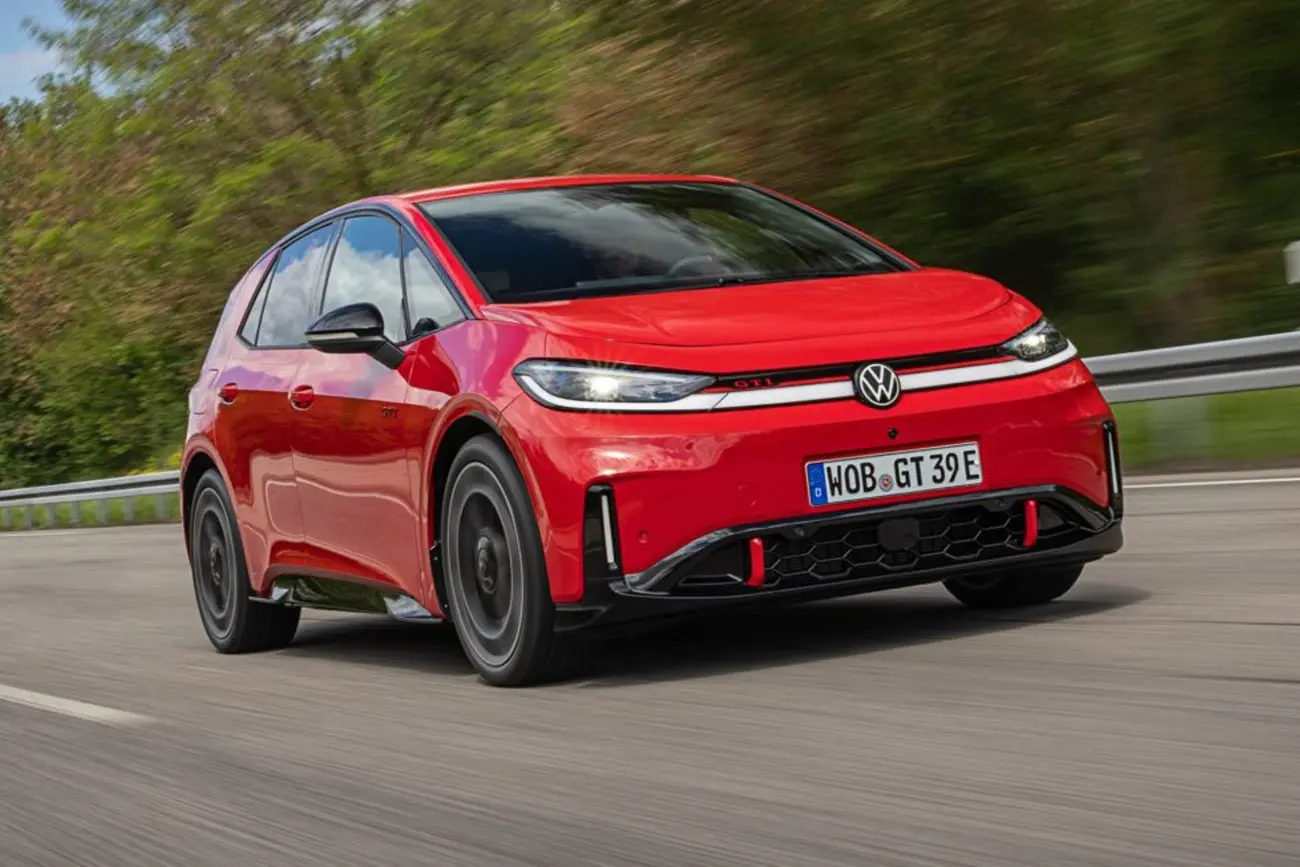
Volkswagen ID.3 GTI: 326 hp and rear-wheel drive in the most powerful GTI ever
240 kW, 545 Nm and the driven wheels at the back. In five decades of GTI history, no series-production GTI has been this powerful — and the record now belongs to an electric car. Volkswagen revealed the ID.3 GTI on 16 September 2026, with European pre-sales starting in early 2027. If you're weighing up an electric hot hatch for next year, the VW ID.3 GTI price in Portugal and its arrival date are worth following closely.
It beats the petrol Golf GTI Edition 50 (239 kW) by just 1 kW, so the milestone is more symbolic than technical. For buyers in Portugal, the better questions are what changes compared with the ID.3 GTX Performance, what it's likely to cost here, and whether it makes sense against smaller, cheaper rivals.
Volkswagen ID.3 GTI specs: the numbers that matter
Power comes from the APP550, a rear-mounted permanent-magnet synchronous motor carried over from the ID.3 GTX Performance, which the GTI effectively replaces. The "550" in the name refers to the motor's maximum torque in Nm.
| Specification | ID.3 GTI |
|---|---|
| Power | 240 kW (326 PS) |
| Torque | 545 Nm |
| Drive | Rear-wheel drive |
| 0-100 km/h | 5.6 s |
| Top speed | 200 km/h (limited) |
| Battery | 79 kWh usable, NMC |
| WLTP range | up to 601 km |
| DC charging | up to 183 kW; 10-80% in about 29 min |
| AC charging | 11 kW |
| Boot | 385 litres |
| Weight | about 2,000 kg (estimate) |
| Wheels / tyres | 20" Wörthersee, 225/45 R20 (235 optional) |
| Launch | pre-sales in early 2027 (Q1) |
The 5.6-second 0-100 km/h time is a tenth quicker than the GTX Performance — some outlets quote 5.7 s, but the official figure is 5.6 s. The Golf GTI Edition 50 is still faster off the line at 5.3 s. At roughly two tonnes, the electric car pays for its battery.
Range and charging in everyday use
Up to 601 km WLTP is rare among compact performance cars. For a real-world view, its mechanical twin, the Cupra Born VZ (same motor, same 79 kWh battery), has a combined real-range estimate of 465 km from EV Database, falling to 330 km on the motorway in cold weather. Lisbon to Porto in one go is realistic in mild conditions. On a winter motorway run, plan for one stop.
That stop won't be long. With a 183 kW peak, 10 to 80% takes about 29 minutes — enough for a coffee and a sandwich at a motorway service area on MOBI.E, Portugal's national public charging network. At home or at work, 11 kW AC charging refills the battery overnight.
Rear-wheel drive GTI: what changes behind the wheel
Ever since the 1976 Golf GTI, the recipe hadn't changed: engine up front, front-wheel drive. The ID.3 GTI breaks that rule, and that's the headline.
Volkswagen has gone beyond badges. Standard equipment includes:
- DCC adaptive dampers with a bespoke GTI tune (springs, dampers and anti-roll bars)
- Progressive steering, quicker in corners and lighter when parking
- MacPherson front axle with revised elastokinematics and a five-link rear axle
- Launch Control
- GTI drive mode, activated by an illuminated button on the steering wheel, bringing motor mapping, steering and suspension into their sportiest setting
A note on the platform: Volkswagen and some outlets call it MEB+, while others describe it as the original MEB shared with the ID.4. Whatever the label, the technical base is that of the ID.3 GTX Performance.
A word of caution. Nobody has driven it yet — the reveal was static — so it remains to be seen whether the GTI tune sets it apart dynamically from the GTX Performance. Two tonnes rarely help agility.
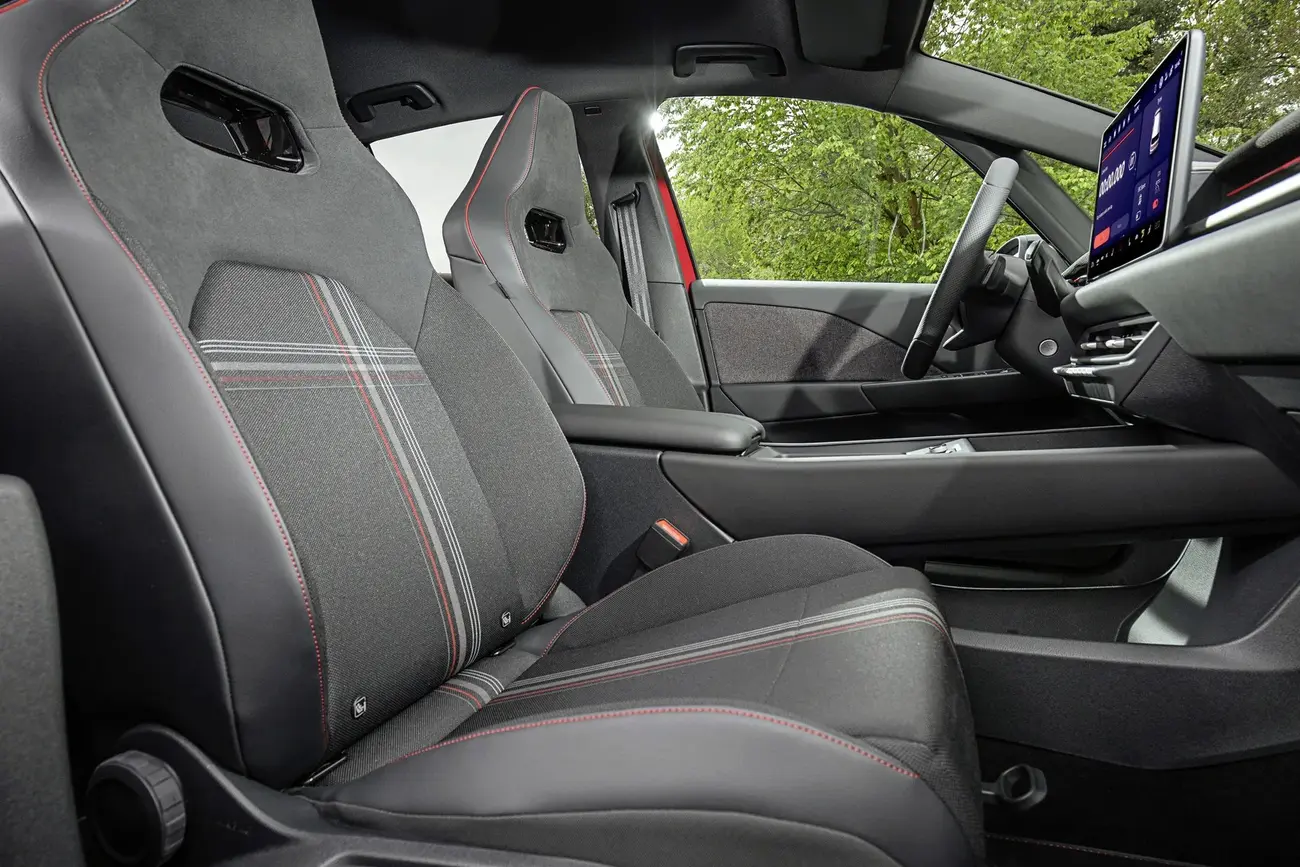
GTI details inside and out
Heritage is everywhere. The redesigned front gets a horizontal red stripe inspired by the original Golf GTI grille, standard IQ.LIGHT LED Matrix headlights and a gloss-black honeycomb grille with red vertical elements. The roof, spoiler and tailgate are painted in body colour.
Tornado Red, a classic 1980s GTI shade, leads the colour list. Inside, there are "Superclark" tartan seats, a red stripe running across the dashboard, a red 12 o'clock marker on the steering wheel, a 10.25" digital cockpit and a 12.9" Innovision touchscreen. GTI mode adds a synthetic combustion engine sound and retro graphics inspired by the Golf Mk1. Physical climate controls stay — good news if you're tired of touch menus.
VW ID.3 GTI price in Portugal: what to expect
Official price? There isn't one yet, for Portugal or any other European market. Any figure at this stage is an estimate and should be read that way.
There are useful reference points, though:
- The ID.3 GTX Performance, with the same motor and battery, sold in Portugal from €50,959
- Italian press expects the GTI at around €51,000
- The technically equivalent Cupra Born VZ costs €52,870 in Germany and €49,990 in the Netherlands
- In the UK, Electrifying estimates £47,000, above the GTX Performance's £46,315
Putting these together, our estimate is that the ID.3 GTI will land in Portugal somewhere around €51,000 to €53,000, and unlikely to undercut the GTX Performance it replaces. Until an official price list appears, treat this range as a guide, not a price.
On tax, as a fully electric car it is exempt from ISV, Portugal's one-off vehicle purchase tax. For companies, when the acquisition cost is below €62,500 the VAT is deductible and there is no autonomous taxation — a strong argument if you're buying it as a company car.
When does the ID.3 GTI arrive in Portugal
Volkswagen is targeting pre-sales for early 2027, with several sources specifying the first quarter. The car is Europe-only. Specific dates for the Portuguese market and first deliveries have not been announced.
ID.3 GTI vs Cupra Born VZ, Peugeot E-208 GTi and Alpine A290
The electric hot hatch segment has never had this much choice. Here's how the ID.3 GTI stacks up:
| Model | Power | 0-100 km/h | Usable battery | Drive |
|---|---|---|---|---|
| VW ID.3 GTI | 240 kW (326 PS) | 5.6 s | 79 kWh | Rear |
| Cupra Born VZ | 240 kW (326 PS) | 5.6 s | 79 kWh | Rear |
| Peugeot E-208 GTi | 204 kW | 5.5 s | 51 kWh | Front |
| Alpine A290 GTS | 220 hp | 6.4 s | 52 kWh | Front |
| VW ID. Polo GTI | 166 kW (226 PS) | 6.8 s | 52 kWh | Front |
ID.3 GTI vs Cupra Born VZ: which to choose
Underneath, they're essentially the same car: 240 kW, 545 Nm, 79 kWh, rear-wheel drive and 5.6 s. The choice comes down to design, equipment and final price. The Born VZ has the more aggressive styling; the GTI leans on nostalgia and an updated interior with the Innovision system. Once Portuguese prices are out, the gap between the two will settle a lot of purchases.
The smaller, cheaper rivals
The Peugeot E-208 GTi is quicker to 100 km/h (5.5 s) and has a mechanical limited-slip differential, but its 51 kWh battery and 100 kW charging hold it back on long trips. The Alpine A290 GTS is the fun benchmark, with less boot space. In the UK, both cost around £34,000, well below what's expected for the ID.3 GTI.
The biggest threat may come from within VW. The ID. Polo GTI arrives at the end of 2026, estimated at around £33,000 in the UK, and delivers the same GTI spirit in a lighter package. The ID.3 GTI will need to justify the premium with more than extra power: range, space and long-distance ability are its strengths.
Frequently Asked Questions
There is no official price yet, in Portugal or any other European market. Our estimate is €51,000 to €53,000, based on the ID.3 GTX Performance (€50,959 in Portugal) and the Cupra Born VZ (€52,870 in Germany). As a fully electric car it is exempt from ISV (vehicle tax), and companies can reclaim VAT with no autonomous taxation below €62,500.
Volkswagen unveiled the ID.3 GTI on 16 September 2026 and plans European pre-sales for early 2027, with several sources pointing to the first quarter. The model is Europe-only. A Portuguese launch date and first deliveries have not been announced yet.
The hardware is the same: an APP550 motor with 240 kW (326 PS) and 545 Nm, a 79 kWh battery and rear-wheel drive. The GTI does 0-100 km/h in 5.6 s, a tenth quicker, and adds GTI-tuned DCC adaptive dampers, progressive steering, Launch Control and a GTI drive mode as standard. In practice, the GTI replaces the GTX Performance in the line-up.
Not from 0 to 100 km/h. Although it has 1 kW more (240 kW versus 239 kW for the petrol Golf GTI Edition 50), the ID.3 GTI takes 5.6 s, while the Golf does it in 5.3 s. The electric car's weight of around 2,000 kg (estimated) explains the gap.
On a DC fast charger peaking at 183 kW, it goes from 10 to 80% in about 29 minutes; on AC it charges at 11 kW, enough for a full charge overnight. Official range is up to 601 km WLTP. For reference, its mechanical twin, the Cupra Born VZ, has an estimated real-world range of 465 km in mixed use, dropping to 330 km on the motorway in cold weather.
Is the ID.3 GTI worth waiting for?
If you want an electric performance car that also handles Lisbon to the Algarve without range anxiety, the ID.3 GTI offers what the smaller rivals can't: 601 km WLTP, 183 kW charging and a 385-litre boot. If pure agility and a lower price matter more, the ID. Polo GTI, E-208 GTi or A290 make more sense.
The deciding factors will be the Portuguese price and the first proper drive, both expected in 2027. In the meantime, it's worth looking at the Cupra Born VZ and ID.3 GTX Performance, which share the same hardware and may show up on the used market at more attractive prices.