
VW ID. Tiguan in Portugal: the Electric SUV Replacing the ID.4
Published: 29/08/2026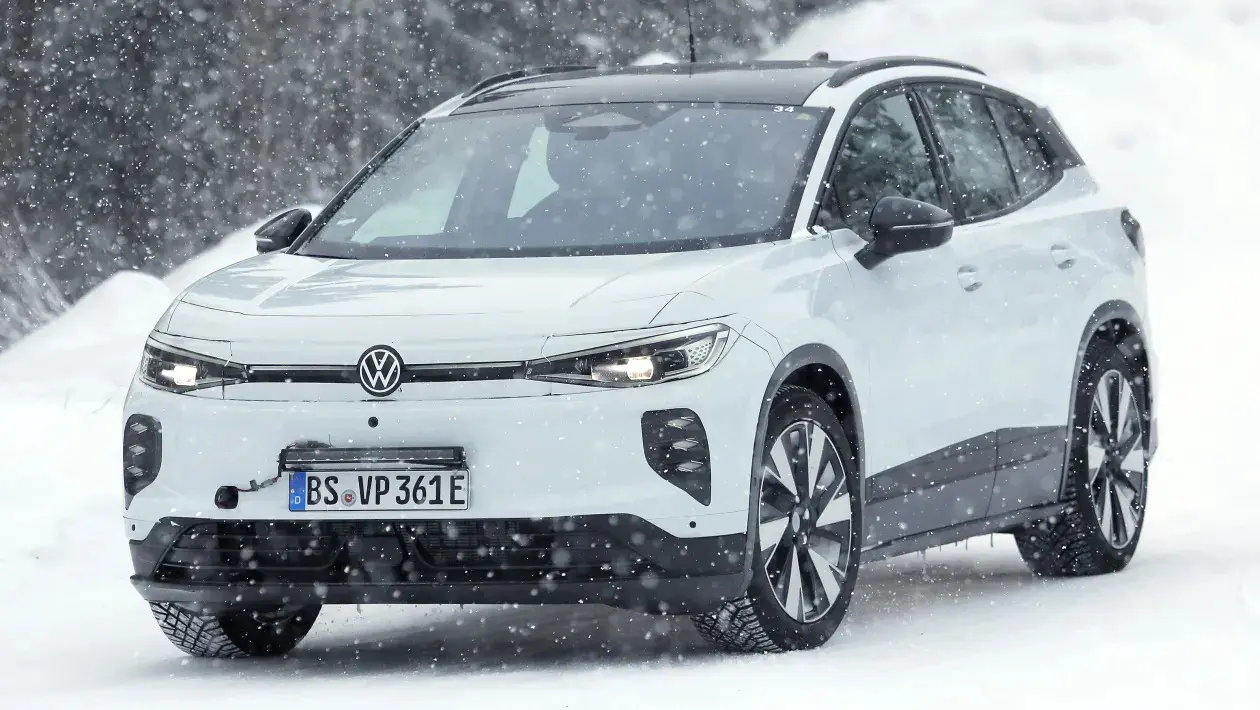
The ID.4 name is being retired, and a Tiguan takes its place
Volkswagen is burying the numeric naming scheme it invented back in 2020. The ID.4 will become the ID. Tiguan, and this is not a badge swap: the electric SUV rolling off the Emden line from late this year gets new doors, fenders, hood, bumpers, tailgate and lighting. The story first broke in January 2026, when the IG Metall union confirmed the new name at a local press conference in Emden. Spy shots and insider reports have piled up ever since.
None of it is officially confirmed by Volkswagen. The reveal is set for October 2026, and until then everything below is expectation built on leaks, camouflaged prototypes and executive remarks. Read it that way.
Don't confuse it with the Tiguan eHybrid already sold here
Worth settling straight away. The Tiguan that Portuguese dealers sell today is a combustion SUV — petrol, diesel and eHybrid plug-in versions — built on the MQB platform. It stays in production and stays on sale.
The ID. Tiguan is a different car entirely: fully electric, MEB+ platform, rear-wheel drive in base form. They share a name and some design language, and that is the extent of it. Anyone walking into a showroom in 2027 will find both, and the gap in price, taxation and day-to-day running is huge.
A facelift deep enough to read as a new generation
The sheet-metal changes go far beyond a normal mid-life update. Spy photos show a squarer, more upright nose, a longer hood, a flatter beltline with a dip near the A-pillar, a redesigned C-pillar with louvers, and a new side window graphic. The ID.4's rounded, aero-led silhouette gives way to classic SUV proportions, closer to the combustion Tiguan and to the ID. Cross concept.
The details include sharply cut 21-inch wheels, twin rectangular rear light modules, and conventional door handles that extend outward again. Up front sit IQ. Light HD matrix headlights with individual LED control to avoid dazzling oncoming drivers, plus a Lane Light function that projects your path within the lane markings onto the road. That one matters more than it sounds on Portugal's unlit national roads, where most night driving happens on main beam and hope.
Andreas Mindt, Volkswagen's design chief, talks about the car's "secret sauce". Brand CEO Thomas Schäfer was blunter: the ID.4 is the "best-selling SUV in terms of electric, so it needed a revamp, a couple of things that we should have done in the first place".
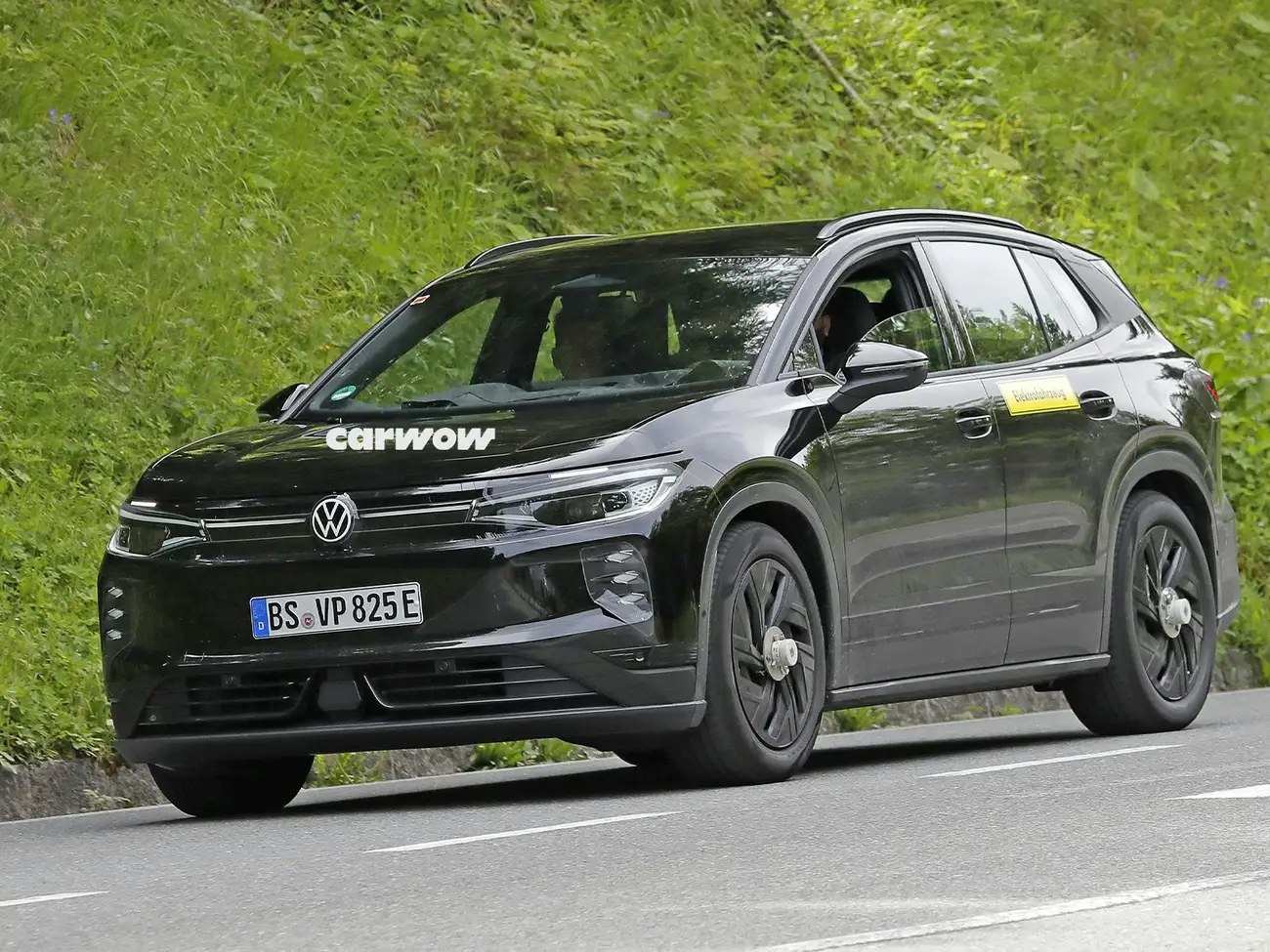
VW ID. Tiguan range: the target is over 700 km WLTP
Here is the number that matters. Volkswagen is aiming to break 700 km WLTP — roughly 435 miles — which is about a 24% jump over the current car. For reference, the 2026 ID.4 with its 82 kWh gross (77 kWh usable) pack manages 566 km WLTP, or 468 km and 423 km on the EPA cycle in rear- and all-wheel-drive form.
What does 700 km WLTP mean in practice here? On the motorway at 120 km/h with the air conditioning running, knocking 25 to 30% off the homologated figure is realistic. That lands somewhere between 490 and 525 real kilometres — Lisbon to Porto with comfortable margin even in winter, and a good chunk of the Algarve run without stopping. For a mostly urban commute, that is a full week between charges.
The gain comes from the MEB+ platform, shared with the ID. Polo and ID.3 Neo, with revisions at cell level. Entry versions in selected markets get LFP cells in a cell-to-pack construction, supplied by BYD among others. The architecture stays at 400 V — no jump to 800 V as on the Hyundai IONIQ 5 — and DC charging power has not been published anywhere. Volkswagen promises faster charging; until there is a kW figure, it stays a promise.
Mechanically, the base version keeps the ID.4's 210 kW / 286 PS single rear motor. Dual-motor versions may gain power.
Physical buttons are back, fixing the ID.4's biggest complaint
If ID.4 owners never forgave Volkswagen for one thing, it was the touch-sensitive climate controls and the unlit steering wheel sliders. The company has backed down.
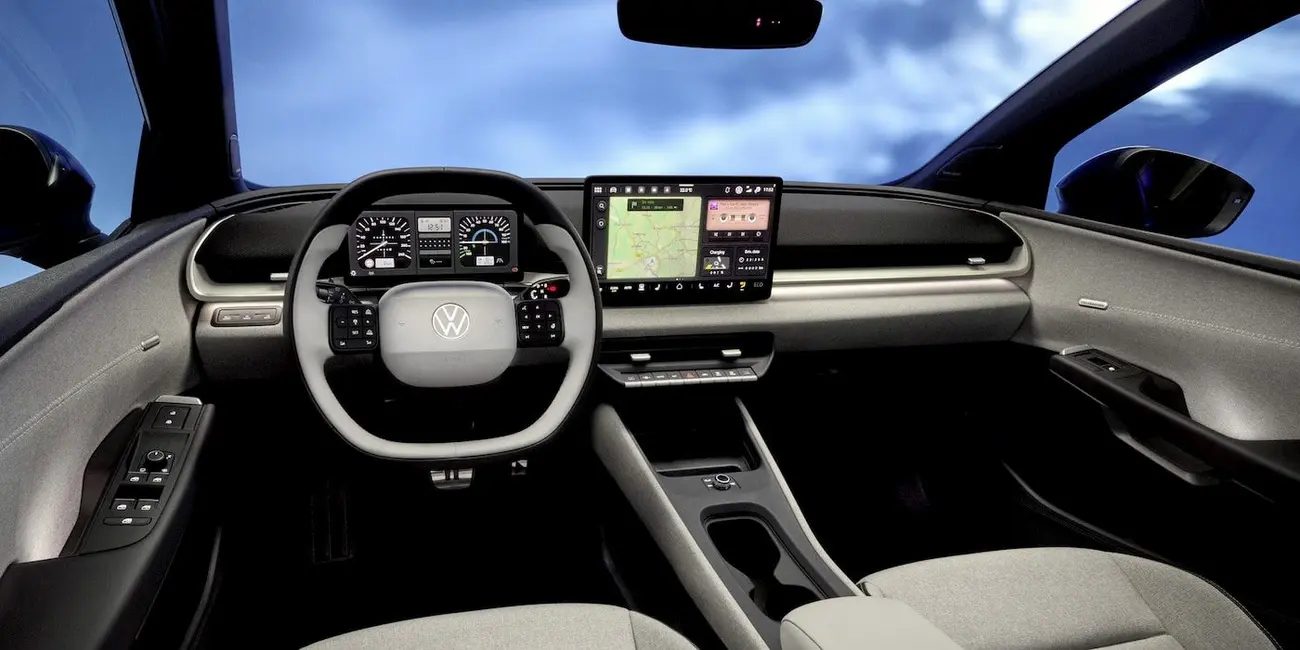
The ID. Tiguan brings physical climate buttons below the centre screen, a proper rotary volume knob, and physical push buttons back on the steering wheel. The central display grows: the most recent reports point to 15 inches, up from the ID.4's 12.9, though earlier leaks described a 13-inch centre screen paired with a 10.25-inch digital cluster. The figures are not final.
Behind it runs the new Android-based One Connected system, which Schäfer describes as "streamlining the content by implementing a standardized infotainment system". There is also a smart climate control that reads the sun's position through windscreen sensors and adjusts each cabin zone accordingly, storing per-driver profiles. Given the sun we get here, that is one of the more genuinely useful items on the list.
VW ID. Tiguan price in Portugal: what can be estimated today
There is no official price, European or Portuguese. What there is, is the current car's starting point: the ID.4 opens at around €40,000 in Europe and $45,095 in the United States.
From there, three forces pull in different directions. LFP cells and MEB+ cost reductions should allow a more aggressive entry price — that was Volkswagen's stated reason for adopting them. Against that, a facelift this deep, with a bigger screen, HD matrix headlights and more range, rarely comes out cheaper. And pressure from Chinese manufacturers in this segment leaves little room for big increases.
Portugal's tax treatment helps. Fully electric passenger cars are exempt from ISV (the vehicle registration tax), pay only the reduced component of IUC (the annual road tax), and keep meaningful company-car advantages: recoverable VAT up to the legal cap and far lighter autonomous taxation than a combustion equivalent. That is why an EV with 286 PS lands at a price point a diesel SUV of similar output never reaches here.
Being cautious about it: budgeting somewhere around €40,000 for the entry version is reasonable, but that is our extrapolation from the ID.4, not a Volkswagen figure.
When the VW ID. Tiguan will arrive in Portugal
The known calendar looks like this:
| Milestone | Date |
|---|---|
| Press embargo lift | around 28 September 2026 |
| Official reveal | October 2026 |
| Production starts in Emden, Germany | November 2026 |
| European market arrival | late 2026 and through 2027 |
| US launch | 2027 |
| Emden production scheduled through | 2031 |
Portugal is rarely in the first delivery wave for a new Volkswagen EV. Between reveal and first cars in Portuguese showrooms, the brand's historical pattern points to six to nine months. In practice: order books likely opening in early 2027, first local deliveries from spring that year onwards. ID.4 production at Chattanooga in the United States already ended in mid-April 2026, which shows the transition is well under way.
Frequently Asked Questions
There is no official Portuguese date yet. The known schedule points to an official reveal in October 2026 and the start of production in Emden, Germany, in November 2026, with the first European deliveries between late 2026 and 2027. Portugal is rarely in the first delivery wave for a Volkswagen EV, and the brand's usual six-to-nine-month gap between launch and Portuguese showrooms suggests order books opening in early 2027 and first local deliveries from spring of that year.
No price has been published, in Europe or in Portugal, because the car has not been revealed. The only solid reference is today's ID.4, which starts at around €40,000 in Europe and $45,095 in the United States. LFP cells and MEB+ cost savings could allow a more aggressive entry price, while the larger screen, HD matrix headlights and extra range push the other way. In Portugal, the ISV exemption and the reduced IUC band for electric passenger cars help keep the final figure competitive against a diesel SUV of similar output.
Volkswagen is targeting more than 700 km WLTP, roughly 24% above the current ID.4's 566 km WLTP with its 82 kWh gross (77 kWh usable) battery. That is a stated target, not a homologated figure. On Portuguese motorways at 120 km/h with the air conditioning running, a realistic deduction of 25 to 30% from the WLTP number puts real range somewhere between 490 and 525 km — comfortably enough for Lisbon to Porto without stopping, even in winter.
No. They are entirely different cars that share only a name. The Tiguan sold by Portuguese dealers today is a combustion SUV on the MQB platform, offered with petrol, diesel and eHybrid plug-in hybrid drivetrains, and it stays in production. The ID. Tiguan is fully electric, built on the MEB+ platform with a 400 V architecture and rear-wheel drive in base form, producing around 210 kW / 286 hp. From 2027 both should sit side by side in showrooms, with very different taxation, running costs and pricing.
It depends on your timeline and annual mileage. Waiting makes sense if range is your sticking point, if you drive a lot at night on unlit national roads, or if the ID.4's touch-sensitive controls were a dealbreaker — those are exactly the three things the new model addresses, with physical climate buttons and a proper rotary volume knob returning. If you need a car within the next twelve months, buying now usually wins: an outgoing model brings run-out discounts and downward pressure on used values, and a 2022-2023 ID.4 with the 77 kWh battery is already available in Portugal for a fraction of its list price. For anyone covering under 15,000 km a year, waiting two years for roughly 150 km of extra homologated range rarely pays off.
Wait for the ID. Tiguan, or buy an ID.4 now?
It depends on when you need the car and what waiting costs you.
Waiting makes sense if range is your sticking point, if you drive a lot at night away from motorways, or if the ID.4's touch controls annoy you enough to be a dealbreaker. Those are precisely the three things the ID. Tiguan fixes.
Waiting doesn't make sense if you need a car in the next twelve months. There is also a useful side effect: a model at the end of its life brings run-out discounts on new stock and downward pressure on used prices. A 2022-2023 ID.4 with the 77 kWh battery already sells in Portugal for a fraction of its list price, and it will keep falling as the successor approaches. If you cover less than 15,000 km a year, the maths rarely justifies waiting two years for 150 km of extra homologated range.
What remains unknown is the part that decides a purchase: DC charging power, actual battery capacities, the trim line-up and, above all, prices. September and October of this year should answer nearly all of it — and that is when it is worth running the numbers again.