
VW ID.Cross in Portugal: Price, Specs and Range Explained
Published: 20/07/2026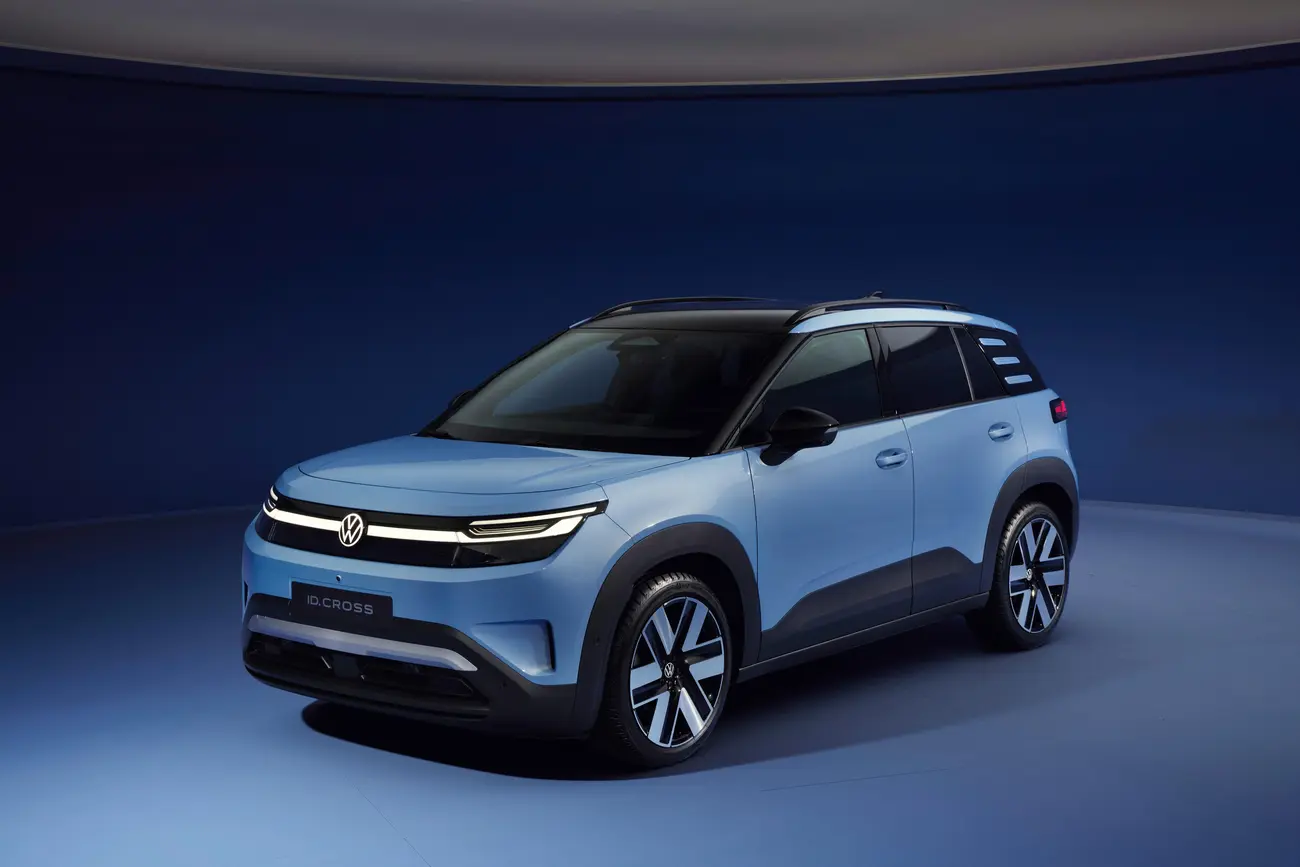
Volkswagen's cheapest electric SUV starts under €30,000
Volkswagen has just revealed the car a lot of buyers in Portugal have been waiting for: an electric SUV priced like a small hatchback. The ID.Cross broke cover on 15 July 2026 with a starting price of €27,995 in Germany, making it the brand's most affordable electric SUV. If you are trying to pin down the VW ID.Cross Portugal price, here is everything we know so far — and what is still to be confirmed.
In practice, it is the SUV version of the ID.Polo. It rides on the same MEB+ platform (shared with the Cupra Raval and Skoda Epiq) and takes on the role of electric counterpart to the combustion T-Cross, Volkswagen's best-selling compact SUV in Europe.
What changes versus the ID.Polo
The ID.Cross costs roughly €3,000 more than the ID.Polo hatchback (which starts around €24,990), and that premium buys you the SUV body, more ground clearance and a bigger boot. It measures just over 4.15 metres long, with a 2.60-metre wheelbase.
That wheelbase is the key. The boot swallows 475 litres — 20 litres more than the combustion T-Cross — and there is a 25-litre frunk up front for cables. Five seats, 14 cm of ground clearance and a towing capacity of up to 1,200 kg on the 52 kWh version. For a car built with the city in mind, it is surprisingly practical for weekends away.
Volkswagen ID.Cross specs and range
Every version is front-wheel drive with a single motor. There are two batteries and three power levels:
| Specification | Value |
|---|---|
| Platform | MEB+ (front-wheel drive) |
| Length | 4,153 mm |
| Width | 1,794 mm |
| Height | 1,581 mm |
| Wheelbase | 2,601 mm |
| Boot / frunk | 475 L / 25 L |
| Battery (net) | 37 kWh (LFP) or 52 kWh (NMC) |
| Power | 85 kW (116 PS) / 99 kW (135 PS) / 155 kW (211 PS) |
| WLTP range | 316 km (37 kWh) / up to ~436 km (52 kWh) |
| Top speed | 150 km/h / 160 km/h |
| Kerb weight | 1,539 kg / 1,548 kg |
| Towing | up to 1,200 kg (52 kWh) |
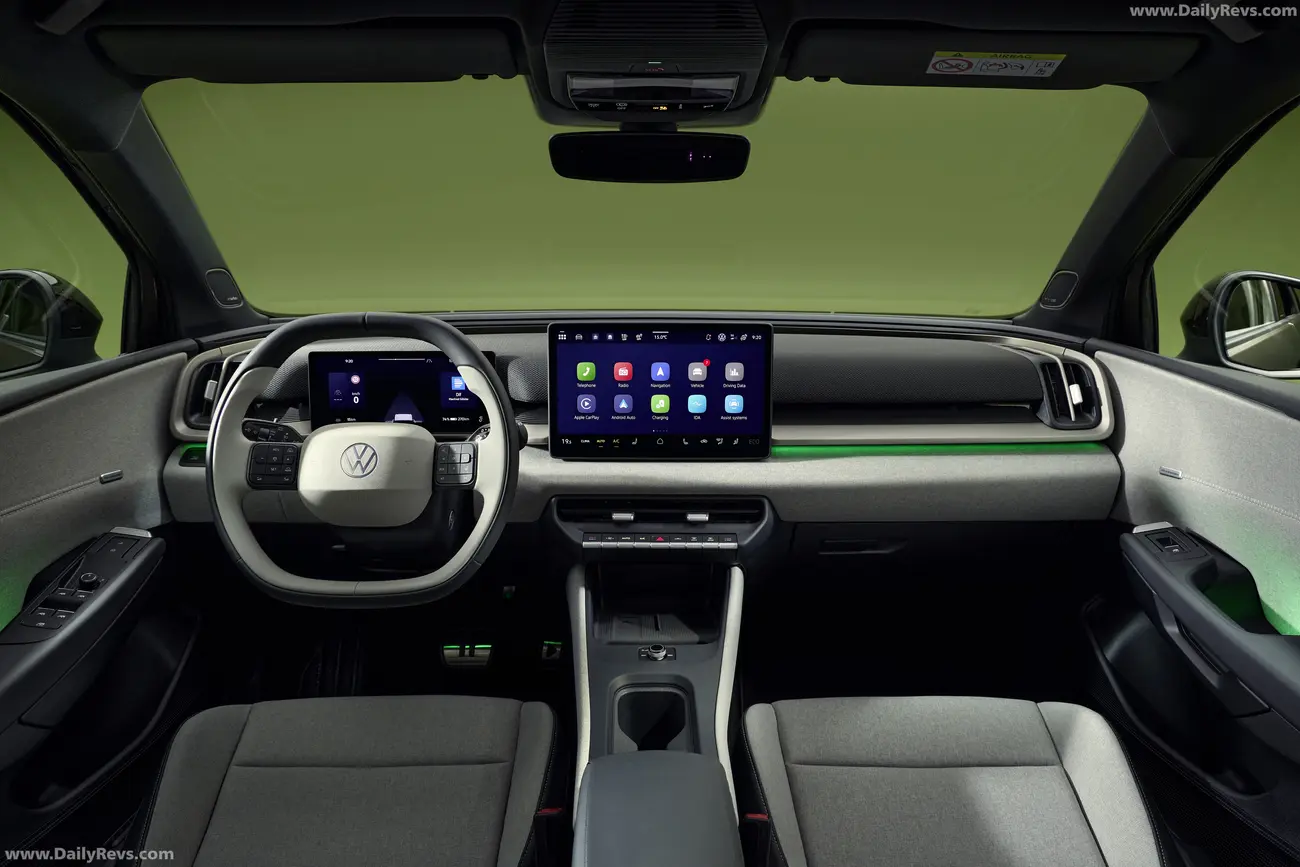
Inside, even the base car gets the 10.25-inch Digital Cockpit Pro and the 12.9-inch infotainment screen. There is a fun touch for the nostalgic: a retro display mode that turns the instrument cluster into Golf I dials. Higher trims add the 10-speaker Harman Kardon sound system, a panoramic roof and massage seats.
Range and charging: what to expect day to day
The 37 kWh battery (LFP chemistry) is rated at 316 km WLTP. The 52 kWh (NMC) climbs to around 436 km WLTP — Volkswagen officially quotes "up to 427 km" as its headline figure, so it is worth confirming the final number on the VW Portugal configurator once it goes live.
On the road, charging is what matters. The 52 kWh version accepts up to 105 kW on DC and goes from 10 to 80% in about 24 minutes; the 37 kWh peaks at 90 kW and does the same in a little over 20 minutes. On AC, both charge at up to 11 kW — plug in overnight at home or at work and you leave with a full battery. There is also a 3.6 kW vehicle-to-load function, so the car can power an e-bike or external gear through a Schuko adapter.
For mostly-urban driving with the occasional trip, the 52 kWh version comfortably covers a Lisbon-Porto run with a single charging stop. Portugal's MOBI.E network and the fast chargers along the motorways make that journey entirely doable.
VW ID.Cross Portugal price (estimate)
Here is the part that is not settled yet. Volkswagen has not announced official prices for Portugal, so the figures below are estimates based on the German MSRP.
- Entry version (Trend, 85 kW / 37 kWh): €27,995 in Germany
- Top of the range (Style, 155 kW / 52 kWh): €36,525 in Germany
The good news for the Portuguese buyer: as a fully electric car, the ID.Cross is exempt from ISV, the vehicle tax that usually inflates combustion-car prices in Portugal. That means the local price should land very close to the German figure — somewhere around €28,000 for the entry version — rather than being marked up by the fiscal penalty petrol and diesel models carry. The annual IUC road tax on an EV is also among the lowest on the market. Even so, the final price depends on how Volkswagen Portugal positions the car and on any incentives in force at launch, so treat these numbers as a reference, not an official price list.
ID.Cross vs Renault 4 and other rivals
The ID.Cross lands in one of 2026's most crowded segments. These are its direct rivals:
| Model | Price (base) | Max range |
|---|---|---|
| VW ID.Cross | ~€27,995 | up to ~436 km |
| Renault 4 | ~€28,000 | ~398 km |
| Kia EV2 | ~€26,600 | ~452 km |
| Ford Puma Gen-E | to be confirmed | ~375 km |
The closest fight is with the Renault 4: an almost identical starting price, but the Volkswagen offers more range in its 52 kWh form. The Kia EV2 starts a touch cheaper and takes the range crown, while the Ford Puma Gen-E answers with the biggest boot of the group (its 523-litre "Gigabox"). None of these is a wrong choice — the decision comes down to how much you value the Volkswagen badge, the service network and the way the car drives, which only a test in Portugal can confirm.
Frequently Asked Questions
Volkswagen has not yet announced official Portuguese prices. In Germany, the ID.Cross starts at €27,995 for the entry Trend (85 kW / 37 kWh) and rises to €36,525 for the top Style (155 kW / 52 kWh). As a fully electric car it is exempt from ISV, so the local price should land very close to the German figure — somewhere around €28,000 for the base version. Treat these numbers as an estimate until Volkswagen Portugal publishes an official price list.
The European launch is set for autumn 2026. Orders opened in Germany on 15 July 2026, starting with the Life and Style versions in 155 kW / 52 kWh form, and the base Trend follows from mid-October 2026. There is no confirmed date or pricing for Portugal yet, but the car is built in Landaben, Navarre (Spain), a proximity that tends to favour a quick arrival on the Iberian market.
There are two batteries: the 37 kWh (LFP) is rated at 316 km WLTP and the 52 kWh (NMC) reaches around 436 km WLTP (Volkswagen officially quotes 'up to 427 km'). On DC fast charging, the 52 kWh version accepts up to 105 kW and goes from 10 to 80% in about 24 minutes; the 37 kWh peaks at 90 kW. Both charge at up to 11 kW on AC, enough to fill the battery overnight at home.
Both start at almost the same price (around €28,000), but they differ on range: the 52 kWh ID.Cross reaches ~436 km WLTP versus ~398 km for the Renault 4. The Volkswagen also offers a 475-litre boot and the VW service network, while the Renault 4 leans on more distinctive styling. The same segment includes the Kia EV2 (from ~€26,600, up to ~452 km) and the Ford Puma Gen-E, which has the biggest boot of the group at 523 litres.
For anyone after Volkswagen's cheapest electric SUV, the ID.Cross is one of the most compelling options of 2026: it combines an SUV body, a 475-litre boot and up to ~436 km of range at an estimated price around €28,000. The tax advantages strengthen the case — as a BEV it is exempt from ISV and its annual IUC road tax is among the lowest on the market. The final call should wait for Volkswagen Portugal's official pricing and any EV purchase incentives in force at launch.
When it arrives in Portugal
Orders opened in Germany on launch day, starting with the Life and Style versions in 155 kW / 52 kWh form; the base Trend follows from mid-October 2026. The European launch is set for autumn 2026.
For Portugal there is no confirmed date yet, and no official pricing. The car is built at Volkswagen's Landaben plant in Navarre, Spain — logistics that tend to favour a quick arrival on the Iberian market. It is worth keeping an eye on Volkswagen Portugal's next announcements, because an electric SUV with a 475-litre boot, ISV exemption and a price around €28,000 is exactly the kind of car that has been missing to bring more Portuguese families into electric motoring.